

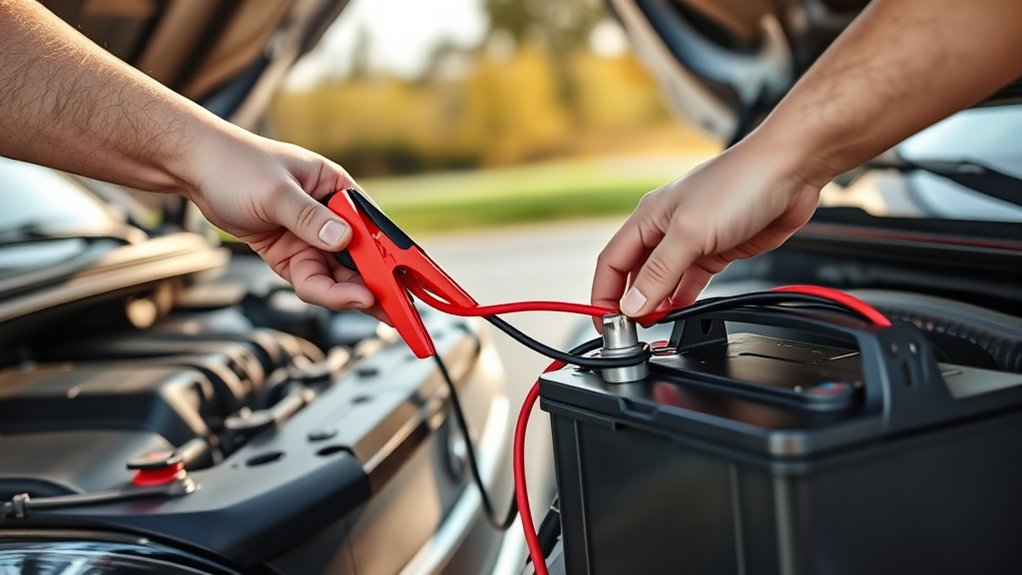
First, confirm your battery is dead by checking if the car won’t start and lights are dim. Knowing how to charge a car battery without a battery charger can save you time and hassle in emergencies.
Then, boost it with jumper cables connected to another vehicle, or use a portable power bank.
You can also recharge by running your engine to activate the alternator.
If you’re handy, try a DIY charger with a 12V power supply and resistor.
Keep your battery well-maintained to avoid drains.
Follow these steps, and you’ll soon have a reliable way to power up your battery.
Key Takeaways
- Confirm the battery is dead by checking for no engine crank, dim lights, or non-functioning electrical accessories.
- Use jumper cables to connect a good battery to the dead one, following proper positive and negative terminal connections.
- Employ a fully charged portable power bank designed for automotive use to safely boost the battery.
- Start the engine and let it idle or drive to recharge the battery via the alternator without electrical accessory use.
- Create a DIY charger using a 12V power supply and resistor, ensuring safe and insulated connections while monitoring charging.
Confirm Your Car Battery Is Dead
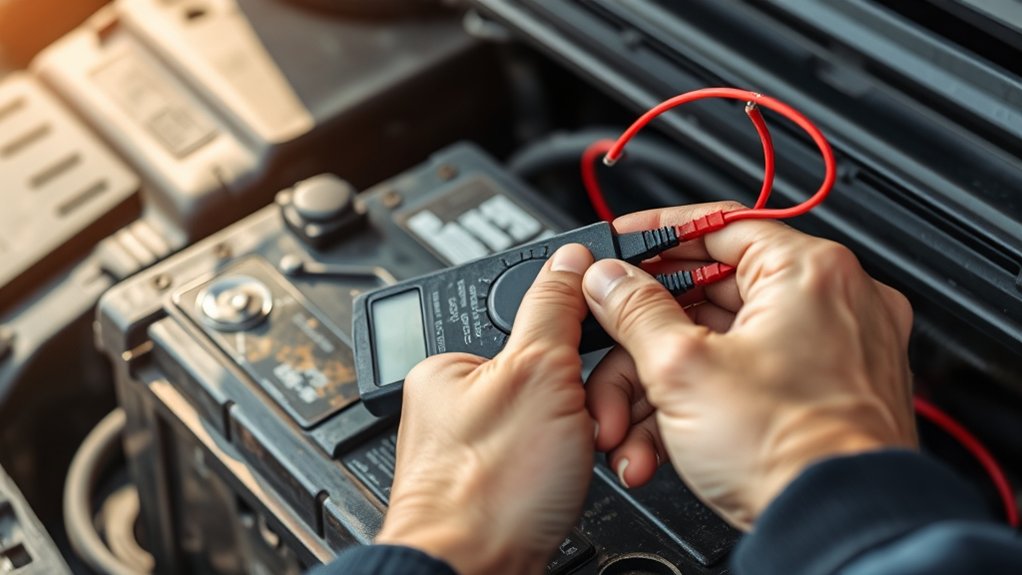
How can you be sure your car battery is truly dead? First, turn the key or push the start button. If the engine doesn’t crank or you hear a clicking sound, your battery might be dead.
Next, check your headlights and interior lights. Dim or no lights often indicate a weak battery. Also, listen for electrical accessories like the radio or dashboard lights; if they don’t power on, that’s another clue.
You can try turning on the headlights and then attempt to start the car—if the lights dim considerably, the battery likely lacks sufficient charge. Avoid assuming the battery is dead without checking these signs, as other issues might cause similar symptoms. Confirming your battery’s condition helps you decide the next steps accurately.
Boost Your Battery Using Jumper Cables and Another Car
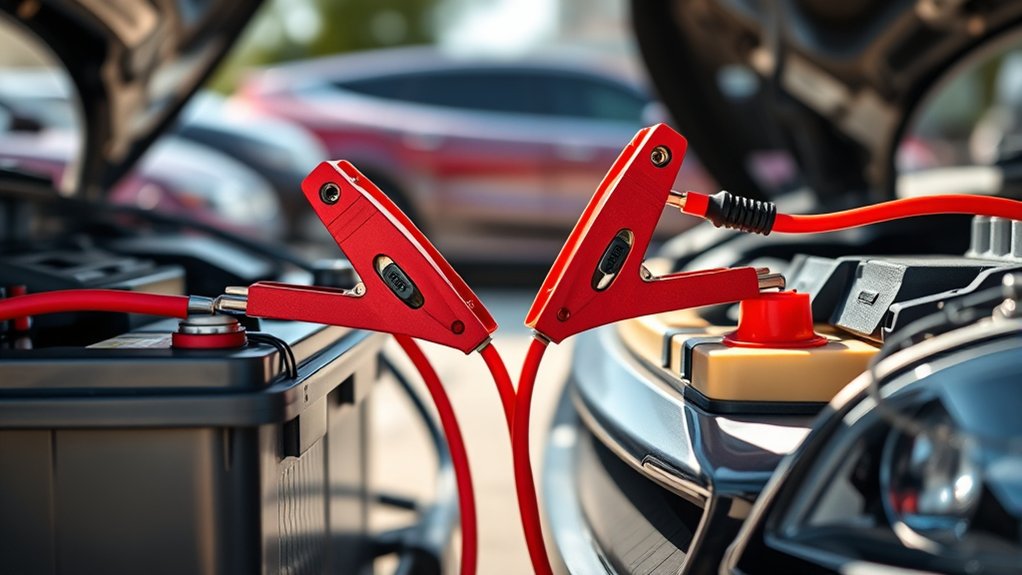
Before attempting to boost your battery, position the working car close enough so the jumper cables can reach both batteries, but make sure the vehicles don’t touch.
Next, follow these steps carefully:
Next, carefully follow these steps to safely jump-start your battery and get your car running again.
- Attach one red clamp to the positive (+) terminal of the dead battery, then connect the other red clamp to the positive terminal of the good battery.
- Connect one black clamp to the negative (-) terminal of the good battery, and attach the other black clamp to an unpainted metal surface on the dead car’s engine block—away from the battery.
- Start the working car and let it run for a few minutes, then try starting your car.
Once it starts, remove the cables in reverse order.
This method safely transfers power and gets your battery charged without a charger.
Use a Portable Power Bank to Charge Your Car Battery
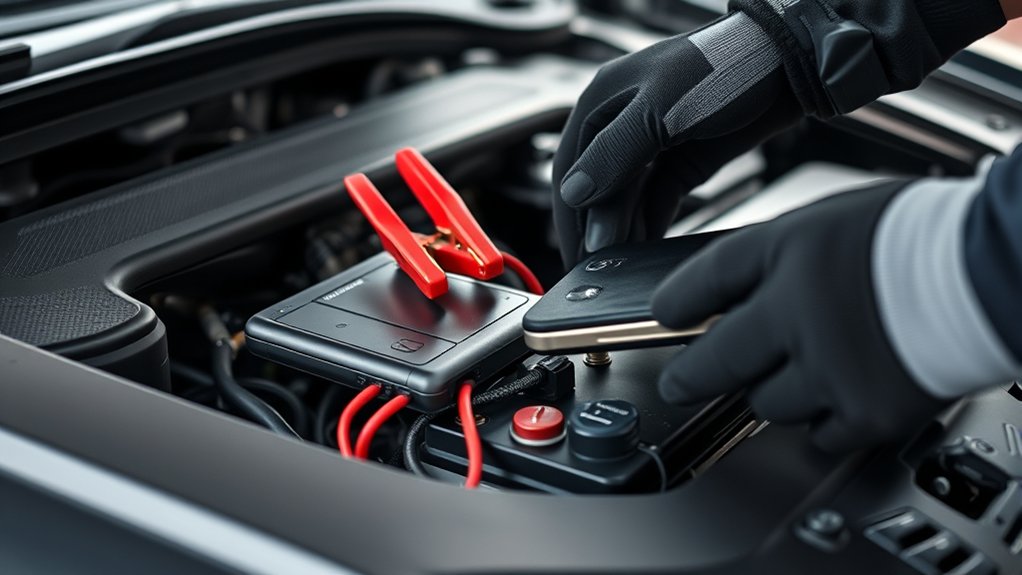
Wondering if you can charge your car battery without another vehicle? You can, by using a portable power bank designed for car batteries. First, make sure the power bank is fully charged and rated for automotive use.
Connect the power bank’s positive clamp to your battery’s positive terminal, then attach the negative clamp to the negative terminal or a grounded metal surface. Turn on the power bank and let it deliver a boost to your battery. This method is quick and convenient, especially if you’re stranded without access to another car.
Just follow the manufacturer’s instructions carefully, and avoid sparks or loose connections. Once your battery has enough charge, you can start your car and disconnect the power bank safely.
Use Your Car’s Alternator to Recharge the Battery
Although it takes some time, you can recharge your car battery using your vehicle’s alternator by simply running the engine. The alternator generates electricity to power the car’s electrical systems and recharge the battery while the engine runs. To do this effectively:
- Start your car and let it idle for at least 30 minutes, ensuring the engine runs smoothly.
- Avoid using electrical accessories like headlights or the radio, so the alternator focuses on charging the battery.
- If possible, drive the car around to maintain a higher engine speed, which helps the alternator generate more power.
Keep in mind, this method is slower than using a dedicated charger but works well in emergencies when you don’t have one available.
How to Safely Make a DIY Car Battery Charger at Home
Creating a simple DIY car battery charger at home can save you time and money when a traditional charger isn’t available. To start, gather a 12V power supply, like an old laptop charger or a power adapter, and a resistor to control the current flow. Connect the positive wire from the power supply to the battery’s positive terminal through the resistor.
Then, attach the negative wire directly to the battery’s negative terminal. Make sure all connections are secure and insulated to avoid shorts. Always monitor the battery’s voltage and temperature while charging to prevent overheating or damage.
Never leave the setup unattended. By following these steps carefully, you can safely charge your car battery without specialized equipment, but always prioritize safety and double-check your connections before powering on.
Maintain Your Battery to Avoid Future Drains
To keep your car battery reliable, check it regularly for any signs of wear or damage. Make sure the terminals stay clean to prevent corrosion and guarantee a strong connection. Also, avoid letting your battery drain completely to extend its lifespan.
Regular Battery Inspection
When you regularly inspect your car battery, you catch small issues before they turn into major problems that leave you stranded. Start by checking the battery case for cracks or bulges that signal damage. Next, test the battery voltage with a multimeter to verify it holds a proper charge, ideally around 12.6 volts.
Finally, examine the battery fluid level if your battery has removable caps; low fluid can reduce performance and lifespan.
- Look for physical damage or leaks on the battery casing.
- Measure voltage to confirm the battery charge status.
- Check fluid levels to maintain *ideal* battery health.
These steps help you spot issues early, so your battery stays reliable longer.
Keep Terminals Clean
Regularly inspecting your battery sets a strong foundation for its health, but keeping the terminals clean plays an equally important role in preventing power loss. Corrosion buildup blocks the flow of electricity, causing your battery to drain faster or fail to start your car.
Use a wire brush or a battery terminal cleaner to remove any white, green, or blue deposits. After cleaning, apply a thin layer of petroleum jelly or a terminal protector spray to slow down future corrosion.
| Step | Tool Needed | Purpose |
|---|---|---|
| 1. Inspect terminals | Visual check | Spot corrosion early |
| 2. Disconnect cables | Wrench | Safe cleaning |
| 3. Clean terminals | Wire brush | Remove corrosion |
| 4. Apply protector | Petroleum jelly | Prevent new corrosion |
| 5. Reconnect cables | Wrench | Restore connection |
Avoid Deep Discharges
Although car batteries are designed to handle regular use, letting them discharge too deeply can considerably shorten their lifespan. To keep your battery healthy and avoid future drains, you should:
- Monitor the battery voltage regularly and recharge promptly when it drops below 12.4 volts.
- Turn off all electrical components like lights, radio, and air conditioning when the engine is off.
- Avoid leaving your car unused for long periods; if you do, start the engine occasionally to keep the battery charged.
Essential Tools to Charge Your Car Battery Without a Charger
Since you won’t have a traditional battery charger at hand, you’ll need a few essential tools to safely and effectively charge your car battery. First, grab a set of jumper cables—they’re vital if you plan to use another vehicle’s battery to jump-start yours. You’ll also want safety gloves and goggles to protect yourself from battery acid and sparks.
A wrench or pliers can help you disconnect the battery terminals if necessary. Additionally, having a multimeter on hand lets you check the battery’s voltage before and after charging. If you have access to a power source, a USB car battery maintainer or solar charger can serve as alternatives.
Always make certain your tools are in good condition to avoid accidents during the process.
Frequently Asked Questions
Can Extreme Weather Affect the Charging Process Without a Charger?
Yes, extreme weather can affect the charging process without a charger. Cold temperatures slow chemical reactions inside the battery, while heat increases self-discharge, making it harder for you to restore power efficiently and safely.
How Long Does It Take to Fully Charge a Car Battery Manually?
How long do you think it takes to fully charge a car battery manually? Usually, it takes several hours, often 6 to 12, depending on your method and the battery’s condition, so be patient and cautious.
Are There Any Risks of Damaging the Car’s Electrical System?
Yes, you can damage your car’s electrical system if you’re not careful. Incorrect connections or overcharging can cause shorts, blown fuses, or damage sensitive electronics.
Always double-check connections and avoid prolonged charging without proper equipment.
Can a Dead Battery Be Revived Multiple Times Without Replacement?
You can revive a dead battery a few times, but it won’t last forever. Each recharge stresses the battery, reducing its capacity.
Eventually, you’ll need to replace it to avoid breakdowns and guarantee reliable starts.
What Are Signs the Battery Needs Professional Replacement Instead?
When your battery’s like a sinking ship, showing constant slow starts, swelling, or leaking acid, you know it needs professional replacement.
Don’t ignore a check engine light or frequent jump-starts—they’re clear warning flags waving at you.
Conclusion
So, there you have it—7 foolproof ways to charge your car battery without that fancy charger you probably forgot to buy. Who needs convenience when you’ve got jumper cables, power banks, and a dash of DIY genius?
Just remember, if your car refuses to start after all that, maybe it’s time to reconsider your life choices or, you know, actually buy a charger.
Until then, happy jump-starting, MacGyver! These simple car battery charging methods without a battery charger can save the day when you least expect it.

