

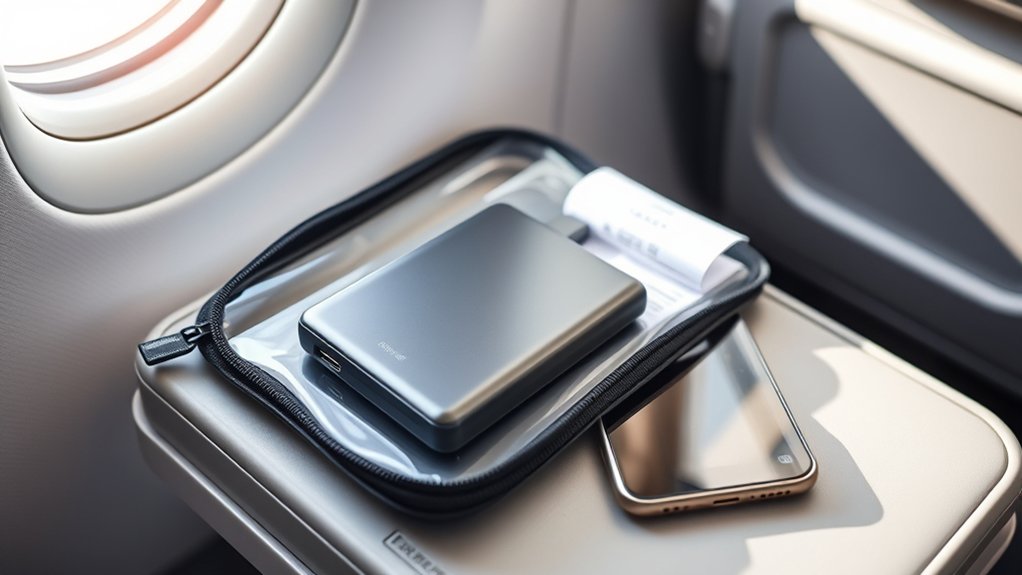
To bring a portable battery charger on a plane safely, it’s important to follow airline regulations and airport security guidelines. Always keep your portable charger in your carry-on bag, never in checked luggage, to prevent potential hazards.
Verify that the charger’s capacity is under 100Wh for hassle-free travel and compliance with airline rules. Check the charger’s label for milliamp-hours (mAh) or watt-hours (Wh) to confirm its capacity.
Be prepared to place the charger separately during security screening for inspection. Avoid using damaged or unapproved chargers, as they may pose safety risks.
Follow crew instructions regarding the use of your portable battery charger onboard. Taking these precautions will help ensure a smooth and safe travel experience.
If you want to make your trip smoother with chargers, there’s more useful info you’ll want to know.
Key Takeaways
- Always carry portable battery chargers in your carry-on luggage, never in checked baggage, to reduce fire risk and comply with airline rules.
- Check and confirm your charger’s capacity is under 100Wh for unrestricted carry-on or obtain airline approval if between 100Wh and 160Wh.
- Present chargers separately during security screening and be ready to show capacity labels or demonstrate their specifications.
- Use padded protection and organize cables to prevent damage while keeping chargers easily accessible for inspections.
- Follow airline and crew instructions on charger use during the flight, avoiding plugging into airplane power outlets unless permitted.
Airline Rules for Bringing Portable Battery Chargers on Planes
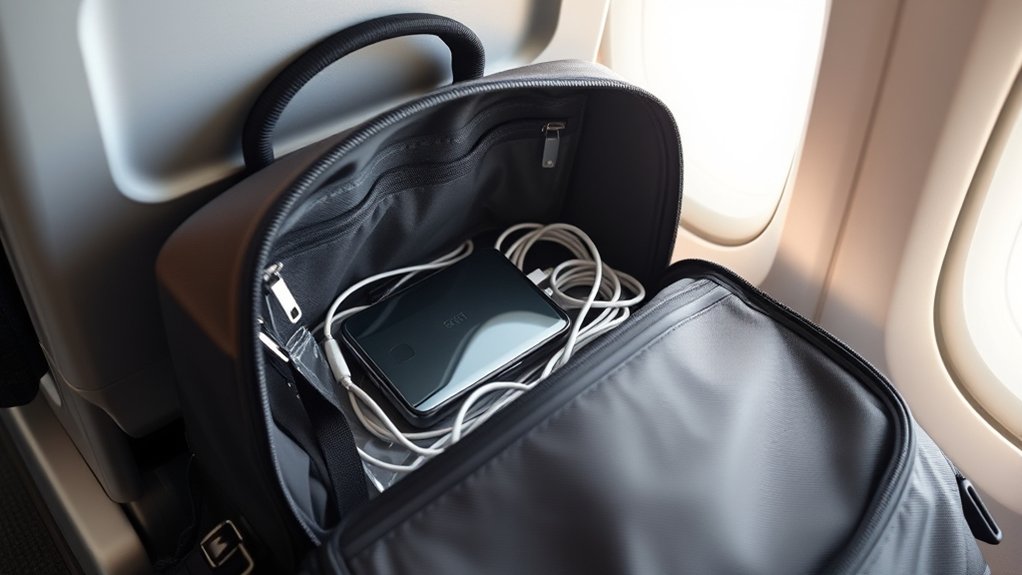
Although rules can vary between airlines, you’ll generally need to carry portable battery chargers in your carry-on luggage rather than checked bags. Airlines restrict batteries in checked baggage because they pose fire risks if damaged or short-circuited. You should also verify your charger is turned off and protected from accidental activation during the flight.
Some airlines limit the watt-hour (Wh) rating of batteries you can bring onboard, often allowing chargers up to 100Wh without prior approval. If your charger exceeds that, you’ll need airline permission or may not be able to bring it at all. Additionally, damaged or recalled batteries are usually prohibited.
Always check your airline’s official guidelines before traveling to avoid surprises at security checkpoints and ensure a smooth experience with your portable charger.
How to Find Your Portable Charger’s Capacity
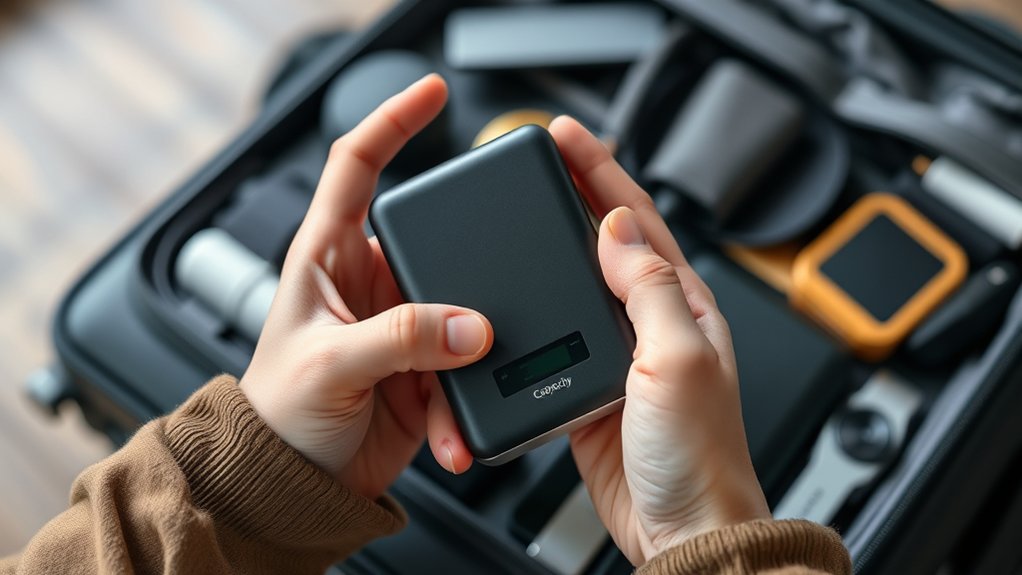
Understanding your portable charger’s capacity helps guarantee it meets airline regulations and avoids any issues during your trip. To find this capacity, start by checking the charger’s label or packaging, where the milliamp-hour (mAh) rating is often printed.
Knowing your portable charger’s capacity ensures it complies with airline rules and prevents travel disruptions.
If you can’t find it there, look for the watt-hour (Wh) rating, which is sometimes listed instead. If neither is labeled, use this formula to calculate Wh from mAh:
- Find the voltage (V), usually 3.7V for most lithium-ion batteries.
- Multiply the mAh rating by the voltage.
- Divide the result by 1000 to convert to watt-hours.
For example, a 10,000mAh charger at 3.7V equals 37Wh. Knowing this helps you stay within airline limits and avoid hassles.
Choosing the Right Portable Battery Charger for Air Travel
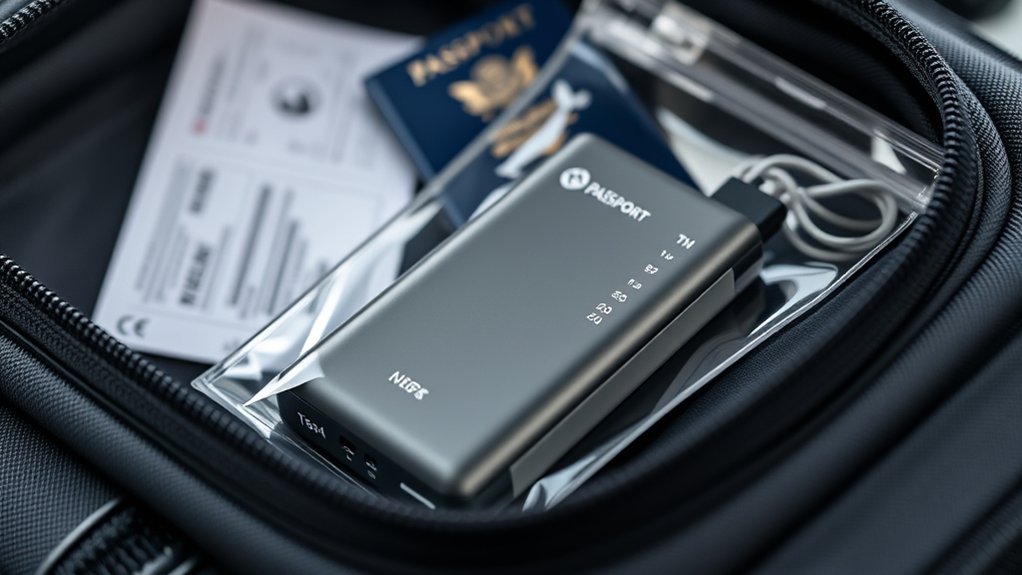
You’ll want to pick a portable charger that meets airline capacity limits to avoid any issues at security. Make sure it complies with airline regulations and has built-in safety features like overcharge protection.
This way, you’ll keep your devices powered without risking delays or confiscation.
Battery Capacity Limits
When selecting a portable battery charger for your flight, you need to pay close attention to its capacity, usually measured in watt-hours (Wh). This number determines if you can carry it on board and how much charge it holds. To stay within safe limits, keep these key points in mind:
- Chargers under 100 Wh are generally accepted without special approval.
- Devices between 100 Wh and 160 Wh may require airline approval.
- Chargers over 160 Wh are typically prohibited on passenger aircraft.
Airline Regulations Compliance
Knowing the battery capacity limits is just one part of traveling with a portable charger. You also need to adhere to specific airline regulations to avoid issues at security checkpoints. Most airlines require that your charger’s watt-hour (Wh) rating doesn’t exceed 100Wh without prior approval.
Chargers between 100Wh and 160Wh may need airline permission, while anything above 160Wh is typically prohibited. You should carry your portable charger in your carry-on luggage, as checked bags usually don’t allow lithium-ion batteries. Additionally, some airlines might limit the number of spare batteries you can bring.
Before you fly, check the airline’s website for their battery policies and any recent updates. Following these rules ensures a smoother security process and keeps your charger on board safely.
Charger Safety Features
Although selecting a portable battery charger for air travel might seem straightforward, prioritizing safety features is essential to prevent accidents and comply with airline rules. When choosing your charger, focus on these key safety elements:
- Overcharge Protection – Prevents the battery from overheating or swelling by stopping charging once full.
- Short-Circuit Prevention – Shields the device from electrical faults that could cause sparks or fires.
- Battery Certification – Look for chargers with UL, CE, or FCC certification to guarantee they meet safety standards.
Why You Should Carry Portable Chargers in Your Carry-On Bag
Many travelers keep portable battery chargers in their carry-on bags because it guarantees easy access and complies with airline regulations. Carrying your charger with you means you can quickly charge your devices anytime during your journey, whether waiting at the gate or on the plane. It also reduces the risk of damage or loss since checked luggage often undergoes rough handling.
Airlines typically restrict lithium batteries in checked baggage for safety reasons, so placing your charger in your carry-on ensures you meet these rules and avoid delays. You’ll stay connected, powered up, and compliant, making your travel experience smoother. Keeping your portable charger close by also allows you to monitor it for any signs of overheating or malfunction during the flight.
How to Pack Your Portable Charger Safely for a Flight
When packing your portable charger for a flight, you should prioritize safety and accessibility to guarantee smooth travel. Start by placing the charger in your carry-on bag, never in checked luggage, to comply with airline regulations. Keep it easily reachable for quick access during security checks or in-flight use.
Always pack your portable charger in your carry-on for safety and easy access during flights.
Protect it from damage by using a padded pouch or wrapping it in soft material.
Follow these steps to pack your portable charger safely:
- Ensure the charger’s capacity is within airline limits, typically under 100Wh.
- Keep charger cables organized to prevent tangling or damage.
- Avoid overpacking your bag to reduce pressure on the charger.
What to Expect at Security When Carrying a Portable Charger
When you go through security, be ready to take your portable charger out of your bag for separate screening. TSA agents may ask you to place it in a bin so they can get a clear look.
Knowing this ahead of time helps speed up the process and keeps things running smoothly.
Security Screening Process
Although carrying a portable battery charger is common, airport security treats these devices with specific caution. When you approach the screening checkpoint, expect a precise process to guarantee safety. Here’s what you should know:
- Your charger will typically be scanned separately on the X-ray conveyor belt to allow clear inspection.
- Security may ask questions about the charger’s capacity and purpose to verify compliance with regulations.
- In some cases, they might perform additional screening, such as swabbing for explosive residues or manual inspection.
Charger Removal Requirements
Security personnel often require you to remove your portable battery charger from your carry-on or backpack during screening. This helps them get a clear X-ray image and guarantees the device meets safety regulations. When you reach the security checkpoint, place your charger in a separate bin along with other electronics like laptops or tablets.
If your charger has a high capacity, expect additional inspection or questions. Keep it easily accessible to speed up the process. Avoid packing your charger in checked luggage, as most airlines prohibit that.
Knowing these removal requirements can prevent delays and keep your travel smooth. So, organize your bags in advance and be ready to take out your charger when asked at security.
Can You Use a Portable Battery Charger Onboard the Plane?
Since portable battery chargers are popular travel accessories, you might wonder if you can use them while onboard a plane. The good news is that most airlines allow you to use your portable charger during the flight, but there are some important considerations.
- You can charge your devices using the portable battery, but plugging the charger into the airplane’s power outlet is typically not allowed.
- Keep your portable charger in your carry-on bag; using it in checked luggage is prohibited.
- Follow crew instructions—if they ask you to stop using your charger during certain phases of the flight, comply promptly.
Tips to Avoid Delays When Traveling With Portable Chargers
Using a portable battery charger onboard is generally allowed, but carrying one through airport security can sometimes cause delays if you’re not prepared. To avoid this, keep your charger in your carry-on bag, as checked luggage restrictions are stricter. Make certain your charger’s capacity is clearly labeled and within airline limits (usually under 100Wh).
When you reach security, place the charger in a separate bin for easy inspection. Avoid packing it deep in your bag to save time. Also, check your airline’s specific rules before you fly, since policies can vary.
Finally, carry only the chargers you need; extra devices can raise questions and slow you down. Following these tips helps guarantee a smooth security process and keeps your travel stress-free.
Frequently Asked Questions
How Long Does It Take to Fully Charge a Portable Battery Charger?
It usually takes between 2 to 8 hours to fully charge a portable battery charger, depending on its capacity and the charger’s output.
You’ll want to check the specs to know exactly how long it’ll take.
Can Portable Chargers Be Used to Charge Multiple Devices Simultaneously?
Yes, you can charge multiple devices simultaneously with many portable chargers. Just make sure your charger has multiple output ports and enough capacity to handle all devices without overheating or draining too quickly during use.
What Materials Are Portable Battery Chargers Typically Made From?
Portable battery chargers are typically made from durable plastic or aluminum casings with lithium-ion or lithium-polymer batteries inside. You’ll find metal connectors and circuit boards too, all designed to keep your device powered safely and efficiently.
Are There Any Environmental Concerns With Disposing of Old Portable Chargers?
Yes, you should be concerned. Disposing of old chargers improperly releases harmful chemicals into the environment. Don’t just toss them; recycle them at designated e-waste centers to protect the planet and conserve resources.
How Can I Extend the Lifespan of My Portable Battery Charger?
You can extend your portable battery charger’s lifespan by avoiding overcharging, keeping it cool, using it regularly, storing it half-charged, and cleaning the ports.
Don’t let it fully drain or stay plugged in too long.
Conclusion
Bringing your portable battery charger on a plane doesn’t have to feel like steering a telegram in the digital age. By knowing airline rules, checking your charger’s capacity, and packing it properly in your carry-on, you’ll breeze through security and keep your devices powered.
Just remember to stay informed and follow guidelines—doing so guarantees your travel won’t be slowed down by unnecessary delays. Safe travels and charged adventures await! Always ensure your portable battery charger complies with airline regulations for a smooth journey.

