

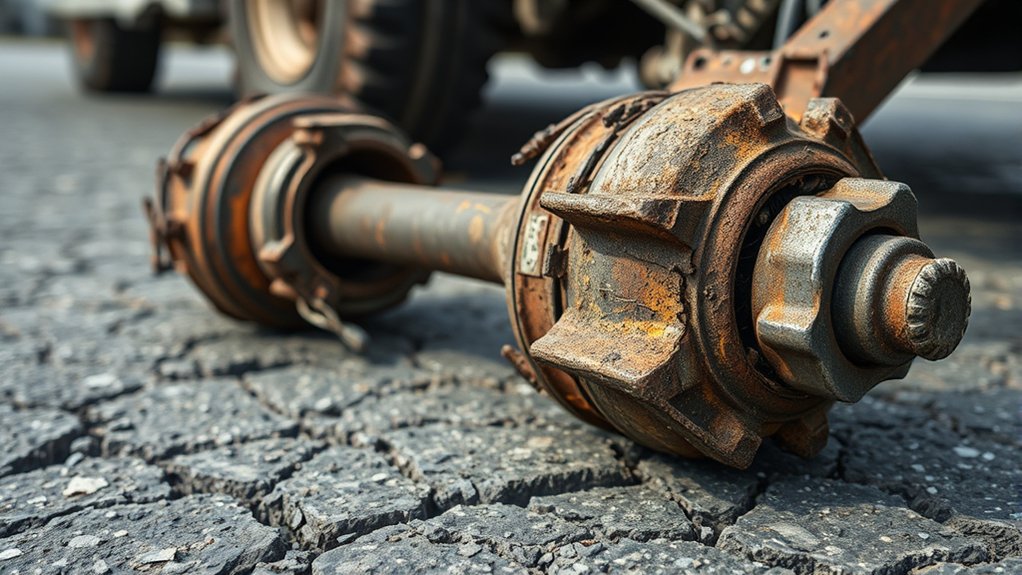
If you notice visible cracks, bends, or warping on your axle shaft, it’s likely broken.
Signs of a broken axle often include leaking grease around axle seals or torn CV joint boots, with grease splattered near tires or suspension parts. These visual cues are critical indicators that your axle may need immediate attention.
Your vehicle could vibrate sharply, make clunking or grinding noises, and pull to one side while driving.
Tires may wear unevenly, and steering could feel unstable. Keep an eye out because these signs reveal deeper axle issues you’ll want to understand fully.
Key Takeaways
- A broken axle often shows visible damage like cracks, bends, or twisting in the axle shaft during inspection.
- Grease splatters around CV joints or axle seals indicate possible axle damage or seal failure.
- Unusual noises such as clunking, clicking, or grinding during driving suggest axle or joint issues.
- Vehicle vibrations, pulling to one side, or unstable handling can signal a broken or damaged axle.
- Uneven tire wear and fluid leaks near the axle or wheel area are common signs of axle problems.
Understanding Broken Axles and Why They Matter
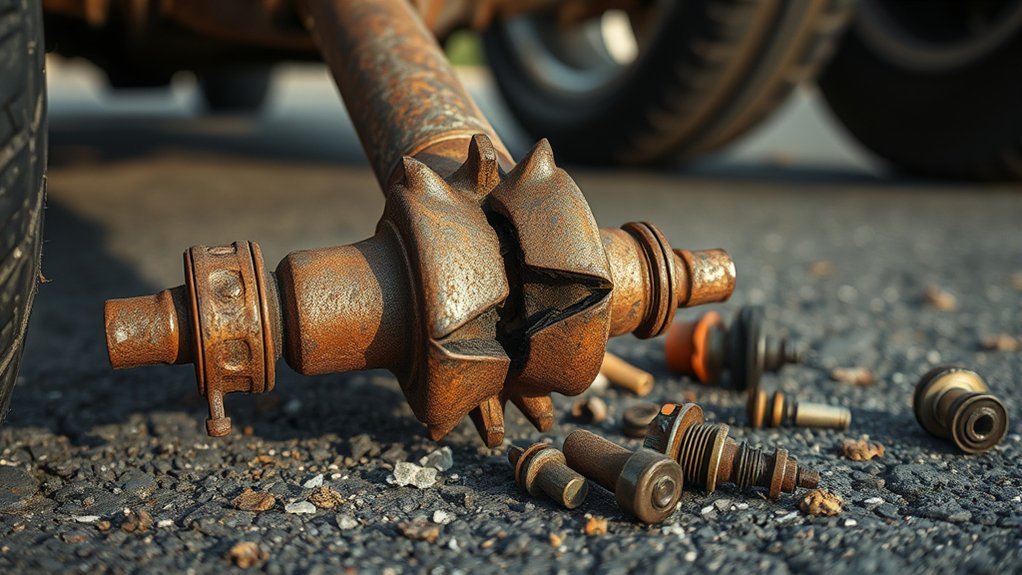
Although you might not notice them often, axles play a critical role in keeping your vehicle moving smoothly. They connect your wheels to the engine, transmitting power that enables movement. Without sturdy axles, your wheels wouldn’t turn properly, and your ride would be unsafe or impossible.
A broken axle disrupts this power flow, leading to serious problems. Understanding what an axle does helps you appreciate why maintaining it matters. Axles handle immense stress from driving, turning, and carrying weight.
You rely on them to keep your vehicle stable and controllable. When an axle weakens or breaks, it compromises your car’s mechanical integrity. Knowing this helps you stay alert to signs of damage, ensuring you address issues before they turn dangerous.
How a Broken Axle Affects Vehicle Performance
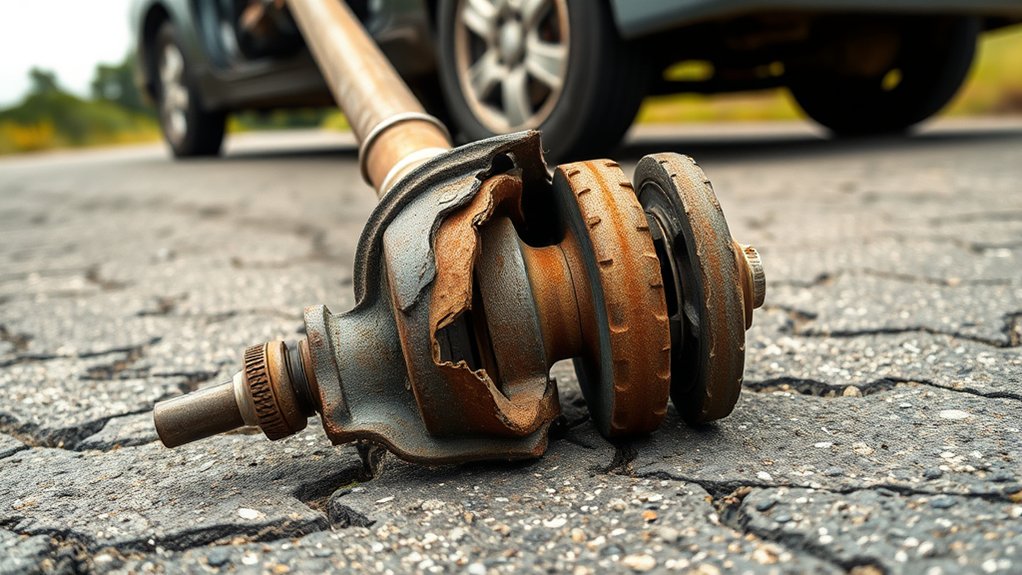
When an axle breaks, it immediately disrupts your vehicle’s ability to transfer power to the wheels, causing noticeable performance issues. You’ll likely feel a strong vibration or shudder as the broken axle struggles to spin properly. Steering may become difficult or unpredictable, making it unsafe to drive.
Your vehicle might pull to one side, and you could hear clunking or grinding noises when accelerating or turning. Acceleration will feel sluggish since power isn’t reaching the wheels efficiently. In severe cases, the wheels may stop turning altogether, leaving you stranded.
Driving with a broken axle stresses other components like the transmission and suspension, risking further damage. If you notice these symptoms, it’s vital to stop driving and get the axle inspected and repaired promptly.
Front vs. Rear Axle Damage Signs
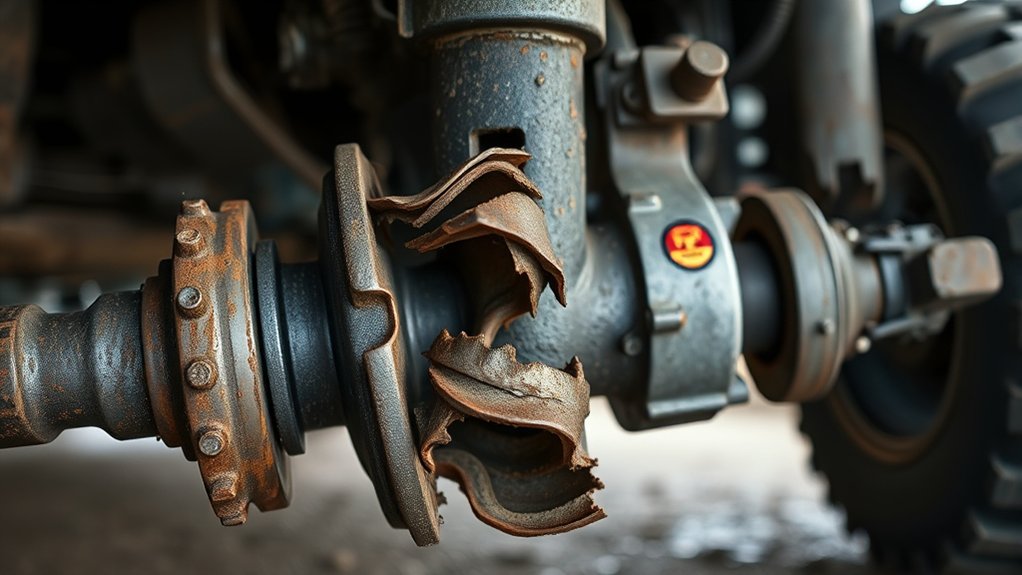
Recognizing the signs of axle damage depends on which axle is affected—front or rear. If your front axle is damaged, you’ll likely notice difficulty steering, uneven tire wear, or the vehicle pulling to one side. You might also feel vibrations or shuddering when you accelerate or turn.
On the other hand, rear axle issues often cause a noticeable clunking sound when you shift gears or accelerate, though you won’t feel steering problems since the rear axle doesn’t handle steering. Rear axle damage may also cause instability or wobbling at higher speeds.
In either case, ignoring these signs can lead to serious safety risks, so if you spot any of these symptoms, have your vehicle inspected promptly to prevent further damage.
Common Noises That Signal a Broken Axle
You might notice clicking sounds when turning, which often point to axle issues. Loud clunking during acceleration is another warning sign you shouldn’t ignore.
If you feel vibrations paired with strange noises, it’s time to check your axle immediately.
Clicking Sounds When Turning
If you hear a distinct clicking sound while turning your vehicle, it often signals a broken axle or a failing CV joint. This noise usually becomes more noticeable during sharp turns or when accelerating while turning. The clicking happens because the CV joint, which allows the axle to flex as you steer, is damaged or worn out.
When it fails, the joint can’t move smoothly, causing the clicking sound. Ignoring this noise risks further axle damage and potential loss of vehicle control. If you catch this early, you can prevent costly repairs and stay safe on the road.
Loud Clunking During Acceleration
When your vehicle accelerates and you hear a loud clunking noise, it often points to a broken axle. This noise usually occurs because the axle’s joints or shafts are damaged, causing parts to move improperly under torque. If you ignore this, it could lead to more serious damage or even a breakdown.
Pay close attention to these signs:
- Sudden clunks or bangs when you press the gas pedal.
- Noise intensity increases with acceleration.
- Difficulty maintaining smooth power delivery.
If you notice these symptoms, it’s crucial to get your axle inspected immediately. Driving with a broken axle can be dangerous and may cause further damage to your vehicle’s drivetrain. Don’t wait until the problem worsens.
Vibrations Accompanied By Noise
Along with loud clunking during acceleration, vibrations paired with unusual noises often signal a broken axle. When you feel a constant shaking in the steering wheel or the floorboard, especially during turns or at higher speeds, it’s a red flag. These vibrations usually come with a rhythmic thumping or clicking sound, which intensifies as the damage worsens.
You might notice the noise changes when you shift gears or accelerate, indicating the axle’s joints are compromised. Ignoring these signs can lead to further damage or even axle failure, putting you at risk on the road. If you catch these vibrations and noises early, get your vehicle inspected immediately to avoid costly repairs and guarantee your safety.
What Your Car’s Vibrations Say About a Broken Axle
You’ll notice different types of vibrations when your axle is damaged, ranging from slight shakes to intense wobbling. Paying attention to how strong and where the vibration happens helps you pinpoint the problem.
Understanding these clues lets you diagnose whether the axle is the real culprit.
Types Of Vibrations
Vibrations in your car can reveal a lot about the condition of its axle. When your axle starts to fail, you’ll notice specific vibration patterns that signal trouble. Recognizing these can help you address issues early and avoid costly repairs.
Here are the main types of vibrations you might feel:
- Low-frequency vibrations: Often felt through the steering wheel, these can indicate axle imbalance or a bent axle shaft.
- High-frequency vibrations: Usually felt in the cabin or floorboard, these might point to worn CV joints or damaged axle bearings.
- Intermittent vibrations: These come and go, often signaling a cracked axle shaft or loose components that worsen with speed or turning.
Paying attention to these types can help you diagnose axle problems quickly.
Vibration Intensity Levels
Recognizing the type of vibration is just the start; understanding how intense those vibrations are can tell you a lot about the severity of a broken axle. Low-intensity vibrations might hint at early wear or minor damage, while strong, relentless shaking usually means the axle is seriously compromised.
Paying attention to how the vibration changes with speed can help you decide if immediate repairs are needed.
| Vibration Intensity | Possible Cause |
|---|---|
| Mild | Slight axle imbalance |
| Moderate | Developing axle crack |
| Strong | Significant axle damage |
| Severe | Broken or shattered axle |
If vibrations escalate quickly, don’t delay getting your vehicle inspected to avoid further damage.
Diagnosing Vibration Sources
When your car starts shaking, understanding where the vibrations come from can help pinpoint a broken axle before it causes major damage. You’ll want to pay attention to when and where the vibrations occur.
A broken axle often causes vibrations that intensify with acceleration or when turning. To diagnose the source, consider these signs:
- Steering wheel shake: Vibrations felt mainly through the steering wheel usually point to a front axle issue.
- Uneven vibration: If the shake changes when you turn or accelerate, it often signals a damaged axle shaft or CV joint.
- Noise along with vibration: Clicking or clunking sounds combined with shaking typically indicate a failing axle.
Steering Problems Caused by a Broken Axle
How does a broken axle affect your vehicle’s steering? When an axle is damaged, it directly impacts your control over the vehicle. You might notice the steering wheel feels loose or unresponsive, making it harder to maintain a straight path.
Sharp turns can become challenging, and you may experience sudden jerks or pulling to one side. This happens because the axle connects the wheels to the drivetrain, and when it’s compromised, the wheels don’t rotate evenly. As a result, steering becomes unpredictable and unsafe.
Ignoring these signs can lead to more severe damage or accidents. If you feel unusual steering behavior, it’s essential to inspect your axles promptly or consult a mechanic to guarantee your safety on the road.
Uneven Tire Wear: What It Reveals About Your Axle
Uneven tire wear often signals that your axle might be damaged or misaligned. When your axle isn’t functioning properly, it affects how your tires make contact with the road, causing irregular wear patterns. If you notice one tire wearing out faster or unevenly compared to others, don’t ignore it.
This issue can reduce your vehicle’s stability and increase the risk of further damage.
Here’s what uneven tire wear can reveal about your axle:
- Misalignment: A bent or broken axle can throw off alignment, leading to uneven tread wear.
- Vibration: Damaged axles cause vibrations that wear down tires unevenly.
- Inconsistent Handling: Uneven wear affects grip, hinting at axle problems.
Regularly check your tires to catch these signs early and avoid costly repairs.
Visual Signs of a Broken Axle
You’ll want to keep an eye out for visible cracks or splits on the axle itself. If you notice a bent or warped axle, that’s a clear warning sign.
Also, leaking grease or oil around the axle can indicate serious damage.
Visible Cracks And Splits
Although a broken axle often causes noticeable performance issues, the most immediate visual clue comes from visible cracks and splits along the axle shaft. When you inspect your vehicle, look closely for any fractures that might appear as thin lines or jagged breaks on the metal surface. These cracks can start small but grow quickly, compromising the axle’s integrity and safety.
Keep an eye out for:
- Fine hairline cracks running along the shaft
- Splits near welds or joints where stress concentrates
- Areas where the metal looks chipped or flaked off
Finding any of these signs means you should avoid driving and get the axle checked immediately to prevent further damage or accidents.
Bent Or Warped Axle
How can you tell if an axle is bent or warped just by looking? First, check for any obvious bends along the axle shaft—straight axles should appear uniform without kinks or curves. You might notice the axle doesn’t sit flush where it connects to the wheel hub or differential, indicating warping.
Another sign is uneven wear on the axle surface, which can look like grooves or flattened spots. If the axle looks twisted or misaligned when the vehicle is on a lift, that’s a clear visual cue. Keep in mind, subtle bends might be harder to spot without specialized tools.
However, any visible distortion usually means the axle has suffered damage and needs replacing to avoid further mechanical issues or unsafe driving conditions.
Leaking Grease Or Oil
If you spot a bent or warped axle, don’t stop there—keep an eye out for leaking grease or oil around the axle seals and joints. Leaks often mean the axle’s protective seals are damaged, letting lubricant escape and dirt in. This can lead to further wear or even axle failure if ignored.
When inspecting your vehicle, look closely for:
- Wet or shiny spots near wheel hubs or under the car
- Accumulated grease or oily residue on suspension parts
- A noticeable drop in lubricant levels during maintenance checks
Catching these signs early lets you address the issue before it turns into a costly repair. Don’t overlook leaking grease or oil—it’s a clear warning that your axle needs attention.
Inspecting CV Joints and Axle Boots for Damage
When inspecting CV joints and axle boots, you’ll want to carefully check for cracks, tears, or leaks in the rubber boots that protect the joint. These boots keep dirt, water, and debris out while holding the grease that lubricates the joint. If you spot any damage like splits or holes, it’s a sign the joint could be exposed and vulnerable.
Also, look for grease splattered around the area, which often means the boot has failed. Pay close attention to the joints themselves for any excessive play or clicking sounds when you move the axle by hand. Catching these issues early helps prevent further damage and costly repairs, keeping your vehicle running smoothly and safely.
Fluid Leaks From a Broken Axle
Although a broken axle primarily affects your vehicle’s handling, it can also cause fluid leaks that signal serious damage. When your axle is damaged, seals and surrounding components may break, allowing fluids like gear oil or grease to leak out. You might notice puddles under your car or fluid splatters near the axle area.
Here are key signs to watch for:
- Dark, thick fluid leaking near the wheel or axle housing
- A strong, oily smell around the damaged area
- Grease splattered on suspension parts or tires
If you spot these signs, don’t ignore them. Fluid leaks mean your axle’s protective barriers are compromised, which can lead to further mechanical issues. Getting it inspected promptly will save you from costlier repairs later.
Dangers of Driving With a Broken Axle
Driving with a broken axle puts you and others on the road at serious risk. When an axle fails, your vehicle’s stability and control deteriorate rapidly. You might experience sudden vibrations, difficulty steering, or even a complete loss of power to the wheels.
This can lead to dangerous situations like swerving, stalling in traffic, or losing control at high speeds. Additionally, a broken axle can cause further damage to your transmission, differential, or suspension, escalating repair costs and increasing the likelihood of an accident.
You shouldn’t ignore these signs or try to push through a drive. Staying on the road with a compromised axle endangers your safety and that of everyone around you, so take any symptoms seriously to avoid catastrophic consequences.
When to See a Mechanic for a Broken Axle
Ignoring the warning signs of a broken axle can quickly turn into a dangerous situation that demands immediate attention. If you notice unusual noises, difficulty steering, or vibrations while driving, don’t wait to get your vehicle checked. Acting quickly can prevent further damage and keep you safe on the road.
You should see a mechanic right away if you experience:
- Grinding or clunking sounds when turning or accelerating
- Noticeable shaking or wobbling of the vehicle
- Difficulty controlling your car, especially during turns
Promptly addressing these issues with a professional mechanic ensures the broken axle is properly diagnosed and repaired, saving you from costly repairs and potential accidents. Don’t risk it—get your vehicle inspected as soon as you suspect a problem.
Frequently Asked Questions
How Much Does It Cost to Replace a Broken Axle?
You’ll typically pay between $300 and $1,000 to replace a broken axle, depending on your car’s make, model, and labor costs.
It’s best to get a detailed quote from a trusted mechanic before proceeding.
Can a Broken Axle Cause Transmission Damage?
Like a domino falling, a broken axle can cause transmission damage by misaligning gears and stressing components. If you don’t fix it quickly, you’ll risk costly repairs that affect your vehicle’s overall performance and safety.
Are Broken Axles Covered by Car Insurance?
You’re usually covered for a broken axle if you have all-inclusive or collision insurance. But, if it’s wear and tear, most policies won’t cover it.
Always check your specific plan’s details to be sure.
How Long Does It Take to Repair a Broken Axle?
You might think fixing a broken axle takes days, but typically, it only takes a few hours.
Once you get to the shop, mechanics usually replace or repair it within 2 to 4 hours, depending on damage severity.
Can I Drive Short Distances With a Broken Axle?
You shouldn’t drive even short distances with a broken axle. It’s unsafe and can cause more damage to your vehicle.
Instead, get it towed to a mechanic to avoid risking your safety and costly repairs.
Conclusion
So, if you’re hoping a broken axle will just fix itself, think again. Ignoring those strange noises, vibrations, or leaks won’t make your car magically heal. In fact, driving with a damaged axle is like trusting a tightrope made of spaghetti—exciting, but a disaster waiting to happen.
Don’t wait for the inevitable breakdown; get it checked out before your “adventure” turns into a costly nightmare. Your car—and your wallet—will thank you. Remember, recognizing what a broken axle looks like early on can save you from expensive repairs and ensure your vehicle stays safe on the road.

