

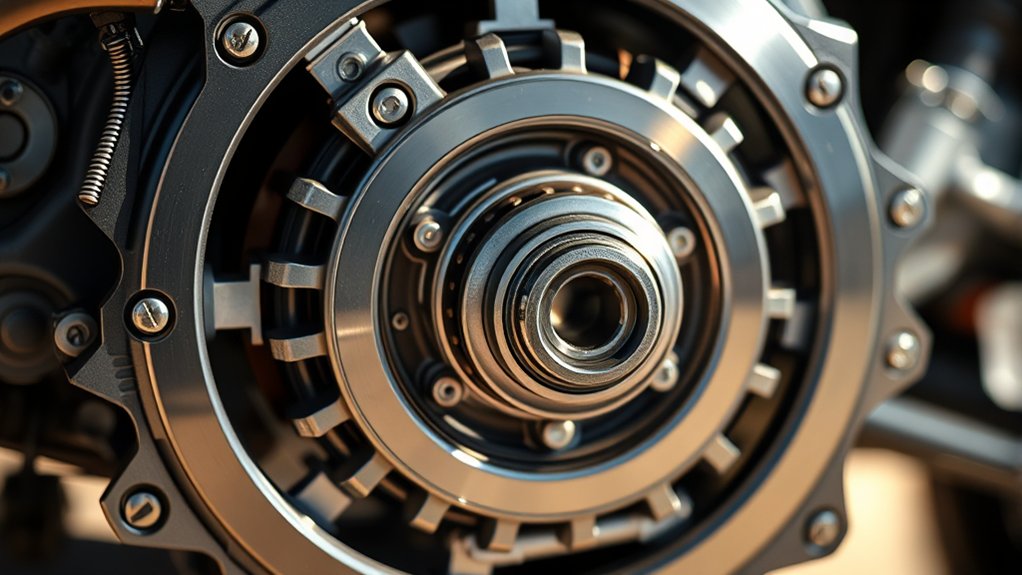
You rely on the Can-Am X7 primary clutch to transfer engine power smoothly to your vehicle’s transmission, ensuring seamless acceleration without jerks or slippage. This crucial component uses centrifugal force to function: as your engine revs increase, the clutch weights push outward, causing the clutch sheaves to grip tighter and deliver power automatically.
Springs and weights work together to control how quickly and smoothly the clutch engages, balancing performance and responsiveness.
Understanding how the Can-Am X7 primary clutch operates can help you optimize tuning and maintenance for better performance. Proper care ensures the clutch remains responsive and prevents premature wear.
If you want to know the signs of clutch issues and how adjustments affect your ride, there’s more to explore.
Key Takeaways
- The Can-Am X7 primary clutch transfers engine power to the transmission for smooth vehicle acceleration.
- Centrifugal force pushes weights outward as engine RPM increases, causing clutch engagement automatically.
- Clutch sheaves adjust belt tension to ensure seamless power delivery based on engine speed.
- Springs and weights control engagement timing, affecting acceleration response and ride smoothness.
- Proper maintenance prevents slipping, overheating, and noise, ensuring reliable clutch performance.
What Is the Can-Am X7 Primary Clutch and Why It Matters
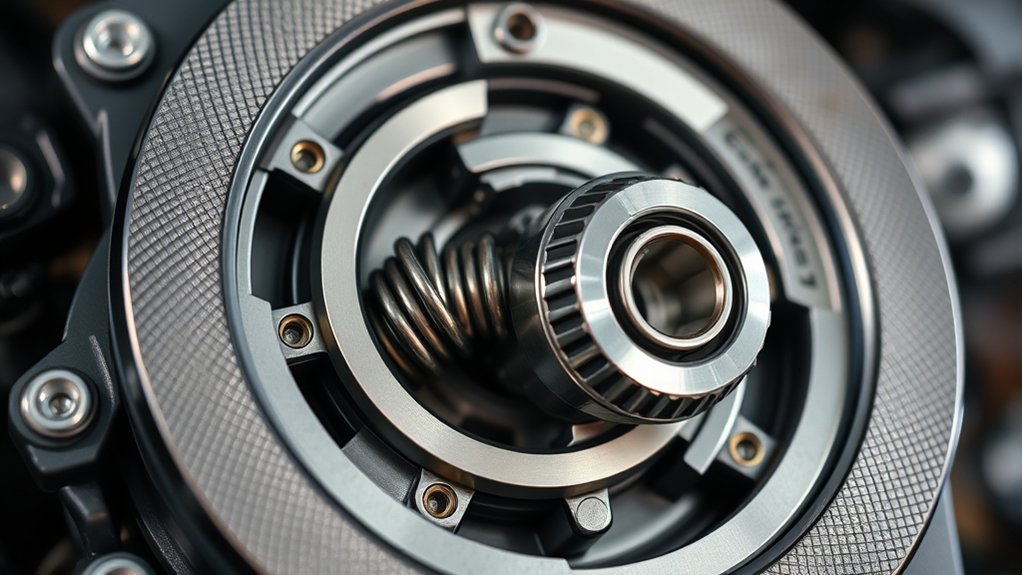
The Can-Am X7 primary clutch is a key component that transfers power from the engine to the transmission, allowing your vehicle to move efficiently. It’s designed to engage and disengage smoothly, ensuring you get seamless acceleration and controlled power delivery. Without a properly functioning primary clutch, you’d experience jerky starts or even lose the ability to move your vehicle.
This clutch also helps protect your engine by managing how power is applied, preventing unnecessary strain. When you maintain or upgrade the primary clutch, you improve your Can-Am X7’s overall performance and reliability. Understanding what this clutch does helps you appreciate its role in your vehicle’s operation.
Making it clear why keeping it in good condition is essential for smooth rides and long-term durability.
How the Can-Am X7 Primary Clutch Transfers Power From the Engine
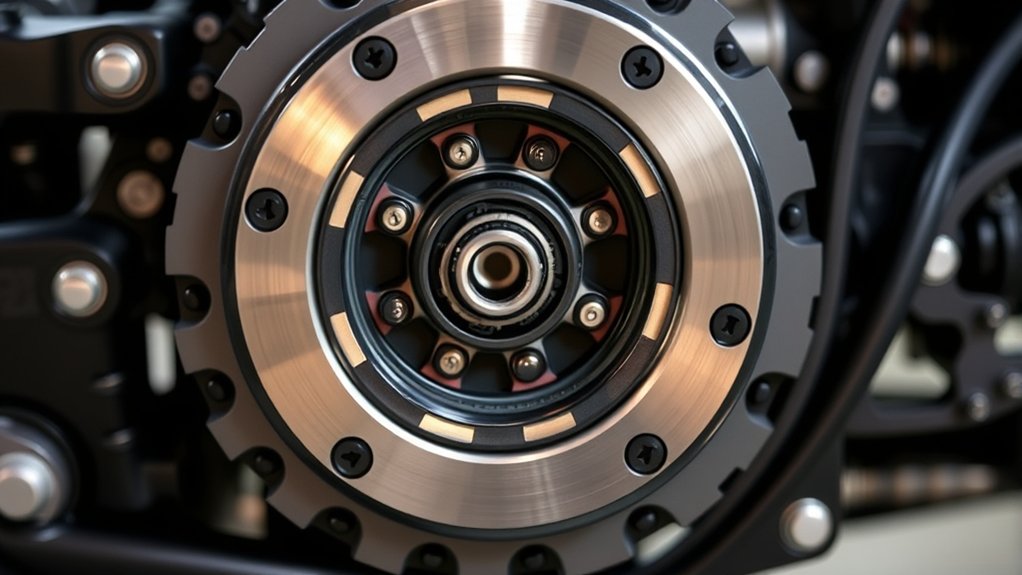
How exactly does the Can-Am X7 primary clutch transfer power from the engine to get your vehicle moving? When the engine runs, it spins the clutch’s drive components. As you accelerate, centrifugal force pushes the clutch’s weights outward, causing the clutch to engage and grip the driven sheave tightly.
This engagement transfers rotational force smoothly from the engine to the transmission system. The clutch modulates this transfer by adjusting the contact pressure based on engine speed, ensuring maximum power delivery without slippage. This process lets you move efficiently, as the clutch adapts to changing speeds and loads automatically.
Essentially, the primary clutch acts as a dynamic link, converting engine power into controlled motion that propels your Can-Am X7 forward.
Main Parts of the Can-Am X7 Primary Clutch
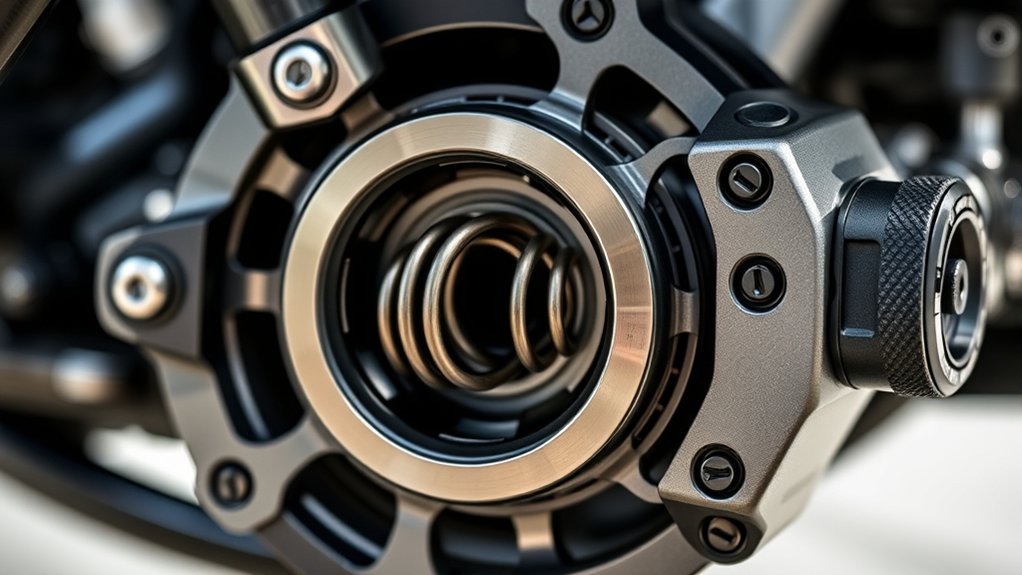
You’ll want to understand the main parts that make up the Can-Am X7 primary clutch to see how it functions. Each component plays a specific role in transferring power efficiently.
Let’s take a closer look at these key elements and how they work together.
Clutch Components Overview
What parts come together to make the Can-Am X7 primary clutch function smoothly? You’ll find several key components working in harmony. First, the clutch housing holds everything in place and connects to the engine’s crankshaft.
Inside, the drive face and driven face interact, transferring power through friction. Springs play an essential role by controlling the engagement force, ensuring the clutch doesn’t slip or grab too harshly. You’ll also notice weights or flyweights, which respond to engine speed by moving outward to engage the clutch.
The sheaves, or pulley halves, adjust their position to vary belt tension, allowing smooth power delivery. Each component is designed precisely to handle the stresses of operation, making sure your Can-Am X7 runs reliably and efficiently.
Key Functional Elements
Although the Can-Am X7 primary clutch contains several parts, a few key functional elements play the biggest roles in transferring power efficiently. First, the drive sheave connects directly to the engine crankshaft, initiating power transfer. Next, the movable sheave works in tandem with the drive sheave, adjusting its position to change the belt’s grip.
The clutch springs control how quickly the movable sheave shifts, influencing engagement speed and responsiveness. The drive belt runs between these sheaves, transmitting rotational force to the secondary clutch. Finally, the clutch housing encases these components, protecting them from debris while allowing heat dissipation.
Understanding these elements helps you appreciate how the clutch modulates power smoothly, ensuring your Can-Am X7 delivers ideal performance under varying conditions.
How Centrifugal Force Controls Can-Am X7 Clutch Engagement
When the Can-Am X7’s engine speed increases, centrifugal force pushes the clutch weights outward. This outward movement causes the clutch to engage smoothly, transferring power to the drivetrain. You’ll notice this process happens automatically based on engine RPM without any manual input.
Here’s how centrifugal force controls clutch engagement:
Here’s a clear breakdown of how centrifugal force manages clutch engagement seamlessly.
- Engine speed rise generates centrifugal force on clutch weights.
- Clutch weights move outward due to this force.
- Outward movement causes clutch sheaves to move closer.
- Increased contact engages the clutch, transmitting power.
How Can-Am X7 Clutch Weights and Springs Affect Performance
Because the clutch weights and springs directly influence how quickly and smoothly your Can-Am X7 engages, understanding their role is key to optimizing performance. The weights control the centrifugal force needed for engagement: heavier weights require higher RPMs to move outward and engage the clutch, delaying power delivery but allowing smoother acceleration. Lighter weights engage sooner, giving you quicker response but potentially less smoothness.
The springs provide resistance against the weights’ outward movement. Stiffer springs demand more RPM to engage, improving control at high speeds but reducing low-speed responsiveness. Softer springs let the clutch engage earlier, enhancing low-speed handling but risking slippage at higher loads.
How the Can-Am X7 Clutch Adapts to Speed and Load
You’ll notice the Can-Am X7 clutch adjusts automatically to changes in speed, ensuring smooth power delivery. It also senses the load and modifies torque to match, keeping your ride efficient and responsive.
Understanding these features helps you appreciate how the clutch adapts in real time.
Speed-Responsive Clutch Mechanism
Although the Can-Am X7’s primary clutch may seem simple, it cleverly adjusts to changing speeds and loads to deliver smooth power. You’ll notice the clutch uses a speed-responsive mechanism that reacts instantly as your engine revs up or slows down. Here’s how it works:
- As engine speed increases, centrifugal force pushes the clutch weights outward.
- This outward movement forces the clutch sheaves to engage more tightly.
- The increased engagement transfers more power to the drivetrain.
- When speed drops, the clutch weights retract, reducing engagement and easing power transfer.
This responsive system ensures you get seamless acceleration without manual adjustments, adapting naturally to your riding conditions for ideal performance.
Load-Dependent Torque Adjustment
The speed-responsive mechanism handles changes in engine RPM smoothly, but there’s more at play when it comes to managing the torque the clutch delivers. The Can-Am X7’s primary clutch adjusts torque based on load by using centrifugal weights and spring tension that react to both speed and resistance.
When you accelerate uphill or carry a heavier load, the clutch senses the increased demand and tightens its grip, transferring more torque to the drivetrain. Conversely, during lighter loads or steady cruising, it eases pressure to reduce wear and improve efficiency.
This dynamic adjustment means you get seamless power delivery tailored to your riding conditions, ensuring ideal performance without manual intervention. You experience smoother acceleration and better control, no matter the terrain or load.
Symptoms of a Worn Can-Am X7 Primary Clutch
When your Can-Am X7’s primary clutch starts showing signs of wear, you might notice changes in how your ATV accelerates or responds. These symptoms can affect your ride’s performance and indicate it’s time for inspection.
Noticing changes in your Can-Am X7’s acceleration often signals it’s time to inspect the primary clutch.
- Slipping Clutch: The engine revs increase without a corresponding rise in speed.
- Delayed Engagement: The ATV feels slow to move when you twist the throttle.
- Unusual Noises: You hear grinding or rattling sounds from the clutch area.
- Overheating: The clutch area becomes excessively hot after short rides.
If you spot any of these signs, it’s essential to address them promptly to maintain your Can-Am X7’s smooth operation and avoid further damage.
Common Can-Am X7 Clutch Problems and Fixes
Noticing symptoms like slipping or unusual noises means you’ll likely face some common clutch problems with your Can-Am X7. One frequent issue is worn clutch shoes, which causes slipping and poor engagement. Replacing them restores proper function.
Another problem is a dirty or glazed clutch surface; cleaning it with a suitable solvent can improve grip. If you hear rattling or feel inconsistent engagement, check the clutch springs—they may be weak or broken and need swapping out.
Sometimes, debris or worn bearings cause noise and uneven operation; inspecting and replacing these parts helps. Regularly check and maintain your clutch components to avoid costly repairs and guarantee smooth performance on every ride.
How to Tune Your Can-Am X7 Clutch for a Smoother Ride
If you want to get the most out of your Can-Am X7, tuning the clutch is essential for a smoother, more responsive ride. Proper tuning improves acceleration and reduces wear on your drivetrain. Here’s how to get started:
Tuning your Can-Am X7 clutch enhances ride smoothness, boosts acceleration, and extends drivetrain life.
- Check and Replace Springs – Inspect clutch springs for wear and replace them with stiffer or softer options depending on your riding style.
- Adjust the Roller Weights – Heavier weights delay engagement; lighter weights allow quicker clutch response.
- Clean and Lubricate – Remove dirt and apply the right lubricant to ensure smooth movement without causing slippage.
- Test and Fine-Tune – After adjustments, test ride and tweak settings incrementally until you achieve optimal performance.
Frequently Asked Questions
What Tools Are Needed to Disassemble the Can-Am X7 Primary Clutch?
You’ll need a clutch holding tool, torque wrench, impact wrench, socket set, and screwdrivers to disassemble the Can-Am X7 primary clutch.
Don’t forget safety gloves and a clean workspace to keep parts organized and avoid damage.
Can the Can-Am X7 Primary Clutch Be Upgraded With Aftermarket Parts?
You can upgrade your Can-Am X7 primary clutch with aftermarket parts, like planting stronger seeds to grow a mightier engine. These parts boost performance and reliability, letting you conquer tougher trails with confidence and power.
How Often Should the Can-Am X7 Primary Clutch Be Lubricated?
You should lubricate the Can-Am X7 primary clutch every 10 to 15 hours of riding to keep it running smoothly.
Don’t forget to check the manufacturer’s manual for specific lubrication recommendations and use the proper lubricant.
Are There Any Safety Precautions When Working on the Can-Am X7 Clutch?
Yes, you should always disconnect the battery, wear gloves and safety glasses, and guarantee the engine is cool before working on the clutch.
Avoid loose clothing and keep tools organized to prevent accidents while servicing the Can-Am X7 clutch.
What Is the Average Lifespan of a Can-Am X7 Primary Clutch Under Normal Use?
You can expect the Can-Am X7 primary clutch to last around 20,000 to 30,000 miles under normal use. Regular maintenance and proper riding habits will help you maximize its lifespan and performance.
Keeping an eye on wear and tear during routine checks can prevent unexpected failures. Replacing the clutch components at the right time ensures smooth operation.
Proper cleaning and lubrication also contribute significantly to extending the clutch’s life. Following the manufacturer’s guidelines is essential for optimal results.
Conclusion
Understanding how your Can-Am X7 primary clutch works is key to keeping your ride smooth and responsive. While many think centrifugal force alone controls engagement, the interplay between clutch weights and springs actually fine-tunes performance under varying speeds and loads.
If you notice slipping or jerking, it’s often a sign your clutch needs attention. By tuning your clutch properly, you’ll get better power transfer and a more enjoyable ride every time you hit the trail. Proper maintenance and adjustment of the Can-Am X7 primary clutch are essential for optimal performance and reliability.

