

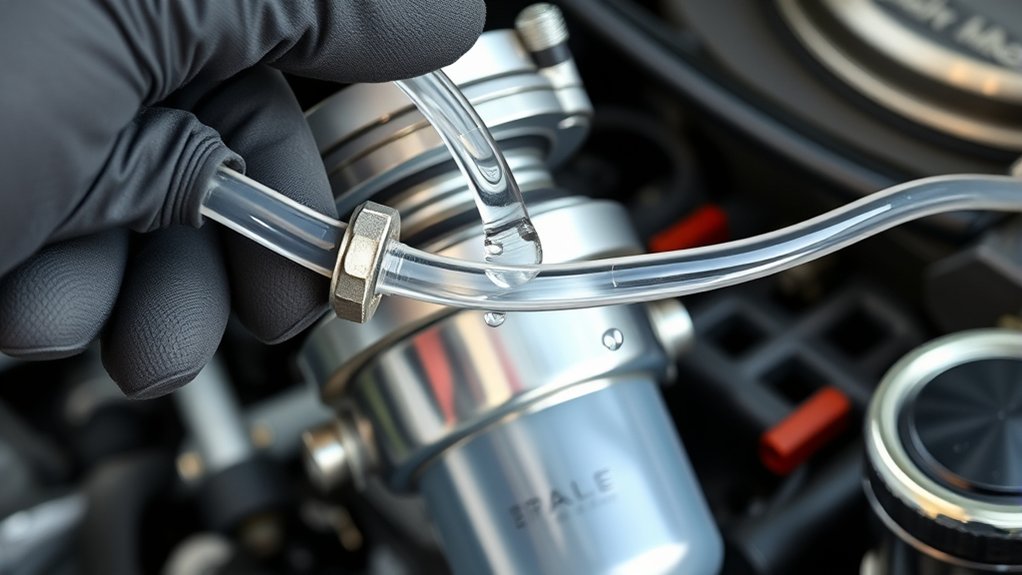
To bleed your clutch master cylinder in 7 easy steps, start by ensuring your vehicle is parked securely on a flat surface. Gather essential tools like a wrench and fresh brake fluid before beginning the process. Properly bleeding the clutch master cylinder is crucial for maintaining smooth clutch operation and preventing air from compromising performance.
Locate the bleeder valve and clean the area around it thoroughly to avoid contamination. Next, remove old fluid from the reservoir and refill it with fresh brake fluid to ensure optimal system function. Pump the clutch pedal several times to help push out trapped air from the hydraulic system.
While pressing the clutch pedal, loosen the bleeder valve to release air bubbles and fluid. Close the valve as soon as the bubbles stop appearing to prevent air from re-entering the system. Repeat this procedure until the clutch pedal feels firm and responsive, indicating a successful bleed.
Keep following for detailed guidance to master the process and maintain your vehicle’s clutch system in top condition.
Key Takeaways
- Park on a level surface, engage the parking brake, and locate the clutch master cylinder reservoir.
- Remove old fluid from the reservoir and refill with fresh, manufacturer-recommended brake fluid.
- Pump the clutch pedal several times to build pressure and loosen the bleeder valve.
- Attach clear tubing to the bleeder valve, open it, and have an assistant press the clutch pedal to expel air and fluid.
- Repeat bleeding until no air bubbles appear, then tighten the valve, top off fluid, and confirm firm, consistent pedal feel.
Prepare Your Vehicle for Clutch Bleeding
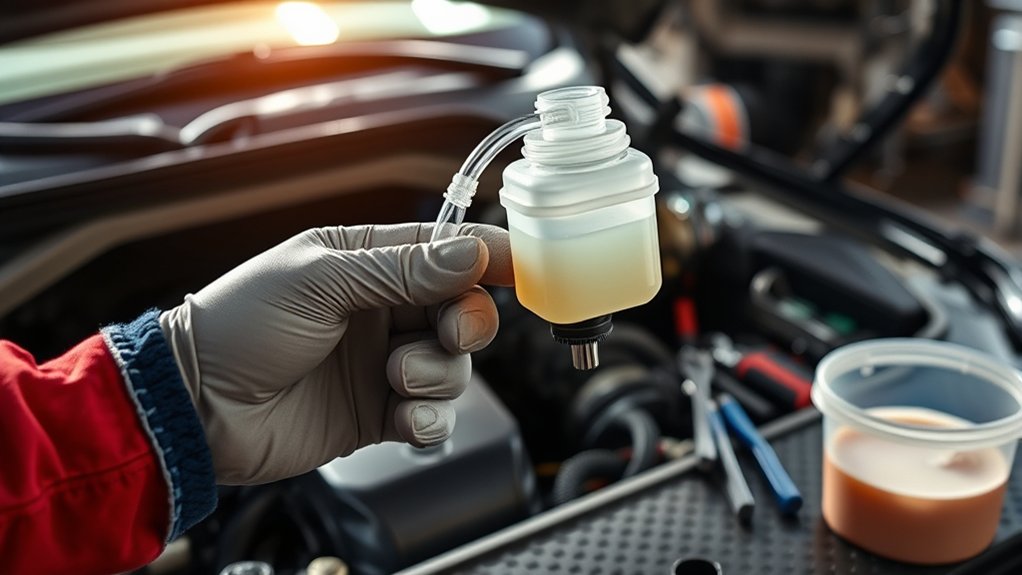
Before you begin bleeding the clutch master cylinder, make sure your vehicle is parked on a level surface and the engine is turned off. This ensures safety and prevents fluid from flowing unevenly during the process. Next, engage the parking brake firmly to keep the car stationary.
Open the hood and locate the clutch master cylinder reservoir, typically near the brake master cylinder. Clean the reservoir cap and surrounding area to prevent dirt from contaminating the hydraulic fluid. Inspect the fluid level; if it’s low, top it up with the manufacturer-recommended brake fluid.
Keep the reservoir cap loosely in place to avoid spills but allow air to escape. With your vehicle properly prepped, you’re ready to proceed with bleeding the clutch master cylinder efficiently.
Gather Tools and Materials Needed for Clutch Bleeding
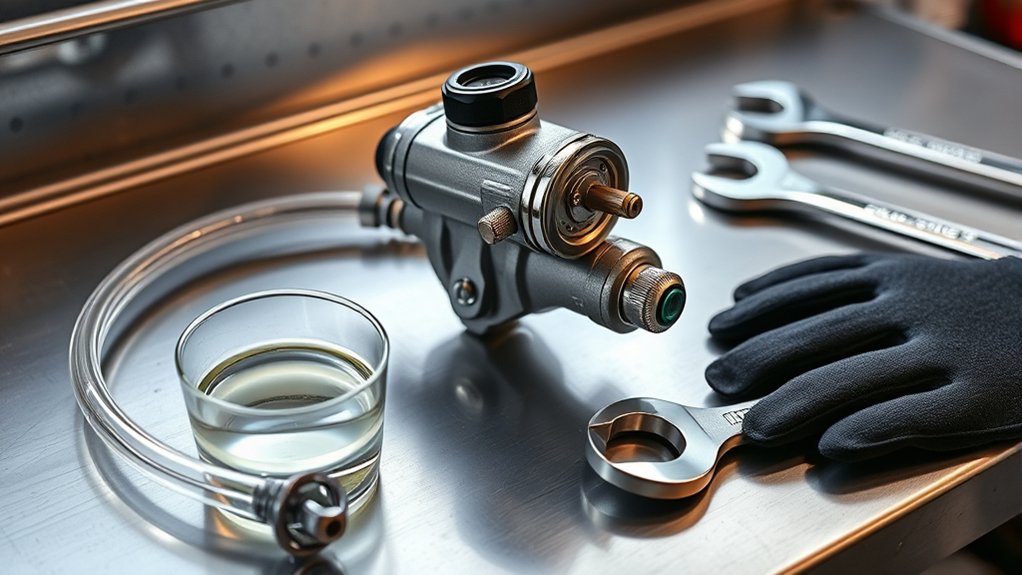
Before you start, make sure you have all the essential tools like a wrench, clear tubing, and a catch container.
Don’t forget the right brake fluid for your clutch system.
Also, grab safety gear like gloves and goggles to protect yourself during the process.
Essential Tools Checklist
Although clutch bleeding might seem straightforward, having the right tools on hand makes the process much smoother and more efficient. First, grab a clear plastic tube that fits snugly over the bleeder valve to direct fluid into a catch container. You’ll also need a wrench, usually between 8mm and 11mm, to open and close the bleeder valve.
Keep a sturdy catch container nearby to collect old fluid and avoid spills. Don’t forget a brake fluid-resistant funnel if you plan to top off the reservoir during the process. Have clean rags or paper towels ready for quick cleanups.
Finally, safety goggles and gloves protect you from harmful fluid splashes. Gathering these essentials before you start saves time and prevents frustration during clutch bleeding.
Required Fluids Overview
With your tools ready, the next step is to gather the right fluids to get the job done properly. Using the correct fluid guarantees your clutch master cylinder functions smoothly and avoids damage.
Typically, you’ll need:
- DOT 3 or DOT 4 brake fluid: Most vehicles specify one of these; check your owner’s manual.
- Clean container: To catch old fluid during bleeding.
- Distilled water: For cleaning tools or mixing if recommended (rarely needed).
- Rags or paper towels: To wipe spills and keep the area clean.
Make sure the brake fluid is fresh and unopened, as it absorbs moisture quickly, which can compromise performance. Avoid mixing different types of brake fluids, as that can cause corrosion or failure.
Having these fluids on hand keeps the process efficient and safe.
Safety Equipment Essentials
Since working with brake fluid can be messy and potentially harmful, you’ll want to equip yourself with the right safety gear to protect your skin and eyes during clutch bleeding. Start by wearing chemical-resistant gloves to prevent fluid contact with your skin, and safety goggles to shield your eyes from splashes. It’s also wise to have a clean rag or paper towels handy for quick cleanups.
In addition to protective gear, gather essential tools: a wrench to open the bleeder valve, a clear hose to direct fluid into a container, and a suitable container to catch old fluid. Having fresh brake fluid nearby is vital for refilling. Preparing these items ensures a smooth, safe clutch bleeding process and protects you from potential hazards.
Locate and Access the Clutch Master Cylinder Bleeder Valve
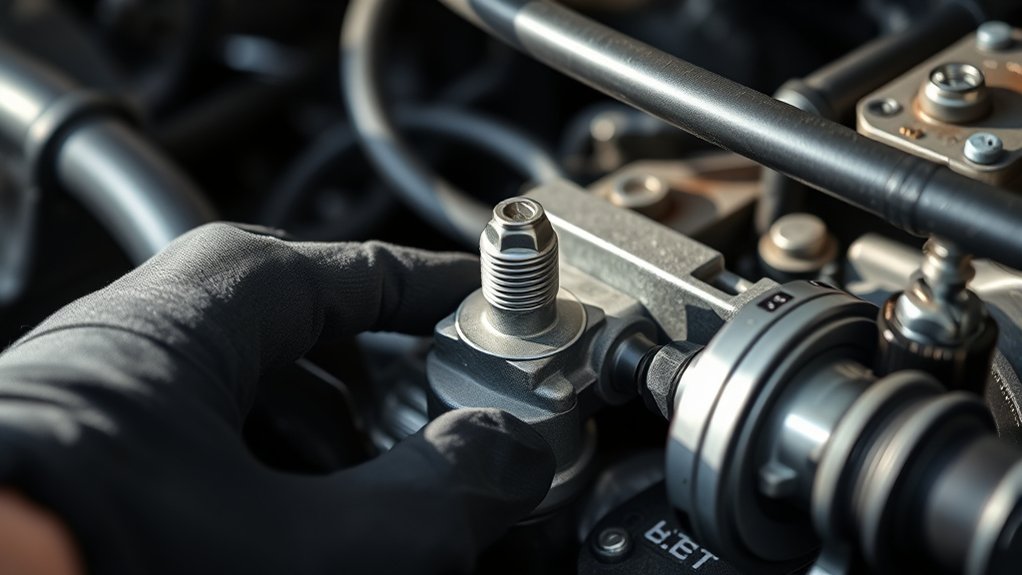
Before you can bleed the clutch master cylinder, you’ll need to locate its bleeder valve, which is usually found near the cylinder itself. This valve allows trapped air to escape, ensuring proper clutch function.
To find and access it, follow these steps:
- Open the hood and locate the clutch master cylinder on the driver’s side firewall.
- Look for a small nipple or valve, often capped, on the cylinder body.
- Clear any dirt or debris around the valve to prevent contamination during bleeding.
- Use a wrench or appropriate tool to loosen the bleeder valve when ready.
Make sure you have good lighting and enough room to work. Knowing exactly where the bleeder valve is will save time and make the bleeding process smoother.
Remove Old Clutch Fluid From the Reservoir
First, find the clutch fluid reservoir, usually located near the brake master cylinder. Then, use a turkey baster or similar tool to carefully remove the old fluid without spilling.
Make sure to dispose of the old fluid properly to keep things safe and clean.
Locating The Reservoir
Where exactly is the clutch master cylinder reservoir located? Usually, you’ll find it mounted on or near the firewall under the hood, close to the brake master cylinder. To spot it quickly, keep these tips in mind:
- Look for a small, translucent plastic container with a cap labeled “clutch” or “brake.”
- It’s often positioned on the driver’s side, near the brake fluid reservoir.
- Check near the firewall, as this area houses most master cylinders.
If your vehicle has a combined reservoir, the clutch fluid shares the same container as the brake fluid but has a separate level indicator.
Knowing where the reservoir sits helps you remove old fluid efficiently and prepare for bleeding the system without confusion.
Safely Draining Old Fluid
Once you’ve located the clutch master cylinder reservoir, the next step is to remove the old fluid safely. First, wear gloves and eye protection to avoid contact with brake fluid. Use a clean turkey baster or syringe to suck out the old fluid carefully.
Dispose of the fluid properly—it’s toxic and harmful to the environment. Avoid spilling fluid on painted surfaces as it can cause damage. After draining, wipe the reservoir clean with a lint-free cloth before adding fresh fluid.
| Step | Tip |
|---|---|
| Wear Safety Gear | Gloves & eye protection |
| Use Proper Tools | Turkey baster or syringe |
| Drain Carefully | Avoid spills |
| Dispose Properly | Follow local hazardous waste rules |
| Clean Reservoir | Use lint-free cloth |
Pump the Clutch Pedal to Remove Air
After you’ve filled the master cylinder with fresh fluid, you’ll need to pump the clutch pedal several times to push trapped air out of the system. This step is essential because air bubbles can cause a spongy clutch feel and reduce hydraulic pressure.
Here’s how you do it effectively: press the clutch pedal fully down and release it slowly. Repeat this motion 10 to 15 times to build pressure. Watch for resistance changes in the pedal; it should feel firmer.
Keep the fluid reservoir topped off to prevent new air from entering.
Open and Close the Bleeder Valve to Expel Air Bubbles
To effectively remove air bubbles from the clutch system, you’ll need to open the bleeder valve while someone gently presses the clutch pedal. Begin by loosening the bleeder valve just enough to let fluid and trapped air escape. You should see bubbles in the fluid flowing out.
Once the flow slows and becomes bubble-free, tighten the bleeder valve securely to prevent air from re-entering. Make sure the person pressing the pedal holds it down during this process to maintain pressure. Repeat this open-close cycle as necessary until no more air bubbles come out.
Keep an eye on the clutch fluid reservoir and top it off as needed to avoid introducing new air. This careful valve control ensures your clutch system bleeds properly and functions smoothly.
Check Clutch Pedal Feel and Complete the Bleeding Process
How does the clutch pedal feel after bleeding the system? It should feel firm and consistent without any sponginess or sticking. To verify you’ve completed the bleeding process correctly, test the pedal several times and check for smooth operation.
Here’s what to focus on:
- Firmness: The pedal should resist pressure evenly.
- Travel: It shouldn’t travel too far before engaging.
- Consistency: Each press should feel the same.
- Responsiveness: The clutch should engage and disengage promptly.
If any issues persist, repeat the bleeding steps to remove remaining air. Once satisfied, top off the master cylinder reservoir, secure the cap, and clean any spilled fluid. Proper pedal feel confirms a successful bleed and ensures smooth clutch performance.
Frequently Asked Questions
How Often Should I Bleed My Clutch Master Cylinder?
You should bleed your clutch master cylinder every 1-2 years or whenever you notice a spongy clutch pedal or difficulty shifting.
Regular bleeding guarantees proper hydraulic function and prevents air bubbles from causing issues.
Can I Use Brake Fluid for the Clutch Master Cylinder?
Yes, you can use brake fluid for the clutch master cylinder since both systems often share the same type. Just make sure to use the correct fluid specified by your vehicle’s manufacturer to avoid damage or poor performance.
Always check your owner’s manual to confirm the recommended fluid type. Using the wrong fluid can lead to system failure or costly repairs. Regular maintenance ensures your clutch operates smoothly and safely.
What Are Signs of a Failing Clutch Master Cylinder?
When your clutch master cylinder’s failing, you’ll notice a spongy pedal, clutch slipping, or difficulty shifting gears. It’s like trying to catch smoke—fluid leaks or no pedal resistance mean it’s time to replace it.
Is It Safe to Bleed the Clutch Without a Helper?
Yes, you can safely bleed the clutch without a helper using a one-person brake bleeder kit or a vacuum pump. Just follow instructions carefully, keep the reservoir topped, and work slowly to avoid air entering the system.
Using the right tools makes the process manageable on your own. Always ensure the fluid level doesn’t drop too low. This prevents air from getting into the hydraulic system.
Can a Faulty Clutch Master Cylinder Cause Shifting Problems?
Yes, a faulty clutch master cylinder can cause shifting problems. You’ll notice difficulty engaging gears, spongy clutch pedal feel, or clutch slipping.
Replacing or repairing it usually resolves these issues and restores smooth shifting.
Conclusion
Now that you’ve mastered these seven simple steps, bleeding your clutch master cylinder will feel like second nature. With patience and the right technique, you’ll have the air bubbles out faster than you can say “smooth ride.”
Remember, a properly bled clutch pedal is the heartbeat of your vehicle’s control, so don’t rush the process. Stay steady, check your work, and enjoy the confident grip of a perfectly responsive clutch.
By following this clutch master cylinder bleeding guide, you ensure optimal clutch performance and a safer driving experience. Keep these tips in mind for future maintenance and a smooth, reliable clutch operation every time.

