

You’ll recognize a burning clutch by a sharp, acrid smell like burning rubber or hot electrical wires, often noticeable inside your car during gear shifts or stops. This distinct odor is a key indicator of clutch problems and differs significantly from fuel or oil smells.
Sometimes, the scent can also feel metallic or chemical, signaling that the clutch is overheating.
If you notice this smell along with slipping, difficulty shifting, or a soft clutch pedal, it’s a strong sign your clutch needs attention.
Identifying these symptoms early can help you prevent costly damage. Keep an eye out for these warning signs to maintain your vehicle’s performance and avoid expensive repairs.
Key Takeaways
- A burning clutch smell is sharp, acrid, and resembles burning rubber or hot electrical wires. The odor intensifies during clutch use, especially in stop-and-go traffic or gear shifts. It is distinct from fuel or oil smells and often lingers near the driver’s side footwell.
- Signs include clutch slipping, difficulty shifting gears, and a soft or sticky clutch pedal. Immediate action involves safely stopping, letting the clutch cool, and seeking a mechanic if the smell persists.
What Does a Burning Clutch Smell Like?
When you notice a burning clutch smell, it often resembles the sharp scent of burning rubber or hot electrical wires. You’ll find this odor distinct from typical car smells—it’s acrid, pungent, and hard to ignore. This smell usually hits you inside the vehicle, especially when shifting gears or starting from a stop.
You might mistake it for overheated brakes, but the clutch smell is more chemical and slightly metallic. It can linger briefly or persist if the clutch keeps slipping. Recognizing this scent early helps you avoid serious damage.
Pay attention when you smell it during normal driving, as it signals your clutch is under stress. Trust your nose—it’s your first warning sign to check the clutch system before problems worsen.
Why Does a Clutch Start to Burn?
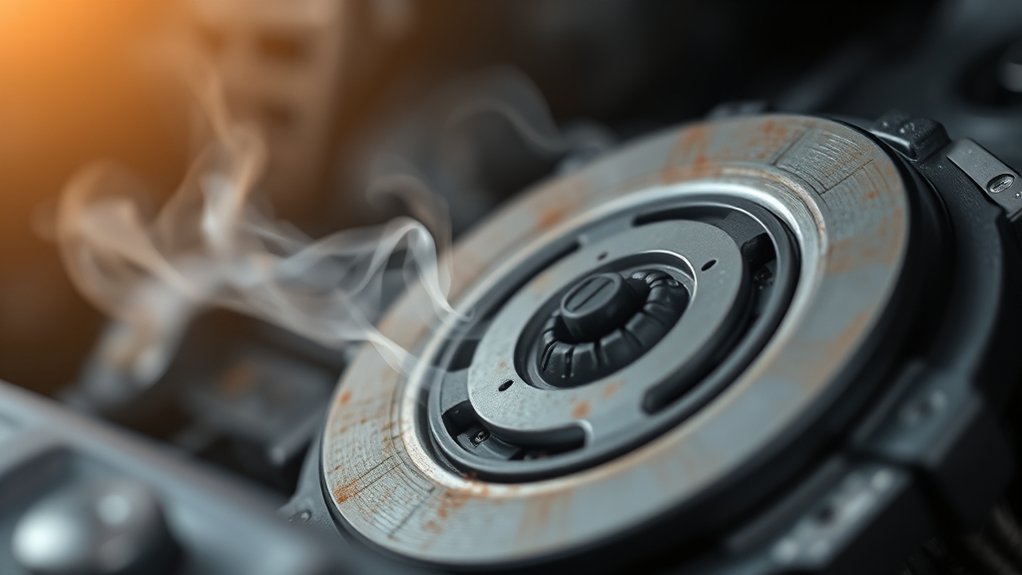
Because the clutch plays a crucial role in transferring power from the engine to the wheels, it can start to burn if it slips or overheats under excessive stress. When you push your clutch too hard or hold it partially engaged, friction produces heat that damages the clutch surface. This can lead to burning.
Several factors contribute to this, including:
- Riding the clutch pedal for extended periods
- Improper gear shifting techniques
- Towing heavy loads beyond vehicle capacity
- Faulty or worn clutch components
- Driving in stop-and-go traffic without proper clutch control
Common Signs Your Clutch Is Overheating and Burning
If you notice a distinct, acrid smell while driving, your clutch might be overheating and burning. Other signs include a slipping clutch where your engine revs increase without corresponding acceleration. You may also feel difficulty shifting gears or a spongy clutch pedal that doesn’t respond as it should.
Sometimes, your vehicle might jerk or hesitate during acceleration, indicating clutch wear. Additionally, a burning clutch often causes a noticeable decrease in performance, making it harder to maintain speed. Overheating can result in a soft or sticky clutch pedal feel, signaling internal damage.
If you experience any of these symptoms, it’s essential to inspect your clutch soon to avoid further damage and costly repairs.
How to Tell a Burning Clutch Smell From Other Car Odors
Identifying a burning clutch smell can be tricky, especially since several car odors might seem similar at first. To tell a burning clutch apart, focus on its unique characteristics compared to other smells under the hood. The clutch odor tends to be sharp, acrid, and somewhat sweet, unlike the oily or fuel-like scents you might encounter.
Here’s how to differentiate it:
- It intensifies during clutch use, especially in stop-and-go traffic
- Smells like overheated friction material rather than burning fuel or oil
- Often accompanied by a slight loss of clutch responsiveness
- Not mixed with the rubbery scent typical of burning belts or tires
- Usually localizes around the driver’s side footwell, near the clutch pedal
Pay close attention to these clues to identify a burning clutch smell accurately.
How Driving Habits Affect Clutch Health
Your driving habits play a big role in clutch health. Riding the clutch frequently, shifting gears aggressively, or letting the clutch slip for too long can cause it to overheat and wear out faster.
Understanding these behaviors helps you avoid that burning clutch smell.
Frequent Clutch Riding
Although many drivers might not realize it, frequently riding the clutch wears down its components much faster than normal use. When you keep your foot resting on the clutch pedal unnecessarily, you cause constant friction between the clutch disc and the flywheel. This friction generates heat, which leads to premature wear and that distinctive burning clutch smell.
To preserve your clutch’s lifespan, avoid habits like:
- Resting your foot on the clutch pedal while driving
- Using the clutch to hold the vehicle on inclines instead of the handbrake
- Partially engaging the clutch instead of fully releasing it
- Holding the clutch down during stops longer than necessary
- Riding the clutch during slow maneuvers or heavy traffic
Being mindful of these habits helps you maintain clutch health and avoid costly repairs.
Aggressive Gear Shifting
Riding the clutch too often can wear it down, but how you shift gears also plays a big role in clutch health. When you shift aggressively—forcing the gear lever or dropping the clutch abruptly—you increase stress on the clutch components. This sudden engagement causes excessive friction and heat, which can quickly lead to a burning clutch smell.
Smooth, deliberate gear changes reduce wear by allowing the clutch to engage gradually, minimizing heat buildup. If you’re impatient or rough with your shifts, you’re fundamentally pushing the clutch beyond its limits, accelerating its deterioration. To keep your clutch in good shape, focus on shifting smoothly and timing your gear changes properly.
This simple habit can prevent that unpleasant burning smell and save you costly repairs down the road.
Prolonged Clutch Slippage
When you keep the clutch partially engaged for too long, it causes prolonged slippage that wears down the friction material quickly. This habit not only generates excessive heat but also produces that distinct burning smell you want to avoid. Your driving style plays an essential role in clutch health.
If you frequently rest your foot on the clutch pedal or slip the clutch to control speed, you’re accelerating wear unnecessarily. To protect your clutch, consider these tips:
- Fully release the clutch pedal after shifting gears
- Avoid riding the clutch in stop-and-go traffic
- Use engine braking instead of slipping the clutch on descents
- Minimize holding the clutch halfway during starts
- Practice smooth, deliberate gear changes
Adopting these habits will extend your clutch’s lifespan and keep that burning odor at bay.
What Causes Clutch Slipping and Overheating?
You’ll often notice clutch slipping and overheating when you ride the clutch pedal too much or shift gears improperly. Worn clutch components also play a big role in causing these issues.
Understanding these causes can help you prevent damage and keep your clutch running smoothly.
Excessive Clutch Pedal Riding
Though it might seem harmless, keeping your foot lightly on the clutch pedal for extended periods causes excessive clutch pedal riding, which leads to clutch slipping and overheating. When you rest your foot on the pedal instead of fully releasing it, you create continuous friction between the clutch disc and the flywheel. This friction generates heat, wearing down the clutch surfaces prematurely and causing that distinct burning smell.
To avoid excessive clutch pedal riding:
- Keep your foot off the pedal when not shifting
- Engage the clutch fully only during gear changes
- Avoid resting your foot on the pedal’s edge
- Use the handbrake on hills instead of holding the clutch
- Practice smooth, deliberate clutch engagement
Worn Clutch Components
If clutch components wear down over time, they can cause slipping and overheating, which leads to that burning smell you want to avoid. When the clutch disc, pressure plate, or release bearing degrade, they don’t engage properly, causing friction and heat buildup. This slipping means your engine revs without transferring full power to the wheels, making the clutch work harder and overheat.
You’ll notice reduced performance, difficulty shifting, and eventually the distinct burnt odor. Ignoring worn parts only worsens damage and raises repair costs. Regular inspections help catch wear early, letting you replace components before slipping and overheating start.
If you feel your clutch slipping or smell burning, have a mechanic check these parts promptly to prevent further issues.
Improper Gear Shifting
When you shift gears improperly, the clutch has to work harder to compensate, which can cause slipping and overheating. This puts extra stress on the clutch system, leading to the distinctive burning smell. You might notice this if you:
- Ride the clutch pedal instead of fully releasing it
- Shift without fully disengaging the clutch
- Downshift abruptly at high speeds
- Release the clutch too quickly during gear changes
- Use the clutch to hold the vehicle on inclines instead of the brake
Each of these habits forces the clutch to slip more than it should, generating excessive heat and wear. Being mindful of smooth, timely gear shifts can prevent clutch damage and avoid that unpleasant burning odor. Proper technique extends your clutch’s lifespan and keeps your driving experience smooth and safe.
Immediate Steps to Take When You Smell a Burning Clutch
As soon as you detect the smell of a burning clutch, you need to act quickly to prevent further damage. First, safely pull over and turn off the engine to stop additional heat buildup. Avoid driving any further, as this can worsen the wear and potentially lead to clutch failure.
Next, allow the clutch to cool down completely before attempting to drive again. While waiting, check if you’ve been riding the clutch or shifting improperly, which may have caused the issue. If you’re unsure or the smell persists after cooling, call a mechanic for professional assistance.
Taking these immediate steps helps protect your vehicle and avoids costly repairs down the line. Don’t ignore the warning signs your clutch is sending you.
How to Check Your Clutch for Damage at Home
You can start by visually inspecting your clutch components for obvious wear or damage. Next, test how your clutch performs by paying attention to any slipping or unusual resistance while driving.
These simple checks can help you spot problems before they get worse.
Visual Inspection Tips
Although a professional mechanic can provide a thorough diagnosis, you can perform a basic visual inspection of your clutch at home to identify obvious signs of damage. Start by safely accessing the clutch assembly, usually by removing the transmission cover. Look closely for discoloration, cracks, or excessive wear on the clutch disc and pressure plate.
Also, check for oil contamination that can cause slipping. Don’t forget to inspect the flywheel surface for scoring or heat spots.
Here are key things to look for:
- Burn marks or discoloration on the clutch disc
- Cracks or warping on the pressure plate
- Excessive wear or thinning of friction material
- Oil or grease contamination on clutch components
- Scoring or hot spots on the flywheel surface
These signs often indicate clutch damage needing professional attention.
Test Clutch Performance
When your clutch emits a burning smell or shows signs of wear, checking its performance at home can help pinpoint potential issues before they worsen. Start by testing the clutch pedal: press it and notice if it feels spongy, sticks, or requires excessive force.
Next, try shifting gears with the engine running—if you experience grinding or difficulty engaging gears, it could indicate clutch slippage or damage. Another simple test is the “stall test”: in first gear, gently release the clutch while applying some throttle; if the engine revs rise without the vehicle moving smoothly, your clutch may be slipping.
Performing these tests helps you catch problems early, saving time and preventing costly repairs down the road.
When to Visit a Mechanic for Clutch Problems
If your clutch starts emitting a burning smell consistently or you notice slipping, it’s crucial to have a mechanic inspect it promptly. Ignoring these signs can lead to more severe damage and costly repairs. You should seek professional help when you experience any of the following:
- Persistent burning odor during or after driving
- Difficulty shifting gears smoothly
- Clutch pedal feels spongy, loose, or sticks to the floor
- Noticeable loss of power or engine revving without acceleration
- Strange noises like grinding or squealing when engaging the clutch
Addressing clutch issues early ensures your vehicle remains safe and reliable. Don’t delay; a quick mechanic visit can prevent further damage and save you money down the road.
What Happens During Clutch Repairs and Replacements
Since clutch repairs and replacements involve several detailed steps, understanding the process can help you know what to expect and prepare accordingly. First, the mechanic will remove the transmission to access the clutch assembly. Then, they inspect the clutch disc, pressure plate, and flywheel for wear or damage.
If replacements are necessary, they’ll install new parts, guaranteeing proper alignment to avoid future issues. The mechanic will also check the release bearing and hydraulic components, replacing them if needed. After reassembling the transmission, they’ll adjust the clutch pedal to ensure smooth engagement.
Finally, you’ll notice improved performance and a smoother driving experience. Knowing these steps makes the process less intimidating and helps you communicate better with your mechanic.
Tips to Prevent Your Clutch From Burning
Understanding the steps involved in clutch repairs and replacements gives you insight into how your vehicle’s clutch system functions. To keep your clutch from burning out prematurely, you need to adopt good driving habits. Here are some practical tips to help you prevent clutch burning:
- Avoid riding the clutch pedal; keep your foot off it when not shifting.
- Use the handbrake on inclines instead of holding the clutch.
- Shift gears smoothly and avoid sudden acceleration.
- Don’t hold the clutch down for extended periods at a stop.
- Regularly check and maintain the clutch fluid level and system components.
How Long Can You Drive With a Burning Clutch Smell?
When you notice a burning clutch smell, you shouldn’t ignore it or assume you can keep driving without consequences. The truth is, driving with a burning clutch smell is risky. How long you can safely drive depends on the severity of the issue, but generally, you shouldn’t go far.
Continuing to drive can cause the clutch to overheat, leading to permanent damage and costly repairs. If the smell is strong or accompanied by slipping or difficulty shifting gears, it’s best to stop immediately. Driving a short distance at low speeds might be possible if the smell is mild, but don’t push it.
To protect your vehicle and avoid breakdowns, have your clutch inspected as soon as you detect that burning odor.
Frequently Asked Questions
Can a Burning Clutch Smell Damage the Car’s Interior?
Yes, a burning clutch smell can damage your car’s interior by leaving stubborn odors and residue on fabrics or surfaces. You’ll want to address the issue quickly to prevent lasting damage and costly repairs.
Are Certain Car Models More Prone to Clutch Burning?
You’ll find that manual transmission cars, especially older models from brands like Honda and Volkswagen, are more prone to clutch burning.
Studies show 30% of clutch failures happen in these vehicles due to frequent stop-and-go driving.
Does a Burning Clutch Smell Affect Vehicle Emissions?
Yes, a burning clutch smell usually means your clutch’s slipping, which increases emissions by burning more fuel inefficiently.
You’ll want to fix it quickly to avoid harming the environment and your vehicle’s performance.
Can Clutch Burning Cause Transmission Problems?
Yes, clutch burning can cause transmission problems. When you burn the clutch, it wears out the friction material, leading to slipping and damage. You’ll notice difficulty shifting gears and potential long-term transmission issues if not fixed promptly.
Is It Safe to Continue Driving Immediately After Smelling a Burning Clutch?
No, it isn’t safe to keep driving right after smelling a burning clutch. You should stop immediately to prevent further damage. Check for issues and get professional help before continuing.
This will help you avoid costly repairs or breakdowns.
Conclusion
If you notice a burning clutch smell, listen closely, act swiftly, and avoid further damage. Pay attention to slipping, grinding, or unusual odors, and adjust your driving habits to ease clutch strain. Don’t ignore warning signs, don’t delay mechanic visits, and don’t risk costly repairs.
By recognizing symptoms early and maintaining good driving practices, you’ll protect your clutch and enhance your car’s performance. Seeking timely help is crucial to save yourself from unnecessary trouble down the road. Remember, identifying a burning clutch smell promptly can prevent severe damage and costly repairs.

