


A Stage 2 clutch is an upgraded clutch system designed to handle increased power and torque without slipping. It provides firmer engagement, enhanced durability, and better performance for vehicles with modified engines or aggressive driving styles.
This upgrade is essential for those looking to improve their car’s power handling and overall driving experience.
You upgrade to a Stage 2 clutch by replacing your stock clutch components with a stronger pressure plate, an enhanced clutch disc, and a more durable release bearing. Often, the flywheel is resurfaced, and the hydraulic system may be adjusted to optimize clutch operation.
These modifications help your car manage higher engine output more reliably and efficiently.
If you want to boost performance while maintaining drivability, understanding how to choose, install, and maintain a Stage 2 clutch is crucial.
This upgrade is a smart step for anyone seeking improved clutch response and longevity in demanding driving conditions.
Key Takeaways
- A Stage 2 clutch is an upgraded system designed to handle increased power and torque with stronger pressure plates and enhanced friction materials. It prevents clutch slipping and improves shift responsiveness during aggressive driving or when engine modifications increase torque.
- Choose a Stage 2 clutch based on material type (organic, ceramic, metallic) and ensure compatibility with your vehicle and transmission. Upgrading requires tools like a clutch alignment tool, torque wrench, and jack stands, plus possible flywheel resurfacing or replacement.
- Common upgrade issues include improper adjustments and air in hydraulic lines, resolved by bleeding, tightening bolts, and testing clutch engagement.
What Is a Stage 2 Clutch and How It Works
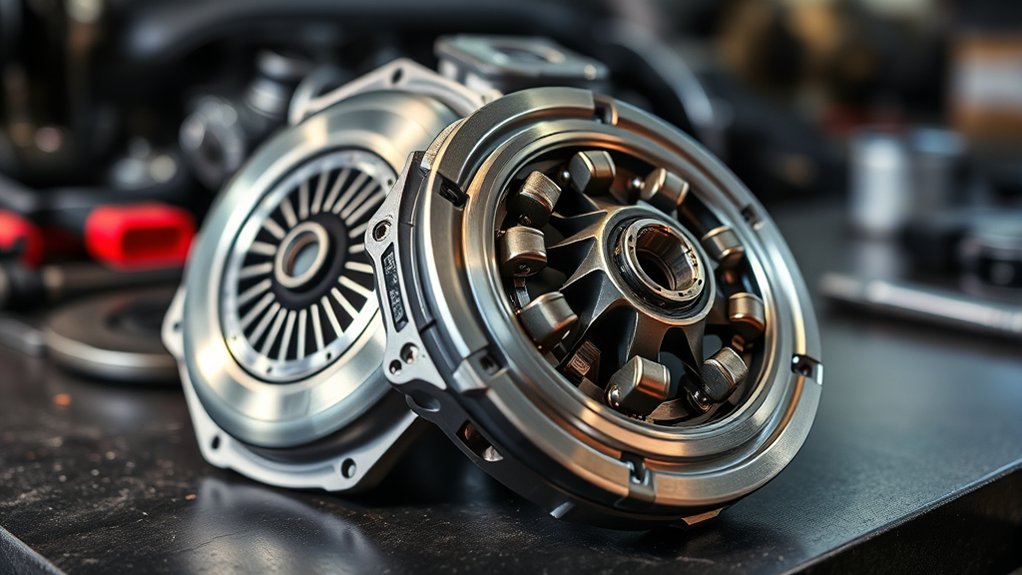
Although a Stage 2 clutch might sound complicated, it’s simply an upgraded clutch system designed to handle more power and provide better performance than a stock clutch. When you install a Stage 2 clutch, you’re getting stronger pressure plates and enhanced friction materials that can manage increased engine torque without slipping. This means you can accelerate more aggressively without worrying about clutch fade or failure.
The clutch engages more firmly, giving you a more direct and responsive feel when shifting gears. While it might require a slightly heavier pedal effort, the trade-off is improved durability and performance, especially if you’ve made other modifications to your engine.
In short, a Stage 2 clutch works by offering a tougher, more reliable connection between your engine and transmission under demanding conditions.
When to Upgrade to a Stage 2 Clutch
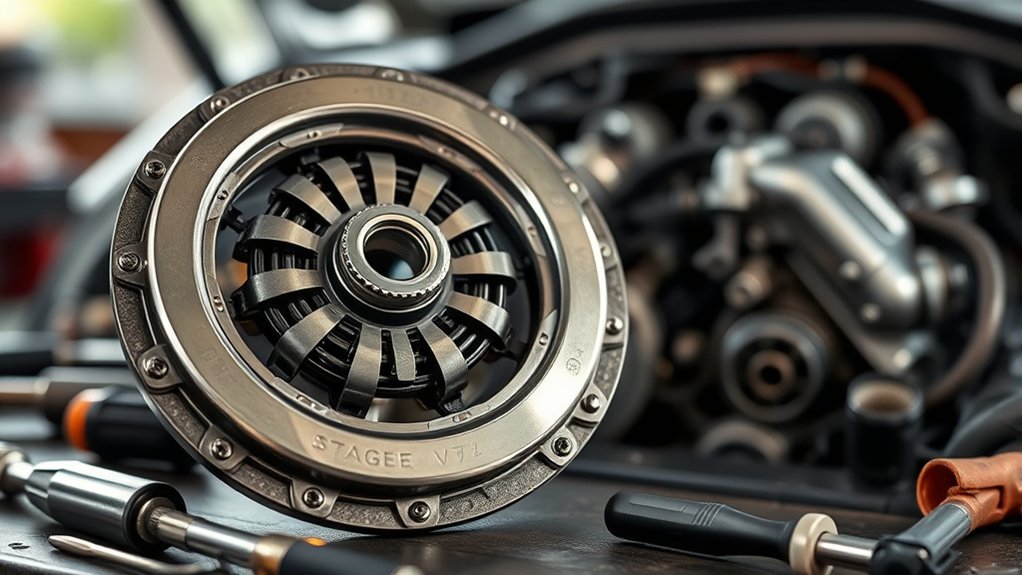
Upgrading to a Stage 2 clutch makes sense when your current setup can’t keep up with your driving demands or engine modifications. If you notice slipping during hard acceleration or your clutch feels weak under increased power, it’s a clear sign you need a more robust clutch.
You’ll also want to upgrade if you’ve installed performance parts like a turbocharger, supercharger, or upgraded exhaust, which add torque beyond your stock clutch’s capacity. Daily driving with aggressive shifting or track use can wear out your clutch faster, making a Stage 2 clutch a smart choice for durability and better engagement.
Fundamentally, when your clutch struggles to handle power or driving style, it’s time to step up to a Stage 2 for improved performance and reliability.
Picking the Right Stage 2 Clutch for Your Ride
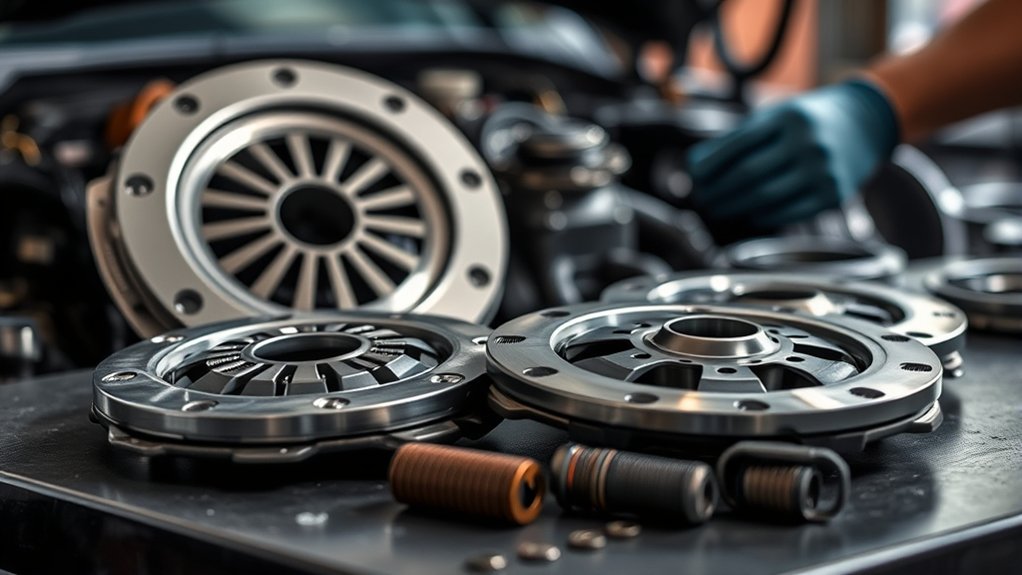
You’ll want to take into account the clutch material options since they directly affect performance and durability. Make certain the stage 2 clutch you pick is compatible with your specific vehicle model.
Getting the right match will ensure smoother shifts and longer clutch life.
Clutch Material Options
When choosing a Stage 2 clutch, the material plays a crucial role in how your ride performs and feels. You’ll mainly encounter organic, ceramic, and metallic options. Organic clutches offer smooth engagement and are gentle on your flywheel, ideal if you want daily comfort.
Ceramic clutches handle higher heat and torque, giving you sharper engagement but can be a bit harsher during stop-and-go traffic. Metallic clutches provide the best durability and grip for aggressive driving or track use but may cause more noise and wear your flywheel faster.
Consider your driving style and conditions to pick the material that balances performance, smoothness, and longevity. Matching the clutch material to your needs ensures you get the most out of your Stage 2 upgrade without sacrificing drivability.
Compatibility With Vehicles
Choosing the right clutch material sets the foundation, but ensuring your Stage 2 clutch fits your specific vehicle is just as important. Each car model has unique requirements for clutch size, pressure plate design, and compatibility with the transmission. You need to verify that the Stage 2 clutch you choose matches your car’s make, model, and year.
Don’t overlook factors like flywheel compatibility and whether your vehicle is manual or automatic. Consulting your vehicle’s specifications or a trusted mechanic can save you from costly errors. Many manufacturers provide fitment guides online to help you pick the right clutch.
Why a Stage 2 Clutch Makes a Difference
Although stock clutches handle everyday driving, a Stage 2 clutch transforms your vehicle’s performance by offering greater durability and improved power transfer. When you push your engine harder—whether through tuning or added horsepower—the stock clutch can slip or wear out quickly.
A Stage 2 clutch uses stronger friction materials and a more robust pressure plate, meaning you get better grip and less slippage. This upgrade lets you accelerate more confidently, especially during spirited driving or track use, because power flows more efficiently from the engine to the wheels.
Plus, it handles heat and stress better, reducing the chance of clutch fade during aggressive driving. In short, choosing a Stage 2 clutch means you’re ready to get the most out of your enhanced engine without worrying about premature clutch failure.
Tools and Parts Needed for Your Stage 2 Clutch Upgrade
Before you start your Stage 2 clutch upgrade, make certain you have the right tools on hand to get the job done smoothly. You’ll also need specific replacement parts designed for this upgrade to guarantee peak performance.
Let’s go over the essentials you’ll need to complete the process efficiently.
Essential Tools Overview
To successfully complete your Stage 2 clutch upgrade, you’ll need a specific set of tools and parts that guarantee both efficiency and safety during the installation. First, a quality automotive jack and jack stands are essential to safely lift and support your vehicle. Next, gather a socket set with various sizes, including deep sockets, to remove bolts and fasteners.
A torque wrench is vital for tightening components to the manufacturer’s specified settings, preventing damage or failure. You’ll also need a clutch alignment tool to center the clutch disc properly during installation. Additionally, screwdrivers, pliers, and a breaker bar will help with stubborn parts.
Having these tools ready before starting guarantees a smooth, safe upgrade process without interruptions or frustration.
Required Replacement Parts
Gathering the right replacement parts guarantees your Stage 2 clutch upgrade goes smoothly once you have your tools ready. You’ll want to confirm you have all necessary components before starting to avoid delays or incomplete installation.
Here are the essential replacement parts you’ll need:
- Stage 2 Clutch Kit – Includes a high-performance pressure plate, clutch disc, and release bearing designed to handle increased power and torque.
- Pilot Bearing/Bushing – Replacing this prevents premature wear and ensures smooth engagement.
- Flywheel (optional but recommended) – A resurfaced or upgraded flywheel enhances clutch performance and durability.
Having these parts on hand ensures your upgrade delivers the improved responsiveness and reliability you’re aiming for. Don’t forget to double-check compatibility with your vehicle model before purchasing.
Stage 2 Clutch Installation Guide
Although installing a Stage 2 clutch might seem challenging, you’ll find the process straightforward if you follow each step carefully. Start by disconnecting the battery and removing the transmission.
Next, replace the old clutch assembly with the new Stage 2 components, guaranteeing proper alignment. Tighten bolts to the manufacturer’s torque specs and reassemble everything in reverse order.
Double-check all connections before testing.
| Step | Action | Tips |
|---|---|---|
| 1 | Disconnect battery | Prevent electrical issues |
| 2 | Remove transmission | Use a jack for support |
| 3 | Install new clutch | Align clutch with tool |
| 4 | Reassemble & test | Torque bolts precisely |
Following this guide ensures a smooth upgrade and improved performance.
Troubleshooting Stage 2 Clutch Installation
When you encounter issues after installing your Stage 2 clutch, understanding common problems can help you quickly identify and fix them. Here are key troubleshooting steps to take into account:
- Clutch Slippage: If you notice the clutch slipping under load, check for improper clutch disc alignment or insufficient pedal free play. Re-adjust as needed to ensure full engagement.
- Difficulty Shifting: Hard shifts may indicate incorrect clutch cable/bearing adjustment or air trapped in the hydraulic line. Bleed the clutch system and verify linkage settings.
- Noisy Operation: Unusual noises often result from worn pilot bearings or loose pressure plate bolts. Inspect and tighten components or replace faulty parts.
Maintaining and Testing Your Stage 2 Clutch
To keep your Stage 2 clutch performing at its best, you’ll need to regularly maintain and test its components. Begin by checking for any signs of wear on the clutch disc, pressure plate, and release bearing. Look for cracks, glazing, or uneven wear that could affect performance.
Keep the linkage and hydraulic system clean and properly lubricated to ensure smooth engagement and disengagement. When testing, pay attention to pedal feel—any unusual stiffness or sponginess might indicate an issue. Perform a clutch slip test by holding the clutch partially engaged at a safe speed.
Excessive slipping means it’s time for adjustment or replacement. Regular maintenance not only extends the clutch’s life but also keeps your driving experience smooth and reliable.
Frequently Asked Questions
How Does a Stage 2 Clutch Affect Fuel Efficiency?
A stage 2 clutch might slightly lower your fuel efficiency because it requires more force to engage, causing minor energy loss. However, if you drive smoothly, you won’t notice much difference in your overall fuel consumption.
Can a Stage 2 Clutch Be Used in Automatic Transmissions?
You can’t fit a square peg in a round hole—stage 2 clutches are designed for manual transmissions, so they won’t work in automatics.
You’ll need transmission-specific upgrades tailored to your automatic system instead.
What Are the Warranty Implications of Upgrading to a Stage 2 Clutch?
Upgrading to a stage 2 clutch often voids your vehicle’s warranty, especially on the transmission and drivetrain. You should check with your manufacturer or dealer before upgrading to avoid unexpected warranty issues or denied claims.
How Does a Stage 2 Clutch Impact Daily Driving Comfort?
You’ll feel a bit more resistance and hear some noise, but it’s not the end of the world. A Stage 2 clutch can make daily driving less smooth, yet you’ll handle spirited drives with ease and confidence.
Are There Specific Brands Known for Quality Stage 2 Clutches?
You’ll find quality stage 2 clutches from brands like Exedy, ACT, and Clutch Masters. They’re known for durability and performance, so you can trust their products to handle increased power without sacrificing too much daily drivability.
Conclusion
So, you’ve learned all about stage 2 clutches—because who doesn’t want to wrestle with a clutch that’s just a tad more demanding? Upgrading isn’t just for showing off; it actually makes your ride snappier and more fun (if you like a little challenge).
Just remember, if your car starts feeling like a stubborn mule, you probably did something wrong—or you just love extra leg day. Either way, enjoy the upgrade!
In conclusion, a stage 2 clutch upgrade enhances your vehicle’s performance by providing better grip and quicker response. It’s an essential modification for those seeking improved driving dynamics and a more engaging experience behind the wheel.

