

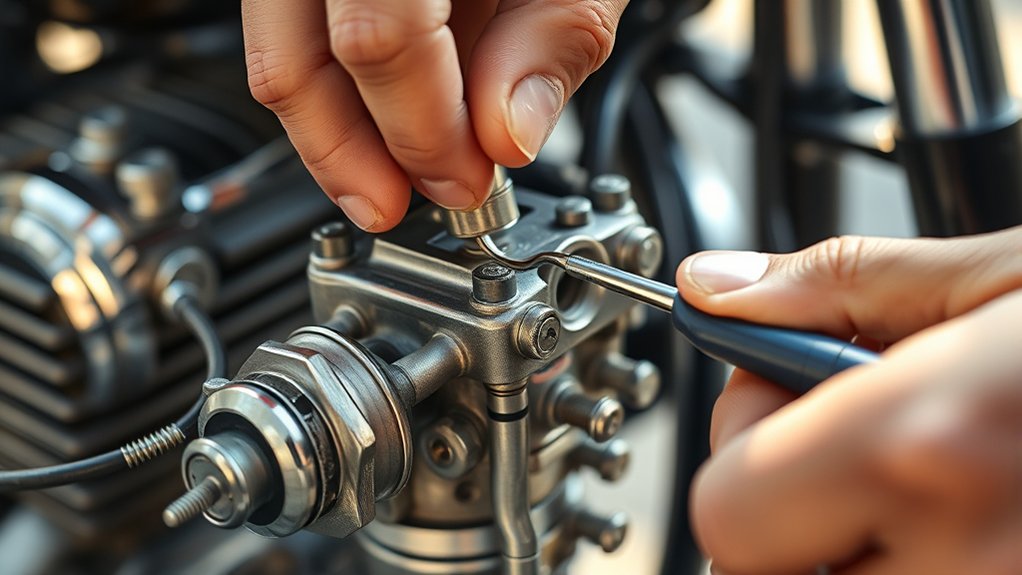
To adjust your carburetor in seven simple steps, start by warming up the engine to ensure accurate settings. Removing the air filter provides better access to the carburetor components. Identifying key parts such as the idle speed and mixture screws is essential for a precise adjustment.
Begin by turning the idle speed screw to achieve a steady engine idle. Next, fine-tune the air-fuel mixture screw to ensure smooth acceleration and optimal engine performance. Check the throttle linkage and choke function to confirm they operate correctly.
Finally, test the engine’s response under load to verify the adjustments. If the engine performance seems off, explore how to troubleshoot common carburetor issues for a reliable fix.
Following these steps will help you maintain your engine’s efficiency and longevity.
Key Takeaways
- Warm up the engine by idling for a few minutes to ensure accurate carburetor adjustment.
- Locate and adjust the idle speed screw to achieve a smooth, steady idle without stalling.
- Turn the idle mixture screw slowly to find the highest, smooth idle speed without engine hesitation.
- Check and adjust the choke for proper opening when warm and closing on cold starts.
- Test throttle response and engine performance, making further mixture or speed adjustments as needed.
Prepare Your Engine for Adjustment
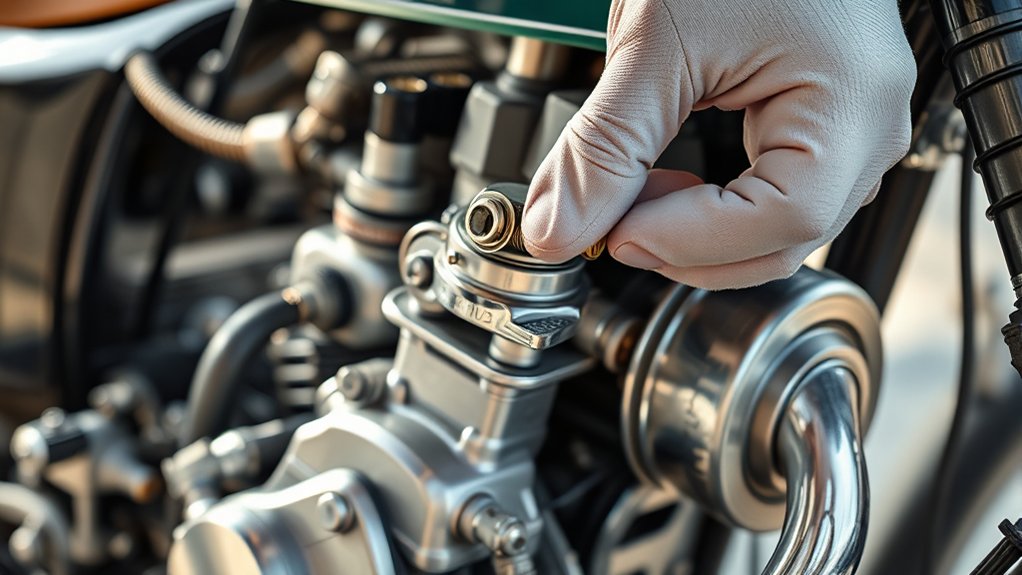
Before adjusting your carburetor, you’ll need to prepare the engine properly to guarantee accurate tuning. Start by ensuring the engine is off and cool to avoid burns or injury. Check the fuel level and top it off if necessary, since a consistent fuel supply helps maintain steady engine performance during adjustment.
Remove any debris or dirt around the carburetor to prevent contaminants from entering. Next, disconnect the air filter to access the carburetor easily. You’ll also want to make sure all spark plugs are clean and functional to promote smooth ignition.
Finally, warm up the engine by letting it idle for a few minutes; a warm engine responds better to carburetor adjustments, giving you precise results.
Identify Carburetor Parts to Adjust
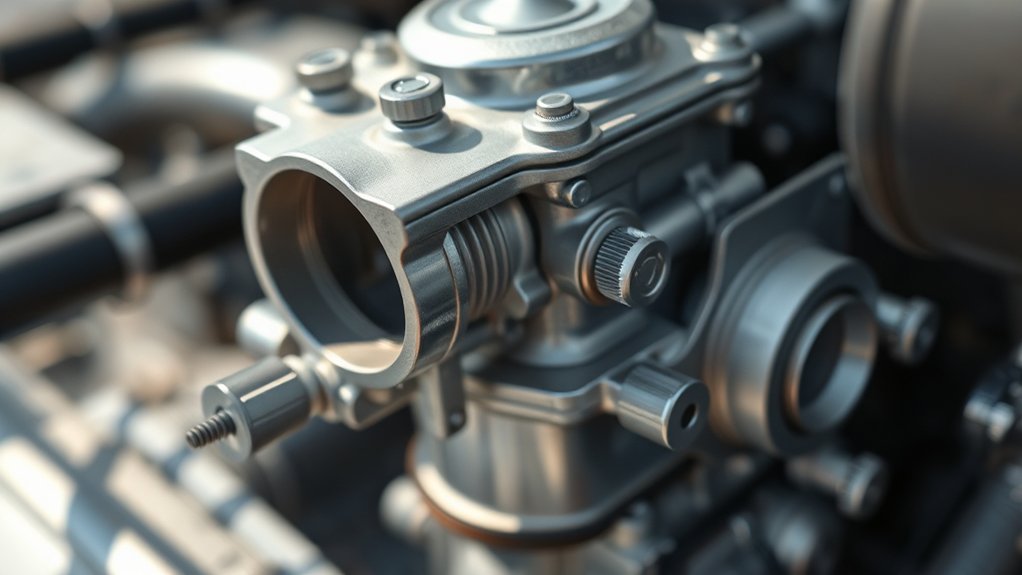
Before you start adjusting, you need to identify the key carburetor parts involved. Focus on the essential components like the adjustment screws and the fuel and air passages.
Knowing where these are will help you make precise tweaks for better engine performance.
Essential Carburetor Components
Although adjusting a carburetor might seem complex at first, understanding its essential components makes the process much easier. You’ll need to recognize key parts like the float chamber, which controls fuel level, and the throttle valve that regulates air intake. The choke valve helps start the engine by restricting airflow, while the main jet meters fuel flow into the engine.
The venturi narrows the carburetor’s passage to increase air velocity and draw fuel in. Don’t forget the fuel inlet where gasoline enters, and the air filter that prevents debris from entering the system. Knowing these components lets you identify where adjustments affect performance.
This foundation prepares you for making precise tweaks in the next step, ensuring your engine runs smoothly and efficiently.
Adjustment Screws Overview
Since the adjustment screws control your carburetor’s fuel and air mixture, understanding their functions is essential for fine-tuning performance. These screws let you regulate how much fuel and air enter the engine, directly affecting efficiency and power.
Here are the key adjustment screws you’ll encounter:
- Idle Mixture Screw: Controls the fuel-to-air ratio at idle speed.
- Idle Speed Screw: Sets the throttle opening when the engine is idling.
- Main Jet Screw: Adjusts the fuel flow during mid to high throttle.
- Choke Adjustment Screw: Regulates the choke valve position for cold starts.
Knowing these screws helps you make precise tweaks, ensuring your engine runs smoothly and responds well under different conditions.
Fuel and Air Passages
Understanding how the adjustment screws affect your carburetor means you also need to know the fuel and air passages they control. These passages regulate the mixture entering your engine, ensuring it runs smoothly. The fuel passage delivers gasoline, while the air passage controls airflow.
When you turn the idle mixture screw, you’re adjusting how much fuel blends with air at low speeds. The idle speed screw, on the other hand, influences the throttle valve, controlling airflow and engine speed. Knowing these parts helps you make precise adjustments.
If the fuel passage is clogged or the air passage is blocked, your carburetor won’t perform well. So, pay attention to these passages when tuning, and your carburetor will respond better to your adjustments.
Set the Carburetor Idle Speed Screw
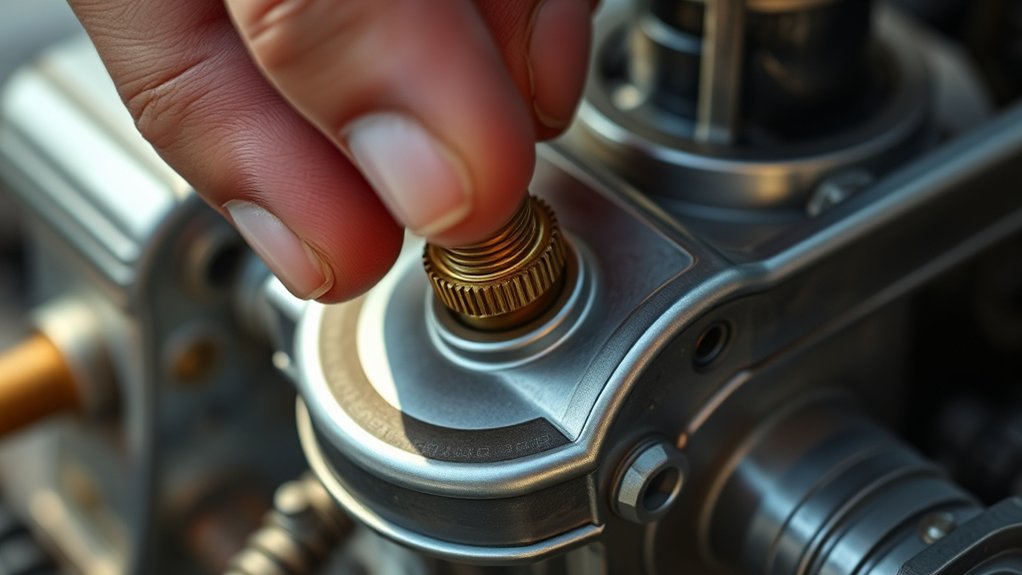
How do you know when your engine is idling just right? Setting the carburetor idle speed screw is key. This screw controls how fast the engine runs when it’s not under load.
Turn it slowly to find the perfect idle speed.
Adjust the screw gradually to achieve a smooth, consistent idle speed without hesitation or stalling.
Here’s how to set it properly:
- Locate the idle speed screw on the carburetor body.
- Start the engine and let it warm up for a few minutes.
- Turn the screw clockwise to increase idle speed or counterclockwise to decrease it.
- Aim for a smooth, steady engine sound without stalling or racing.
Adjusting this screw ensures your engine runs efficiently at rest, preventing rough idling or stalling.
Once set, you can move on to fine-tuning other carburetor settings.
Adjust the Carburetor Air-Fuel Mixture
After setting the idle speed, you’ll want to adjust the air-fuel mixture to guarantee your engine runs smoothly and efficiently. Locate the mixture screw, usually near the base of the carburetor. Turn it slowly clockwise to lean the mixture (less fuel) or counterclockwise to enrich it (more fuel).
Listen to the engine’s response as you adjust; the goal is the highest, smoothest idle speed without hesitation or stumbling. If the engine bogs down or stalls, reverse the adjustment slightly. Make small turns—about a quarter turn at a time—and allow the engine to stabilize before proceeding.
Once you find the best position, tighten any locking screws to secure the setting. This step guarantees your carburetor delivers the right balance of air and fuel for peak performance.
Adjust Carburetor Throttle Linkage and Choke
While tuning the air-fuel mixture is essential, you also need to adjust the throttle linkage and choke to guarantee smooth engine response and proper starting. Start by checking the throttle linkage for any play or binding; it should move freely without sticking.
Adjust throttle linkage and choke to ensure smooth engine response and reliable starting every time.
Next, adjust the linkage so the throttle plate fully closes when the pedal is released but doesn’t bind when pressed. Then, inspect the choke mechanism; it should close completely when the engine is cold and open smoothly as it warms up.
Finally, fine-tune the choke cable tension for proper operation.
- Ensure throttle linkage moves smoothly without resistance
- Set throttle plate to fully close without binding
- Verify choke closes fully on cold start
- Adjust choke cable tension for seamless operation
Test Your Carburetor Adjustments
Once you’ve adjusted the throttle linkage and choke for smooth movement and proper closure, you need to confirm that your carburetor settings are working correctly. Start the engine and let it idle. Listen closely for a steady, smooth sound without sputtering or stalling.
If the idle feels rough, slight tweaks may be necessary. Slowly increase engine speed by pressing the throttle and observe the response. The engine should accelerate smoothly without hesitation or bogging down.
Also, check for consistent RPMs at idle using a tachometer if available. Finally, take your vehicle for a short test drive, paying attention to how it responds under different loads. If everything feels balanced and responsive, your adjustments are successful.
If not, you can fine-tune further before moving on.
Troubleshoot Carburetor Adjustment Problems
If your engine isn’t running smoothly after adjusting the carburetor, you’ll want to check for common issues like rough idling or hesitation. Identifying these problems early helps you pinpoint what’s causing poor performance.
Let’s look at how to diagnose and fix these adjustment challenges quickly.
Common Adjustment Issues
Although adjusting a carburetor might seem straightforward, you’ll often encounter common issues that can throw off your tuning. These problems usually stem from small mistakes or overlooked parts. To avoid frustration, keep an eye out for:
- Incorrect idle speed causing stalling or rough running
- Lean or rich fuel mixture making the engine sputter or flood
- Vacuum leaks that disrupt air-fuel balance
- Worn or dirty adjustment screws that don’t respond properly
If you notice any of these, double-check your adjustments and inspect the carburetor components. Fixing these issues early prevents poor performance and guarantees your engine runs smoothly.
Diagnosing Performance Problems
Mistakes like incorrect idle speed or vacuum leaks can cause noticeable engine problems that make it clear something needs fixing. When diagnosing performance issues, start by listening for rough idling or stalling, which often indicate improper fuel-air mixtures. Check for hesitation or backfiring during acceleration; these symptoms usually point to carburetor adjustments being off.
Inspect vacuum lines for cracks or disconnections, as leaks disrupt engine function. Use a vacuum gauge to verify stable readings, ensuring smooth operation. If the engine runs rich (black smoke) or lean (poor acceleration), tweak the mixture screws carefully.
Don’t overlook the air filter; a clogged one can mimic carburetor problems. By methodically checking these areas, you’ll identify and resolve carburetor-related issues effectively, restoring your engine’s performance.
Frequently Asked Questions
How Often Should I Clean My Carburetor?
You should clean your carburetor at least once a year or every 25-30 hours of use.
If your engine runs rough or stalls, clean it sooner to keep your machine running smoothly and efficiently.
Can a Bad Carburetor Cause Poor Fuel Economy?
Yes, a bad carburetor can cause poor fuel economy because it may mix fuel and air improperly. You’ll notice your engine running rich or lean, wasting fuel and reducing performance until you fix or clean it.
What Tools Do I Need for Carburetor Adjustment?
To get down to brass tacks, you’ll need a screwdriver, a socket wrench, and a tachometer. Don’t forget a clean rag and safety gloves to keep things smooth and safe while you fine-tune your carburetor.
How Do Altitude Changes Affect Carburetor Settings?
Altitude changes affect carburetor settings because thinner air means less oxygen. You’ll need to lean the fuel mixture at higher altitudes to keep your engine running smoothly and avoid flooding or poor performance.
Is It Safe to Adjust the Carburetor Myself?
Tinkering with your carburetor is like fine-tuning a delicate instrument—yes, you can do it safely if you have basic knowledge and the right tools.
Just take your time, follow instructions, and avoid forcing anything.
Conclusion
By following these seven simple steps, you can keep your engine running smoothly and efficiently. Did you know that a properly adjusted carburetor can improve fuel efficiency by up to 15%? That’s a significant boost just from fine-tuning your settings!
So, take the time to prepare, adjust, and test carefully. With patience, your carburetor will deliver better performance, saving you money and hassle down the road. Proper carburetor adjustment is key to optimal engine function and fuel economy.

