

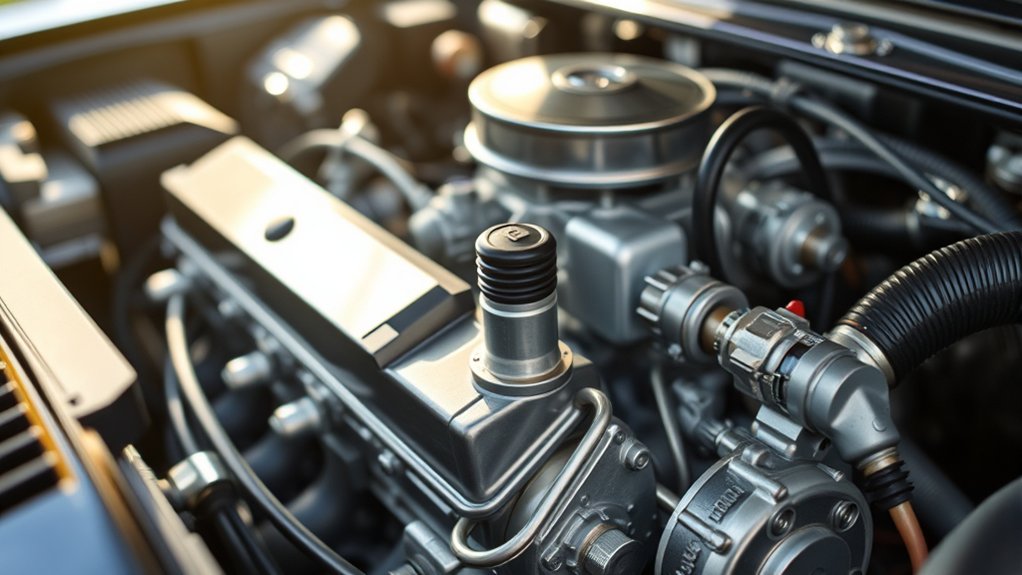
You’ve moved past carburetors because modern engines now rely on fuel injection systems for better performance. Fuel injection systems provide precise fuel control, improved efficiency, and cleaner engine operation. These systems have largely replaced carburetors due to their advanced technology and adaptability.
Unlike carburetors, fuel injection uses sensors and electronic controls to adjust fuel delivery instantly. This allows the engine to adapt perfectly to changing driving conditions and meet stringent emissions requirements.
As a result, electronic fuel injection improves power output and reduces pollution effectively.
Modern engines mostly use electronic fuel injection to optimize performance.
As you explore further, you’ll discover how different injection types and advanced engine management technologies make this possible. These innovations continue to evolve, pushing automotive technology forward.
Key Takeaways
- Fuel injection systems replaced carburetors by delivering precise and efficient fuel control for modern engines.
- Electronic fuel injection (EFI) uses sensors and ECUs to optimize fuel delivery and engine performance in real-time.
- Types of fuel injection include throttle body injection, multi-point injection, and direct injection for varying precision levels.
- Fuel injection improves fuel economy, reduces emissions, and adapts automatically to changing driving conditions.
- Advanced sensors like oxygen and mass airflow sensors enable accurate air-fuel mixture adjustments for cleaner combustion.
Why Carburetors Became Obsolete
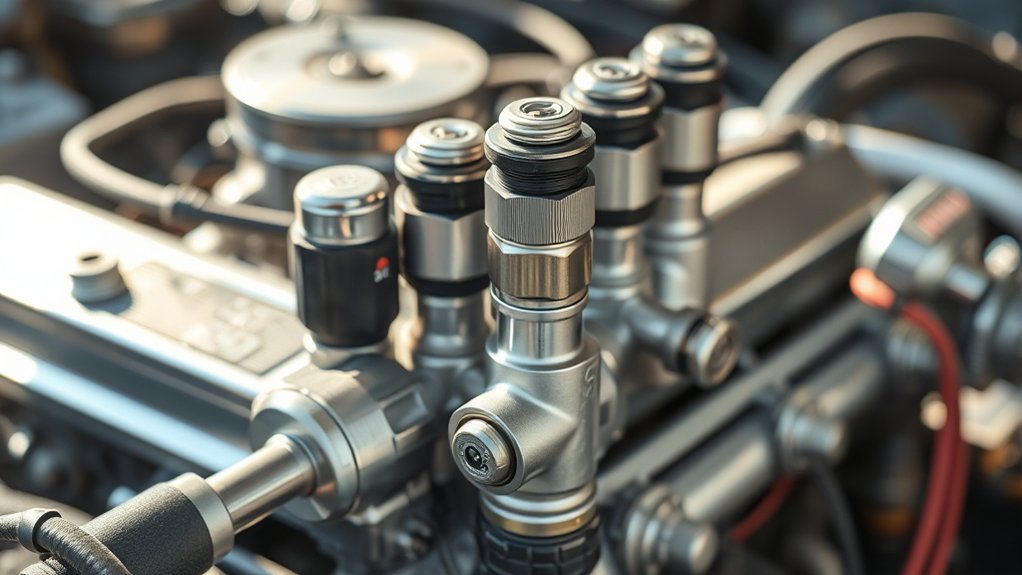
Although carburetors were once essential for mixing air and fuel in engines, they became obsolete because they couldn’t keep up with the demands for better fuel efficiency and stricter emissions standards. You’ll find that carburetors rely on mechanical parts, which makes it hard to precisely control the air-fuel mixture. This imprecision leads to wasted fuel and higher emissions, which modern regulations don’t allow.
Plus, carburetors can struggle with adapting to different driving conditions, causing inconsistent engine performance. You need a system that adjusts instantly and accurately, something carburetors simply can’t provide. Their inability to optimize fuel delivery under varying loads and speeds made them unsuitable for modern vehicles.
What Replaced Carburetors in Modern Engines?
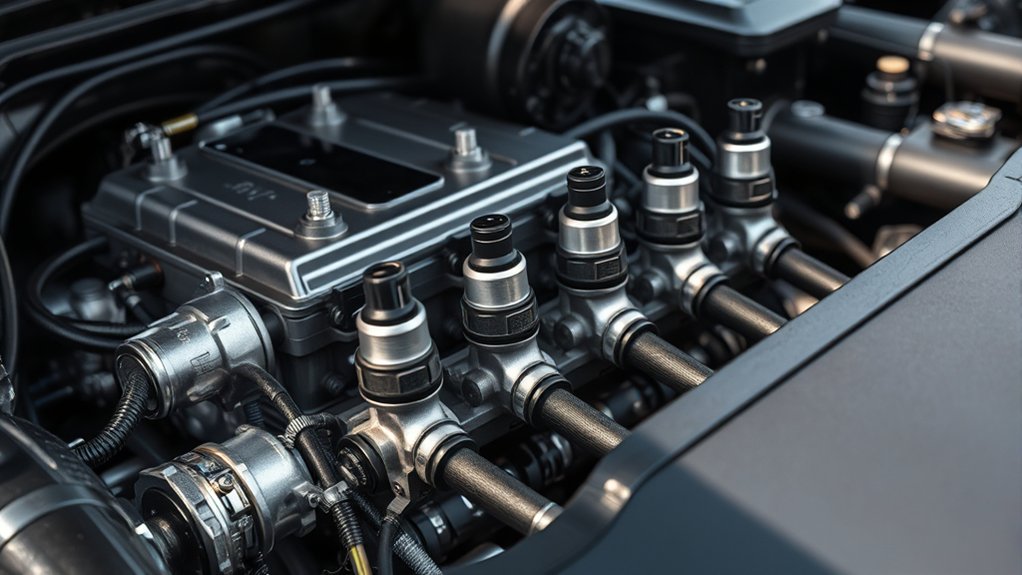
You’ve probably noticed that modern engines no longer use carburetors; instead, they rely on fuel injection systems for precise fuel delivery. These systems work hand-in-hand with electronic control units (ECUs) that manage engine performance efficiently.
Let’s explore how these technologies replaced the old carburetor setup.
Fuel Injection Systems
How do modern engines deliver fuel more efficiently than carburetors ever could? Fuel injection systems precisely spray fuel directly into the engine’s combustion chamber or intake manifold, ensuring ideal air-fuel mixture for combustion. Unlike carburetors, they respond instantly to engine demands, improving performance and reducing emissions.
Fuel injection systems offer better fuel economy, smoother idling, and easier cold starts. You’ll find two main types: mechanical and electronic fuel injection, with electronic being the most common today.
| Type | Key Feature |
|---|---|
| Mechanical Injection | Uses mechanical components |
| Electronic Injection | Uses sensors and actuators |
| Direct Injection | Injects fuel directly in cylinder |
This upgrade replaced carburetors by providing more control and efficiency without sacrificing power.
Electronic Control Units
Since modern engines rely on fuel injection systems, they also need advanced electronic control units (ECUs) to manage fuel delivery precisely. You’ll find that the ECU acts as the brain of your engine, constantly adjusting fuel flow and ignition timing based on real-time data. It takes inputs from sensors, processes information, and sends commands to optimize performance.
Imagine the ECU handling:
- Engine temperature, so fuel mixes just right for efficient combustion
- Oxygen levels in the exhaust, ensuring emissions stay low
- Throttle position, adjusting fuel to match your acceleration
With this precise control, your engine runs cleaner, uses fuel smarter, and responds faster than ever before. So, the ECU doesn’t just replace the carburetor; it revolutionizes how your engine breathes and performs.
How Fuel Injection Systems Work Compared to Carburetors
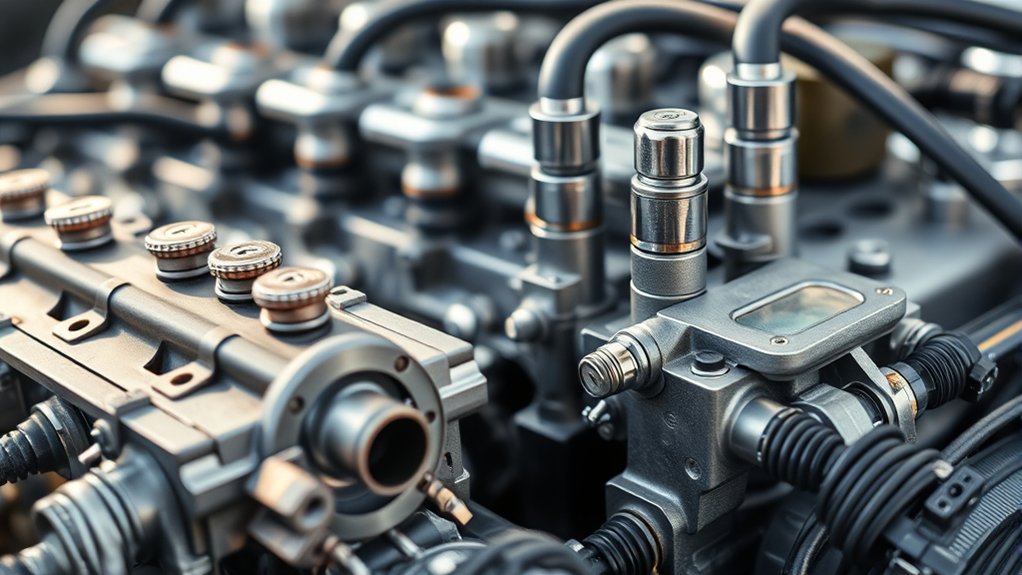
Although carburetors once controlled the air-fuel mixture in engines, fuel injection systems have taken over by delivering fuel more precisely and efficiently. Unlike carburetors, which rely on air pressure to draw fuel into the engine, fuel injection systems use electronic controls to spray fuel directly into the intake manifold or combustion chamber. This method lets you achieve a more accurate fuel-to-air ratio, improving performance and reducing emissions.
When you press the accelerator, sensors send data to the engine control unit, which adjusts the fuel delivery in real time. This precision helps you get better fuel economy and smoother engine response. With fuel injection, you avoid the inconsistencies carburetors often have, especially in varying temperatures or altitudes.
This is why modern engines favor fuel injection systems over carburetors.
Fuel Injection Types That Replaced Carburetors
Fuel injection systems come in several types, each designed to deliver fuel in a specific way to optimize engine performance. You’ll encounter:
- Throttle Body Injection (TBI): Delivers fuel just above the intake manifold, mixing with air before entering cylinders, making it a simple upgrade from carburetors.
- Multi-Point Fuel Injection (MPFI): Sprays fuel directly near each cylinder’s intake valve, ensuring precise fuel delivery and better combustion.
- Direct Fuel Injection (DI): Injects fuel straight into the combustion chamber under high pressure, maximizing efficiency and power.
Each type offers distinct advantages, but they all replaced carburetors by improving fuel accuracy, reducing emissions, and boosting engine response.
Understanding these systems helps you appreciate how modern engines achieve better performance and cleaner operation without the old carburetor limitations.
Why Throttle Body Injection Was a Key Step
When you look back at the evolution of engine technology, throttle body injection (TBI) stands out as a key bridge between carburetors and more advanced fuel injection systems. TBI simplified fuel delivery by replacing the carburetor with a single injector or a pair mounted above the throttle body, making fuel distribution more precise. You’d notice better fuel atomization and improved cold starts compared to carburetors.
TBI also helped engines meet stricter emission standards by controlling fuel flow electronically, which was a major step forward. For you, this meant smoother engine operation and better fuel efficiency without a complete redesign of the intake system. While it wasn’t as sophisticated as later multi-point injection, TBI was essential in shifting from mechanical to electronic fuel management.
Direct vs. Port Fuel Injection: What’s the Difference?
Moving beyond throttle body injection, modern engines use more advanced methods to deliver fuel with even greater accuracy. You’ll encounter two main types: port fuel injection (PFI) and direct fuel injection (DI).
PFI sprays fuel into the intake ports, just before the intake valves, mixing it with air before it enters the combustion chamber. DI injects fuel directly into the combustion chamber, allowing for more precise control over combustion.
Here’s how they differ visually and functionally:
- Port Fuel Injection: Fuel sprays near intake valves, creating a uniform air-fuel mixture.
- Direct Injection: Fuel sprays inside the cylinder, enabling stratified charge and better efficiency.
- Performance Impact: DI offers improved power and fuel economy but can produce more carbon buildup.
Understanding these helps you appreciate modern engine efficiency.
How Engine Control Units (ECUs) Manage Fuel Delivery
You rely on the ECU to precisely control fuel injection for ideal engine performance. It constantly monitors real-time data like air flow and engine temperature to adjust fuel delivery instantly. This smart management replaces the old carburetor’s guesswork with exact timing and amounts.
Precise Fuel Injection Control
Although carburetors relied on mechanical parts to mix air and fuel, modern engines use Engine Control Units (ECUs) to deliver fuel with pinpoint accuracy. When you start your engine, the ECU instantly calculates how much fuel each cylinder needs based on various sensor inputs. This precise control improves efficiency, power, and emissions.
You can imagine the process like this:
- Tiny injectors spraying fuel directly into the combustion chamber or intake manifold.
- The ECU adjusting the fuel amount in milliseconds to match engine speed and load.
- Sensors continuously feeding data so the ECU refines fuel delivery on the fly.
Real-Time Engine Monitoring
Since engine conditions change constantly, ECUs monitor multiple sensors in real time to adjust fuel delivery instantly. You rely on the ECU to gather data like air temperature, engine speed, throttle position, and oxygen levels from the exhaust. It processes this information quickly, tweaking fuel injection timing and quantity to keep your engine running efficiently.
This constant feedback loop guarantees ideal performance, fuel economy, and reduced emissions. Unlike carburetors, which use fixed mechanical settings, the ECU adapts to your driving style and conditions automatically. So, when you accelerate, climb hills, or idle, the ECU manages fuel delivery precisely, preventing engine stalls or excessive fuel consumption.
This real-time monitoring is key to modern engines’ reliability and responsiveness.
Key Sensors That Optimize Fuel Mixtures in Modern Engines
When modern engines manage fuel mixtures, they rely heavily on a network of precise sensors that constantly monitor engine conditions. These sensors send real-time data to the engine control unit (ECU), which adjusts the fuel delivery for peak performance.
You’ll find these critical sensors working together:
- Oxygen Sensor: Measures oxygen levels in the exhaust to maintain the ideal air-fuel ratio.
- Mass Air Flow Sensor: Calculates the amount of air entering the engine to ensure the right fuel quantity.
- Throttle Position Sensor: Detects how far you press the accelerator, helping modulate fuel injection accordingly.
Benefits of Electronic Fuel Injection for Performance and Efficiency
Because electronic fuel injection (EFI) precisely controls fuel delivery, you’ll experience better engine performance and improved fuel efficiency. EFI adjusts the fuel-air mixture based on real-time data from various sensors, ensuring ideal combustion under all conditions. This means your engine runs smoother, with quicker throttle response and increased power output.
You’ll also notice reduced emissions because EFI burns fuel more completely, which benefits both your wallet and the environment. Additionally, EFI systems adapt to changes like altitude or temperature automatically, so you won’t have to manually adjust anything. Overall, EFI gives you a more reliable and consistent driving experience while maximizing fuel economy, making it a significant upgrade over traditional carburetors.
Common Problems With Fuel Injection Systems Replacing Carburetors
While electronic fuel injection (EFI) offers many advantages over carburetors, it’s not without its own set of challenges. You might face issues that can affect your engine’s performance and reliability. For instance, EFI systems rely heavily on sensors and electrical components, which can fail or give inaccurate readings.
Also, fuel injectors can get clogged, causing uneven fuel delivery. Finally, troubleshooting EFI problems often requires specialized tools and knowledge, making DIY repairs tougher.
Common problems you might encounter include:
- Faulty sensors disrupting fuel-air mixture precision
- Clogged injectors leading to misfires or rough idling
- Complex diagnostics due to integrated electronics
Understanding these issues helps you maintain your fuel injection system effectively, ensuring your engine runs smoothly.
How Environmental Regulations Shaped Fuel Injection Technology
You’ve probably noticed how much stricter emission standards have become over the years. These regulations pushed automakers to improve fuel delivery, making fuel injection systems more precise and efficient.
Let’s explore how these changes shaped the technology that replaced carburetors.
Emission Standards Impact
How did tightening emission standards drive the shift from carburetors to fuel injection systems? You see, carburetors couldn’t precisely control the air-fuel mix, leading to higher emissions. Fuel injection stepped in, offering exact fuel delivery that met stricter environmental rules.
These regulations forced engineers to innovate, making engines cleaner and more efficient. Imagine:
- A delicate balance of air and fuel, finely tuned by sensors
- Real-time adjustments reducing harmful pollutants
- Engines adapting instantly to changing conditions
Advances In Fuel Delivery
Why did fuel injection technology evolve so rapidly alongside environmental regulations? Because you needed a system that precisely controlled fuel delivery to meet stricter emission standards. Carburetors couldn’t provide the accuracy required to minimize pollutants, so engineers developed fuel injection systems that adjusted fuel flow based on real-time engine conditions.
This shift allowed engines to burn fuel more efficiently, reducing harmful emissions considerably. As regulations tightened, fuel injection technology advanced with innovations like electronic control units (ECUs), sensors, and direct injection. These improvements let you optimize combustion, improve fuel economy, and comply with environmental laws.
Future Trends Beyond Fuel Injection in Engine Technology
Although fuel injection revolutionized engine performance and efficiency, engineers are already pushing beyond its limits to develop even smarter and cleaner technologies. You’ll see innovations aiming to reduce emissions and boost power while maximizing fuel economy.
Among the exciting trends, you’ll find:
- Direct Injection with Advanced Sensors: These systems precisely monitor combustion in real-time, adjusting fuel delivery instantly for peak performance.
- Electrification and Hybrid Integration: Combining electric motors with combustion engines lets you enjoy smoother power delivery and lower emissions.
- Alternative Fuels and Hydrogen Engines: These technologies offer you cleaner energy sources that could eventually replace traditional gasoline entirely.
Frequently Asked Questions
How Difficult Is It to Convert a Carbureted Engine to Fuel Injection?
Converting a carbureted engine to fuel injection can be challenging. You’ll need proper parts, wiring, and tuning. If you’re not experienced, it’s easy to get overwhelmed, so consider professional help to avoid costly mistakes.
Can Fuel Injection Systems Be Repaired at Home Without Special Tools?
Yes, you can repair some fuel injection issues at home without special tools, like cleaning injectors or replacing sensors.
However, complex repairs usually need diagnostic equipment and professional skills to guarantee everything runs smoothly.
Do Fuel Injection Systems Require Special Fuel Types or Additives?
You don’t need special fuel types for fuel injection systems; regular gasoline works fine. However, using quality fuel additives occasionally can help clean injectors and improve performance, but they’re not strictly required for proper operation.
How Does Altitude Affect Fuel Injection Compared to Carburetors?
You’ll find fuel injection systems adjust automatically for altitude changes, keeping your engine running smoothly.
Carburetors can struggle because they rely on air pressure, so they need manual tuning to handle different altitudes effectively.
Are There Classic Cars That Still Benefit From Carburetors Over Fuel Injection?
Imagine your classic car as a vintage guitar—carburetors still strike the perfect chord for you, offering simple tuning and that authentic feel.
Conclusion
You’ve seen how fuel injection systems have taken the wheel from carburetors, offering better performance, efficiency, and cleaner emissions. While they’re not without their quirks, fuel injection technology has undeniably changed the game in modern engines.
As regulations tighten and technology evolves, you can bet the next big thing is just around the corner—proving that when it comes to engine innovation, you’ve got to keep your eyes on the prize. Fuel injection has replaced the carburetor as the standard, delivering more precise fuel delivery and improved engine control. This shift marks a significant advancement in automotive technology and sets the stage for future developments in engine performance and emissions control.

