

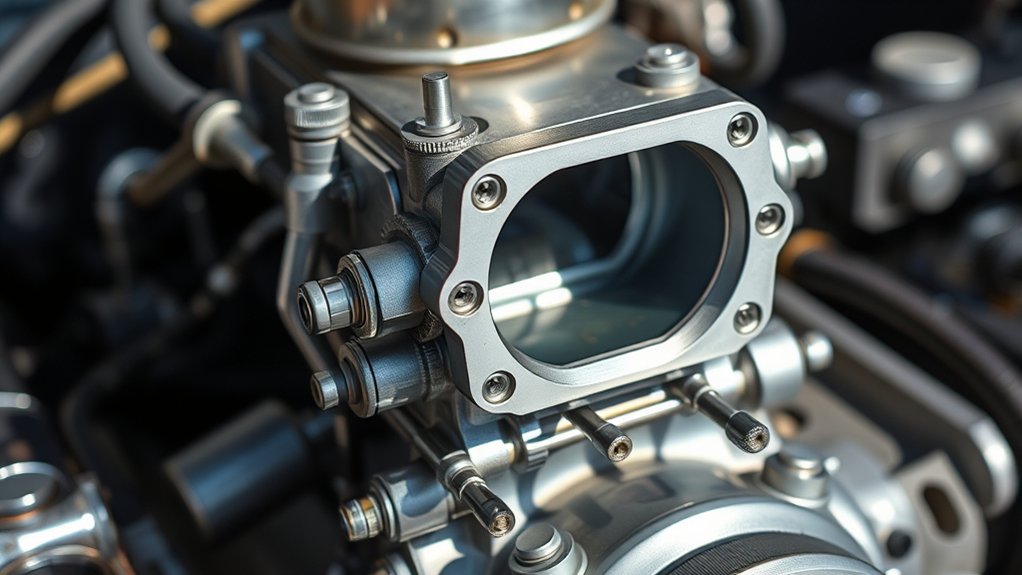
A carburetor plays a crucial role in an engine by mixing the right amount of air and fuel before combustion. This precise air-fuel mixture is essential for the engine to run smoothly and efficiently. The carburetor uses airflow to draw fuel in and atomizes it for better burning.
It adjusts the mixture based on the engine’s demand, ensuring optimal performance under different conditions. Mechanical parts like the throttle and float chamber work together to maintain this balance. These components help regulate the fuel flow and air intake seamlessly.
While carburetors are simple and effective devices, understanding their impact on engine performance provides valuable insight. However, modern engines now often replace carburetors with fuel injection systems for improved efficiency and control.
Key Takeaways
- A carburetor mixes air and fuel in the correct ratio before entering the engine cylinders for combustion.
- It uses airflow through a venturi to draw fuel from the float chamber and atomize it into the air stream.
- The throttle valve controls airflow, regulating engine speed and power output.
- Proper carburetor function ensures smooth engine start, efficient combustion, and consistent throttle response.
- Carburetors rely on mechanical vacuum pressure and require regular maintenance to prevent issues like clogging or flooding.
What Is a Carburetor? Why Was It Used in Engines?
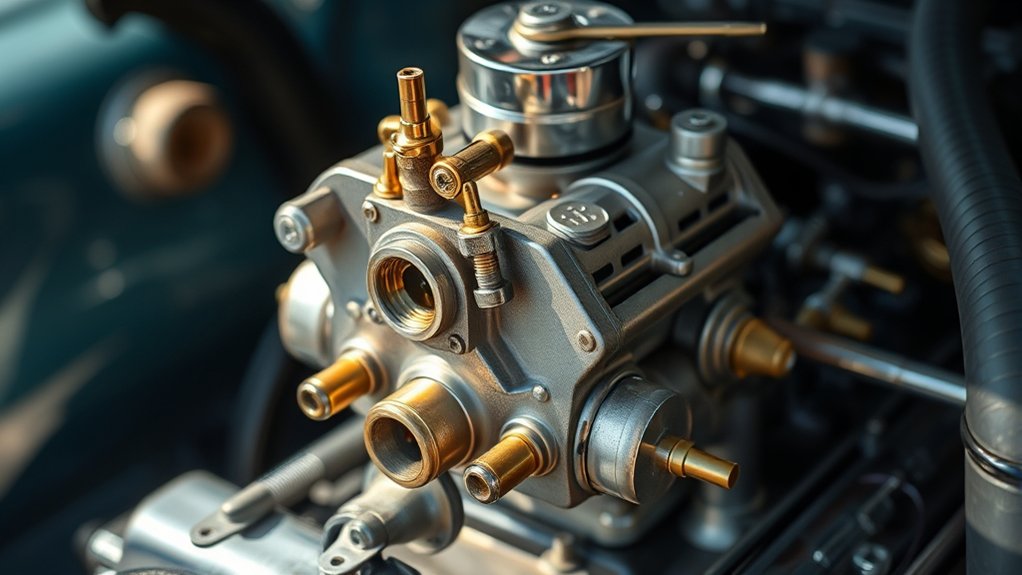
How does a carburetor work in an engine? A carburetor is a mechanical device that mixes air and fuel before it enters the engine’s combustion chamber. You’ll find it in older engines because it was simple, reliable, and effective for its time.
It uses the airflow created by the engine’s intake stroke to draw fuel from a reservoir, blending it with air to create a vaporized mixture necessary for combustion. Before fuel injection systems became common, carburetors were your go-to for controlling the air-fuel ratio. They helped engines start smoothly, run efficiently, and respond well to throttle changes.
Though modern engines mostly use fuel injection, understanding carburetors shows you how early engine technology balanced performance and simplicity.
How Carburetors Mix Air and Fuel
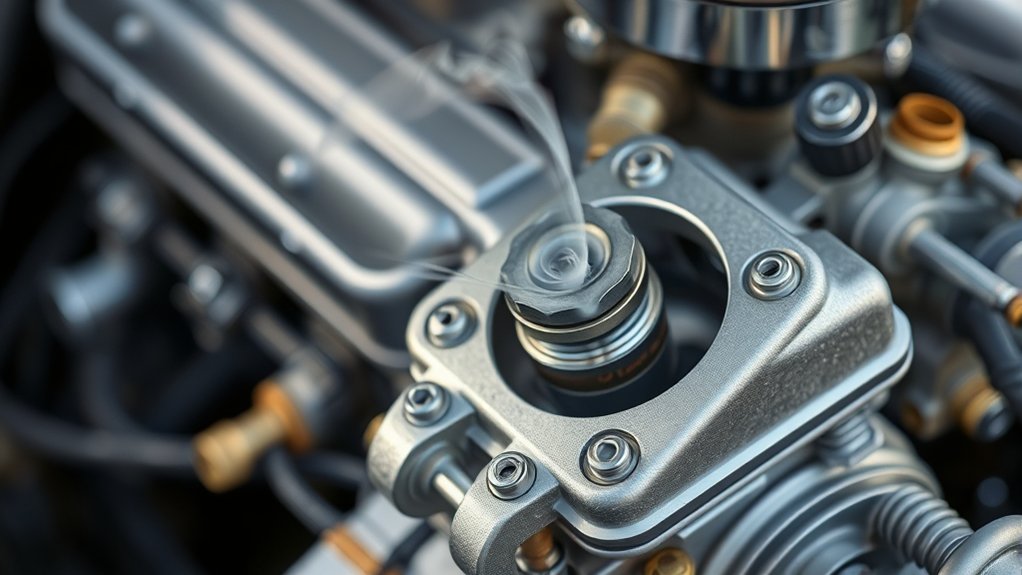
You’ll see that a carburetor controls airflow to regulate how much fuel gets mixed in. It atomizes the fuel so it blends evenly with the air for efficient combustion. Understanding how it balances this mixture ratio is key to grasping its role in engine performance.
Airflow Regulation Mechanism
Why does the carburetor precisely control airflow to mix fuel and air effectively? Because the engine needs the right balance to run smoothly. As you open the throttle, air rushes through a narrow passage called the venturi, which speeds up airflow and lowers pressure.
This pressure drop pulls fuel from the jet into the airstream, blending it with air. You adjust the throttle valve to regulate how much air enters, directly affecting fuel flow. When you close the throttle, less air and fuel mix, slowing the engine.
This airflow regulation ensures the mixture matches engine demand, whether idling or accelerating. By managing air volume and speed, the carburetor keeps the fuel-air ratio consistent, helping your engine perform efficiently under varying conditions.
Fuel Atomization Process
Where does the fuel go once it’s drawn into the airflow? It gets atomized, meaning the carburetor breaks the liquid fuel into tiny droplets and mixes it evenly with air. This process guarantees better combustion and engine efficiency.
Here’s how the fuel atomization works:
- Fuel Delivery: The carburetor pulls fuel from the bowl through a small nozzle called a jet.
- Air Pressure Drop: As air speeds up through the venturi, pressure drops, pulling fuel into the airflow.
- Fuel Spray: The fuel passes through the jet and sprays into the air stream, creating a fine mist.
This fine mist mixes thoroughly with air, allowing the engine to burn fuel more completely and run smoothly.
Mixture Ratio Control
After fuel atomizes into a fine mist, the carburetor must carefully balance the right amount of fuel with air for the engine to run efficiently. You control this balance through the mixture ratio, which adjusts how much fuel mixes with the incoming air. If the mixture is too rich—too much fuel—you risk wasting fuel and fouling spark plugs.
Too lean—too much air—and the engine might sputter or overheat. The carburetor uses jets and valves to regulate this ratio, responding to engine demands and conditions like throttle position and air pressure. By precisely controlling the mixture, the carburetor ensures your engine runs smoothly, delivers power efficiently, and maintains ideal fuel consumption.
This balance is essential for performance and longevity.
Key Parts of a Carburetor and Their Functions
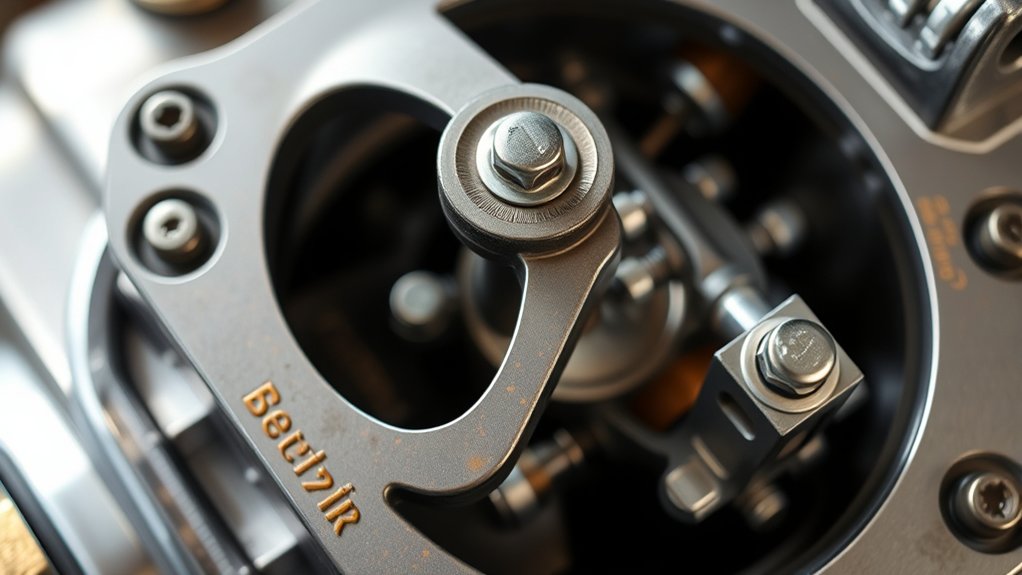
Now, you’ll learn about the main components that make up a carburetor. You’ll see how the fuel delivery mechanism works alongside the airflow regulation system to keep your engine running smoothly.
Understanding these parts helps you grasp how the carburetor controls the air-fuel mix.
Main Carburetor Components
How does a carburetor control the mixture of air and fuel in an engine? It relies on its main components working together seamlessly. You’ll find these key parts essential to its function:
- Throttle Valve – This controls the airflow entering the engine, adjusting speed and power by opening or closing.
- Venturi – A narrow passage that speeds up air, creating a pressure drop that draws fuel into the airflow.
- Float Chamber – Maintains a steady fuel level so the carburetor can deliver a consistent mixture.
Fuel Delivery Mechanism
Where does the fuel go once it leaves the float chamber? It flows through the main jet, a narrow passage that controls the fuel amount entering the carburetor’s throat. You’ll notice the fuel then enters the venturi, where it mixes with air.
The main jet ensures the right fuel quantity reaches this point, maintaining an ideal air-fuel ratio for combustion. Additionally, the idle jet supplies fuel when the engine runs at low speeds, keeping it stable. You rely on these jets to deliver fuel accurately, responding to engine demands.
This precise delivery mechanism allows your engine to perform efficiently, preventing fuel waste or engine stalling. Understanding this helps you appreciate how your carburetor fuels your engine effectively.
Airflow Regulation System
Once fuel mixes with air in the venturi, controlling the airflow becomes vital to maintaining the right balance for combustion. The airflow regulation system guarantees this balance by adjusting how much air enters the engine.
You rely on three key parts to manage this:
- Throttle Valve – You open or close this valve to control the airflow volume, directly influencing engine speed and power.
- Choke Valve – When starting cold, you use the choke to restrict airflow, enriching the mixture for easier ignition.
- Idle Jet – This part regulates airflow and fuel at low engine speeds, so your engine runs smoothly when idling.
Together, these components let you fine-tune airflow, ensuring efficient fuel combustion and perfect engine performance.
How Carburetors Affect Engine Performance and Efficiency
Although you might not always notice it, the carburetor plays a crucial role in determining your engine’s performance and fuel efficiency. It precisely mixes air and fuel in the right proportions, which directly affects how smoothly your engine runs. If the mixture is too rich, your engine wastes fuel and produces more emissions.
If it’s too lean, you risk poor acceleration and potential engine damage. By delivering the ideal blend, the carburetor ensures your engine produces enough power while using fuel efficiently. This balance maximizes performance, helps maintain consistent throttle response, and improves overall mileage.
Common Carburetor Problems to Watch Out For
When your carburetor isn’t working correctly, it can throw off the air-fuel mixture and cause noticeable issues with your engine’s performance. You might experience rough idling, poor acceleration, or even stalling.
These problems often stem from common carburetor issues that you should watch out for.
Common carburetor problems are key culprits behind engine troubles you need to identify early.
Here are three frequent carburetor problems:
- Clogged Jets – Dirt and debris block fuel flow, leading to uneven engine running.
- Vacuum Leaks – Air leaks disrupt the air-fuel ratio, causing the engine to run lean.
- Float Malfunction – A stuck or damaged float can flood the carburetor, resulting in fuel overflow and poor performance.
Recognizing these problems early can help you address engine troubles before they worsen.
Simple Maintenance and Troubleshooting Tips for Carburetors
To keep your carburetor running smoothly, you should perform regular maintenance and know a few basic troubleshooting steps. Start by cleaning the air filter to prevent dirt from entering the carburetor. Check and adjust the idle speed and mixture screws to ensure ideal fuel flow.
Inspect the fuel lines for cracks or leaks and replace them if needed. If your engine hesitates or stalls, clean the jets and passages with carburetor cleaner to remove buildup. Make sure the float level is set correctly to avoid flooding.
Also, check the choke mechanism for proper operation, especially in cold starts. By staying proactive with these simple tasks, you can avoid many common carburetor issues and keep your engine running efficiently.
How Carburetors Compare to Modern Fuel Injection Systems
While carburetors have been the traditional method for mixing air and fuel in engines, modern fuel injection systems offer more precise control over this process. You’ll notice fuel injection adjusts fuel delivery based on real-time data from sensors, improving efficiency and performance. In comparison, carburetors rely on mechanical parts and vacuum pressure, which can be less accurate.
Here’s how they differ:
- Fuel Delivery: Injection systems spray fuel directly, while carburetors mix fuel with air before entering the engine.
- Efficiency: Fuel injection optimizes combustion, reducing emissions and improving fuel economy.
- Responsiveness: Injection reacts faster to changing engine conditions, providing smoother acceleration.
Understanding these differences helps you see why fuel injection dominates modern engines.
Why Carburetors Disappeared From Cars
Although carburetors played a crucial role in engine design for decades, manufacturers phased them out as stricter emission standards and the demand for better fuel efficiency grew. You’ll find that carburetors couldn’t meet the precise fuel control needed for modern engines, making them less effective at reducing harmful emissions. Fuel injection systems replaced carburetors because they deliver fuel more accurately and adjust in real-time to engine conditions.
This switch helped cars run cleaner and use less gas. Additionally, carburetors required frequent tuning, which added maintenance hassles you don’t face with fuel injection. As technology advanced, automakers focused on systems that improved performance while complying with regulations.
Frequently Asked Questions
Can Carburetors Be Used in Small Engines Like Lawnmowers?
Yes, you can use carburetors in small engines like lawnmowers. They’re common in those engines because they mix fuel and air efficiently, helping your mower run smoothly and start easily without complicated fuel injection systems.
How Do Altitude Changes Affect Carburetor Performance?
You’ll notice a 3% power drop for every 1,000 feet increase in altitude because your carburetor struggles to mix less dense air properly.
You’ll need adjustments to maintain engine performance as you climb higher.
What Tools Are Best for Rebuilding a Carburetor?
You’ll need screwdrivers, a carburetor rebuild kit, small wrenches, needle-nose pliers, and a clean workspace.
Don’t forget carb cleaner and compressed air to remove deposits and guarantee all passages are spotless before reassembly.
Are Carburetors Environmentally Friendly Compared to Fuel Injection?
You won’t find carburetors as environmentally friendly as fuel injection systems because they’re less precise, causing more emissions. Fuel injection controls fuel better, reducing pollution and improving efficiency, so it’s the greener choice for your engine.
Can Carburetors Be Adapted for Alternative Fuels?
Think of a carburetor as a chef who can tweak recipes; yes, you can adapt it for alternative fuels by adjusting its mix, letting you experiment with blends like ethanol or propane, though it’s trickier than modern systems.
Conclusion
Now that you know what a carburetor does, you see how it plays a crucial role in mixing air and fuel for your engine. While newer fuel injection systems have replaced carburetors in most cars, understanding them can save you time and money if you work on older engines.
Remember, “a stitch in time saves nine”—regular maintenance keeps your carburetor running smoothly and your engine performing at its best. Don’t overlook this classic component! Proper carburetor maintenance is essential for optimal engine performance and fuel efficiency.

