

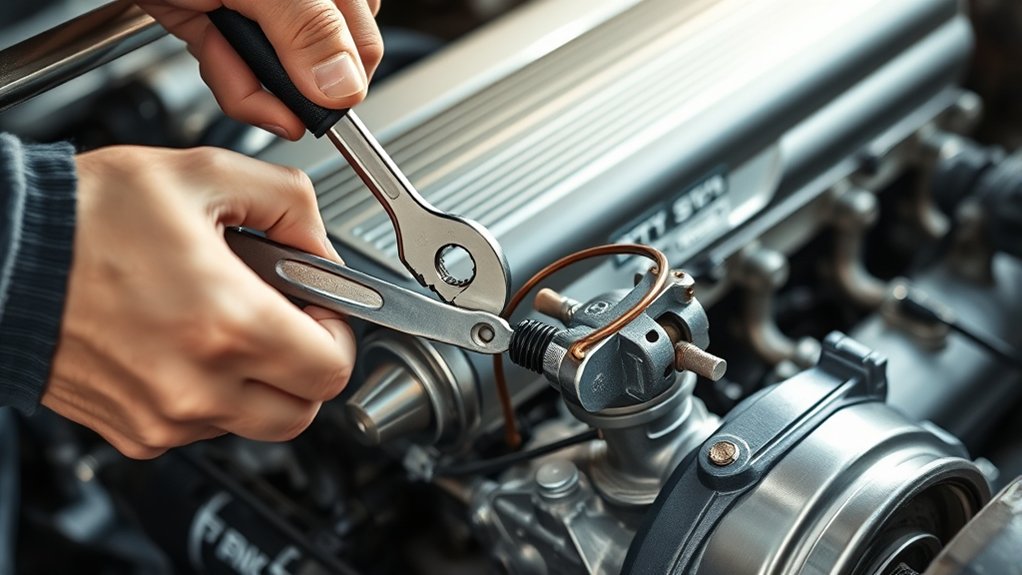
To modify your throttle cable on the carburetor, start by gathering essential tools such as screwdrivers, pliers, and wrenches. Adjusting the throttle cable on the carburetor is crucial for ensuring smooth engine performance and proper throttle response.
Locate the cable where it attaches to the carburetor and loosen the locknuts slightly.
Next, pull or push the cable adjuster to set the right tension—there should be no slack, but it should not be too tight.
Test the throttle to guarantee smooth response, then tighten the locknuts to secure it in place.
If you want to troubleshoot common issues or fine-tune the throttle cable, keep exploring what comes next.
Key Takeaways
- Locate the throttle cable from the throttle grip or pedal to the carburetor and ensure the engine is off and cool.
- Loosen the locknut on the cable adjuster without fully removing it to allow tension adjustment.
- Adjust the cable tension by pulling or pushing the adjuster until slack is removed but the throttle moves freely.
- Tighten the locknut securely after adjustment to prevent the cable from loosening during operation.
- Test throttle response to ensure smooth, quick action and verify the cable end is properly seated in the carburetor lever.
How To Tell If Your Throttle Cable Needs Adjusting
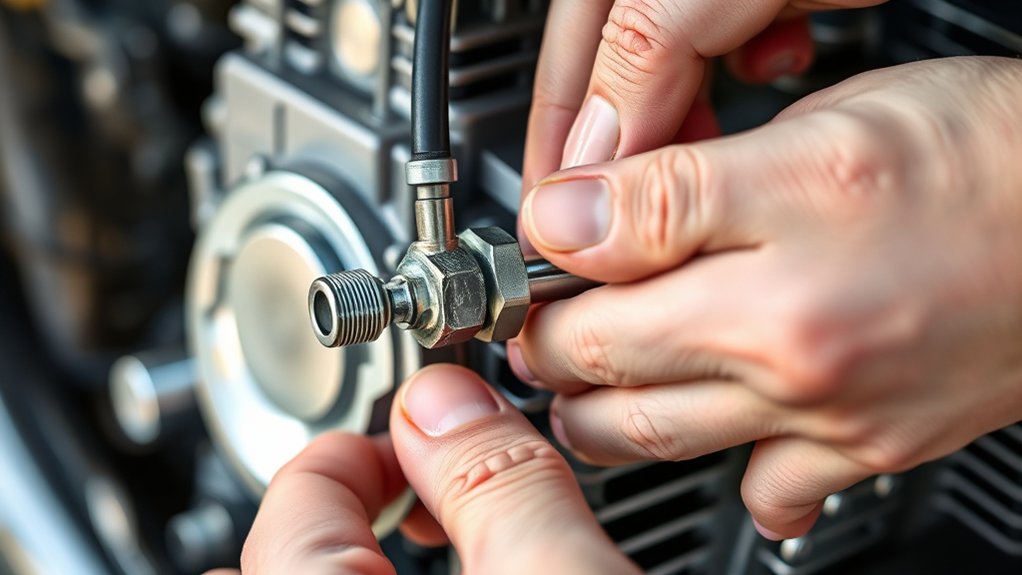
Although you might not notice it immediately, your throttle cable needs adjusting when your engine responds sluggishly or the throttle feels loose. If you twist the throttle and the engine hesitates or revs inconsistently, that’s a clear sign. You might also feel extra play in the throttle grip or pedal before the engine reacts, indicating slack in the cable.
Another clue is if the engine idles roughly or stalls when you release the throttle. Inspect the cable for visible wear, fraying, or rust, which can affect performance. If these symptoms appear, don’t ignore them—adjusting the throttle cable restores proper tension, ensuring smooth acceleration and control.
Catching this early prevents further damage and keeps your ride reliable and safe.
Gather Tools For Throttle Cable Adjustment
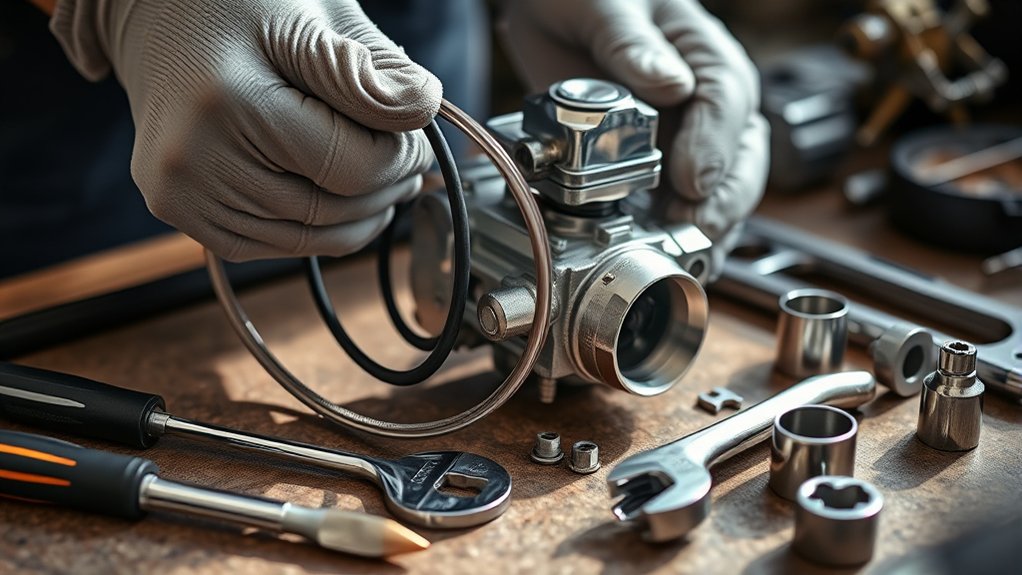
Before you start adjusting the throttle cable, make sure you have all the essential tools ready. Choose quality equipment to make the job easier and safer. Don’t forget to prepare your safety gear to protect yourself during the process.
Essential Tools Checklist
When you’re ready to adjust your throttle cable, having the right tools on hand makes the job much smoother. Start with a set of screwdrivers—both flathead and Phillips—since you’ll need to loosen clamps and adjust screws. A pair of pliers is essential for gripping and pulling the cable when necessary.
You’ll also want an adjustable wrench or a small socket set to handle nuts securing the cable. Don’t forget a flashlight to illuminate tight spaces, especially if you’re working in low light. Finally, keep a clean rag nearby to wipe any grease or dirt.
Having this essential toolkit ready not only speeds up the process but also helps you avoid frustration during the adjustment.
Selecting Quality Equipment
Gathering the right tools is only part of the process; choosing quality equipment guarantees your throttle cable adjustment goes smoothly and lasts longer. Start with durable screwdrivers and wrenches that fit your carburetor’s bolts precisely—this prevents stripping or slipping.
Opt for cables made from corrosion-resistant materials to withstand wear and environmental factors. Select pliers with comfortable grips and reliable tension control to handle delicate cable ends without damage. Investing in a quality lubricant specifically designed for throttle cables also ensures smooth operation after adjustment.
Avoid cheap, low-grade tools that can break or cause mistakes. By choosing reliable, well-made equipment, you’ll save time and effort while achieving a precise, lasting throttle cable adjustment that keeps your engine responsive and safe.
Safety Gear Preparation
Though adjusting a throttle cable requires skill, wearing the right safety gear guarantees you stay protected throughout the process. Before you start, put on safety glasses to shield your eyes from dirt or debris. Gloves are essential to protect your hands from sharp edges and grime.
Wear long sleeves to avoid skin irritation and closed-toe shoes for foot protection. Confirm your workspace is well-lit and ventilated.
Gather your tools in advance: screwdrivers, pliers, and wrenches, all in good condition. Having everything within reach prevents unnecessary movements that could cause accidents. Remember, safety gear isn’t optional—it’s your first line of defense.
Taking these precautions keeps you safe and focused, making your throttle cable adjustment smoother and more effective.
Locate The Throttle Cable And Carburetor Connection
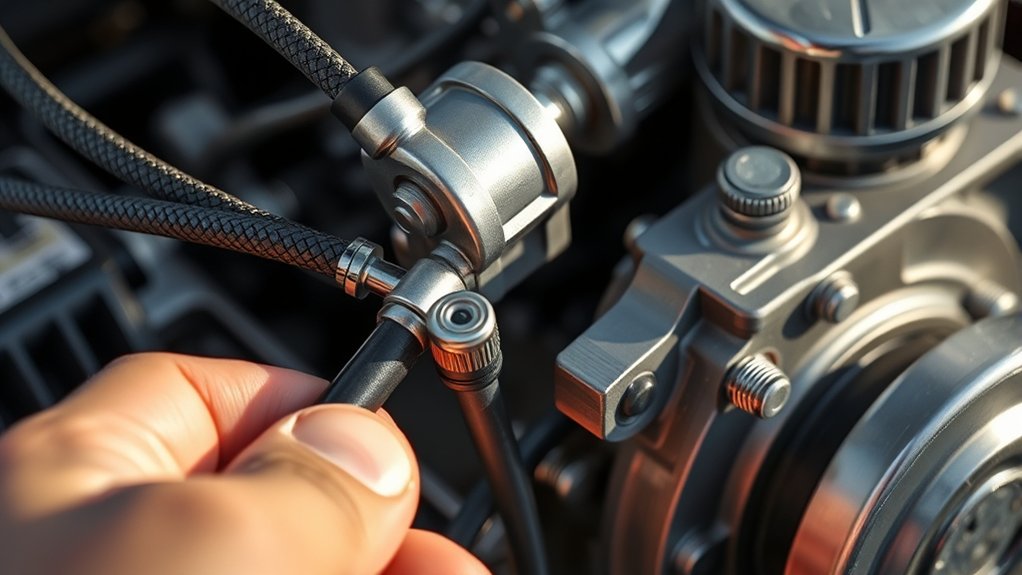
Before you adjust the throttle cable, you’ll need to find where it connects to the carburetor. Start by locating the carburetor itself, usually attached to the engine intake manifold. The throttle cable runs from the throttle grip or pedal to a small lever or arm on the carburetor.
Follow the cable along its length until you spot where it hooks onto this lever. This connection controls the carburetor’s throttle valve, regulating engine speed. You might need to clear away some debris or covers for better access.
Make sure the engine is off and cool before you begin. Once you’ve identified the cable and its connection point on the carburetor, you’re ready for the next step in adjusting the cable tension.
Loosen Locknuts And Adjust Cable Tension
Now that you’ve located the throttle cable connection on the carburetor, the next step is to loosen the locknuts securing the cable adjuster. Use a wrench to carefully turn the locknuts counterclockwise until they’re loose enough to move the adjuster freely. Be sure not to remove them completely.
Once loosened, pull or push the throttle cable adjuster to increase or decrease tension. The goal is to eliminate any slack without making the cable too tight, which could cause the throttle to stick. Keep an eye on the cable’s movement as you adjust, ensuring it moves smoothly.
After setting the appropriate tension, hold the adjuster in place and tighten the locknuts to secure your adjustment firmly. This prevents the cable from slipping during operation.
Test Throttle Response And Fine-Tune Adjustment
Now that you’ve adjusted the cable tension, it’s time to test the throttle response. Twist the throttle and observe how smoothly it moves and returns.
If you notice any sticking or delay, make small adjustments until the throttle operates perfectly.
Checking Throttle Responsiveness
How quickly does your throttle respond when you twist the grip? To check throttle responsiveness, first verify the engine is running smoothly. Twist the throttle grip gently and observe how promptly the engine revs up.
The throttle should respond immediately without any lag or sticking. If you notice delayed response or hesitation, the cable might still be too loose or tight. Pay attention to any resistance or roughness when twisting the grip, which indicates friction or improper cable routing.
Also, make sure the throttle snaps back fully when released—this ensures safety and proper idle speed. Repeat these checks while the engine is off to feel the cable’s tension and smoothness. Adjust as needed to achieve a quick, smooth throttle action before moving on.
Performing Final Cable Adjustments
After checking throttle responsiveness and ensuring the cable moves smoothly without delay or sticking, it’s time to perform the final cable adjustments. Start by loosening the locknut on the adjuster.
Then, turn the adjuster to either increase or decrease cable tension, aiming for a slight free play—usually around 2-3mm—to prevent premature wear or sluggish response. Test the throttle several times, noting any lag or stiffness.
Fine-tune the adjuster accordingly until the throttle snaps back immediately when released.
| Adjustment Step | What to Do |
|---|---|
| Loosen Locknut | Use a wrench to loosen the locknut |
| Adjust Cable Tension | Turn adjuster to set 2-3mm free play |
| Test & Fine-Tune | Check throttle response and tweak |
Once satisfied, tighten the locknut securely.
Tighten Locknuts To Secure Cable
Once you’ve positioned the throttle cable correctly, tighten the locknuts to secure it firmly in place. Use a wrench or pliers to hold the cable’s adjusting nut steady while you turn the locknut clockwise. This prevents the cable from shifting during operation.
Make sure both locknuts are snug against the cable bracket or throttle arm to eliminate any slack. Avoid overtightening, which could damage the cable housing or make throttle movement stiff. After tightening, check that the throttle moves smoothly from closed to open without binding or excessive free play.
If everything feels right, the cable is securely fastened in position. This step ensures consistent throttle response and prevents accidental changes while riding or driving.
Troubleshoot Common Throttle Cable Issues
If your throttle feels sticky or unresponsive, you’ll want to identify common cable issues before making adjustments. First, check for frayed or kinked cables, which can cause binding and prevent smooth throttle movement.
If your throttle feels sticky, inspect for frayed or kinked cables that may cause binding.
Next, inspect the cable housing for cracks or damage that may let dirt and moisture in, leading to corrosion. Also, make sure the cable is properly lubricated; a dry cable can cause stiffness.
Verify that the cable isn’t too tight or too loose—both can affect throttle response. Finally, confirm that the cable end fits securely in the throttle lever and carburetor linkage.
Addressing these issues early will help maintain smooth throttle operation and prevent sudden engine hesitation or stalling while riding or driving.
Frequently Asked Questions
What Types of Throttle Cables Are Compatible With Different Carburetors?
You’ll find universal throttle cables fit most carburetors, but some require specific lengths or end fittings. Check your carburetor’s model and cable type—push-pull or pull-only—to guarantee compatibility and smooth throttle response.
How Often Should Throttle Cable Maintenance Be Performed?
Think of your throttle cable as a lifeline; you should perform maintenance every 3,000 to 5,000 miles or at least twice a year.
This keeps it smooth, responsive, and prevents sudden snags on your ride.
Can a Throttle Cable Adjustment Improve Fuel Efficiency?
Yes, adjusting your throttle cable can improve fuel efficiency by ensuring smoother throttle response and preventing unnecessary fuel consumption.
Keeping it properly tuned helps your engine run more efficiently, saving you money and reducing emissions over time.
What Are the Signs of a Completely Worn-Out Throttle Cable?
When the throttle cable’s completely worn out, you’ll notice sluggish throttle response, sticking, or it may not return smoothly—it’s like the straw that broke the camel’s back, causing engine hesitation or even stalling during acceleration.
Are There Any Safety Precautions When Working Near the Carburetor?
You should always disconnect the spark plug to prevent accidental starts, work in a well-ventilated area to avoid inhaling fumes, wear gloves to protect your hands, and keep flames or sparks away from the carburetor.
Conclusion
Now that you’ve adjusted your throttle cable, you’re ready to hit the road with smooth, responsive control like never before—almost as if your bike’s got a mind of its own!
Remember, a properly tuned cable can make all the difference between a frustrating ride and pure joy. Keep an eye on your throttle’s feel, and don’t hesitate to fine-tune when needed.
With these simple steps, you’ll master throttle adjustments in no time! Proper throttle cable adjustment on your carburetor ensures optimal performance and enhances your riding experience.

