


Your car horn might not be working due to several common issues such as a blown fuse, a failed relay, or damage to the horn button or wiring. These problems often prevent the horn from functioning properly and can be frustrating to diagnose.
Additionally, the horn itself may wear out over time, or the diaphragm inside might stop vibrating as it should.
Start by checking the fuse and relay to ensure they are intact. Then, inspect the wiring and connections for any signs of corrosion or breaks.
If everything appears fine but the horn remains silent, the horn may need to be replaced. Keep exploring for ways to diagnose and fix these common issues yourself.
Key Takeaways
- A blown fuse or faulty horn relay can interrupt power supply and prevent the horn from working. Wiring problems like loose connections, corrosion, or broken wires often cause horn failure.
- A broken or worn horn button on the steering wheel can stop the horn circuit from closing. The horn itself may be damaged or worn out, affecting its sound or preventing it from working.
- Testing the horn with a 12V battery and inspecting components helps identify the faulty part.
Check the Horn Fuse and Relay First
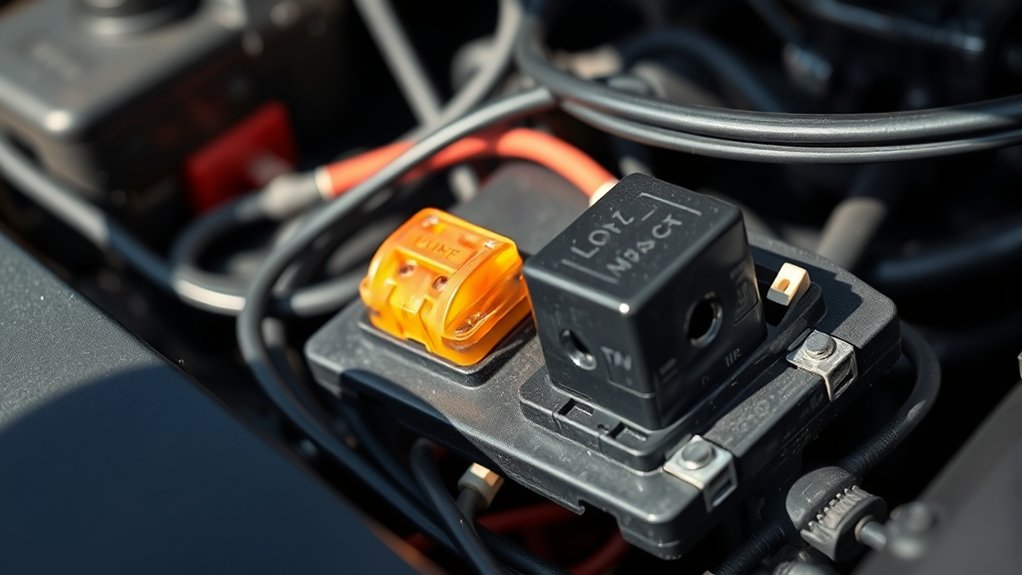
Before diving into complex diagnostics, you should check the horn fuse and relay first, as these components often cause the horn to stop working. Locate your vehicle’s fuse box, usually under the dashboard or hood, and find the horn fuse by referring to the fuse box diagram. Pull the fuse out and inspect it—if it’s blown, replace it with one of the same rating.
Next, identify the horn relay, often near the fuse box. You can swap it with another relay of the same type to test if it’s faulty. If replacing the fuse or relay restores the horn’s function, you’ve solved the problem without further hassle.
This simple step can save you time and money before checking more complicated parts.
Inspect the Horn Button and Steering Wheel Wiring
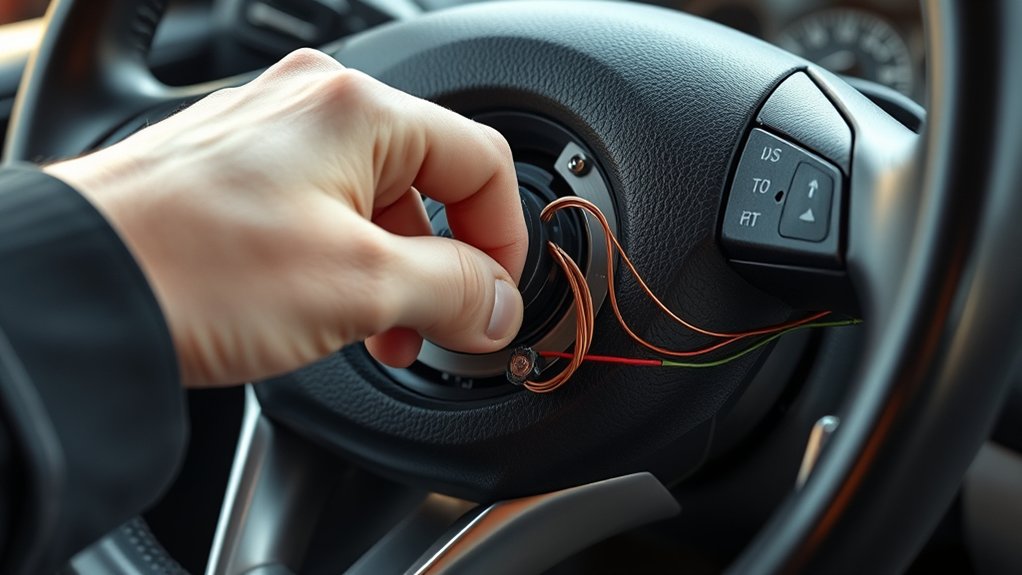
If replacing the fuse and relay didn’t fix your horn, the issue might lie with the horn button or the wiring inside the steering wheel. First, remove the airbag carefully to access the horn button wiring. Check for any loose connections or damaged wires.
Press the horn button and observe if the wiring moves or disconnects. If the wiring looks fine, test the horn button itself with a multimeter to verify it’s sending power.
| Step | Action |
|---|---|
| 1 | Remove airbag safely |
| 2 | Inspect wiring for damage |
| 3 | Press horn button, watch wiring |
| 4 | Test horn button with multimeter |
Address any wiring issues or replace the horn button if faulty before moving on.
Test the Horn for Damage or Wear

Even when the wiring and horn button check out fine, your horn itself can still be damaged or worn out. To test it, first locate the horn, usually found behind the grille or near the radiator. Inspect it visually for rust, corrosion, or physical damage.
If you have a multimeter, disconnect the horn’s electrical connector and measure resistance; a reading far from the manufacturer’s specs indicates a problem. You can also try directly powering the horn with a 12V battery; if it doesn’t sound, it’s likely faulty. Remember to use proper safety precautions when handling electrical components.
If you find signs of wear or the horn fails these tests, replacing it is often the simplest fix to restore your horn’s function.
Diagnose Wiring and Electrical Connection Problems
Now, check the horn fuse to make sure it’s not blown, as this can cut power to the horn. Inspect the wiring for any signs of damage or loose connections that might interrupt the electrical flow.
Finally, test the horn relay to confirm it’s functioning properly and sending power when you press the horn button.
Inspect Horn Fuse
Where should you start when your car horn suddenly stops working? The horn fuse is a common culprit and an easy fix. Here’s how to inspect it:
- Locate the fuse box: Check your owner’s manual to find the exact location. It’s often under the dashboard or in the engine compartment.
- Identify the horn fuse: Use the diagram on the fuse box cover or manual to spot the fuse linked to the horn.
- Check the fuse condition: Pull the fuse out and look for a broken wire or discoloration. If it’s blown, replace it with one of the same amperage.
Inspecting the fuse can save you stress and money before moving to more complex electrical issues.
Check Wiring Integrity
How can you tell if your car horn’s wiring is the problem? Start by visually inspecting the wiring connected to the horn and its fuse box. Look for frayed, corroded, or broken wires that could interrupt the electrical flow.
Pay close attention to connectors; make sure they’re firmly attached and free of rust or debris. If you spot any damage, repair or replace the faulty section. Use a multimeter to check for continuity in the wiring—no continuity means there’s a break somewhere.
Also, test for voltage at the horn terminals when you press the horn button. If voltage’s present but the horn doesn’t sound, wiring is likely okay, and you can rule it out as the issue. Otherwise, focus on fixing the wiring problems you find.
Test Horn Relay
Before assuming the horn relay is faulty, you’ll want to test it to confirm whether it’s causing the electrical issue. The relay controls the power flow to your horn, so a malfunction here can stop it from working. Here’s how to test it:
- Locate the horn relay in the fuse box and remove it carefully.
- Swap it with another relay of the same type from your vehicle, like the one for the headlights.
- Press the horn button—if it works, the relay is the problem; if not, the issue lies elsewhere.
Testing the relay saves you from unnecessary replacements and frustration. It’s a simple step that can quickly get your horn sounding again and restore your peace of mind.
Fix Common Horn Wiring and Circuit Issues at Home
Although diagnosing horn wiring and circuit issues might seem intimidating, you can often fix common problems at home with a few basic tools and some careful inspection. Start by checking the horn fuse in your vehicle’s fuse box; replace it if it’s blown.
Next, inspect the wiring for visible damage like fraying or corrosion, especially around connectors and grounding points. Use a multimeter to test for continuity and voltage at the horn terminals while pressing the horn button. If you find a break or no voltage, trace the wiring back to locate the fault.
Clean any corroded connectors with electrical contact cleaner and secure loose wires. Fixing these issues yourself can restore your horn’s function without costly repairs or replacements.
When to Replace Your Horn or Its Components
If your car horn still doesn’t work after checking the wiring and fuse, it might be time to replace the horn or its components. You don’t want to risk safety or get stuck with a silent horn when you urgently need it.
Consider replacing parts if:
- The horn sounds weak, distorted, or inconsistent despite clean connections.
- You notice visible damage, corrosion, or rust on the horn or its mounting bracket.
- Pressing the horn button produces no noise, indicating a faulty horn unit or relay.
Replacing these parts is often straightforward and restores your horn’s reliability. Don’t ignore these signs, as a non-functional horn can jeopardize your safety and others on the road.
Act promptly to keep your vehicle alert and compliant with traffic laws.
When Should You See a Professional Mechanic?
Replacing your horn or its components can often solve many issues, but sometimes the problem runs deeper than what you can fix on your own. If you’ve tried replacing the horn or fuse and it still won’t work, it’s time to see a professional mechanic.
Complex electrical problems, such as wiring faults or issues with the horn relay, require specialized diagnostic tools and expertise. Also, if your horn intermittently works or only functions under certain conditions, a mechanic can pinpoint inconsistent electrical connections or grounding problems.
Don’t disregard persistent problems, as they might affect your vehicle’s safety systems. When in doubt, having a professional inspect your horn ensures a thorough diagnosis and proper repair, saving you time and preventing further damage.
How Your Car Horn Works: And Why It Might Stop
Your car horn works by sending an electrical signal to a diaphragm that creates sound when you press the horn button. If it stops working, common causes include a blown fuse, faulty wiring, or a bad horn switch.
Understanding these basics can help you pinpoint the problem faster.
Horn Mechanism Basics
How does a car horn actually work, and what causes it to stop sounding? When you press the horn button, it completes an electrical circuit that powers the horn. Inside, an electromagnet moves a diaphragm back and forth, creating the sound you hear.
If it stops working, it’s often because one of these key parts isn’t functioning properly.
Here’s what you should know about the horn mechanism basics:
- Horn Button – It closes the circuit when pressed, sending power to the horn.
- Electromagnet – It activates the diaphragm by rapidly attracting and releasing it.
- Diaphragm – It vibrates to produce the loud honking sound.
Understanding these parts helps you grasp why your horn might suddenly go silent.
Common Failure Causes
Although car horns seem simple, several common issues can cause them to stop working. First, a blown fuse is a frequent culprit—you should check your fuse box to see if it needs replacing.
Next, wiring problems like loose connections or corrosion can interrupt the horn’s power supply. You might also have a faulty horn relay, which controls the electrical current to the horn. Another common cause is a broken or worn horn button on the steering wheel, preventing the circuit from completing.
Finally, the horn itself can fail over time due to wear or damage. By systematically inspecting these parts, you can often pinpoint the issue and decide whether a simple fix or a professional repair is needed.
Frequently Asked Questions
Can a Dead Car Battery Cause the Horn to Stop Working?
Yes, a dead car battery can cause your horn to stop working because the horn relies on electrical power. If the battery’s dead, it won’t send enough power to activate the horn, so it won’t sound.
Does Weather Affect the Functionality of My Car Horn?
Yes, weather can affect your car horn’s functionality. Moisture from rain or snow might cause electrical connections to short or corrode, and extreme cold can thicken wiring insulation, making your horn less responsive or silent.
Are There Legal Restrictions on Car Horn Use?
Yes, you’ll find legal restrictions on car horn use vary by location. Typically, you can’t use your horn unnecessarily or in quiet zones.
Make sure you know local rules to avoid fines or complaints.
Can a Car Alarm System Interfere With the Horn?
Yes, your car alarm system can interfere with the horn, like a noisy neighbor blocking your favorite song. Sometimes, wiring conflicts or a faulty alarm relay prevent the horn from sounding properly, so check those connections first.
How Loud Should a Functioning Car Horn Be?
You should expect a functioning car horn to be loud enough to grab attention, typically between 90 to 110 decibels. If it sounds weak or muffled, it might need repair or replacement to guarantee safety.
Conclusion
If you’re worried fixing your horn might be too complicated or expensive, don’t be. Many common issues, like a blown fuse or loose wiring, are simple to check and fix yourself with basic tools. Taking a little time to troubleshoot can save you from bigger problems and keep you safe on the road.
If your car horn is still not working after these steps, it’s important to consider professional help. A qualified mechanic can diagnose and repair more complex issues quickly and efficiently. Ensuring your horn functions properly is crucial for your safety and the safety of others.
In conclusion, understanding why your car horn is not working and addressing common problems can save you time and money. If DIY fixes don’t solve the issue, consulting a professional mechanic is the best choice to restore your car horn’s functionality.

