

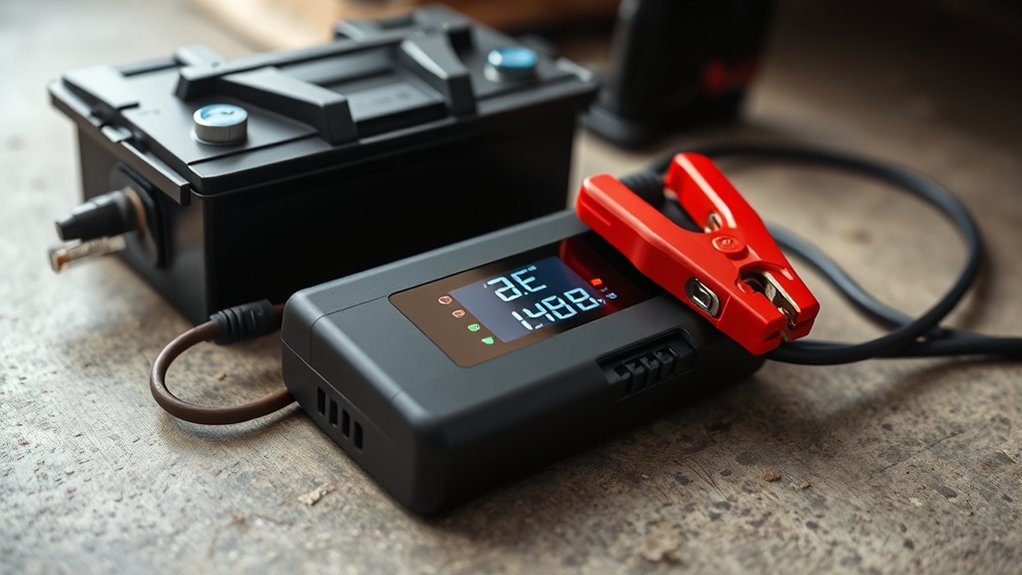
A car battery charger typically delivers between 2 and 12 amps, depending on your battery’s size and charging needs. Understanding how many amps a car battery charger has is essential for selecting the right charger. Using the correct amperage ensures safe and efficient charging without harming your battery.
Lower amps, like 2 to 4, work well for small batteries or maintenance charging.
Chargers providing 6 to 10 amps suit most vehicles’ regular charging needs.
For larger batteries or quick boosts, some chargers can reach 12 amps or more.
Choosing the right amp rating helps you maintain your battery’s health and performance. Keep exploring to better understand charger types and how to select the best amp rating for your battery.
Key Takeaways
- Car battery chargers typically range from 2 to 12 amps depending on charger type and battery size.
- Low-amp chargers (2-4 amps) are ideal for small batteries and maintenance charging.
- Medium amps (6-10 amps) suit most vehicle batteries for standard charging needs.
- High-amp chargers (10+ amps) provide rapid charging but require careful monitoring to avoid damage.
- Selecting the correct amp rating ensures safe, effective charging and prolongs battery life.
What Does “Amperage” Mean for Your Car Battery Charger?
Amperage refers to the amount of electrical current your car battery charger delivers to the battery. When you look at a charger, the amperage rating tells you how much current flows from the charger into the battery. This value is important because it determines how the charger interacts with the battery’s electrical system.
Higher amperage means more current is available, but it doesn’t automatically mean better charging for every battery. You’ll want to pick a charger with an amperage rating that matches your battery’s needs to avoid issues. Understanding amperage helps you use your charger safely and effectively,
ensuring your battery gets the right amount of power without risking damage or inefficiency.
How Charger Amps Affect Charging Speed
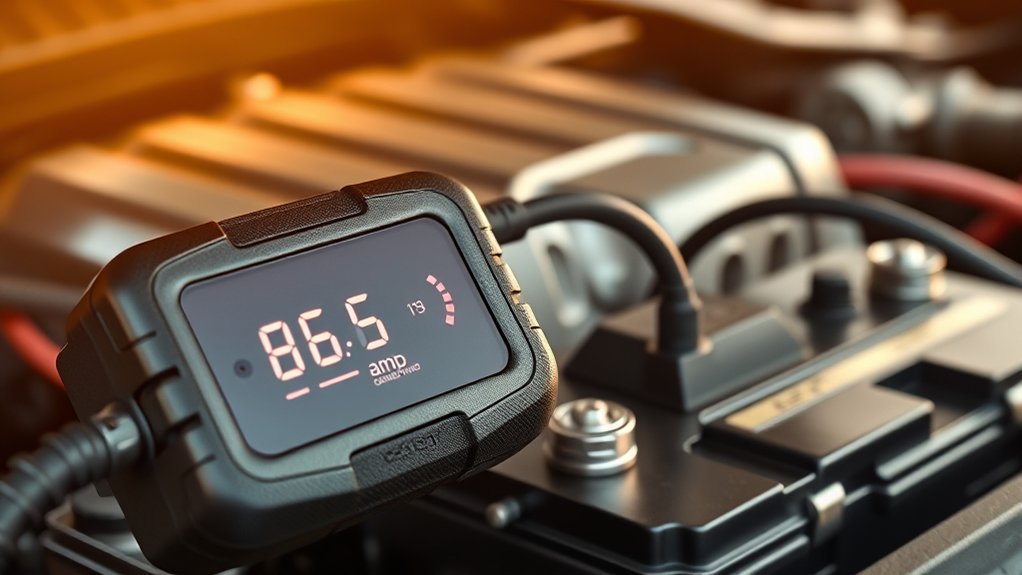
While charging your car battery, the number of amps your charger delivers directly impacts how quickly the battery regains power. Higher amps push more electrical current into the battery, speeding up the charging process. Conversely, lower amps provide a slower charge, extending the time it takes to reach full capacity.
However, charging too fast with high amps might overheat or damage the battery, so it’s essential to match the charger’s amps with your battery’s specifications. Slow charging with lower amps is gentler, promoting battery health over time. When you choose a charger, consider how urgently you need the battery charged and the battery’s tolerance for current.
Understanding this balance helps you charge efficiently without risking harm to your battery.
Common Amp Ratings for Car Battery Chargers
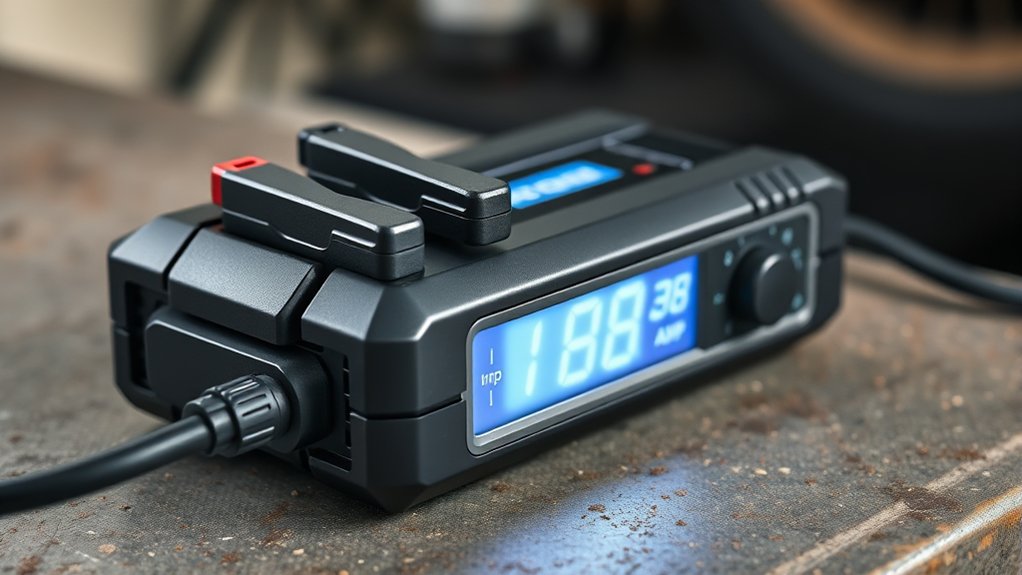
Because different charging needs demand varying power levels, car battery chargers come with a range of common amp ratings. You’ll typically find chargers rated at 2, 4, 6, 10, or 12 amps. Lower-amp chargers, like 2 or 4 amps, are great for maintaining your battery’s charge over time or charging smaller batteries.
If you need a faster charge, a 6 or 10-amp charger works well for most vehicles. For larger batteries or quicker charging, 12-amp chargers deliver more current but require careful use to avoid overcharging. When choosing a charger, consider your battery size and how quickly you want it charged.
Matching the amp rating to your needs helps keep your battery healthy and ready to go.
Differences Between Trickle Chargers and High-Amp Chargers
You’ll notice trickle chargers deliver a slow, steady charge, ideal for maintaining smaller or less-used batteries, while high-amp chargers charge quickly and suit larger or deeply drained batteries.
It’s important to match the charger type to your battery to avoid damage and guarantee safety. Let’s look closer at how charging speed, battery compatibility, and maintenance needs differ between these chargers.
Charging Speed Comparison
How quickly do you need your car battery charged? If time is tight, high-amp chargers are your best bet. They deliver a strong current, often 10 amps or more, charging your battery in a few hours.
This speed is ideal when you can’t wait long, like during emergency situations. On the other hand, trickle chargers supply a low, steady current—usually 1 to 2 amps. They take much longer but are gentler on your battery, perfect for maintaining charge over extended periods without overcharging.
Choosing between them depends on your urgency and battery care priorities. If you want fast charging, go high-amp; if you prefer slow, safe charging, trickle chargers suit you better.
Suitable Battery Types
Which type of battery suits your charger best? If you’re working with smaller, maintenance-friendly batteries like those in motorcycles or lawnmowers, a trickle charger is ideal. It delivers a low, steady current that gently keeps your battery topped off without overcharging.
On the other hand, if you need to quickly recharge a large car or truck battery, a high-amp charger is your go-to. It pumps out more current, restoring power faster but requires careful monitoring to avoid damage. Remember, trickle chargers are perfect for prolonged, slow charging, while high-amp chargers suit quick boosts for larger batteries.
Matching your charger’s output to your battery type guarantees efficient charging and helps extend battery life.
Safety and Maintenance
Although both trickle chargers and high-amp chargers serve to recharge your battery, they demand different safety precautions and maintenance routines. Trickle chargers deliver a low, steady current, making them safer for extended use and reducing the risk of overcharging. You can leave a trickle charger connected for longer periods, but you should regularly check the battery and charger to prevent corrosion and assure connections remain tight.
High-amp chargers provide a rapid charge, which can generate heat and increase the risk of battery damage if not monitored closely. When using a high-amp charger, you need to supervise the charging process carefully and disconnect once the battery is full. Also, inspect cables and terminals frequently for signs of wear or overheating to maintain safety.
How to Choose the Right Amp Rating for Your Car Battery
Because your car battery’s condition and your charging needs vary, selecting the right amp rating is essential for effective and safe charging. First, consider your battery’s size and state of charge. A higher amp charger charges faster but risks overheating or damaging a weak battery.
Conversely, a lower amp charger charges more gently, ideal for maintaining or slowly recharging a battery. Next, think about how quickly you need your battery charged. If time is tight, a charger with a higher amp rating can help, but it’s best to avoid exceeding your battery’s recommended charging rate.
Always check your battery manufacturer’s guidelines and choose an amp rating that balances charging speed with battery health to guarantee best performance and longevity.
When to Use a 2-Amp vs. 10-Amp Car Battery Charger
When deciding between a 2-amp and a 10-amp car battery charger, consider how quickly you need to charge your battery and its current condition. Use a 2-amp charger for slow, steady charging or maintaining a battery’s charge over time without risking damage. It’s ideal for batteries that aren’t deeply discharged or when you have plenty of time.
On the other hand, choose a 10-amp charger when your battery is considerably drained and you want to restore its charge faster. Just be cautious not to overcharge or heat the battery by charging it too quickly. By matching the charger’s amp rating to your battery’s needs and your time constraints, you’ll keep your battery healthy and ready to go.
Amp Ratings for Jump-Starting a Dead Battery
If you need to jump-start a dead battery, understanding the right amp rating is essential to doing it safely and effectively. Most jump starters provide between 400 and 1000 amps to deliver a powerful, quick burst of energy necessary to crank the engine. Using a charger with too low an amp rating might not start your car, while a higher rating ensures a faster jump but isn’t always required for smaller vehicles.
Here’s a quick guide to amp ratings based on vehicle type:
| Vehicle Type | Recommended Amps |
|---|---|
| Small Cars | 400 – 600 amps |
| Midsize Cars | 600 – 800 amps |
| SUVs & Light Trucks | 800 – 1000 amps |
| Large Trucks | 1000+ amps |
| Motorcycles | 200 – 400 amps |
Choose accordingly for safe and efficient jump-starting.
Risks of Using Too High or Too Low Amps
Although using the wrong amp rating might seem like a minor mistake, it can cause serious damage to your vehicle’s battery and electrical system. If you use too high an amp setting, you risk overheating the battery, which can lead to swelling, leaks, or even explosions.
On the other hand, using too low an amp rating can prolong charging time and might not fully charge the battery, leaving you with unreliable power.
Here are key risks to watch for:
- Overheating and damage from excessive current flow
- Incomplete charging causing battery underperformance
- Potential harm to electrical components due to irregular voltage spikes
Always select the correct amp rating to protect your battery and ensure safe, efficient charging.
How Amp Ratings Impact Battery Health and Lifespan
Since the amp rating directly controls the charging speed, it plays a crucial role in maintaining your battery’s health and extending its lifespan. Charging your battery with the right amp rating ensures it fills efficiently without overheating or causing damage. Too high an amp rate can overcharge and stress the battery plates, leading to reduced capacity and early failure.
On the other hand, a very low amp rating might take too long, increasing the risk of sulfation, where lead sulfate crystals build up and impair performance. By choosing an appropriate amp rating, you help preserve the chemical balance inside the battery, keeping it healthy for longer. Proper amp management ultimately means fewer replacements and better reliability when you need your car the most.
Safely Adjusting Charger Amps for Different Batteries
When you adjust charger amps for different batteries, you guarantee a safer and more effective charging process tailored to each battery’s needs. Different batteries require different charging currents to avoid damage or reduced lifespan. For example, a small motorcycle battery needs a lower amp setting than a large car battery.
Adjusting charger amps ensures safer charging tailored to each battery’s specific current needs, preventing damage and extending lifespan.
Always start by checking the battery’s specifications before adjusting the charger.
Here’s how to safely adjust charger amps:
- Match the charger’s amp setting to the battery’s recommended charging current.
- Use a lower amp setting for smaller or partially charged batteries to prevent overheating.
- Monitor the battery during charging to ensure it doesn’t overheat or swell.
Following these steps ensures your battery charges efficiently and lasts longer.
How to Read and Understand the Amp Rating on Your Charger
You’ll find the amp rating clearly marked on your charger’s label, showing how much current it delivers. Understanding this number helps you match the charger to your battery’s needs for safe and efficient charging.
Let’s break down what the amp rating means and how to read the label correctly.
Amp Rating Basics
Although amp ratings might seem confusing at first, understanding them is essential for choosing the right car battery charger. The amp rating tells you how much current the charger can provide to your battery. A higher amp rating charges your battery faster but may risk overheating if not used properly.
A lower amp rating charges slower but is gentler on the battery, ideal for maintenance charging.
Here’s what you need to focus on when reading amp ratings:
- Amps (A): The current the charger delivers; impacts charging speed.
- Multi-amp settings: Some chargers offer adjustable amps for different needs.
- Continuous vs. peak amps: Continuous amps indicate steady current, which is most important.
Understanding these basics helps you pick the perfect charger for your battery’s health and charging time.
Charger Label Explained
Because charger labels pack key information into small print, knowing how to interpret the amp rating can help you choose the right charging speed and guarantee safe use. Look closely at the label for numbers followed by “A” or “amps”—this indicates the charger’s current output. A higher amp rating means faster charging but may risk overheating if used improperly.
Some chargers list multiple amp settings; these let you select slow or fast charging modes depending on your battery’s condition. Also, check for voltage compatibility to match your car battery (usually 12V). Understanding these details ensures you don’t overload your battery or charger.
Always follow the manufacturer’s guidelines printed on the label to keep your battery healthy and your charging process safe.
Battery Maintenance Tips for Different Charging Amps
When charging your car battery, matching the charger’s amp output to your battery’s needs is essential for effective maintenance. Using the right amperage prevents overcharging or undercharging, which can shorten battery life. For lower amp chargers (2-4 amps), use a slow, steady charge to avoid overheating, perfect for maintaining smaller or older batteries.
Matching your charger’s amps to your battery’s needs ensures safe, effective charging and extends battery life.
Medium amps (5-10 amps) work well for regular maintenance and quicker charging without stressing the battery. High amps (above 10 amps) are best reserved for emergency boosts or large batteries but require close monitoring.
Keep these tips in mind:
- Use a low amp charger for long-term, gentle charging.
- Monitor medium amp charging to prevent overheating.
- Avoid leaving high amp chargers connected for too long.
This approach keeps your battery healthy and reliable.
Troubleshooting Common Charging Issues by Amp Rating
When your charger uses low amps, it might take too long to fully charge your battery or fail to start charging. On the other hand, high amp chargers can risk overheating or damaging the battery if not monitored carefully.
Knowing these issues helps you pick the right amp rating and troubleshoot effectively.
Low Amp Charging Problems
Although low amp chargers are gentle on your battery, they often cause frustration by charging too slowly or failing to fully restore power. If you rely on a charger with just 1-2 amps, you might find it takes an entire day or more to reach a full charge. This slow pace can be inconvenient if you need your vehicle ready quickly.
Also, low amps sometimes struggle with deeply discharged batteries, leaving them undercharged. To avoid these issues, watch out for:
- Excessively long charging times that disrupt your schedule
- Chargers that don’t complete the charge cycle on dead batteries
- Inconsistent charging performance, especially in colder weather
Understanding these common problems helps you decide if a low amp charger suits your needs or if a higher amp option is necessary.
High Amp Charger Risks
Because high amp chargers deliver a stronger current, they can recharge your battery much faster, but they also carry risks you should be aware of. Using a charger with too high an amp rating can overheat your battery, causing it to swell or even leak acid. This damages the battery and reduces its lifespan.
Additionally, a high amp charger might overcharge or create sparks if not monitored closely, posing safety hazards. If your battery or charger lacks proper automatic shutoff features, you risk severe damage or injury. To avoid these problems, always check your battery’s specifications and use a charger with an appropriate amp rating.
Monitor the charging process carefully to prevent overcharging and guarantee safe, effective battery maintenance.
Frequently Asked Questions
Can I Use a Car Battery Charger on Other Types of Batteries?
You can use a car battery charger on some other batteries, but only if the voltage and chemistry match. Otherwise, you risk damaging the battery or charger. Always check compatibility before connecting to avoid problems.
How Does Temperature Affect Car Battery Charging Efficiency?
You’ll notice your car battery charges slower in cold temperatures because chemical reactions slow down, reducing efficiency. In hot weather, charging speeds up but can overheat and damage the battery, so you’ve got to be careful.
Cold temperatures cause the battery’s internal resistance to increase, making it harder for the battery to accept a charge.
On the other hand, high temperatures accelerate chemical reactions, which can improve charging speed temporarily. However, excessive heat can lead to battery degradation and shorten its lifespan.
Are Smart Chargers Better Than Traditional Car Battery Chargers?
When push comes to shove, smart chargers beat traditional ones. You’ll enjoy automatic adjustments, prevent overcharging, and extend battery life.
They make charging hassle-free, so you won’t have to babysit your battery constantly.
What Safety Precautions Should I Take When Using a Charger Outdoors?
You should keep the charger dry, avoid charging in rain, and wear insulated gloves. Connect clamps properly, and keep sparks or flames away.
Always use a charger rated for outdoor use and never leave it unattended while charging.
How Long Does It Typically Take to Fully Charge a Dead Battery?
It typically takes 4 to 24 hours to fully charge a dead battery, depending on the charger’s amp rating and battery size.
You’ll want to monitor the process to avoid overcharging and guarantee safety.
Conclusion
Choosing the right amp for your car battery charger isn’t about picking the biggest number; it’s about matching speed with safety. While high amps charge quickly, they risk damaging your battery, whereas low amps take longer but keep your battery healthier.
You don’t want to rush and ruin your battery, nor do you want to wait forever unnecessarily. Striking the right balance guarantees your battery stays powerful and ready, every time you hit the road.
Understanding how many amps a car battery charger has helps you make an informed choice. This ensures you maintain your battery’s longevity and performance without compromising safety.

