

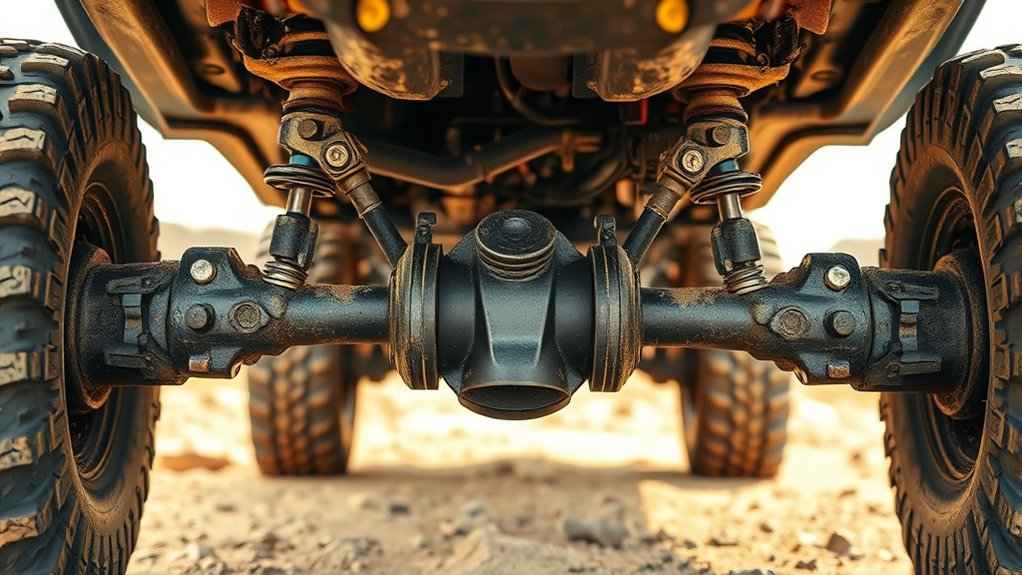
An axle in your vehicle plays a crucial role in connecting the wheels and supporting the vehicle’s weight, ensuring proper balance. It transfers power from the engine to the wheels, enabling smooth rotation and movement. Understanding what an axle does in a vehicle is essential for maintaining stability and control.
Axles also keep your wheels aligned, which is vital for safe driving. If an axle wears out or gets damaged, you might notice vibrations or unusual noises.
Keeping your axles in good shape boosts both performance and safety. There’s more to uncover about how axles affect your ride and maintenance needs. Regular inspection and care can prevent costly repairs and keep your vehicle running smoothly.
Key Takeaways
- Connects and supports the wheels, enabling their rotation and bearing the vehicle’s weight.
- Transmits power from the engine to the wheels to facilitate vehicle movement.
- Maintains proper wheel alignment for vehicle stability and control.
- Distributes vehicle weight evenly across wheels to ensure balance and smooth handling.
- Absorbs and transfers torque, preventing excessive vibrations and enhancing driving safety.
Axle Basics and Importance
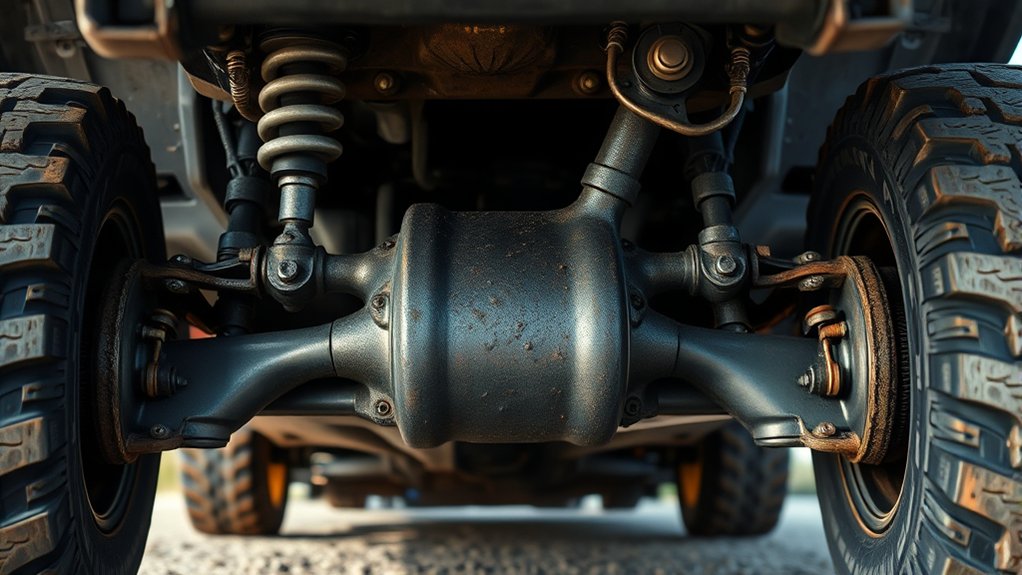
What makes an axle so essential in a vehicle? It’s the core component that connects your wheels, allowing them to rotate and support the vehicle’s weight. Without axles, your wheels wouldn’t turn in harmony, and your vehicle wouldn’t move smoothly.
You rely on axles to transmit power from the engine to the wheels, enabling motion and control. They also keep your wheels aligned, which is vital for safe driving. When you steer or hit bumps, axles help maintain stability and balance.
Understanding axles means recognizing their role in both movement and structural integrity. So, every time you drive, remember axles work behind the scenes, making sure your wheels spin correctly and your ride stays steady.
Axle Weight Support and Vehicle Stability
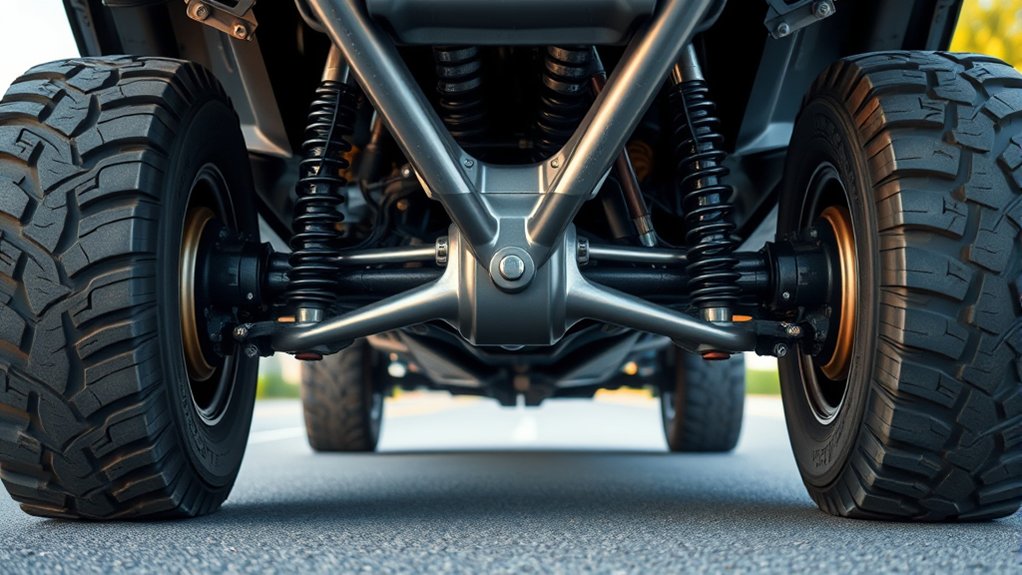
Because axles bear the entire weight of your vehicle, they play a vital role in maintaining stability and safety on the road. When you drive, axles evenly distribute this weight across the wheels, preventing uneven load that could lead to poor handling or tire wear.
If an axle is damaged or weakened, your vehicle may feel unstable, especially during turns or on uneven terrain. Proper axle support helps keep your vehicle balanced, reducing the risk of swaying or tipping. This is essential not only for everyday driving but also when carrying heavy loads.
Axle Role in Wheel Rotation and Movement
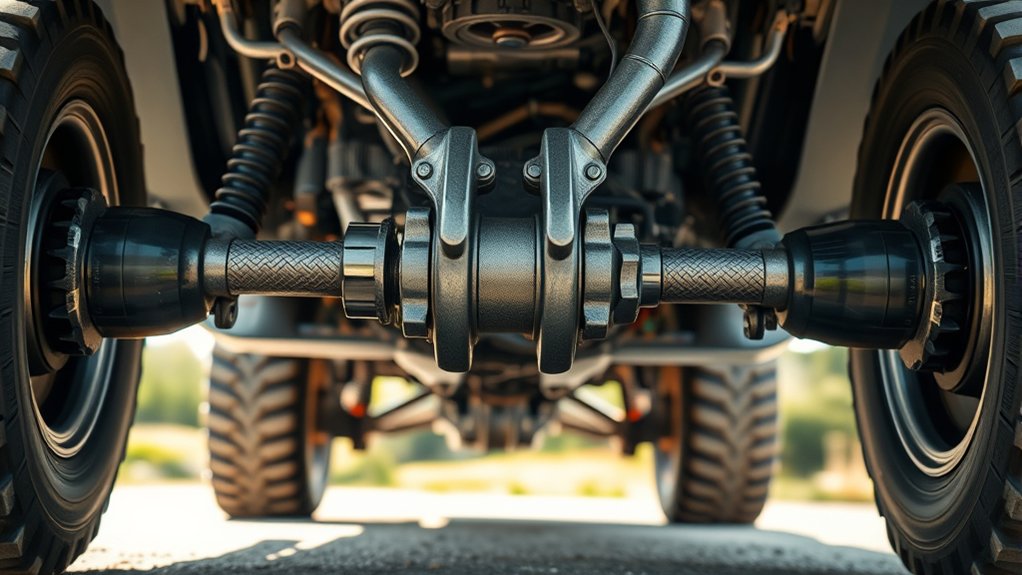
You rely on the axle to transmit power from the engine to the wheels, making movement possible. It also supports the vehicle’s weight while allowing the wheels to rotate smoothly.
Understanding this role helps you see how essential the axle is for your vehicle’s performance.
Transmitting Power to Wheels
How does the axle guarantee your vehicle’s wheels turn smoothly and efficiently? The axle transmits power from the engine and drivetrain directly to the wheels, enabling movement. It acts as a vital link, converting rotational force into wheel motion.
Without this power transfer, your vehicle wouldn’t move forward or backward.
Here’s a quick look at how axles handle power transmission:
| Component | Function | Impact on Movement |
|---|---|---|
| Drive Shaft | Sends torque to axle | Initiates wheel rotation |
| Differential | Distributes power | Allows wheel speed variation |
| Axle Shaft | Transfers torque to wheels | Powers wheel movement |
Supporting Vehicle Weight
Once the axle transmits power to the wheels, it also takes on the heavy job of supporting the vehicle’s weight. You rely on the axle to bear the entire load of your vehicle, including passengers and cargo, distributing that weight evenly across the wheels. This balance is vital because it keeps your vehicle stable and prevents excessive strain on any single wheel.
The axle acts as a sturdy backbone, holding the wheels in the correct position relative to the vehicle’s frame. Without this support, your vehicle wouldn’t maintain proper alignment, and handling would suffer.
Enabling Smooth Wheel Rotation
Although the axle bears your vehicle’s weight, it also plays an essential role in enabling the wheels to rotate smoothly. The axle connects to the wheels and transmits torque from the engine, allowing your vehicle to move forward or backward with ease. Without this critical function, wheel rotation would be jerky and inefficient, making your ride uncomfortable and unsafe.
Here’s how the axle contributes to smooth wheel rotation:
| Function | Explanation |
|---|---|
| Torque Transmission | Transfers power to wheels |
| Rotation Support | Ensures wheels spin on a stable axis |
| Load Bearing | Maintains wheel alignment under weight |
| Smooth Movement | Reduces friction and vibration |
Axle Impact on Steering and Handling
Because the axle connects the wheels to the vehicle’s frame, it plays an essential role in steering and handling. When you turn the steering wheel, the axle helps transfer this motion to the wheels, allowing you to change direction smoothly. A strong, well-maintained axle guarantees that your vehicle responds accurately to your steering inputs, giving you better control on the road.
If the axle is damaged or worn, you might notice wobbling or difficulty steering, which can compromise safety. Additionally, the axle supports the weight of the vehicle and helps maintain wheel alignment, both critical for stable handling.
Types of Vehicle Axles: Cars, Trucks, and Bikes
How do axles differ across vehicles like cars, trucks, and bikes? In cars, you usually find either a solid axle or independent suspension axles, which help manage weight and improve ride comfort. Trucks often use heavy-duty solid axles because they need to carry more weight and endure tough conditions.
Bikes, on the other hand, have much simpler axles—usually just a rod that connects the wheels and allows them to spin freely. While cars and trucks rely on axles to transfer engine power and support vehicle weight, bike axles mainly focus on wheel rotation and stability. Understanding these differences helps you appreciate how axles are designed specifically for each vehicle’s needs, balancing strength, flexibility, and function.
Signs of Axle Damage or Wear
You might notice unusual noises while driving or feel vibrations during acceleration, both of which can signal axle problems. Take a close look for visible damage on the axle or its protective boots.
Catching these signs early helps you avoid bigger issues down the road.
Unusual Noises While Driving
When you hear unusual noises while driving, it’s often a sign that your axle might be damaged or worn. You might notice clicking or clunking sounds, especially when turning corners, which usually indicate issues with the CV joints connected to the axle. A grinding noise during acceleration or deceleration can also point to axle problems.
If you ignore these sounds, the damage can worsen, leading to more costly repairs or even axle failure. Paying attention to these noises early helps you catch problems before they escalate. If you experience vibrations or shaking in the vehicle while driving, that’s another warning sign related to axle wear.
When these symptoms appear, it’s a good idea to have your vehicle inspected promptly to ensure safe and smooth driving.
Visible Axle or Boot Damage
Unusual noises often accompany visible signs of axle or boot damage, making it easier to identify trouble early. When you inspect your vehicle, keep an eye out for these common indicators:
- Cracks or Tears in the Boot – Look for any splits or holes in the rubber boot protecting the CV joint.
- Grease Leaks – Notice grease splattered around the wheel or undercarriage, signaling a boot tear.
- Rust or Corrosion – Check the axle shaft for rust spots or corrosion, which can weaken the metal.
- Bent or Warped Axles – Visually inspect for any bends or distortions that affect axle alignment.
Spotting these signs early can save you costly repairs and keep your vehicle running smoothly.
Vibrations During Acceleration
How can you tell if your axle is wearing down? One clear sign is feeling vibrations when you accelerate. If the axle’s joints or shafts are damaged or worn, they won’t spin smoothly, causing your vehicle to shake or vibrate, especially during acceleration.
These vibrations often increase with speed and can be felt through the steering wheel or floorboard. Ignoring this symptom can lead to more serious damage or even axle failure. If you notice unusual vibrations when you press the gas pedal, have a mechanic inspect your axle right away.
Catching axle wear early helps maintain your vehicle’s safety and performance, saving you from costly repairs down the road. Don’t wait until the vibrations get worse—address them promptly.
Why Axle Maintenance Matters for Safety and Performance
Why should you prioritize axle maintenance in your vehicle? Your axle plays a vital role in transferring power from the engine to the wheels, so keeping it in good shape guarantees safety and peak performance. Neglecting it can lead to serious issues.
Here’s why axle maintenance matters:
- Prevents breakdowns – Regular checks catch wear and tear before it causes failure.
- Ensures vehicle stability – A well-maintained axle keeps your vehicle balanced and responsive.
- Improves fuel efficiency – Properly functioning axles reduce unnecessary drag and resistance.
- Enhances safety – Faulty axles can lead to loss of control or accidents.
Axle Replacement and Upgrade: What to Expect
When you decide to replace or upgrade your vehicle’s axle, you can expect a process that considerably boosts your vehicle’s performance and safety. First, a mechanic will inspect your current axle to determine the best replacement or upgrade options based on your vehicle type and driving needs. Upgraded axles often offer enhanced strength and durability, especially if you’re towing or off-roading.
The replacement involves removing the old axle, checking related components like bearings and seals, and installing the new one precisely. After installation, the mechanic will test the axle’s alignment and functionality to ensure smooth operation. You’ll notice improved handling, reduced vibrations, and increased reliability, making your vehicle safer and more efficient on the road.
Frequently Asked Questions
How Is an Axle Different From a Driveshaft?
An axle connects your wheels and supports your vehicle’s weight, while a driveshaft transfers power from the engine to the axle.
You’ll see the axle is stationary, but the driveshaft spins to deliver motion.
Can Axle Problems Affect Fuel Efficiency?
Think of your axle as the heartbeat of your ride; if it’s weak or damaged, it can make your engine work harder, lowering fuel efficiency.
What Materials Are Axles Commonly Made From?
Axles are commonly made from steel or alloy steel because they’re strong and durable. Sometimes, manufacturers use aluminum or carbon fiber to reduce weight. You’ll find the material choice depends on the vehicle’s performance needs.
Do Electric Vehicles Use Different Axles?
Yes, electric vehicles often use lighter, more compact axles designed for electric motors’ torque. You’ll notice these axles are sometimes integrated with the motor, improving efficiency and reducing weight compared to traditional internal combustion vehicle axles.
How Do Axle Designs Vary Worldwide?
Think of axles as the roots of a tree—worldwide, their designs adapt to local roads and vehicles. You’ll find variations in materials, thickness, and suspension types, all tailored to handle unique terrains and driving styles.
Conclusion
You rely on your axle more than you realize—it quietly carries your vehicle’s weight, keeps things rolling smoothly, and helps you steer with confidence. When it starts to show signs of wear, it’s not just a mechanical hiccup; it’s a gentle nudge reminding you to care for your ride.
Keeping your axle in good shape means you’re safeguarding your journey, ensuring every mile feels safe, steady, and just right. Don’t overlook this silent hero. Proper axle maintenance is key to vehicle performance and safety.

