

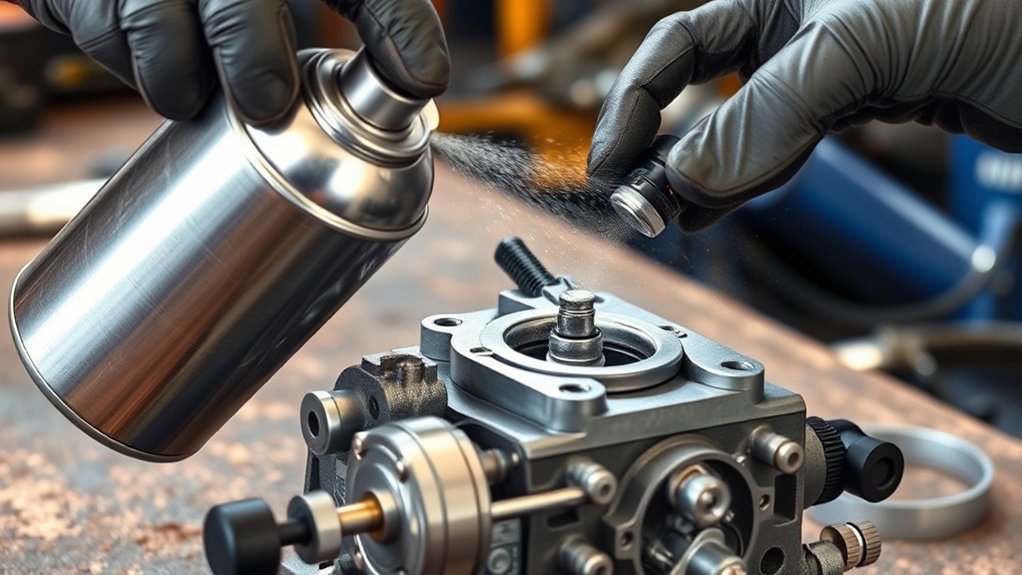
Carburetor cleaner is a specialized solvent designed to remove grime, varnish, and deposits that clog your carburetor, ensuring smooth fuel flow and efficient engine performance. This essential automotive cleaning product helps maintain your engine’s proper function by dissolving tough buildups that can lead to rough idling and poor fuel economy.
Using carburetor cleaner regularly can improve throttle response and extend the life of your carburetor.
You typically apply carburetor cleaner as a spray for light cleaning or soak parts for tougher buildup. Always wear gloves and goggles, and work in a well-ventilated area to stay safe during use. Proper application prevents damage to sensitive engine components.
Keep exploring to uncover tips on choosing the right carburetor cleaner and avoiding common mistakes that can compromise your engine’s performance.
Key Takeaways
- Carburetor cleaner is a solvent that removes grime, varnish, and deposits to ensure proper fuel flow and combustion efficiency.
- It comes in types like spray, soak, gel, solvent-based, and eco-friendly, chosen based on deposit severity and cleaning needs.
- Use carburetor cleaner in well-ventilated areas, wearing gloves, goggles, and a mask to protect against harmful fumes.
- Apply spray cleaners for light deposits and soak or gel cleaners for tougher grime, avoiding painted or sensitive parts.
- Regular cleaning prevents engine issues such as rough idling, poor fuel economy, and stalling, extending engine lifespan.
What Is Carburetor Cleaner and Why Use It
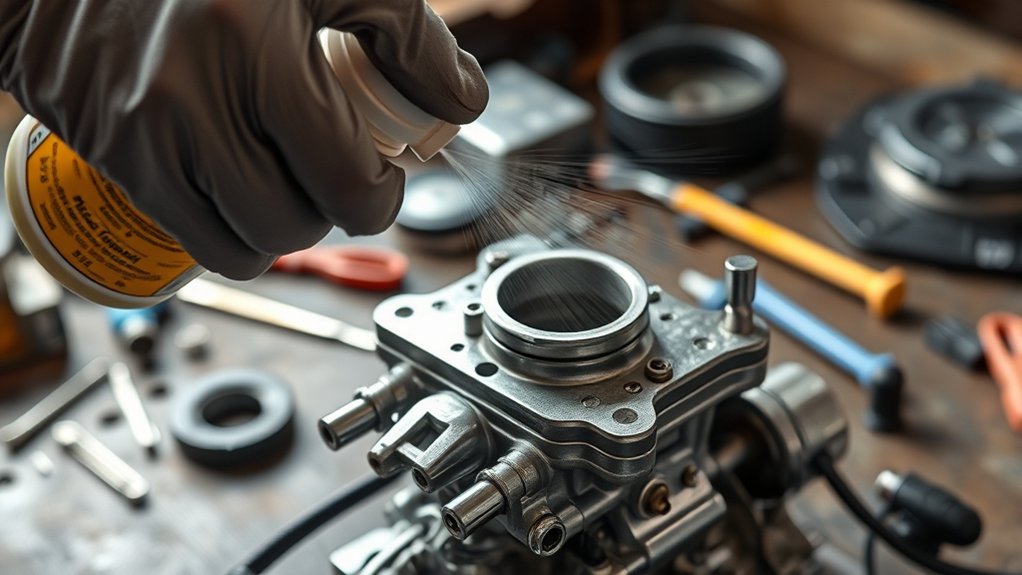
Although you might not think about it often, carburetor cleaner plays a crucial role in keeping your engine running smoothly. It’s a specialized solvent designed to remove grime, varnish, and deposits that build up inside your carburetor over time. These contaminants can clog tiny passages, disrupt fuel flow, and cause poor engine performance or stalling.
By using carburetor cleaner, you help restore proper fuel mixture and air flow, which improves combustion efficiency and engine responsiveness. You’ll find that regular cleaning prevents costly repairs and extends your engine’s lifespan. Whether you’re maintaining a lawnmower, motorcycle, or classic car, this cleaner guarantees your carburetor stays free of buildup,
so your engine runs clean and reliable every time you start it.
Types of Carburetor Cleaners and How to Choose
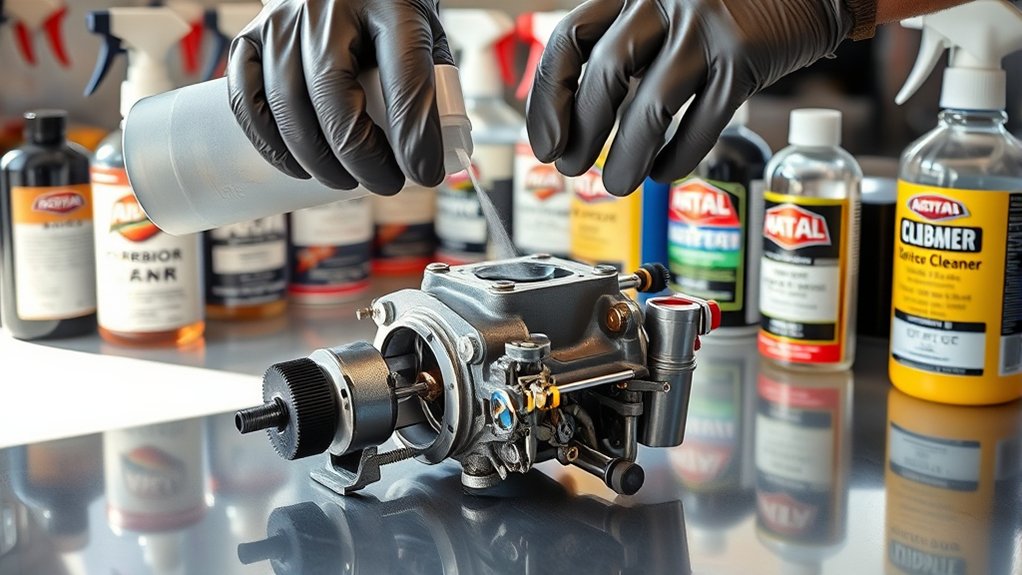
When selecting a carburetor cleaner, you’ll find several types designed for different cleaning needs and applications. Spray cleaners are the most common and easy to use, ideal for quick surface cleaning and removing light deposits.
For tougher grime, soak cleaners allow you to immerse parts, breaking down stubborn buildup effectively. Gel cleaners cling to vertical surfaces, giving you targeted cleaning without dripping. Some cleaners are solvent-based, offering strong degreasing power, while others use eco-friendly formulas that are safer for you and the environment.
To choose the right one, consider the severity of the deposits and whether you’ll clean the carburetor on the vehicle or disassembled. Always check compatibility with your carburetor’s materials to avoid damage and guarantee effective performance.
Signs of a Dirty Carburetor
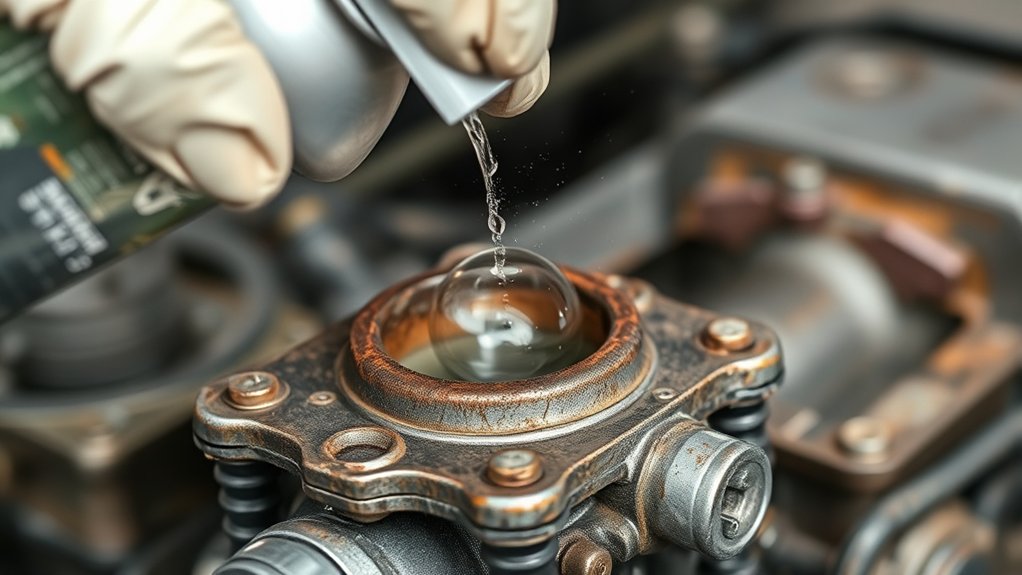
Choosing the right carburetor cleaner is just the first step in maintaining your engine’s performance. To keep things running smoothly, you need to recognize the signs of a dirty carburetor. You’ll notice rough idling or frequent stalling, especially when your engine is cold.
Hesitation or sluggish acceleration is another red flag, as a clogged carburetor restricts fuel flow. Black smoke from the exhaust can indicate a rich fuel mixture caused by dirt buildup. You might also experience poor fuel economy since the engine struggles to burn fuel efficiently.
If your engine has trouble starting or runs unevenly, it’s time to inspect the carburetor. Catching these signs early helps you clean it before bigger problems arise.
How Carburetor Cleaner Boosts Engine Performance
When you use carburetor cleaner, it efficiently removes deposits that clog your engine’s parts. This clears the way for better fuel flow, which helps your engine run smoother.
As a result, combustion improves, boosting overall performance and efficiency.
Removing Deposits Efficiently
How exactly does carburetor cleaner improve your engine’s performance? It works by efficiently breaking down and dissolving stubborn deposits like varnish, gum, and dirt that accumulate inside your carburetor over time. These deposits can restrict airflow and fuel mixture, causing rough idling and poor acceleration.
When you apply carburetor cleaner, it penetrates and loosens these buildup areas, allowing you to wipe or flush them away with ease. This removal restores smooth fuel and air passage, helping your engine run cleaner and more efficiently. By keeping your carburetor free of deposits, you reduce the risk of misfires and improve overall engine responsiveness.
Using carburetor cleaner regularly ensures your engine maintains ideal performance without costly repairs.
Enhancing Fuel Flow
Clearing away deposits with carburetor cleaner doesn’t just improve airflow—it also guarantees fuel flows smoothly through your engine. When fuel passages clog with varnish or gum, your engine struggles to get the right amount of fuel, causing hesitation or rough idling. Using carburetor cleaner dissolves these buildups, reopening blocked jets and channels.
This ensures fuel reaches your engine consistently and at the correct pressure. As a result, your engine runs more efficiently, with better throttle response and smoother acceleration. Regular use prevents future blockages, maintaining peak fuel delivery over time.
Improving Combustion Quality
Why does using carburetor cleaner make such a difference in your engine’s performance? It directly improves combustion quality by ensuring fuel burns more efficiently. When your carburetor is clean, fuel and air mix properly, which means smoother ignition and better power output.
Here’s how it helps:
- Removes carbon deposits that disrupt the air-fuel mixture, leading to more complete combustion.
- Clears clogged jets and passages, allowing consistent fuel spray for balanced burning.
- Prevents misfires and rough idling by maintaining clean combustion chambers.
Regular use of carburetor cleaner means your engine runs cleaner, with less pollution and improved fuel economy. You’ll feel the difference in acceleration, responsiveness, and overall engine health.
Essential Tools and Safety Gear for Cleaning
Before you start cleaning your carburetor, make sure you have the right protective gear, like gloves and safety glasses, to keep yourself safe. You’ll also need specific tools such as brushes and compressed air to get the job done properly.
Having everything ready will make the process smoother and more effective.
Protective Equipment Essentials
Although carburetor cleaner is highly effective, you’ll need the right protective gear to stay safe during use. This cleaner contains harsh chemicals that can irritate your skin, eyes, and lungs. To protect yourself, focus on these essentials:
- Gloves: Wear chemical-resistant gloves to prevent skin contact and avoid burns or rashes.
- Safety Glasses: Use goggles or safety glasses to shield your eyes from splashes or fumes.
- Respirator or Mask: A respirator or mask helps you avoid inhaling harmful vapors, especially in poorly ventilated areas.
Using this protective equipment minimizes health risks and guarantees you can clean your carburetor safely and efficiently. Don’t skip these steps—they’re vital for your safety.
Necessary Cleaning Tools
When you’re ready to clean your carburetor, having the right tools on hand makes the job much easier and safer. You’ll need a good carburetor cleaner spray to dissolve grime quickly. A set of screwdrivers and wrenches helps you remove the carburetor without damaging bolts or screws.
Use a soft-bristle brush or toothbrush to scrub stubborn deposits gently. Compressed air or an air compressor is essential to blow out debris from tiny passages. Don’t forget a clean, lint-free cloth for wiping parts dry.
To protect yourself, wear gloves and safety goggles to avoid irritation from chemicals and debris. Having these tools ready keeps your cleaning efficient, thorough, and safe, ensuring your carburetor works smoothly afterward.
Preparing Your Vehicle for Carburetor Cleaning
Since a clean carburetor guarantees better engine performance, you’ll want to start by parking your vehicle on a flat surface and engaging the parking brake. This assures safety and stability while you work.
Starting with safety, park on a flat surface and engage the parking brake for stability while working.
Next, make sure the engine is completely cool to avoid burns or damage. Finally, disconnect the battery to prevent any electrical accidents during the cleaning process.
Before you begin, follow these steps:
- Clear the area around the carburetor so you have easy access without obstructions.
- Gather all necessary tools and your carburetor cleaner nearby to streamline the cleaning.
- Remove any air filters or covers that block access to the carburetor for thorough cleaning.
With your vehicle properly prepared, you’re ready to move on to the cleaning itself.
How to Use Carburetor Cleaner Safely
When using carburetor cleaner, make sure you’re in a well-ventilated area to avoid inhaling harmful fumes. Always wear protective gear like gloves and safety glasses to protect your skin and eyes. Taking these precautions helps keep you safe throughout the cleaning process.
Proper Ventilation Importance
Because carburetor cleaner contains strong chemicals, you need to guarantee proper ventilation to protect yourself from harmful fumes. Without fresh air, these fumes can build up quickly, causing dizziness, headaches, or worse. To ensure safety, follow these steps:
- Work outdoors or in a well-ventilated garage with open doors and windows.
- Use fans to circulate air and push fumes away from your breathing zone.
- Avoid enclosed spaces where fumes can accumulate, and never use the cleaner near open flames or sparks.
Protective Gear Usage
Although proper ventilation helps reduce exposure to harmful fumes, you still need to wear protective gear to keep yourself safe while using carburetor cleaner. This cleaner contains harsh chemicals that can irritate your skin, eyes, and lungs. Always wear gloves, goggles, and a mask to minimize direct contact and inhalation of fumes.
Choose gear made from chemical-resistant materials for the best protection.
| Protective Gear | Purpose | Tips |
|---|---|---|
| Gloves | Protect skin | Use nitrile or neoprene gloves |
| Goggles | Shield eyes | Ensure a snug fit |
| Mask | Prevent inhalation | Use a respirator with organic vapor cartridges |
Wearing the right gear keeps you safe and lets you work confidently.
Tips for Using Carburetor Cleaner on Parts Outside the Vehicle
To effectively clean carburetor parts outside the vehicle, you’ll need to prepare a well-ventilated workspace and gather the right tools. Start by laying out all parts on a clean surface where you can easily access them. Then, use carburetor cleaner to remove grime and deposits without damaging delicate components.
Here are three tips to get the best results:
- Soak small parts: Submerge metal components in the cleaner for a few minutes to loosen stubborn buildup.
- Use a brush: Apply the cleaner with a soft brush to scrub hard-to-reach areas gently without scratching.
- Dry thoroughly: After cleaning, let parts air dry completely or use compressed air to avoid moisture buildup.
Following these steps will ensure your carburetor parts are spotless and ready for reassembly.
Common Mistakes to Avoid When Using Carburetor Cleaner
When you use carburetor cleaner, it’s easy to make mistakes that can damage parts or reduce cleaning effectiveness. Avoid spraying on painted surfaces, as the chemicals can strip paint. Don’t soak rubber parts too long; they can deteriorate.
Also, don’t inhale fumes—always work in a well-ventilated area.
| Mistake | Why It’s Harmful | How to Avoid It |
|---|---|---|
| Spraying on paint | Removes paint and damages finish | Cover painted areas |
| Prolonged soaking | Deteriorates rubber components | Limit soak time to minutes |
| Poor ventilation | Health risks from fumes | Use outdoors or in ventilated spaces |
Stay cautious, follow instructions, and handle cleaner responsibly for best results.
How Often Should You Use Carburetor Cleaner?
Since carburetor cleaner is a powerful chemical, you shouldn’t use it more often than necessary. Overusing it can damage seals and sensitive components.
Instead, focus on these guidelines to know when to clean your carburetor:
- Every 12,000 to 15,000 miles: Routine cleaning at these intervals helps maintain smooth engine performance.
- If you notice performance issues: Rough idling, hesitation, or poor acceleration are signs your carburetor needs attention.
- Before long storage periods: Cleaning prevents residue buildup that can cause blockages after sitting idle.
When to Consider a Professional Carburetor Rebuild
Regular use of carburetor cleaner can keep your engine running smoothly, but some issues go beyond what a spray can fix. If your engine still stalls, hesitates, or runs rough after cleaning, it might be time to contemplate a professional carburetor rebuild.
Signs like persistent fuel leaks, damaged gaskets, or worn-out internal parts indicate that a simple cleaner won’t cut it. Also, if your carburetor has excessive corrosion or buildup inside, a rebuild will restore proper function.
Trying to fix complex problems yourself could lead to more damage. A skilled technician can disassemble, thoroughly clean, replace faulty components, and recalibrate the carburetor to ascertain your engine performs reliably. Knowing when to seek professional help saves you time and frustration.
Frequently Asked Questions About Carburetor Cleaner
How do you know if carburetor cleaner is the right solution for your engine troubles? It’s best used when your engine runs rough, idles poorly, or stalls frequently due to clogged jets or varnish buildup.
To help you decide, here are three key FAQs:
- Can I use carburetor cleaner on other parts? Yes, it works well on throttle bodies and intake valves but avoid painted surfaces.
- How often should I clean my carburetor? Clean it whenever you notice performance issues or during routine maintenance every 12 months.
- Is it safe to spray while the engine is running? Some cleaners are designed for that, but always check the label and work in a well-ventilated area.
Use carburetor cleaner wisely to keep your engine running smoothly.
Frequently Asked Questions
Can Carburetor Cleaner Damage Rubber or Plastic Engine Components?
Yes, carburetor cleaner can damage rubber or plastic engine parts if you’re not careful. It’s strong and can cause deterioration, so you’ll want to avoid prolonged contact or use products specifically labeled safe for those materials.
Is Carburetor Cleaner Effective for Fuel Injectors?
Carburetor cleaner isn’t ideal for fuel injectors since it can damage sensitive parts. You’re better off using a cleaner specifically designed for injectors to avoid harm and guarantee effective cleaning.
This approach ensures you don’t risk engine performance while maintaining injector functionality.
How Long Should Carburetor Cleaner Soak on Stubborn Deposits?
You’ll want to let the carburetor cleaner lounge on stubborn deposits for about 10 to 15 minutes. This gives it enough time to gently persuade grime to loosen without risking damage to delicate parts.
Can I Use Carburetor Cleaner to Remove Grease From Tools?
Yes, you can use carburetor cleaner to remove grease from tools, but be careful—it’s strong and may damage plastic or painted surfaces.
Always test a small area first and wear gloves to protect your skin.
What Is the Environmental Impact of Disposing Carburetor Cleaner?
You shouldn’t pour carburetor cleaner down drains or on soil because it contains harmful chemicals that can pollute water and harm wildlife.
Instead, take it to a hazardous waste disposal facility to protect the environment.
Conclusion
You might think carburetor cleaner is just a quick fix, but it’s also a powerful tool that prevents long-term damage. You don’t want to ignore buildup, yet you shouldn’t overuse the cleaner either. Using it wisely boosts performance, but skipping safety can cause harm.
So, balance your care—clean regularly but cautiously—and you’ll keep your engine running smoothly. Avoiding costly repairs while enjoying the ride every time you turn the key is possible with proper use of carburetor cleaner. Remember, regular maintenance with carburetor cleaner ensures optimal engine function and longevity.

