

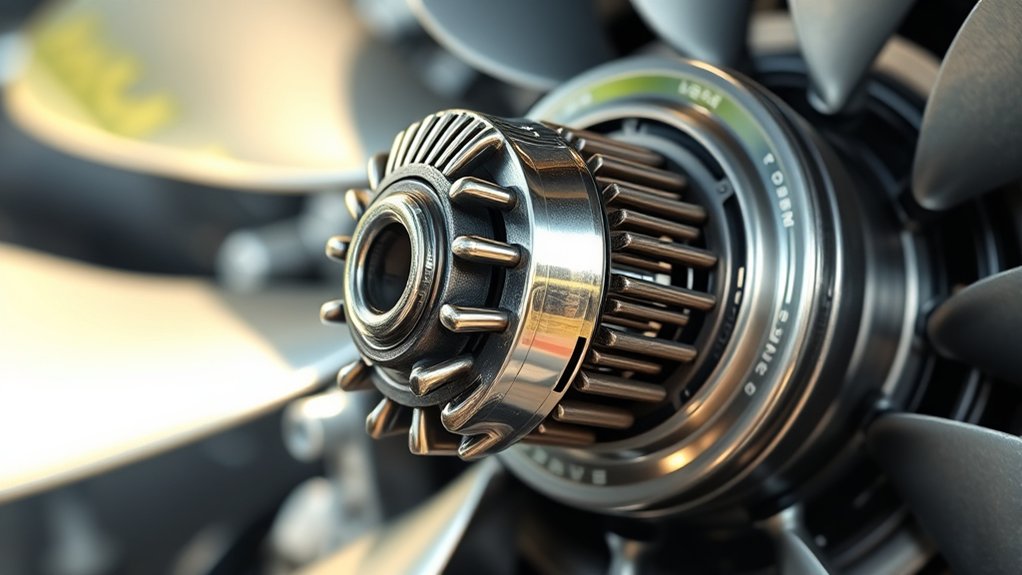
A fan clutch is an essential component in your vehicle that helps regulate engine temperature by controlling the fan’s speed based on how hot the engine is. This cooling system part ensures your engine stays within the optimal temperature range, preventing overheating and maintaining efficient performance. Understanding how a fan clutch works can help you recognize its role in engine cooling and overall vehicle health.
When your engine is cold, the fan clutch allows the fan to spin slowly or even stop, which saves energy and reduces noise.
As the engine heats up, the clutch engages and speeds up the fan. This increased airflow pulls more air through the radiator to cool the engine effectively and prevent overheating.
This balance between fan speed and engine temperature boosts efficiency and prolongs engine life. If you want to understand how different types of fan clutches work and the signs of failure, keep exploring these details.
Key Takeaways
- A fan clutch connects the engine’s cooling fan and controls its speed based on engine temperature to optimize cooling.
- It uses a thermostatic spring or bi-metallic coil to sense coolant heat and regulate viscous fluid flow inside the clutch.
- Rising temperature increases fluid flow, locking clutch plates to engage the fan and pull more air through the radiator.
- When the engine cools, the clutch fluid flow decreases, disengaging the fan to reduce drag and save energy.
- This temperature-responsive mechanism balances engine cooling needs with energy efficiency, preventing overheating and improving performance.
What Is a Fan Clutch and Why It Matters
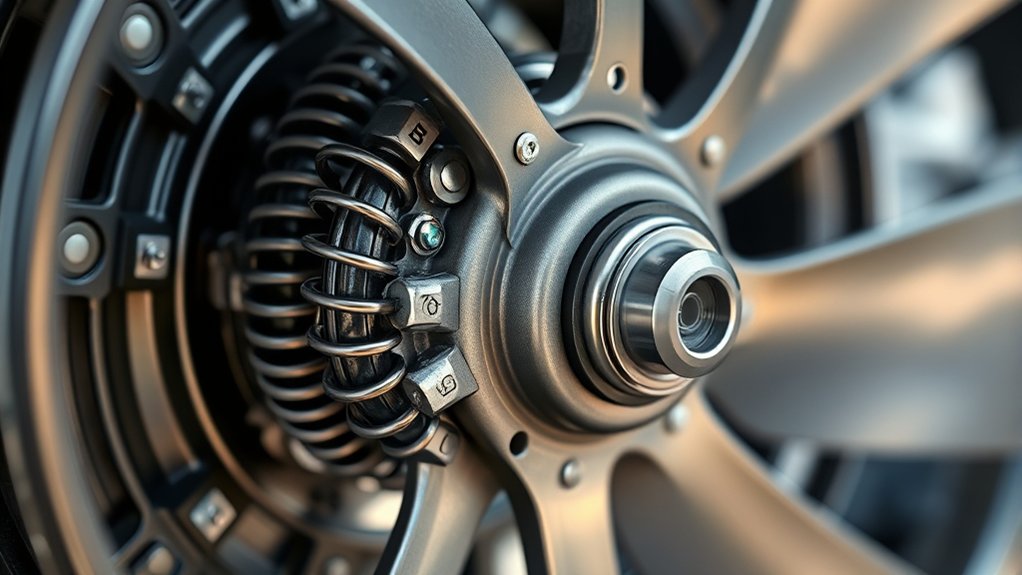
What exactly is a fan clutch, and why should you care about it? A fan clutch is a vital component that connects your engine’s cooling fan to the engine. It controls how much the fan spins based on the engine temperature.
When your engine is cool, the fan clutch lets the fan spin slowly or even stop, saving energy and reducing noise. But when your engine heats up, it engages the fan to spin faster, pulling more air through the radiator to cool things down.
Without a properly working fan clutch, your engine could overheat or waste fuel. Understanding this part helps you keep your vehicle running efficiently and avoid costly repairs.
How a Fan Clutch Keeps Your Engine Cool
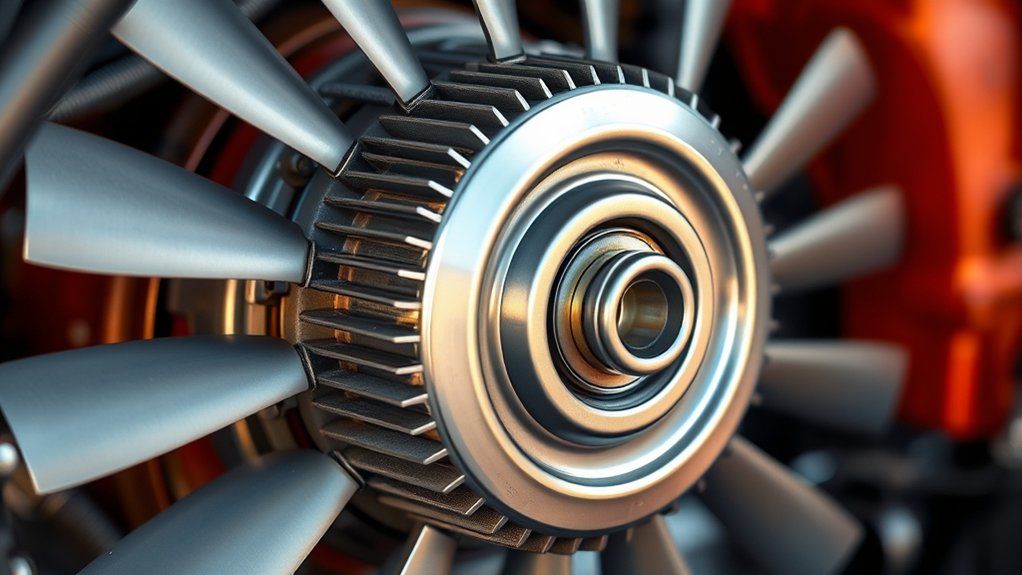
Your fan clutch kicks in when your engine heats up, adjusting the fan speed to match the cooling needs. It ramps up airflow only when necessary, helping to keep the engine temperature in check.
This smart regulation also saves energy, so your engine doesn’t waste power running the fan at full speed all the time.
Temperature-Activated Engagement
Although a fan clutch may seem like a simple component, it plays a crucial role in regulating your engine’s temperature. It engages based on temperature, activating only when your engine heats up. Inside the clutch, a thermostatic spring senses heat from the engine coolant.
When the temperature rises, this spring expands, causing the clutch to engage and spin the fan faster. This increased airflow cools the radiator and engine efficiently. When the engine cools down, the spring contracts, disengaging the clutch and slowing the fan.
This temperature-activated engagement prevents unnecessary fan operation, saving energy and reducing wear. By responding directly to engine heat, the fan clutch keeps your engine running at an ideal temperature without wasting power or creating excess noise.
Regulating Engine Cooling Speed
Because engine temperatures can change rapidly, a fan clutch adjusts the fan’s speed to match cooling needs precisely. When your engine heats up, the clutch engages more tightly, spinning the fan faster to pull extra air through the radiator and cool things down.
If the engine cools off, the clutch loosens, slowing the fan to prevent unnecessary airflow. This dynamic adjustment helps maintain a stable temperature, preventing overheating and ensuring best engine performance.
You’ll notice your fan isn’t always running at full blast; instead, it varies its speed depending on real-time cooling demands. By doing this, the fan clutch keeps your engine cool efficiently, responding instantly to temperature shifts without your intervention.
Reducing Energy Consumption
How exactly does a fan clutch help reduce energy consumption while keeping your engine cool? It smartly engages and disengages the fan based on your engine’s temperature, so it only works when necessary. This precision saves energy and keeps your engine running efficiently.
Here’s how it does that:
- Variable Fan Speed: It adjusts fan speed, preventing unnecessary power use when cooling demand is low.
- Reduced Engine Load: By disengaging the fan when not needed, it lowers the strain on your engine.
- Improved Fuel Efficiency: Less energy spent on cooling means more fuel is used for driving.
- Extended Component Life: Lower energy consumption reduces wear on belts and bearings, saving you maintenance costs.
This smart control balances cooling and energy use perfectly.
Understanding the Different Types of Fan Clutches
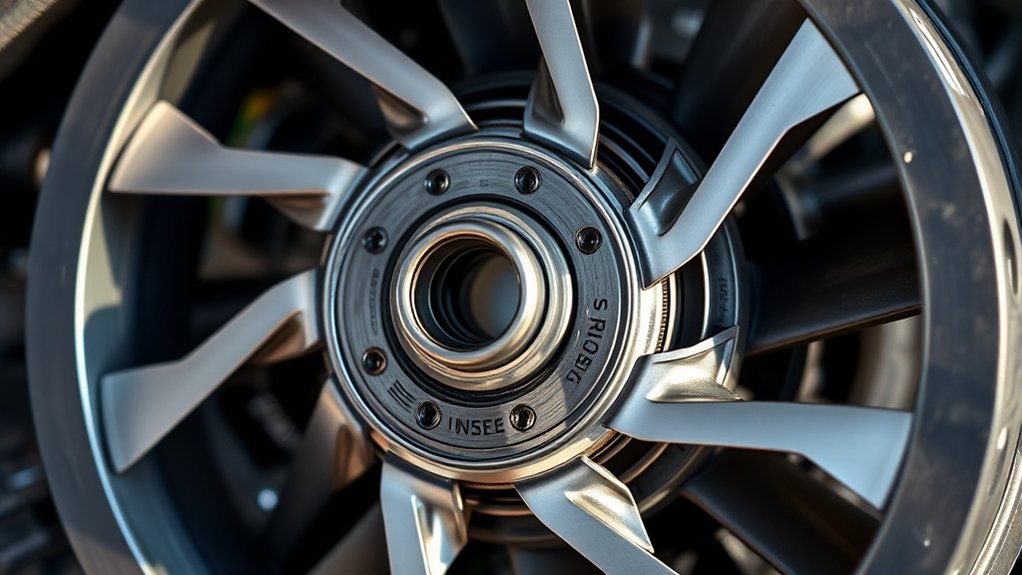
You’ll find that fan clutches come in a few key types, each working a bit differently to control your engine’s cooling. Mechanical fan clutches rely on temperature-sensitive elements, while thermal fan clutches adjust based on heat levels.
Electronic fan clutches use sensors and computers to manage fan speed more precisely.
Mechanical Fan Clutch
Although many vehicles use different types of fan clutches, the mechanical fan clutch remains a popular choice for its simplicity and durability. When you install or maintain one, you’ll appreciate its straightforward design, which relies on direct mechanical connections rather than complex sensors or electronics.
Here’s what you should know about mechanical fan clutches:
- They use a spring or lever mechanism to engage or disengage the fan based on engine speed.
- The clutch adjusts fan speed proportionally, helping regulate engine temperature efficiently.
- Mechanical fan clutches are less expensive and easier to repair than other types.
- They provide consistent performance but lack the precision of more advanced clutches like thermal types.
Understanding these points helps you recognize why many manufacturers still opt for mechanical fan clutches in various vehicles.
Thermal Fan Clutch
Why does a thermal fan clutch often outperform mechanical ones? Because it adjusts its engagement based on temperature, giving you better control over engine cooling. Inside, a bimetallic spring senses heat from the radiator.
When the engine gets hot, the spring expands, allowing more fluid into the clutch, which increases fan speed and cools the engine efficiently. When the engine cools down, the spring contracts, reducing fluid flow and slowing the fan. This automatic adjustment means you get cooling only when necessary, improving fuel efficiency and reducing noise.
Unlike purely mechanical clutches, thermal fan clutches respond directly to temperature changes, so you don’t have to worry about manual adjustments or constant wear. They keep your engine running smoothly and efficiently under varying conditions.
Electronic Fan Clutch
How does an electronic fan clutch differ from thermal and mechanical types? Unlike thermal clutches that rely on temperature-sensitive fluids and mechanical clutches driven by direct engine speed, electronic fan clutches use sensors and a control module to regulate fan engagement precisely. You’ll notice better efficiency and responsiveness with these clutches.
Here’s what sets electronic fan clutches apart:
- Sensor-Based Operation: They monitor engine temperature, speed, and sometimes air conditioning demand.
- Variable Engagement: Adjust fan speed smoothly, reducing unnecessary drag.
- Improved Fuel Economy: By engaging only when needed, they save energy.
- Enhanced Engine Control: They integrate with the vehicle’s ECU for optimized cooling.
You’ll find electronic fan clutches offer smarter, more adaptable cooling solutions that improve overall vehicle performance.
When to Choose a Mechanical vs. an Electric Fan Clutch
Deciding between a mechanical and an electric fan clutch depends largely on your vehicle’s cooling needs and driving conditions. If you drive mostly in stop-and-go traffic or tow heavy loads, a mechanical fan clutch offers reliable, direct control by adjusting the fan speed based on engine temperature. It’s simpler and often more durable in harsh conditions.
On the other hand, if you want better fuel efficiency and quieter operation during highway driving, an electric fan clutch is a smart choice. It activates only when necessary, reducing unnecessary engine drag. Also, electric clutches provide precise temperature control, which benefits modern vehicles with tighter cooling requirements.
Consider your driving habits and vehicle type to decide which fan clutch suits you best.
How the Radiator and Fan Interact With the Fan Clutch
You’ll notice the radiator’s temperature directly affects how the fan clutch engages. When the radiator heats up, the fan clutch activates to spin the fan faster, pulling more air through the radiator. This interaction helps keep your engine from overheating by regulating airflow based on the radiator’s needs.
Radiator Temperature Influence
Why does the radiator’s temperature play such a crucial role in the operation of the fan clutch? The radiator’s heat level directly impacts how hard the fan clutch works to keep your engine cool. When the radiator gets hotter, the fan clutch senses this and adjusts the fan’s speed accordingly to increase airflow and dissipate heat efficiently.
Here’s how radiator temperature influences the fan clutch:
- Higher radiator temperatures cause the fan clutch to engage more firmly, boosting fan speed.
- Cooler radiator temps reduce fan clutch engagement, allowing the fan to spin slower.
- This temperature-dependent response helps maintain ideal engine temperature.
- It prevents unnecessary energy use and reduces wear by avoiding constant fan operation.
You rely on this balance to keep your engine running smoothly.
Fan Clutch Engagement Mechanism
Although the radiator’s temperature plays a critical role, the fan clutch itself uses a clever engagement mechanism to respond to that heat. You’ll find a thermostatic spring or bi-metallic coil inside the clutch, which senses temperature changes. When the radiator heat rises, this spring expands or contracts, adjusting the clutch’s internal valve.
This valve controls the flow of a viscous fluid between the clutch’s plates, regulating how much the fan spins. When it’s cool, the fluid flow is limited, allowing the fan to spin slowly or even freewheel, reducing drag on the engine. As the engine heats up, the fluid flow increases, locking the plates together and speeding up the fan.
This smart interaction between the radiator’s heat and the clutch helps your engine stay cool without wasting energy.
How Temperature Triggers Fan Clutch Engagement
When the engine temperature rises, the fan clutch responds by engaging to help cool it down. You’ll notice that a bi-metallic coil inside the clutch plays a key role. This coil senses temperature changes and triggers the clutch accordingly.
Here’s how temperature triggers fan clutch engagement:
Understanding how temperature activates the fan clutch reveals its crucial role in engine cooling efficiency.
- The engine heats up, warming the air passing over the bi-metallic coil.
- The coil expands or contracts based on temperature shifts.
- This movement adjusts the valve inside the clutch, controlling silicone fluid flow.
- Increased fluid flow strengthens the connection between the fan and the pulley, making the fan spin faster.
This system ensures your engine stays cool only when needed, improving efficiency and reducing unnecessary fan drag.
Signs Your Fan Clutch Isn’t Working Properly
If your fan clutch isn’t working properly, you’ll likely notice changes in your vehicle’s cooling performance and engine behavior. Common signs include overheating, unusual noises, and poor air conditioning performance. You might also feel reduced engine power due to the fan not engaging correctly.
Here’s a quick overview of symptoms you should watch for:
| Symptom | What It Means |
|---|---|
| Engine overheating | Fan clutch isn’t engaging when needed |
| Loud fan noise | Fan clutch stuck engaged |
| Reduced AC efficiency | Fan clutch not spinning fast enough |
If you experience any of these signs, it’s a good idea to inspect or replace the fan clutch to avoid further damage.
How a Faulty Fan Clutch Affects Engine Performance
Since the fan clutch controls the engine cooling fan’s operation, a faulty clutch can directly impact your engine’s performance. When it malfunctions, your engine might overheat or work harder than necessary, leading to reduced efficiency.
A faulty fan clutch can cause your engine to overheat and reduce its overall efficiency.
Here’s how a faulty fan clutch affects your engine:
- Overheating – Without proper fan engagement, your engine temperature rises, risking damage.
- Reduced Fuel Efficiency – The engine consumes more fuel trying to compensate for poor cooling.
- Excessive Wear – Overheating causes faster wear on engine components.
- Noise and Vibration – A stuck or slipping clutch can create unusual noises and vibrations, distracting you while driving.
Recognizing these effects early helps you maintain ideal performance and avoid costly repairs.
Common Causes of Fan Clutch Failure
Although fan clutches are designed to last, several common issues can cause them to fail prematurely. You might notice failure due to worn bearings, which prevent smooth rotation. Leaks in the viscous fluid reduce the clutch’s ability to engage properly.
Excessive heat can degrade the internal components, while dirt and debris cause mechanical wear. Finally, improper installation can lead to early malfunction. Understanding these causes helps you diagnose problems effectively.
| Cause | Description |
|---|---|
| Worn Bearings | Hinder smooth fan rotation |
| Fluid Leaks | Reduce clutch engagement |
| Excessive Heat | Degrades internal components |
| Dirt and Debris | Cause mechanical wear |
| Improper Installation | Leads to early failure |
Preventing Fan Clutch Problems
To keep your fan clutch working smoothly, you should perform regular maintenance and inspections. This helps catch problems early and extends the clutch’s lifespan.
Here’s what you can do:
- Check for leaks – Look for oil or fluid leaks around the clutch, which can indicate seal failure.
- Inspect the fan blades – Ensure blades aren’t cracked or loose, as damaged blades strain the clutch.
- Listen for unusual noises – Grinding or squealing sounds may signal wear or bearing issues.
- Monitor engine temperature – Overheating can point to a failing fan clutch.
Testing a Fan Clutch at Home or in the Shop
How can you tell if your fan clutch is failing before it causes serious engine problems? Start by checking for excessive play in the fan blades—grasp the blades and try to wiggle them. If they move too freely, the clutch may be worn out.
Next, with the engine cool, spin the fan by hand; it should offer some resistance. If it spins too easily, the clutch might not engage properly. When the engine is running and hot, the fan should spin faster to cool the radiator.
If it doesn’t, the clutch could be slipping. You can also watch for overheating or unusual noises. These simple tests can help you catch fan clutch issues early, saving you time and money.
Replacing a Fan Clutch Step-by-Step
Before you start replacing the fan clutch, make sure the engine is completely cool to prevent burns. You’ll need basic tools and a bit of patience for this task. Follow these steps carefully:
- Remove the fan shroud to access the fan clutch assembly.
- Loosen and remove the fan clutch bolts connecting it to the water pump pulley.
- Carefully detach the fan and clutch assembly from the engine, avoiding damage to the radiator or surrounding parts.
- Install the new fan clutch by reversing the removal steps, ensuring bolts are tightened to the manufacturer’s specifications.
Once installed, double-check everything is secure. Start the engine, and observe the fan’s operation to confirm the replacement was successful.
Frequently Asked Questions
Can a Fan Clutch Be Used on Electric Fans?
No, you can’t use a fan clutch on electric fans because they don’t rely on engine heat or speed. Electric fans have their own motors and controls, so they don’t need a clutch to regulate their operation.
What Materials Are Fan Clutches Typically Made From?
You’d think fan clutches are forged from superhero steel! Actually, they’re mostly made from durable aluminum for lightweight strength, combined with silicone fluid inside to control the fan’s spin based on your engine’s temperature.
How Does Altitude Affect Fan Clutch Performance?
You’ll notice your fan clutch works harder at higher altitudes because thinner air reduces cooling efficiency. It compensates by engaging more, but this can increase engine load and fuel consumption. This affects overall performance and temperature control.
Are Fan Clutches Compatible With All Vehicle Brands?
Like a puzzle piece, fan clutches aren’t compatible with all vehicle brands. You’ll need to check your specific make and model because designs and requirements vary, ensuring the fan clutch fits and performs correctly in your vehicle.
Can a Fan Clutch Improve Fuel Efficiency?
Yes, a fan clutch can improve your fuel efficiency by only engaging the fan when needed, reducing engine drag. This means your engine doesn’t work harder than necessary, helping you save fuel during normal driving conditions.
Conclusion
Now that you know how a fan clutch works, you’re armed to keep your engine’s heartbeat steady and cool. Think of the fan clutch as your car’s silent guardian, spinning just right to beat the heat without wasting energy.
By understanding its rhythm and signs of wear, you’ll dodge overheating headaches and keep your ride running smooth. Stay proactive, and your engine will thank you with every mile you drive.
Regular maintenance of the fan clutch ensures optimal cooling performance. This helps prevent engine overheating and prolongs the lifespan of your vehicle. Keep an eye on the fan clutch to maintain your engine’s efficiency and reliability.

