

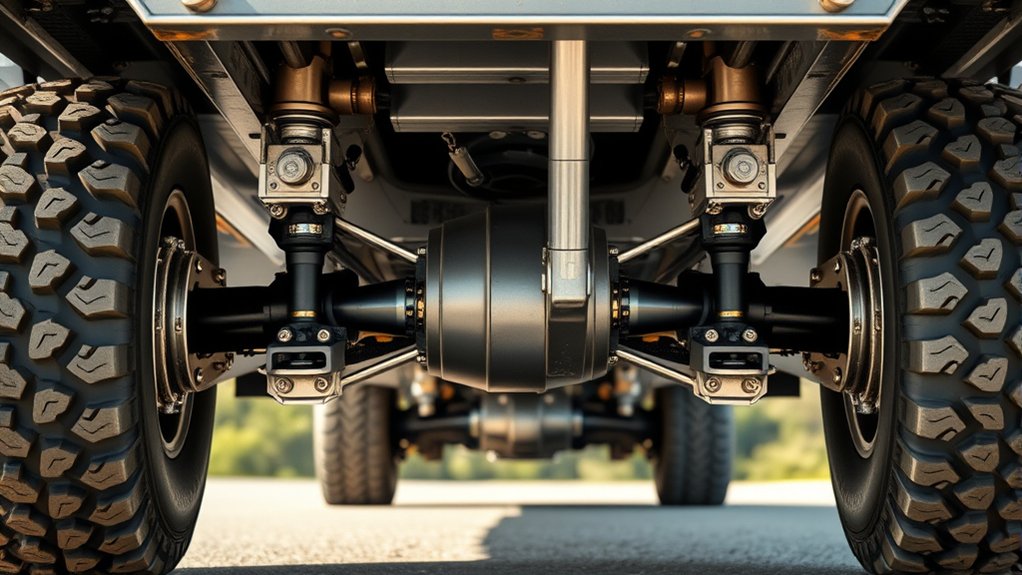
A tandem axle consists of two axles mounted close together, commonly found on trailers and heavy trucks. This setup helps spread weight evenly across the vehicle, enhancing stability and load distribution.
Using tandem axles allows you to carry heavier loads safely while improving handling and reducing sway during transit.
Proper spacing and regular maintenance of tandem axles are essential to prevent uneven wear and ensure smooth performance.
By distributing weight evenly and securing cargo effectively, you minimize the risk of damage and significantly improve overall safety.
Understanding how tandem axles affect your vehicle’s handling and maintenance is crucial for optimal operation and longevity.
Key Takeaways
- A tandem axle consists of two closely spaced axles with wheels to distribute weight and improve vehicle stability. Tandem axles increase load capacity and reduce sway, making them ideal for heavy trailers and trucks.
- Proper spacing between axles (34-60 inches for trailers) ensures even weight distribution and safer handling. Regular maintenance includes checking bolts, lubricating bearings, inspecting suspension, and monitoring tire condition.
- When using, evenly load cargo, secure it properly, and avoid overloading one axle to prevent damage and ensure safety.
What’s a Tandem Axle?
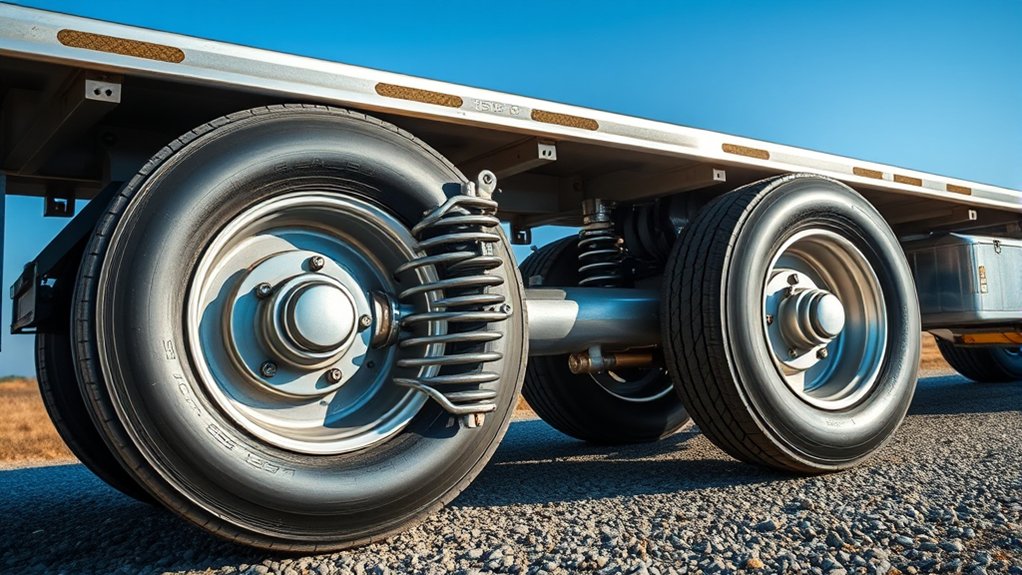
What exactly is a tandem axle, and why does it matter? A tandem axle refers to two axles placed close together on a vehicle or trailer. When you see a trailer with two sets of wheels side by side, that’s a tandem axle setup.
This design isn’t just about doubling the wheels; it’s about how the vehicle distributes weight and handles on the road. You’ll notice tandem axles mainly on larger trailers, trucks, and heavy-duty vehicles. They differ from single axles, which have just one set of wheels.
Why Tandem Axles Improve Load Capacity and Stability
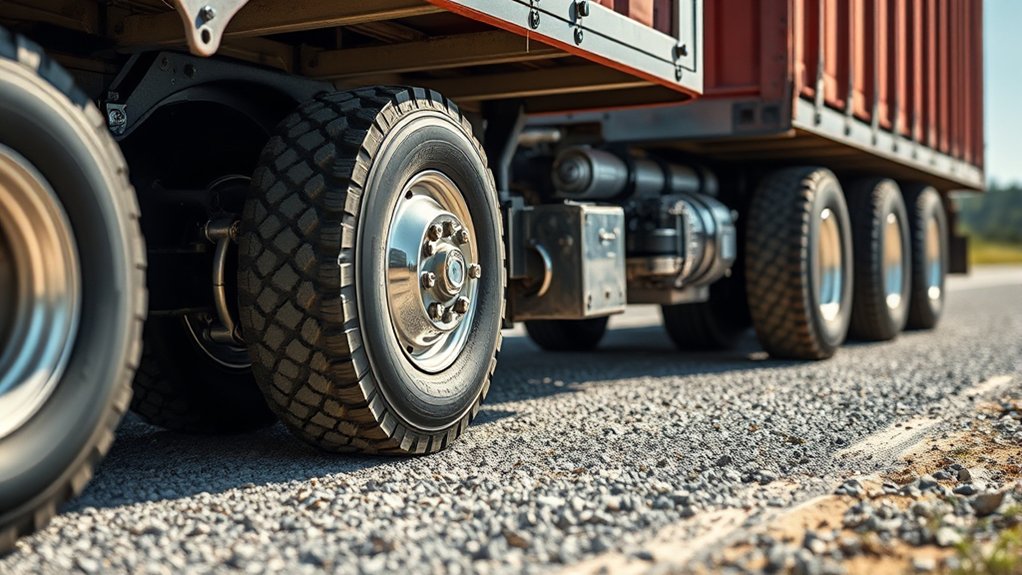
Because tandem axles spread the vehicle’s weight over more wheels, they considerably boost both load capacity and stability. When you have two axles working together, the load distributes more evenly, reducing stress on each tire and preventing premature wear. This means you can carry heavier cargo without compromising safety.
Additionally, tandem axles improve stability by providing a wider footprint, which reduces the risk of swaying or tipping, especially on uneven roads or during sudden maneuvers. You’ll notice better traction and smoother handling too, as the weight balance allows for improved control. Overall, tandem axles give you the confidence to haul larger loads safely, making them a smart choice for trucks and trailers that require durability and steady performance.
Tandem Axle Configurations for Trailers and Trucks
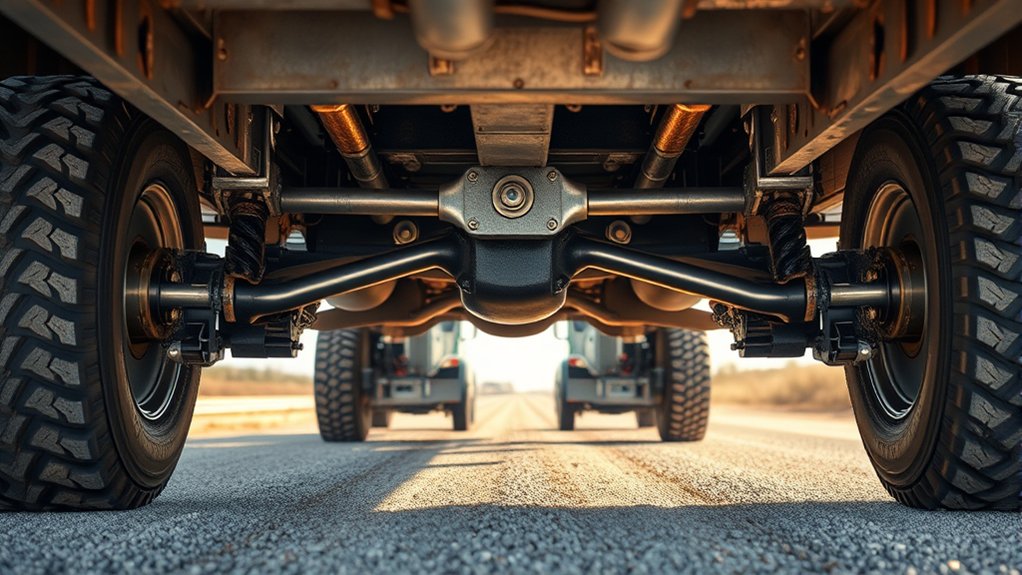
How do tandem axle configurations differ between trailers and trucks? When you look at trailers, tandem axles are usually set close together to evenly spread heavy loads and maintain stability. You’ll often find them spaced around 34 to 60 inches apart, depending on the trailer’s design and weight requirements.
For trucks, tandem axles are spaced wider to handle diverse loads and improve traction, especially on rough terrain or uneven surfaces. You’ll notice adjustable spacing in some trucks, allowing you to adapt the axle distance for different hauling needs.
In both cases, the goal is to optimize weight distribution and durability, but the exact configuration depends on the vehicle’s purpose and typical load type. Understanding these differences helps you choose the right setup for your hauling tasks.
How Tandem Axles Affect Trailer Handling and Safety
When you drive a trailer with tandem axles, you’ll notice improved stability during turns, which helps keep you in control. These axles also spread the load more evenly, reducing stress on each wheel. Understanding how this affects handling and safety can make a big difference on the road.
Stability During Turns
Although turning a trailer can be challenging, tandem axles play a vital role in enhancing stability during these maneuvers. With two axles working together, you get better weight distribution and reduced sway, making sharp or tight turns feel safer and more controlled.
This setup helps keep your trailer grounded, minimizing the risk of fishtailing or tipping. When you’re navigating corners or winding roads, tandem axles give you confidence that your trailer won’t lose balance.
| Feeling | Cause |
|---|---|
| Confidence | Stable, controlled turns |
| Safety | Reduced sway and fishtailing |
| Peace of Mind | Balanced and grounded trailer |
Load Distribution Impact
Why does load distribution matter so much for trailer handling and safety? When you properly balance the weight across tandem axles, you guarantee even pressure on each tire. This prevents uneven tire wear and reduces the risk of blowouts.
Uneven loads can cause your trailer to sway or fishtail, making it harder to control, especially at higher speeds or during sudden maneuvers. Tandem axles help spread the weight more evenly, so you get better stability and smoother handling. If you place too much weight on one axle, you risk overloading it, which can lead to suspension damage or axle failure.
How to Inspect and Maintain Tandem Axles
To keep your tandem axles performing reliably, you need to inspect and maintain them regularly. Start by checking for loose bolts, worn bushings, and any signs of corrosion. Make sure the wheel bearings are lubricated and free of debris.
Inspect the suspension components and look for cracks or damage. Don’t forget to check tire pressure and tread wear to prevent uneven loading.
| Inspection Area | What to Check | Maintenance Tip |
|---|---|---|
| Bolts & Fasteners | Tightness and corrosion | Torque to manufacturer specs |
| Bearings | Wear and lubrication | Grease regularly |
| Suspension | Cracks, wear, and alignment | Replace damaged parts promptly |
| Tires | Pressure and tread depth | Rotate and inflate properly |
Regular upkeep guarantees safety and prolongs axle life.
Tips for Loading and Distributing Weight on Tandem Axles
When you load a trailer with tandem axles, distributing the weight evenly is essential for safe handling and preventing premature wear. Start by placing the heaviest items low and centered between the axles to maintain balance. Avoid overloading one axle, as uneven weight can cause tire blowouts or suspension damage.
Use a scale to check the weight on each axle and adjust as needed. Secure your load to prevent shifting during transit, which can throw off your balance. Keep about 60% of the load forward of the trailer’s center to maintain proper tongue weight, ensuring the trailer tracks smoothly behind your vehicle.
Common Tandem Axle Problems and How to Fix Them
Properly loading and balancing your tandem axles helps prevent many issues, but problems can still arise over time. Here are three common problems you might face and how to fix them:
- Uneven Tire Wear: This often results from improper alignment or weight distribution. Check alignment regularly and redistribute loads to prevent premature tire damage.
- Worn Suspension Components: Overloaded axles strain springs and shocks. Inspect these parts frequently and replace any worn components to maintain smooth rides and control.
- Loose or Damaged Bearings: Bearings can wear out, causing noise and axle damage. Regularly grease bearings and replace them if you notice grinding or excessive play.
When to Upgrade Your Vehicle With Tandem Axles
Adding tandem axles can considerably boost your vehicle’s load capacity and stability, especially if you frequently haul heavy or bulky items. You should consider upgrading when you notice your current axle setup struggles with weight, or when your vehicle feels unstable on the road.
Tandem axles distribute the load more evenly, reducing wear and improving safety.
Here’s when to upgrade:
| Situation | Why Upgrade |
|---|---|
| Hauling heavier loads regularly | Increases load capacity |
| Frequent long-distance trips | Enhances stability and control |
| Uneven tire wear or suspension issues | Reduces stress on individual axles |
If any of these fit your situation, upgrading to tandem axles is a smart move that improves performance and longevity.
Frequently Asked Questions
Can Tandem Axles Be Used on All Types of Vehicles?
No, you can’t use tandem axles on all vehicles. They’re best for heavy loads like trailers or trucks, not smaller cars.
You’ll want to match axle type to your vehicle’s size and purpose for safety and performance.
How Do Tandem Axles Impact Fuel Efficiency?
You’ll notice tandem axles can reduce fuel efficiency by up to 5% due to added weight and rolling resistance.
But, they improve stability and load capacity, so balancing fuel use with safety is key for you.
Are There Specific Tire Types Required for Tandem Axles?
Yes, you’ll need tires designed for heavy loads and even wear on tandem axles. Look for tires labeled for commercial or trailer use with reinforced sidewalls to handle the extra weight and maintain stability.
What Is the Average Cost to Install Tandem Axles?
Installing tandem axles can cost you between $1,000 and $3,000, depending on parts and labor. Don’t let sticker shock stop you—think of it as investing in a stronger backbone for your trailer’s road adventures.
This upgrade enhances stability and load capacity, making it a smart choice for frequent haulers. Remember, quality parts and skilled labor are key to a successful installation.
Do Tandem Axles Require Special Licensing or Permits?
You usually don’t need special licenses just for tandem axles, but you might if your vehicle exceeds weight limits or size restrictions. Always check local regulations and permits to make sure you’re compliant before hitting the road.
Conclusion
Think of tandem axles like a pair of sturdy legs supporting a heavy backpack—they share the weight, making your journey smoother and safer. By understanding how to inspect, maintain, and load them properly, you’re giving your vehicle the balance and strength it needs to perform at its best.
Just like trusting strong legs to carry you forward, relying on well-kept tandem axles guarantees your trailer handles the road with confidence and stability. Proper maintenance and correct loading of tandem axles are essential for safe towing and optimal vehicle performance.
In conclusion, knowing what a tandem axle is and how to use it effectively ensures your trailer’s durability and road safety.

