

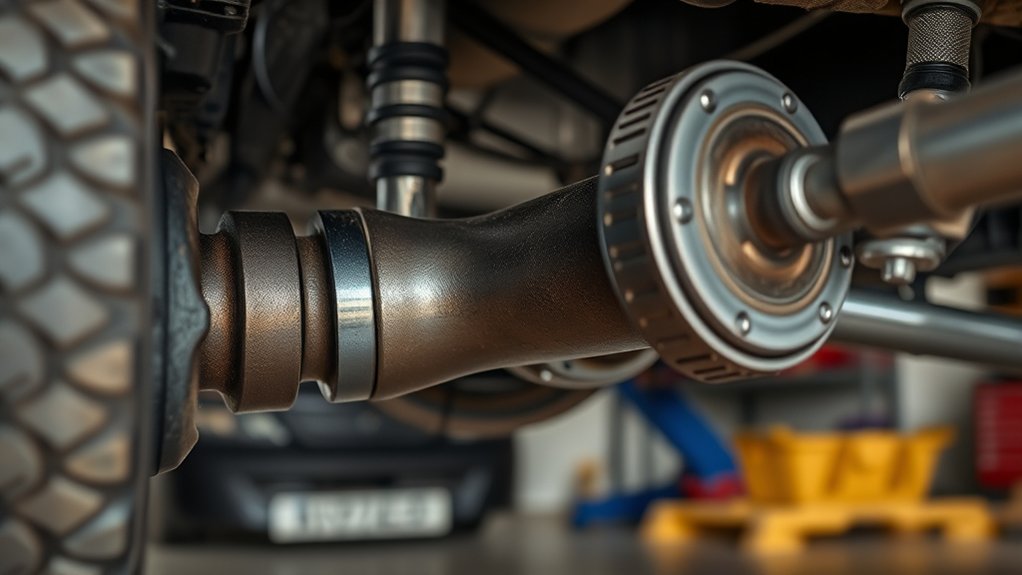
A drive axle is a crucial component that transfers power from your engine to your wheels, enabling your vehicle to move efficiently.
Identifying the drive axle involves locating a sturdy metal shaft running between the differential and wheels, often protected by rubber CV boots.
Understanding how to inspect and maintain the drive axle helps ensure your vehicle’s performance and safety.
To inspect the drive axle, look for grease leaks, cracks, or any unusual vibrations.
Listen carefully for clicking sounds when turning, which can indicate wear.
Catching these issues early keeps your ride smooth and safe.
Keep exploring to learn about the different types of drive axles, common signs of wear, and essential maintenance tips to prolong their lifespan.
Key Takeaways
- A drive axle transfers engine power from the differential to the wheels, enabling vehicle movement in various drivetrain systems.
- Locate the drive axle by identifying the drivetrain layout: front-wheel, rear-wheel, or all-wheel drive configurations.
- Visually identify the drive axle as a thick metal shaft with rubber CV boots, running horizontally between the differential and wheels.
- Inspect for signs of damage like vibrations, clicking noises, leaking grease, or visible cracks and corrosion on the axle.
- Regular maintenance includes checking CV boots, replacing damaged parts, and changing differential fluid to ensure axle integrity and safety.
What Is a Drive Axle and Why It Matters
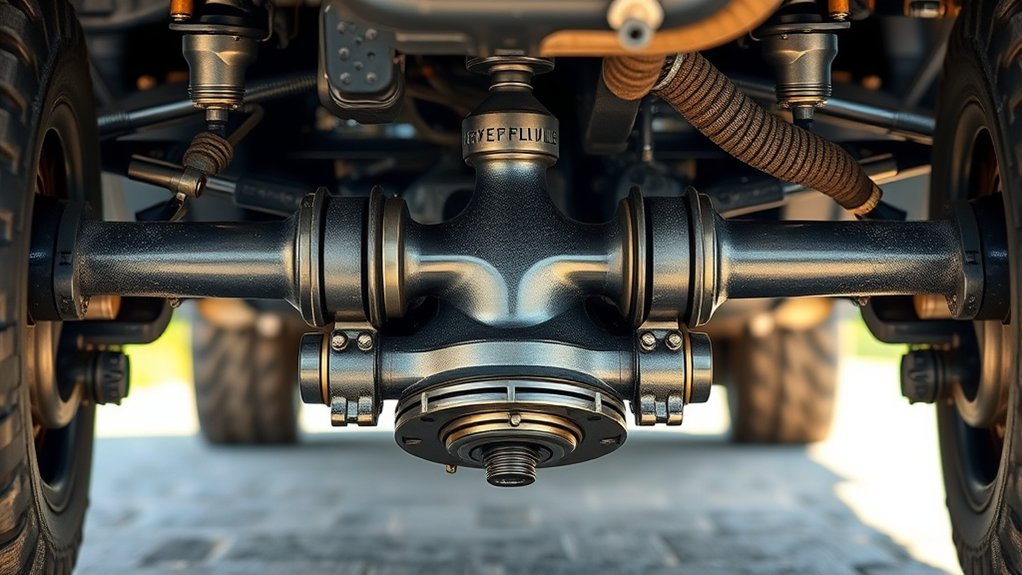
A drive axle is one of the most essential components in your vehicle’s drivetrain, responsible for transferring power from the engine to the wheels. Without it, your car wouldn’t move, no matter how powerful the engine is. It connects the differential with the wheels, allowing them to rotate and propel your vehicle forward or backward.
You’ll find drive axles in both front-wheel and rear-wheel drive systems, and sometimes all four wheels in all-wheel-drive vehicles. Knowing what a drive axle looks like and understanding its role helps you spot issues early, potentially saving you from costly repairs. When you regularly check your drive axle, you guarantee smoother rides and better control, keeping your vehicle safe and reliable on the road.
How a Drive Axle Powers Your Vehicle
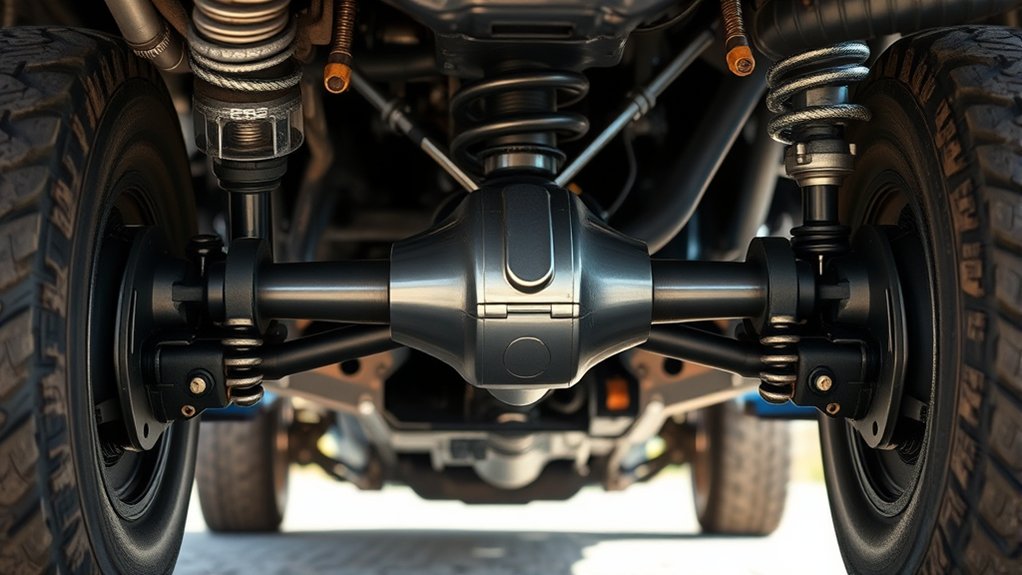
Although you might not see it working, the drive axle plays a crucial role in powering your vehicle by transferring torque from the differential directly to the wheels. When your engine generates power, it sends it through the transmission and then to the differential. The differential adjusts the torque, allowing the wheels to rotate at different speeds, especially while turning.
The drive axle then carries this torque from the differential to the wheels, enabling your vehicle to move forward or backward. Without a functioning drive axle, torque wouldn’t reach the wheels efficiently, resulting in poor performance or immobilization. Understanding this process helps you appreciate why inspecting the drive axle for damage or wear is essential to keep your vehicle running smoothly and safely.
The Main Types of Drive Axles and Their Differences
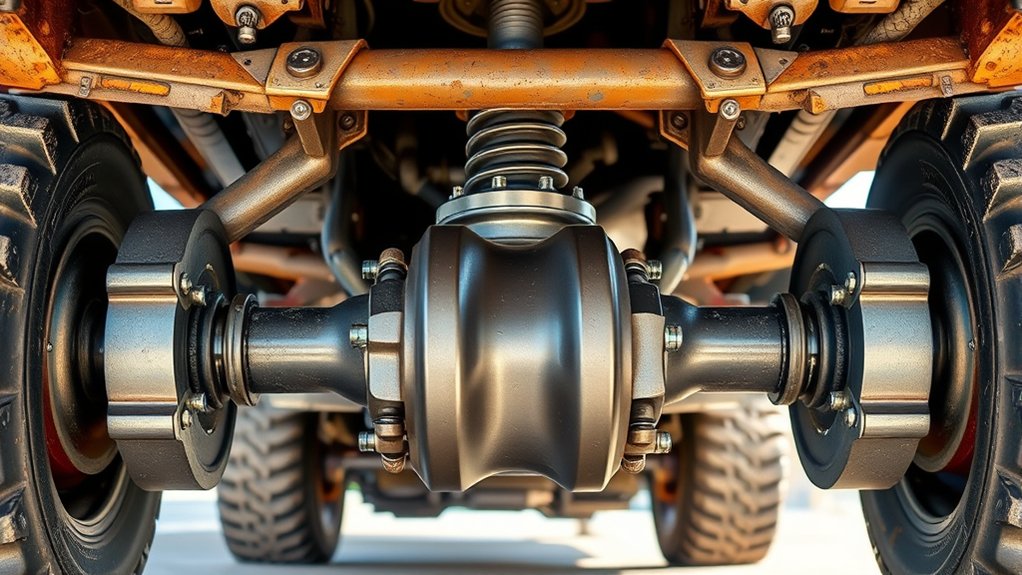
When you examine the drive axle, you’ll find several main types designed to suit different vehicle needs and driving conditions. Each type varies in complexity, strength, and application, so knowing their differences helps you identify and inspect them properly.
| Drive Axle Type | Key Characteristics |
|---|---|
| Solid Axle | Simple, durable, found in trucks |
| Independent Axle | Allows wheel movement, smooth ride |
| Split Axle | Divided shaft, common in front-wheel drive |
| Full-Floating Axle | Supports vehicle weight, heavy-duty |
Understanding these types helps you recognize wear patterns and potential issues during inspection. For instance, solid axles are tough but less flexible, while independent axles improve handling. Identifying the type guides you in choosing proper maintenance and repair methods.
How to Locate Your Drive Axle on the Car
Since the drive axle plays a crucial role in transferring power from the engine to your wheels, knowing exactly where it sits on your car makes inspection and maintenance much easier. To locate it, start by identifying your vehicle’s drivetrain layout—front-wheel, rear-wheel, or all-wheel drive—as this determines the axle’s position.
In front-wheel-drive cars, the drive axle connects the transmission to the front wheels, usually visible just behind the front tires. For rear-wheel-drive vehicles, look under the car near the rear wheels; the drive axle runs from the differential to the wheels. In all-wheel-drive models, you’ll find drive axles at both the front and rear.
Use a jack and secure stands if you need better access, and always confirm the car is safely supported before inspecting underneath.
How to Visually Identify a Drive Axle
How can you quickly spot a drive axle during your inspection? Look for a thick metal shaft connecting the transmission or differential to the wheels. Drive axles often have rubber boots, called CV boots, near the wheel ends that protect the joints.
These boots are usually ribbed and flexible. You’ll notice the drive axle runs horizontally between the differential and the wheel hub. Depending on your vehicle, there might be one or two axles visible.
They’re usually coated in grease or grime but should still be distinguishable by their robust, solid construction compared to thinner suspension or brake components. By focusing on these key features—the shaft, CV boots, and connection points—you can confidently identify the drive axle during your visual inspection.
Common Signs of Drive Axle Wear and Damage
Although drive axles are built to withstand heavy use, you’ll notice signs of wear and damage if you inspect them carefully. Catching these early helps prevent bigger problems.
Look for these common indicators:
- Leaking grease or oil around the axle seals, signaling worn or damaged seals.
- Visible cracks or dents on the axle shaft, which weaken its integrity.
- Excessive play or looseness when you move the axle by hand, showing worn bearings or joints.
- Unusual noises like clicking or clunking during turns, often from CV joint wear.
- Rust or corrosion buildup, which can compromise the metal and lead to failure.
Tools You’ll Need to Check Your Drive Axle
Noticing signs like leaking grease or unusual noises means it’s time to inspect your drive axle more closely. To do this effectively, you’ll need a few essential tools. Start with a jack and jack stands to safely lift and support your vehicle.
A flashlight helps you spot cracks, leaks, or damage in tight spaces. You’ll also want a set of wrenches or socket tools to remove any protective covers or bolts. A pry bar comes in handy to check for excessive play in the axle joints.
Don’t forget gloves to protect your hands and rags for cleaning grease or dirt. Having these tools ready guarantees you can perform a thorough inspection without interruptions or safety risks.
How to Inspect Your Drive Axle Step-by-Step
Before you begin the inspection, make sure your vehicle is securely lifted and supported with jack stands. Now, focus on these key steps to check your drive axle thoroughly:
- Visually examine the axle shaft for cracks, bends, or any obvious damage.
- Rotate the wheels by hand to detect unusual resistance or grinding noises.
- Check the universal joints for excessive play or rust.
- Inspect the splines where the axle connects to the differential for wear or corrosion.
- Wiggle the axle near the hub to identify any looseness indicating worn bearings or mounts.
How to Spot Leaks and Boot Damage on a Drive Axle
After checking the axle shaft, universal joints, and splines, turn your attention to the seals and boots that protect these components. Look closely for any grease leaks around the boots; fresh grease often indicates a tear or hole. Dirt and grime stuck to grease on the boots can also signal damage.
Flex the boots gently to check for cracks, splits, or brittleness, especially near the clamps. Damaged boots can let contaminants in, accelerating wear on the joints. Also, inspect the seals for any signs of oil seepage or hardening, which can compromise their effectiveness.
Catching leaks and boot damage early helps you avoid costly repairs and keeps your drive axle functioning smoothly.
What Noises or Vibrations Reveal Drive Axle Problems
You’ll often notice specific noises or vibrations when your drive axle has issues. Recognizing common sounds and vibration patterns can help you pinpoint the problem quickly.
Let’s explore how to diagnose these axle sound issues effectively.
Common Drive Axle Noises
When your drive axle starts making unusual noises or vibrations, it’s a clear sign that something might be wrong. Recognizing these sounds early helps you avoid costly repairs or breakdowns.
Here are some common drive axle noises to watch for:
- Clunking or knocking when shifting or accelerating, indicating worn universal joints or loose components.
- Grinding sounds during turns, often caused by damaged CV joints.
- Whining or humming noises that change with speed, pointing to worn bearings or gears.
- Vibrations felt through the floor or steering, signaling imbalance or misalignment.
- Clicking noises when turning, usually a sign of failing CV joints.
Pay attention to these signs to address drive axle issues promptly and keep your vehicle running smoothly.
Vibration Patterns and Causes
How can vibrations help you pinpoint drive axle problems? Vibrations often signal underlying issues like worn bearings, imbalanced shafts, or damaged CV joints. By paying attention to when and how vibrations occur, you can narrow down the cause before further damage happens.
| Vibration Pattern | Possible Cause | When It Occurs |
|---|---|---|
| Steady vibration | Imbalanced shaft | At all speeds |
| Pulsating vibration | Worn bearings | Increasing with speed |
| Intermittent vibration | Damaged CV joint | During turns |
| Harsh shaking | Bent axle shaft | During acceleration or load |
Monitoring these patterns helps you catch issues early and keep your drive axle in good shape.
Diagnosing Axle Sound Issues
Vibrations can tell you a lot about what’s wrong with your drive axle, but sounds often reveal even more specific clues. When you hear unusual noises, pay close attention—they can pinpoint issues before they worsen. For instance, a constant clicking could mean worn CV joints, while a grinding noise might signal damaged bearings or gears.
Here are common axle sound indicators to listen for:
- Clicking or popping: Usually worn or damaged CV joints
- Grinding: Possible bearing failure or gear damage
- Clunking: Loose or broken axle components
- Whining: Worn differential or low lubricant levels
- Humming: Imbalanced or worn axle shafts
When to Repair or Replace Your Drive Axle
You’ll want to watch for clear signs of drive axle damage, like leaks or unusual noises. Comparing repair and replacement costs can help you decide the best option. Knowing the right timing for maintenance can save you from bigger problems down the road.
Signs of Drive Axle Damage
When should you consider repairing or replacing your drive axle? You’ll want to act fast if you notice certain signs that signal damage. Ignoring these can lead to bigger problems and costly repairs.
Watch out for:
- Vibrations or shuddering during acceleration
- Clicking or clunking noises when turning
- Grease leaking near the axle or CV joints
- Excessive play or looseness in the axle shaft
- Visible cracks, bends, or corrosion on the axle
If you spot any of these, it’s crucial to inspect the drive axle closely or have a professional do it. Catching damage early helps maintain your vehicle’s safety and performance before more serious issues develop.
Repair Versus Replacement Costs
Although repair might seem like the cheaper option initially, you should weigh the costs and benefits carefully before deciding whether to fix or replace your drive axle. Minor issues like torn CV boots or small seal leaks can usually be repaired affordably.
However, if the axle shows extensive wear, bent shafts, or damaged joints, replacement might save you money long-term by preventing repeated repairs and breakdowns. Consider labor costs too—some repairs require significant disassembly, increasing expenses.
Also, think about reliability; a new axle typically offers better durability and warranty coverage. Ultimately, evaluate the extent of damage, repair complexity, and your vehicle’s age to make a smart choice. Don’t rush—choosing correctly helps maintain safety and avoids unexpected costs down the road.
Timing for Maintenance Actions
How do you know the right moment to repair or replace your drive axle? Watch for signs that indicate wear or damage before problems escalate. Addressing issues early saves you from costly repairs and unsafe driving conditions.
Keep an eye out for:
- Unusual noises like clicking or grinding when turning
- Vibrations felt through the steering wheel or floorboard
- Visible damage or excessive rust on the axle shaft
- Leaking grease or torn CV joint boots
- Difficulty steering or uneven tire wear
If you notice any of these signs, inspect the axle thoroughly. Don’t wait for complete failure—schedule maintenance promptly to ensure safety and extend your vehicle’s lifespan. Regular checks based on mileage and usage also help you stay ahead of potential issues.
Tips to Maintain Your Drive Axle for Long-Term Use
To keep your drive axle performing reliably over time, you need to commit to regular maintenance and timely inspections. First, check for leaks and damaged seals to prevent fluid loss, which can cause premature wear. Change the differential fluid as recommended by your vehicle’s manufacturer to guarantee proper lubrication.
Inspect the axle shafts and CV joints for cracks or excessive play, replacing worn parts promptly. Keep an eye on your tires and suspension, as misalignment or uneven wear can strain the drive axle. Avoid overloading your vehicle, since excess weight increases stress on the axle components.
Finally, listen for unusual noises or vibrations during driving, as these often indicate issues needing immediate attention. Staying proactive will help your drive axle last longer and perform safely.
Frequently Asked Questions
Can a Faulty Drive Axle Affect Fuel Efficiency?
Yes, a faulty drive axle can lower your fuel efficiency because it creates extra resistance and strain on your engine. You’ll notice your vehicle working harder, which means it uses more fuel than usual.
This added effort forces the engine to consume more fuel to maintain performance. Over time, this can lead to a noticeable decrease in your car’s overall fuel economy. It’s important to address drive axle issues promptly to avoid higher fuel costs.
How Does a Drive Axle Differ From a Driveshaft?
Did you know 80% of drivetrain problems trace back to axles? Your drive axle connects wheels to power, while the driveshaft transmits power from the engine to the axle—two vital parts working together but serving different roles.
Are Drive Axles Covered Under Standard Vehicle Warranties?
Yes, drive axles are usually covered under standard vehicle warranties, but coverage varies. You’ll want to check your specific warranty terms carefully, as some might exclude wear-and-tear items or require regular maintenance for coverage.
Can Off-Road Driving Accelerate Drive Axle Wear?
Yes, off-road driving can accelerate drive axle wear because rough terrain puts extra stress on the components. You’ll want to inspect seals, joints, and boots regularly to catch damage early and avoid costly repairs.
What Are the Costs Associated With Professional Drive Axle Repairs?
You’ll typically pay between $300 and $1,000 for professional drive axle repairs, depending on damage severity and parts needed. Labor costs vary, so getting a detailed estimate before work starts helps you avoid surprises.
Costs can fluctuate based on the specific issues and the vehicle model. Always ask for a breakdown of parts and labor charges. This transparency ensures you understand what you’re paying for and helps manage your budget effectively.
Conclusion
Understanding your drive axle is essential since it transfers power to your wheels—did you know that over 70% of vehicle breakdowns involve axle-related issues? By regularly inspecting for leaks, boot damage, and unusual noises, you can catch problems early and avoid costly repairs.
Keep your drive axle in top shape, and your car will run smoother and last longer. Taking a little time for maintenance now saves you big headaches down the road!
Regular drive axle inspection and maintenance are key to ensuring your vehicle’s reliability. Properly caring for your drive axle helps prevent breakdowns and extends the life of your vehicle. Don’t overlook the importance of drive axle care for safe and efficient driving.

