


To securely hold a tire on an axle, start by thoroughly cleaning and inspecting the axle and hub for damage. Proper cleaning ensures a stable fit and prevents future issues. Applying light grease helps prevent corrosion and makes installation smoother.
Next, carefully align the tire and slide it onto the axle. Hand-tighten the lug nuts in a star pattern to ensure even pressure.
Using a torque wrench, secure the lug nuts to the manufacturer’s specifications for safety.
Make sure the tire is centered and balanced to avoid wobbling during use. Proper alignment and balance are crucial for vehicle performance.
Keep following to uncover key steps and avoid common pitfalls.
Key Takeaways
- Clean and inspect the axle and wheel hub, applying light grease to prevent corrosion and ensure smooth mounting.
- Align the wheel hub properly and slide the tire securely onto the axle for a snug fit.
- Hand-tighten lug nuts initially, then use a torque wrench in a star pattern to tighten to manufacturer specifications.
- Balance the tire after mounting and perform an on-road test to check for vibrations, noises, or steering issues.
- Regularly inspect lug nuts, threads, and mounting surfaces, rechecking torque and cleaning to prevent loosening or damage.
Why Securing Your Tire Matters for Safety and Performance

Because your tire directly affects how your vehicle handles, securing it properly is essential for both safety and performance. When you fasten the tire firmly on the axle, you guarantee it stays aligned and balanced, preventing wobbling or slipping while driving. This stability helps you maintain control, especially during turns or sudden stops.
A loose tire can lead to uneven wear, reducing your tire’s lifespan and potentially causing dangerous blowouts. Securing the tire also minimizes vibrations, which improves your ride comfort and protects other vehicle components from unnecessary stress.
Tools You’ll Need to Secure a Tire
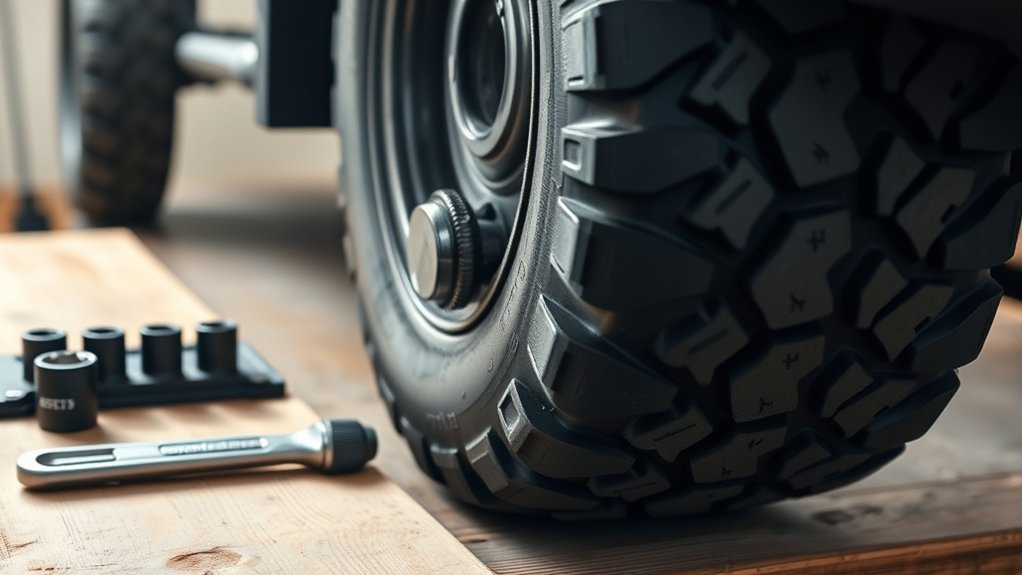
To securely hold a tire on an axle, you’ll need the right tools, including tire irons, a lug wrench, and safety gloves. Don’t forget safety gear like goggles and a sturdy work surface to protect yourself.
Keeping your tools clean and well-maintained will make the job easier and safer every time.
Essential Tire Mounting Tools
Before you start mounting a tire, you’ll want to gather the right tools to make the job safe and efficient. First, a sturdy tire iron or lug wrench is essential for loosening and tightening lug nuts. A jack and jack stands will safely lift and hold the vehicle while you work.
You’ll also need a torque wrench to ensure lug nuts are tightened to the manufacturer’s specifications, preventing over- or under-tightening. A bead breaker or tire lever helps you separate the tire from the rim if you’re mounting the tire yourself. Finally, having a valve core tool is useful for removing or installing valve cores when inflating or deflating the tire.
These tools keep the mounting process smooth and secure.
Safety Equipment Overview
Although securing a tire on an axle might seem straightforward, using the right safety equipment is crucial to protect yourself and guarantee the job goes smoothly. You’ll want gear that shields you from potential injuries and ensures you maintain control throughout the process. Don’t skip these essentials:
- Safety gloves to protect your hands from sharp edges and provide a better grip.
- Safety goggles to guard your eyes from debris or unexpected snaps.
- Steel-toed boots to protect your feet in case the tire or tools drop.
- Protective clothing like a long-sleeve shirt to prevent scrapes and bruises.
Wearing this equipment helps you stay safe and focused, making the task quicker and more efficient.
Tool Maintenance Tips
Since your tools play a vital role in securely holding a tire on an axle, keeping them well-maintained guarantees they work effectively and last longer. Regularly inspect your wrenches, sockets, and clamps for wear or damage. Clean them after use to avoid rust and debris buildup.
Lubricate moving parts to facilitate smooth operation. Store tools in a dry environment to prevent corrosion.
| Tool | Maintenance Tip |
|---|---|
| Wrenches | Check for cracks, clean |
| Sockets | Remove grime, lubricate |
| Clamps | Inspect hinges, oil joints |
| Screwdrivers | Tighten handles, clean |
Preparing the Axle and Wheel Hub for Installation
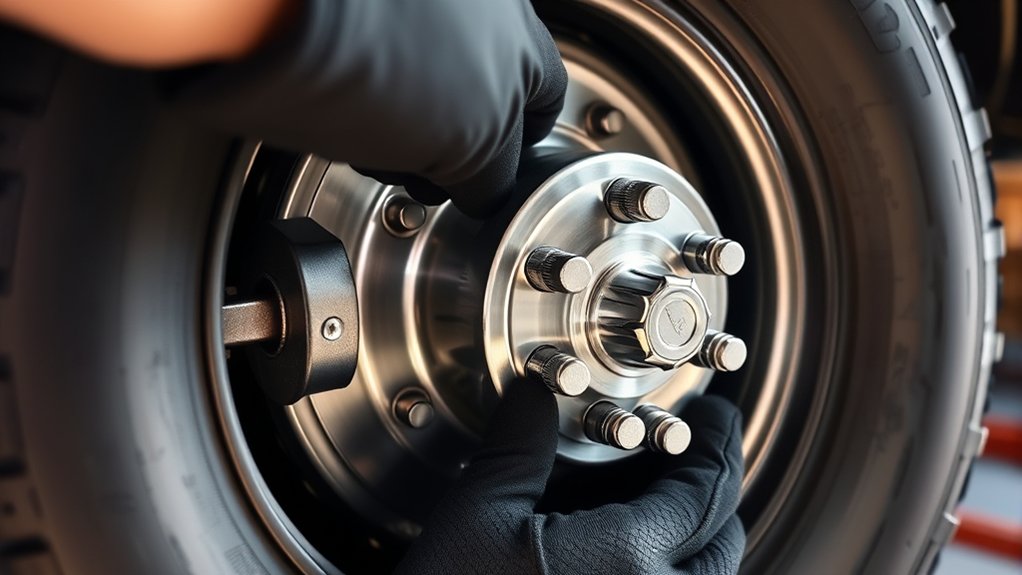
How do you guarantee a smooth fit when mounting a tire onto an axle? Start by thoroughly preparing the axle and wheel hub. This guarantees proper alignment and secure attachment.
Here’s what you need to do:
- Clean the axle and hub with a wire brush to remove rust, dirt, and old grease.
- Inspect the axle for damage or wear, including nicks or bends that could affect fit.
- Apply a light coat of grease to the axle shaft to prevent corrosion and ease installation.
- Check the wheel hub’s bore for debris or imperfections that could interfere with seating.
Choosing the Right Fasteners for Your Tire
After preparing the axle and wheel hub to guarantee a smooth fit, the next step is selecting the right fasteners to hold the tire securely in place. You need to *evaluate* size, strength, and compatibility with your axle and wheel hub.
Using the wrong fasteners can lead to unsafe conditions or damage.
Here’s a quick guide:
| Fastener Type | Best Use |
|---|---|
| Lug Nuts | Common for cars, strong grip |
| Bolts | Heavy-duty applications |
| Retaining Rings | Quick-release, lighter loads |
Make sure to choose fasteners made from durable materials like hardened steel. Also, verify thread size and pitch to match your axle.
Proper torque settings during installation are essential to keep the tire stable and prevent loosening during use.
How to Mount a Tire on an Axle Step-by-Step
When you’re ready to mount the tire on the axle, start by aligning the wheel hub carefully to assure a proper fit. This alignment guarantees the tire sits flush and avoids wobbling.
Next, follow these steps:
- Lift the tire and slide it onto the axle, making sure the hub fits snugly.
- Hold the tire steady while inserting the fasteners through the lug holes.
- Hand-tighten the fasteners just enough to keep the tire in place without forcing them.
- Double-check that the tire is centered and flush against the mounting surface.
Tips for Tightening Lug Nuts and Bolts Correctly
Once you’ve hand-tightened the fasteners to hold the tire steady, it’s important to tighten the lug nuts and bolts properly to assure safety and stability. Use a star or crisscross pattern to guarantee even pressure and prevent warping. Avoid tightening one lug nut fully before moving to the next.
Instead, gradually tighten each lug nut in stages. Use a torque wrench set to the manufacturer’s recommended torque to avoid over-tightening or under-tightening, both of which can cause problems.
| Step | Tip |
|---|---|
| 1. Pattern | Use star or crisscross pattern |
| 2. Initial Tighten | Tighten all nuts evenly |
| 3. Final Torque | Use torque wrench |
| 4. Recheck | After driving, recheck torque |
| 5. Tools | Use correct socket size |
Following these tips keeps your tire secure.
How to Check Tire Alignment and Balance After Installation
After you install the tire, start by visually inspecting its alignment to guarantee it sits straight on the axle.
Next, use balancing techniques to prevent vibrations and uneven wear.
Finally, take a test drive to feel for any handling issues that need adjustment.
Visual Alignment Inspection
How can you quickly tell if your tire is properly aligned and balanced after installation? A visual alignment inspection is a great first step. Start by checking if the tire sits evenly on the axle without any noticeable tilt or wobble.
Look closely for these signs: uneven tire wear patterns, gaps between the tire and the wheel rim, misalignment of the tire tread with the axle axis, and any side-to-side or up-and-down movement while spinning.
If you spot any of these issues, your tire might not be securely aligned or balanced. Catching problems early helps prevent damage and ensures smoother rides. Visual inspections are simple but effective—don’t skip this step before taking your vehicle out for a spin!
Balancing Techniques Overview
Although a visual inspection can catch obvious misalignments, you’ll need proper balancing techniques to guarantee your tire runs smoothly and safely. Start by mounting the tire on a balancing machine, which spins it to detect any heavy spots that cause vibrations. The machine will indicate where and how much weight to add on the rim to counterbalance those spots.
Use adhesive or clip-on wheel weights as recommended, securing them firmly. After adding weights, rerun the balancing test to confirm the tire spins evenly without wobbling. This process prevents uneven tire wear, reduces strain on suspension components, and improves handling.
Always balance each tire after installation to assure optimal performance and safety, even if the tire appears perfectly aligned visually.
Test Drive Evaluation
Once you’ve balanced your tires, it’s important to verify their alignment and balance on the road. A test drive helps you catch any issues that static balancing might miss. Pay close attention to how your vehicle handles and feels during the drive.
Here’s what you should focus on:
- Steering response: Make sure the wheel doesn’t pull to one side.
- Vibrations: Check for unusual shaking in the steering wheel or seat.
- Noise: Listen for any humming or thumping sounds from the tires.
- Straight-line tracking: Confirm the vehicle maintains a steady path without constant correction.
If you notice any of these problems, you’ll want to recheck your tire installation and balance before hitting the road again. This guarantees safety and a smooth ride.
Common Mistakes That Lead to Loose Tires
If you don’t tighten the lug nuts properly or skip essential checks, your tire can become dangerously loose. One common mistake is not using the correct torque when tightening; overtightening or undertightening both cause issues. Another error is neglecting to clean the wheel hub and mounting surface, which prevents a secure fit.
You might also forget to use a proper tightening pattern, leading to uneven pressure on the wheel. Skipping thread inspection on lug nuts and studs can result in stripped threads and poor fastening. Finally, failing to reinstall the valve stem cap can allow debris or moisture inside, affecting tire integrity.
Avoid these pitfalls to keep your tire firmly and safely secured on the axle.
When to Inspect and Replace Tire and Wheel Parts
Ensuring your tire stays securely on the axle means regularly checking the condition of your tire and wheel parts. You want to catch wear and damage early to avoid failures that could lead to unsafe conditions or costly repairs. Here’s when you should inspect and replace parts:
- After every 3,000 miles or as recommended by the manufacturer
- If you notice visible cracks, bulges, or uneven tread wear on the tire
- When wheel rims have dents, corrosion, or bent areas
- Whenever you remove the tire for maintenance or repair
Pay close attention during these times to maintain a secure fit and effective performance. Replacing worn or damaged parts promptly keeps your wheel assembly safe and reliable.
Troubleshooting Loose or Wobbling Tires on an Axle
When your tire feels loose or wobbles on the axle, you need to act quickly to identify the cause before it leads to more serious issues. First, check the lug nuts or bolts to verify they’re tightened to the correct torque. Loose fasteners are a common culprit.
Next, inspect the axle shaft and the hub for any visible damage or wear. Worn bearings or a bent axle can cause wobbling. Also, examine the tire itself for uneven wear or damage that might affect balance.
If everything appears intact, try spinning the wheel to detect any unusual play or noise. Address any problems immediately to avoid unsafe conditions and costly repairs. Staying vigilant helps keep your tires secure and your ride smooth.
Frequently Asked Questions
Can I Use Different Types of Tires on the Same Axle?
You can use different types of tires on the same axle, but it’s not recommended. Mixing tires may cause uneven wear, handling issues, and safety risks.
Stick to matching tires for the best performance and stability.
How Do Temperature Changes Affect Tire Pressure on an Axle?
Temperature changes affect tire pressure like a balloon expanding in the sun; as it gets colder, pressure drops, and when it’s warmer, pressure rises.
You’ll need to check and adjust your tires regularly for safe driving.
What Is the Recommended Torque Specification for Lug Nuts?
You should torque lug nuts to the manufacturer’s specification, typically between 80 to 100 foot-pounds for passenger vehicles. Always use a calibrated torque wrench to guarantee they’re tightened evenly and securely, preventing wheel damage or loosening.
Proper torque ensures safety and helps maintain the integrity of the wheel assembly. Over-tightening can cause stud damage, while under-tightening may lead to wheel detachment.
Always refer to your vehicle’s manual for the exact torque specification and follow the recommended tightening sequence.
Are There Specific Tire Brands Known for Better Axle Compatibility?
Imagine you’re driving a Jeep Wrangler with BFGoodrich tires—they’re known for excellent axle compatibility and durability.
You’ll find brands like BFGoodrich often perform better because they match axle specs and vehicle demands precisely.
Can I Secure a Tire on an Axle Without Professional Tools?
Yes, you can secure a tire on an axle without professional tools by using strong clamps or zip ties temporarily. However, for safety and durability, it’s best to use proper tools or seek professional help when possible.
Conclusion
Think of your tire as the handshake between your vehicle and the road—secure it firmly, and you guarantee trust and safety with every turn. By using the right tools, fasteners, and techniques, you hold more than just rubber on metal; you hold control, stability, and peace of mind.
Don’t let a loose tire shake your confidence—take the time to check, tighten, and maintain. Properly securing your tire on an axle is essential for safe driving and vehicle performance. Regular inspections and maintenance ensure that your tire remains firmly in place.
Remember, a securely held tire prevents accidents and enhances your driving experience. Prioritize the correct method to hold a tire on an axle to keep your journeys safe and steady. Securely holding a tire on an axle is the key to reliability and peace of mind on the road.

