

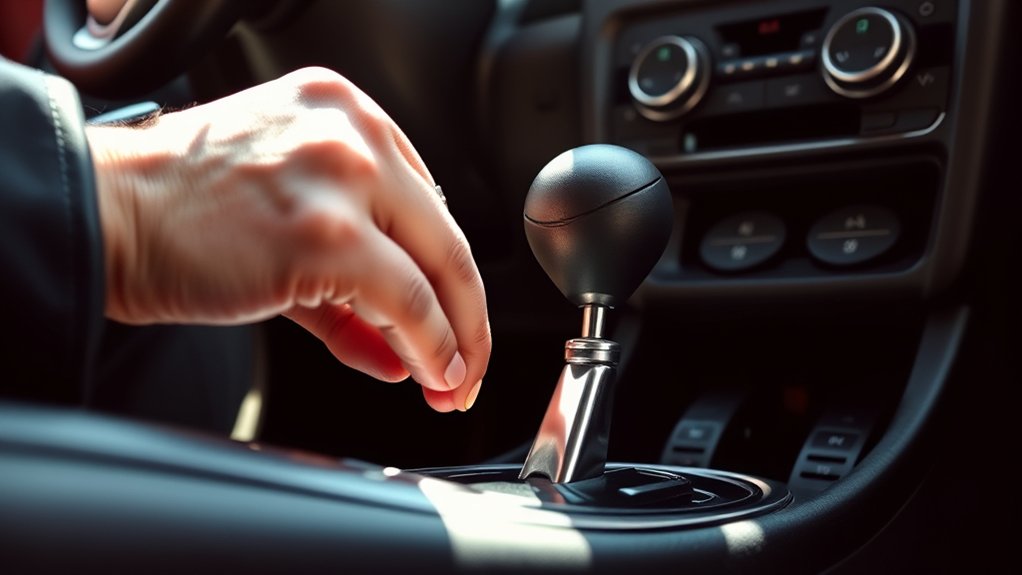
To pop a clutch effectively, you need to understand the basic steps of clutch control and throttle coordination. Popping the clutch is a useful technique for quick starts and can help you gain better control over your manual transmission vehicle.
Before you begin, ensure your car is ready with the parking brake on and the gear in neutral.
Shift into first gear, then fully press the clutch pedal while giving the throttle some gas. Slowly release the clutch until you feel the engagement point, then quickly let go to transfer power smoothly.
Control the throttle after popping to avoid stalling. Practice this coordination to build confidence and control, and you’ll soon master smooth starts with ease. Discover how to refine this skill further.
Key Takeaways
- Fully depress the clutch pedal and shift into first or second gear based on conditions.
- Slowly raise engine RPM by gently pressing the throttle while holding the clutch down.
- Quickly release the clutch pedal at the engagement point to transfer power to the wheels.
- Control the throttle after popping the clutch to maintain smooth acceleration and avoid stalling.
- Practice in a safe, open area to develop timing, balance, and confidence with the technique.
What Popping the Clutch Means and Why It Matters
Although popping the clutch might sound intimidating at first, it’s simply a technique that helps you start moving a manual transmission car without using the gas pedal. When you pop the clutch, you quickly release the clutch pedal, allowing the engine’s power to transfer to the wheels suddenly. This sudden engagement can get your car moving from a standstill, especially when you want a quick start or need extra torque.
Understanding this technique is important because it gives you control over the vehicle’s momentum and can help in situations like hill starts or when your gas pedal isn’t responding well. Mastering popping the clutch boosts your confidence and overall driving skill, making manual driving smoother and more responsive.
Getting Your Car Ready and Choosing the Right Gear
Before you pop the clutch, make sure your car is in good shape and the clutch pedal feels responsive. Choose the right gear, usually first or second, to match your speed and terrain.
Double-check that the clutch engages smoothly to avoid stalling or jerking.
Preparing Your Vehicle
How do you get your car ready to pop the clutch smoothly? First, confirm your vehicle is in good working condition—check the clutch pedal for proper engagement and release. Make sure the engine is running at a moderate idle, so it’s responsive when you engage the clutch.
Keep the parking brake engaged to prevent rolling, especially on inclines. Position yourself comfortably behind the wheel with clear access to the clutch, brake, and accelerator pedals. Verify your foot placement allows precise control without unnecessary strain.
Double-check that the transmission is in neutral before you start. By preparing your vehicle this way, you set the stage for a smooth clutch pop, reducing the risk of stalling or jerking, and making the process safer and more effective.
Selecting Appropriate Gear
Choosing the right gear is essential for a smooth clutch pop and overall control. You’ll want to start in first or second gear, depending on your car’s power and road conditions. First gear offers more torque and control, making it easier to get moving without stalling.
Second gear can work if you’re on a slippery surface or need a gentler start. Make sure your gear lever is fully engaged in the chosen gear to avoid grinding or damage. Avoid higher gears because they require more clutch slip and can strain your engine.
Checking Clutch Engagement
Once you’ve selected the right gear, the next step is to check how your clutch engages. Press the clutch pedal slowly and feel where it starts to bite—that’s your engagement point. This is essential for a smooth pop.
If the clutch grabs too high or too low, it could cause stalling or jerking. Practice finding this spot several times to build your confidence.
Here’s a quick guide to what you should expect:
| Clutch Action | What You Feel | Result |
|---|---|---|
| Pedal Fully Pressed | No power to wheels | Safe to shift gears |
| Engagement Point | Slight resistance/bite | Ready to pop clutch |
| Pedal Released | Full power transfer | Car moves forward smoothly |
Mastering this helps guarantee your pop clutch attempt goes off without a hitch.
How to Use the Clutch and Gas Pedal Together
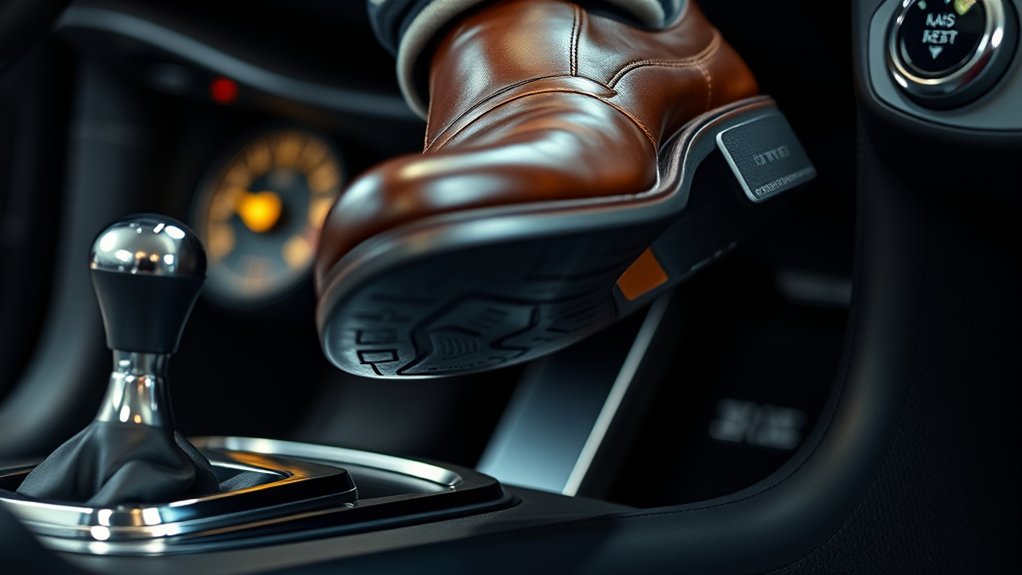
You need to coordinate the clutch and gas pedals carefully to get your car moving smoothly. Timing your release of the clutch while applying the right amount of throttle is key to avoiding stalls. Balancing both controls lets you engage the engine without jerking or losing power.
Coordinating Clutch And Gas
Although it might seem tricky at first, coordinating the clutch and gas pedals is key to smoothly popping the clutch without stalling. You need to balance both pedals carefully to get the engine and transmission working together.
Here’s how to approach it:
- Press the clutch pedal fully to disengage the engine.
- Give the gas pedal a gentle, steady press to increase engine RPM.
- Slowly release the clutch pedal while keeping the gas steady.
- Adjust the gas pedal as needed to maintain engine power and prevent stalling.
Timing For Smooth Engagement
Because timing plays a crucial role, coordinating the clutch and gas pedals precisely guarantees a smooth shift without jerks or stalls. When you pop the clutch, you need to release the clutch pedal just as you begin pressing the gas pedal. Too fast or too slow throws off the engine and transmission balance.
Here’s a quick guide to nail the timing:
| Action | Timing Tip |
|---|---|
| Start releasing clutch | Slow and steady, feel biting point |
| Begin pressing gas | Just as clutch engages |
| Fully release clutch | Once engine revs up smoothly |
Practice makes perfect. Focus on the clutch’s biting point and gradually add gas to avoid stalling or jerking. This timing dance ensures your shifts stay smooth and your car responds well.
Balancing Throttle And Release
Mastering the timing of clutch release and gas application sets the stage, but balancing both pedals together makes all the difference in a smooth pop of the clutch. You need to coordinate your feet carefully to avoid stalling or jerking. Here’s how to get it right:
- Press the clutch fully and start giving gas gently.
- Slowly release the clutch until you feel the engagement point.
- As you reach that biting point, increase throttle smoothly to provide enough power.
- Continue releasing the clutch while balancing gas to maintain steady engine RPM.
When and How to Pop the Clutch for a Smooth Start
If you want to get your vehicle moving smoothly from a standstill, you need to time the clutch release just right. Begin by fully depressing the clutch and shifting into first gear. Gradually lift your foot off the clutch until you feel the engagement point—the moment the engine and transmission start connecting.
This is when you should pop the clutch by quickly releasing it while ensuring the car doesn’t stall. The key is to avoid releasing the clutch too slowly or too abruptly; too slow can cause stalling, and too fast can jerk the vehicle forward.
With practice, you’ll develop a feel for this balance, allowing you to start smoothly without stalling or jolting, giving you better control and confidence behind the wheel.
Controlling the Throttle After Popping the Clutch
Once you’ve popped the clutch, you need to quickly adjust the throttle to keep the engine running smoothly and prevent stalling. Here’s how you control the throttle effectively:
- Press the gas pedal gently to increase engine RPM without overwhelming the wheels.
- Listen to the engine sound—a steady hum means you’re on the right track.
- Watch the tachometer; aim to keep RPMs between 1500 and 2500 for a smooth start.
- Modulate the throttle smoothly as the car gains momentum, avoiding sudden jerks or stalls.
How to Avoid Common Mistakes When Popping the Clutch
Controlling the throttle well after popping the clutch helps you avoid stalling or jerking the car, but there are still common mistakes that can trip you up. First, don’t release the clutch too quickly; doing so can stall the engine or cause a rough start. Instead, ease off the clutch gradually.
Second, avoid giving too much gas too soon, which can lead to wheel spin or loss of control. Third, don’t forget to be in the right gear—usually first or second—before you pop the clutch. Finally, don’t rush the process.
Popping the clutch requires timing and smooth coordination, so stay calm and focus on your movements. Avoid these mistakes, and you’ll get smoother starts every time.
Practice Tips to Master Popping the Clutch Safely
Although popping the clutch can feel tricky at first, practicing in a safe, controlled environment helps you build confidence and skill. Start by finding a flat, open space like an empty parking lot where you won’t risk damage or distractions.
Popping the clutch takes practice—start in a safe, open area to build confidence and control.
Then, follow these steps to master the technique safely:
- Familiarize yourself with how your clutch and throttle respond by slowly engaging and disengaging them.
- Practice popping the clutch gently at low speeds to feel the car’s reaction without jerking.
- Use a spotter or record yourself to get feedback on your timing and smoothness.
- Increase speed gradually only when you’re comfortable, avoiding sudden releases that can stall or damage the drivetrain.
Consistent, mindful practice will make popping the clutch second nature.
Frequently Asked Questions
Can Popping the Clutch Damage My Car’s Transmission?
Yes, popping the clutch can damage your car’s transmission if you do it aggressively or frequently. It stresses the drivetrain and clutch components, leading to premature wear or failure.
Be gentle to avoid costly repairs.
Is Popping the Clutch Suitable for All Types of Manual Cars?
Not all manual cars handle popping the clutch well—you’ll want to avoid it in models with delicate clutches or advanced systems. Always check your car’s specifics; otherwise, you might end up causing costly damage unintentionally.
How Does Popping the Clutch Affect Fuel Efficiency?
Popping the clutch usually lowers fuel efficiency because you’re causing the engine to rev higher abruptly. You’ll waste more fuel compared to smooth clutch engagement, which helps maintain better control and conserves gas over time.
Smooth clutch engagement allows the engine to transition power more gradually, reducing unnecessary fuel consumption. Abrupt revving from popping the clutch forces the engine to work harder than needed. Over time, this inefficient use of fuel adds up, making your vehicle less economical to run.
Can Popping the Clutch Help if My Car Stalls Frequently?
Don’t put the cart before the horse—popping the clutch can temporarily help restart your car if it stalls, but it’s not a fix.
You should diagnose the real issue to avoid frequent stalling and costly repairs.
Are There Safety Risks Associated With Popping the Clutch?
Yes, popping the clutch can cause safety risks like sudden jerks, loss of control, or stalling in traffic. You should use it carefully to avoid damaging your car and guarantee you’re driving safely around others.
Conclusion
Popping the clutch might seem tricky at first, but with practice, you’ll get the timing just right for smooth, confident starts. Some say it’s harsh on your car, but if you pop the clutch correctly, it won’t cause damage—it’s all about control and technique.
So, don’t be afraid to try it out, learn from mistakes, and soon you’ll master this skill. Making driving stick feel natural and even fun comes with understanding how to pop the clutch properly.
Mastering this technique not only improves your starts but also enhances your overall driving experience. With patience and practice, popping the clutch in a manual car becomes second nature. Keep practicing, and you’ll enjoy driving stick more every day.

