

You typically drive a car with two axles—one at the front and one at the rear. Understanding how many axles a car typically has is important because axles play a crucial role in vehicle performance, safety, and fuel efficiency.
The front axle handles steering and supports part of your car’s weight, while the rear axle delivers power and stability.
Some larger or specialized vehicles have more axles to support extra weight and improve balance.
Knowing the function of each axle can help you appreciate why axle design matters for your vehicle’s overall operation. This knowledge also aids in making informed decisions about maintenance and upgrades.
Key Takeaways
- Most standard passenger cars typically have two axles: one front axle and one rear axle.
- The front axle supports steering and part of the vehicle’s weight.
- The rear axle primarily delivers engine torque and stability.
- Some specialized vehicles, like trucks, have more than two axles for heavier loads.
- Two-axle configurations balance vehicle handling, stability, and ease of maintenance.
How Many Axles Does a Typical Car Have?
How many axles does a typical car have? Most standard cars come with two axles—one at the front and one at the rear. These axles connect the wheels on each side, allowing them to turn and support the vehicle’s weight.
When you look under your car, you’ll usually see these two main bars running across the width of the vehicle. While some specialized vehicles may have more axles, the average passenger car sticks to this simple setup. Understanding this basic fact helps you grasp how cars are designed for balance and movement.
What Does Each Axle Do in a Car?
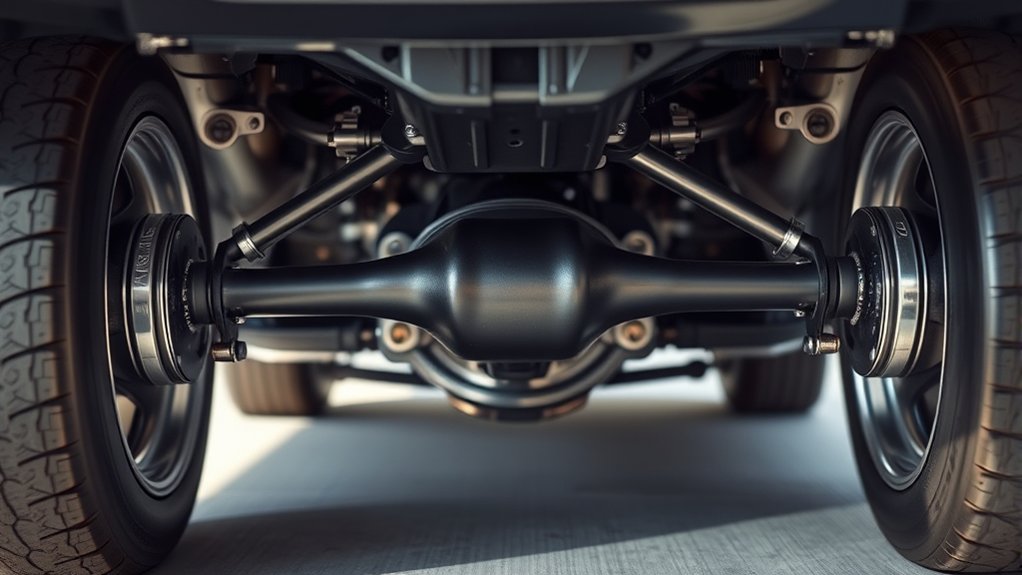
Although each axle seems simple, it plays an essential role in your car’s performance and safety. Each axle connects the wheels and supports the car’s weight, but they do more than just hold things together.
Here’s what each axle does for you:
- Supports Weight: Axles bear the weight of your car and passengers, ensuring stability.
- Transfers Power: They transmit engine power to the wheels, making your car move.
- Enables Steering: Front axles help you steer by allowing the wheels to pivot.
- Absorbs Shock: Axles work with suspension to absorb bumps, providing a smooth ride.
Understanding these functions helps you appreciate why axles are critical for your car’s control and comfort.
Differences Between Front and Rear Axles in Cars
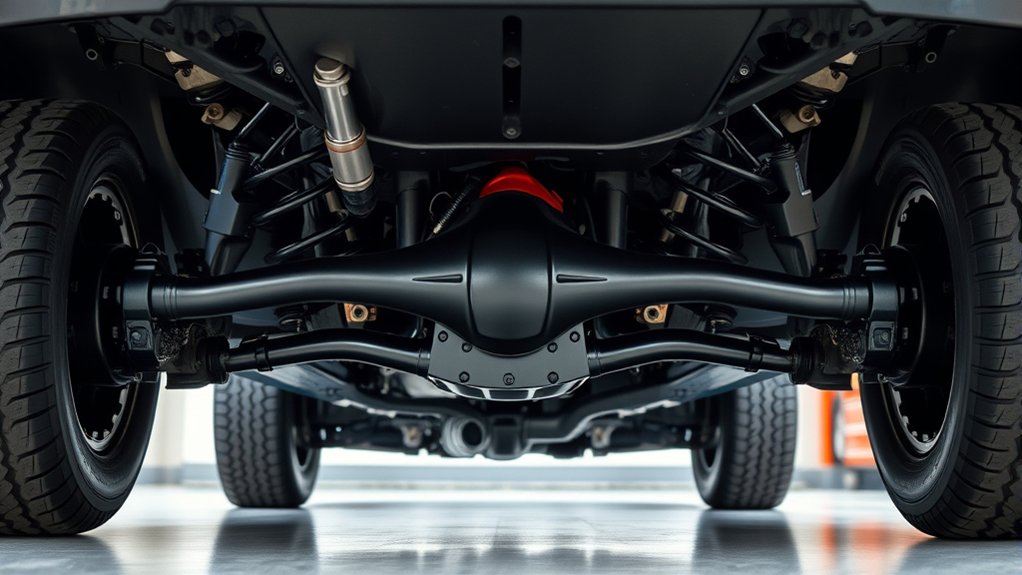
You’ll notice the front axle mainly handles steering and supports the car’s weight. The rear axle often focuses on delivering power to the wheels and maintaining stability.
Understanding these roles helps you see how each axle contributes to your car’s performance.
Front Axle Functions
When you look under the hood, you’ll notice the front axle plays a vital role in steering and supporting the vehicle’s weight. Unlike the rear axle, the front axle directly influences how you control the car. Here’s what it does for you:
- Connects the front wheels, allowing them to turn in sync when you steer.
- Bears a significant portion of the car’s weight, especially from the engine.
- Houses components like the steering knuckles and suspension parts for smooth handling.
- Enables power delivery in front-wheel-drive vehicles, transmitting engine torque to the wheels.
Understanding these functions helps you appreciate why the front axle is essential for both control and stability while driving.
Rear Axle Roles
While the front axle handles steering and much of the vehicle’s weight, the rear axle plays a different but equally important role. It mainly supports the rear of the car and transfers power from the engine to the wheels, especially in rear-wheel or all-wheel-drive vehicles. You’ll notice the rear axle doesn’t usually steer; instead, it focuses on stability, traction, and carrying loads.
Its design is often sturdier to handle torque and weight from passengers or cargo. In contrast to the front axle, which prioritizes maneuverability, the rear axle guarantees your car moves efficiently and stays balanced. Understanding these differences helps you appreciate how both axles work together to provide a smooth, controlled driving experience.
How Axle Count Relates to Vehicle Size and Type
You’ll notice small cars usually have just two axles, one at the front and one at the rear. Trucks and heavy vehicles often need extra axles to support their weight and improve stability. Specialty vehicles, like some construction or military equipment, can have even more axles to handle unique tasks.
Small Cars Axle Count
How many axles does a small car usually have? Typically, small cars come with just two axles. These axles serve as the essential connection points between the wheels and the vehicle’s frame, supporting weight and enabling movement.
Understanding this helps you see why axle count aligns with vehicle size.
Here’s why small cars have two axles:
- Weight Distribution: Two axles evenly spread the car’s lighter weight.
- Maneuverability: Fewer axles improve handling and ease parking.
- Cost Efficiency: Manufacturing and maintenance costs stay lower with fewer axles.
- Standard Design: Most passenger cars follow this simple, effective setup.
Trucks And Heavy Vehicles
Small cars typically have two axles because their size and weight don’t require more. When you look at trucks and heavy vehicles, though, axle count increases to handle the added load and size. You’ll find that most trucks have three or more axles, distributing weight evenly and improving stability.
For example, a standard semi-truck usually has five axles—two on the tractor and three on the trailer. This setup supports heavy cargo and complies with road regulations. The more axles a vehicle has, the better it can manage heavier loads and maintain balance on the road.
Specialty Vehicle Axles
Although specialty vehicles come in many shapes and sizes, their axle configurations are specifically designed to support unique functions and weight distributions. When you consider specialty vehicles, axle count often varies based on the vehicle’s purpose and size.
Here’s how axle count relates to specialty vehicles:
- Emergency Vehicles: Usually have 2-3 axles for maneuverability and equipment weight.
- Construction Equipment: Often feature 4 or more axles to handle heavy loads and rough terrain.
- Agricultural Machinery: May have multiple axles to distribute weight evenly and prevent soil compaction.
- Recreational Vehicles (RVs): Typically have 2-3 axles to balance living space and road stability.
Understanding axle counts helps you appreciate how these vehicles meet their unique demands efficiently.
Why Do Some Vehicles Have More Than Two Axles?
Why do some vehicles have more than two axles? It mostly comes down to weight and stability. When you’re dealing with heavy loads, extra axles help spread the weight more evenly across the vehicle.
This prevents damage to roads and reduces wear on tires and suspension. You’ll often see this on trucks, buses, or trailers designed to carry heavy cargo or many passengers. Additionally, more axles provide extra support, making the vehicle safer and more capable of handling tough conditions.
How Axles Influence Car Handling and Driving Performance
Because axles connect a vehicle’s wheels to its frame, they play a crucial role in how your car handles and performs on the road. The type and condition of axles directly affect your driving experience. Here’s how:
- Steering Response: Axles transfer steering inputs to the wheels, affecting how quickly and accurately your car turns.
- Weight Distribution: Proper axle alignment helps balance weight, improving traction and control.
- Suspension Interaction: Axles work with the suspension to absorb shocks, ensuring a smoother ride.
- Power Delivery: In powered axles, they transmit engine torque to wheels, influencing acceleration and overall performance.
Understanding these factors helps you appreciate how axles contribute to your car’s handling dynamics, making your drive safer and more enjoyable.
How Axle Configurations Impact Safety and Stability
When you consider how axle configurations are set up, you’ll see they play a key role in your vehicle’s safety and stability. The number and arrangement of axles affect weight distribution, which directly impacts traction and balance. For example, a typical two-axle car spreads weight evenly between front and rear, helping maintain control during turns and sudden stops.
If your vehicle has additional axles, it can better handle heavier loads without compromising stability. Proper axle alignment also ensures your tires grip the road correctly, reducing the risk of skidding or loss of control. So, understanding your car’s axle layout helps you appreciate how it keeps you safe, especially in challenging driving conditions like wet or uneven surfaces.
Axle Repair: Signs Your Car Needs Attention
Understanding how your car’s axle configuration affects stability helps you recognize when something’s off. If you notice unusual vibrations or noises, your axle might need repair.
Here are four signs to watch for:
- Clunking sounds: Especially when turning or accelerating, these indicate worn CV joints or axle issues.
- Vibrations while driving: A damaged axle can cause your steering wheel or car body to shake.
- Grease leaks near the wheel: Torn CV boots can leak grease, leading to axle damage.
- Uneven tire wear: Misaligned or damaged axles affect tire performance and safety.
If you spot any of these signs, get your axle inspected promptly to avoid further damage and maintain safe driving.
How Car Axle Design Affects Fuel Efficiency and Ride Quality
Although axle design might seem like a minor detail, it plays a big role in how efficiently your car uses fuel and how comfortable your ride feels. When axles are designed to be lightweight and strong, they reduce the overall weight of your vehicle, which helps improve fuel economy. Additionally, well-engineered axles ensure better power transfer from the engine to the wheels, minimizing energy loss.
This means your car doesn’t have to work as hard, conserving gas. On the ride quality side, axles that absorb shocks and vibrations smoothly provide a more comfortable experience, reducing bumps and noise inside the cabin. So, a smart axle design not only saves you money at the pump but also makes every drive smoother and more enjoyable.
Frequently Asked Questions
Can Axle Types Vary Between Electric and Gasoline Cars?
Yes, axle types can vary between electric and gasoline cars. You’ll find electric vehicles often use simpler or fewer axles due to different drivetrain layouts, while gasoline cars usually have traditional axles supporting their combustion engines and transmissions.
How Do Axles Affect Off-Road Vehicle Capabilities?
Think of axles as your vehicle’s sturdy legs climbing a mountain; they boost traction and stability. You’ll tackle rough terrain better with strong, well-designed axles that distribute power evenly, keeping you steady and confident off-road.
What Materials Are Commonly Used to Make Car Axles?
You’ll find car axles commonly made from steel alloys because they’re strong and durable. Sometimes manufacturers use aluminum for lighter weight, but steel’s toughness helps your vehicle handle stress and maintain stability during driving.
Are There Different Axle Standards Worldwide?
You know what they say, “When in Rome, do as the Romans do.” Yes, axle standards vary worldwide, so you’ll find different sizes and specifications depending on the region, vehicle type, and local regulations to suit diverse needs.
How Often Should Axles Be Inspected During Regular Maintenance?
You should inspect your axles at least once a year or every 12,000 miles during regular maintenance.
If you notice unusual noises or vibrations, check them immediately to avoid bigger problems down the road.
Conclusion
You might not notice it, but just like a pair of sturdy shoes supports your every step, your car’s two axles quietly carry its weight and keep you moving smoothly. Whether it’s the front axle steering you through turns or the rear axle powering ahead, they work together like a well-choreographed dance.
These axles are essential components that balance safety, performance, and comfort. So, next time you hit the road, remember: those axles are the unsung heroes beneath your ride. Understanding how many axles a car typically has can help you appreciate their crucial role even more.

