

When you see “AGM” on a battery charger, it means the charger is designed specifically for Absorbent Glass Mat batteries, a type of sealed lead-acid battery popular for their durability and maintenance-free operation.
AGM batteries use fiberglass mats to trap electrolyte, making them spill-proof and ideal for various applications such as automotive, marine, and renewable energy systems.
This charger safely adjusts voltage and charging stages to match AGM batteries’ unique needs, preventing damage and extending battery life.
Using the right AGM charger guarantees efficient and faster charging with built-in protections.
Keep exploring to understand how these chargers differ and why proper care matters.
Key Takeaways
- AGM on a battery charger indicates it is designed for Absorbent Glass Mat batteries, which are spill-proof and maintenance-free lead-acid batteries.
- AGM chargers use tailored multi-stage charging profiles to optimize voltage and current for AGM battery chemistry.
- These chargers prevent overcharging and undercharging, protecting the battery from damage and extending its lifespan.
- AGM settings ensure faster, safer charging by managing heat buildup and providing precise voltage control.
- Using an AGM-compatible charger maximizes battery efficiency, reliability, and prevents common charging mistakes.
What Does AGM Mean on a Battery Charger?
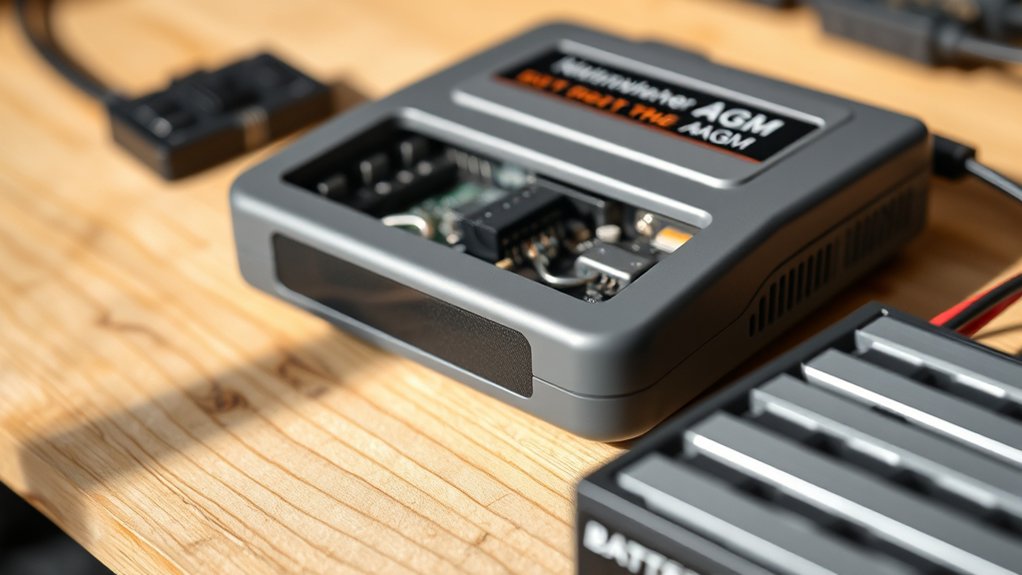
When you see AGM on a battery charger, it stands for Absorbent Glass Mat, a specific type of lead-acid battery technology. AGM batteries use a fiberglass mat to absorb the electrolyte, making the battery spill-proof and more resistant to vibration.
You’ll notice that chargers with an AGM setting are designed to handle the unique charging needs of these batteries, which require controlled voltage and current to avoid damage. Using the correct AGM mode helps maintain battery health, extending its lifespan.
When you select AGM on your charger, it adjusts the charging process to match these batteries’ requirements, ensuring safe and efficient charging every time. This setting is essential if you want to protect your AGM battery investment.
How AGM Batteries Differ From Regular Batteries
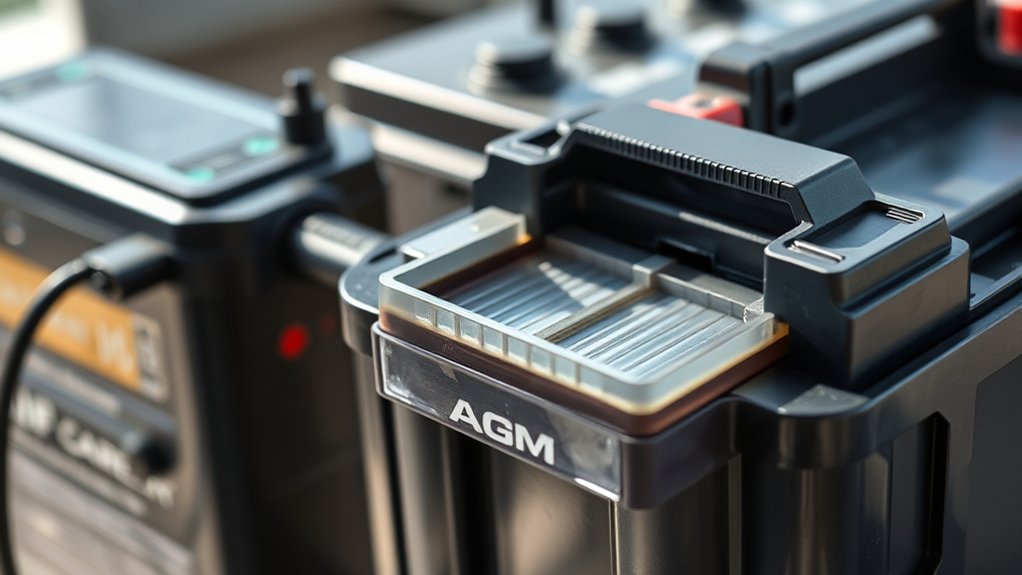
Although both AGM and regular lead-acid batteries serve similar purposes, you’ll find that AGM batteries offer distinct advantages in design and performance. Unlike regular flooded batteries, AGM batteries use a fiberglass mat to absorb the electrolyte, making them spill-proof and maintenance-free. You don’t need to worry about topping off water or acid levels.
AGM batteries also handle vibrations and shocks better, which makes them ideal for vehicles and equipment exposed to rough conditions. They deliver power more efficiently and have a lower self-discharge rate, so they hold their charge longer when not in use. Additionally, AGM batteries charge faster and provide higher burst power, which is perfect for starting engines.
These differences mean AGM batteries offer greater reliability and convenience compared to regular lead-acid types.
Why AGM Batteries Need Special Chargers

Because AGM batteries have a unique internal structure and chemistry, they require chargers designed specifically to manage their charging needs. You can’t just use any charger; AGM batteries need precise voltage control to avoid damage. Overcharging can cause excessive heat and reduce their lifespan, while undercharging leads to sulfation, which decreases capacity.
AGM batteries also have low internal resistance, so they accept charge faster but demand careful monitoring to prevent overvoltage. When you use a charger made for AGM batteries, it adjusts the charging stages—bulk, absorption, and float—to suit their characteristics. This ensures your battery charges efficiently, safely, and lasts longer.
Using a standard charger risks harming the battery, so choosing the right charger is crucial to protect your investment.
How AGM Battery Chargers Differ From Standard Ones
To protect your AGM battery, you need a charger that matches its specific requirements. AGM chargers differ from standard ones in key ways to ensure efficient and safe charging. Here’s how:
- Voltage Regulation: AGM chargers maintain precise voltage levels to avoid overcharging, which can damage the battery.
- Charging Profiles: They use multi-stage charging tailored for AGM chemistry, optimizing battery life and performance.
- Current Control: These chargers limit the charging current to prevent excessive heat buildup inside the sealed battery.
- Battery Detection: AGM chargers often detect battery type automatically, adjusting settings accordingly to protect your battery.
Using a standard charger can lead to undercharging or overcharging, reducing your AGM battery’s lifespan. Choosing the right charger keeps your battery healthy and reliable.
Key Safety and Performance Features of AGM Battery Chargers
You’ll want to focus on ideal charging techniques that keep your AGM battery healthy and efficient. Look for chargers with overcharge protection to prevent damage and extend battery life.
Plus, maintenance mode can help keep your battery ready without overworking it.
Optimal Charging Techniques
When charging an AGM battery, selecting the right technique guarantees both safety and peak performance. You need to follow these ideal charging steps:
- Use a charger with an AGM setting to provide the correct voltage and current tailored for AGM batteries.
- Charge at a low, steady current to avoid overheating and prevent damaging the battery’s internal structure.
- Monitor the battery temperature and voltage regularly to ensure it stays within safe limits.
- Allow the charger to switch to a maintenance or float mode once the battery is fully charged, keeping it topped off without overcharging.
Overcharge Protection Features
Although AGM batteries are designed to handle repeated charging cycles, overcharging can still cause irreversible damage and reduce their lifespan. That’s why AGM battery chargers include overcharge protection features to keep your battery safe. These chargers monitor voltage and current levels closely, automatically reducing or stopping the charge once the battery reaches full capacity.
This prevents excessive heat buildup and electrolyte degradation, which can lead to swelling or permanent damage. When you use a charger with overcharge protection, you avoid wasting energy and extend your battery’s service life. Plus, these safety features minimize risks like short circuits or fires, giving you peace of mind.
Maintenance Mode Benefits
How can you keep your AGM battery in peak condition without constant monitoring? Maintenance mode on AGM battery chargers does the work for you by delivering a steady, low voltage charge that prevents overcharging while keeping the battery fully topped off.
Here’s what maintenance mode offers:
- Prevents Battery Drain: It stops your battery from losing charge during inactivity.
- Extends Battery Life: By avoiding deep discharges, it reduces wear and tear.
- Ensures Safety: It minimizes the risk of overheating or damage from excessive charging.
- Saves Time: You don’t need to frequently check or disconnect the charger.
With maintenance mode, you can confidently leave your AGM battery connected and ready to perform when you need it most.
Can You Use a Non-AGM Battery Charger on AGM Batteries?
Many standard battery chargers can technically charge AGM batteries, but they might not do so as efficiently or safely as chargers designed specifically for AGM technology. When you use a non-AGM charger, it may apply a charging profile meant for traditional flooded batteries, which can lead to overcharging or undercharging your AGM battery. This can reduce the battery’s lifespan and performance over time.
While your AGM battery will still receive a charge, the lack of tailored voltage and current control means it won’t optimize the battery’s unique sealed design. To protect your investment and ensure proper charging, you should consider a charger with an AGM mode or settings that match your battery’s specifications, even if some generic chargers appear compatible at first glance.
Benefits of Choosing the Right AGM Battery Charger
Choosing the right AGM battery charger helps you get the most out of your battery by extending its lifespan. It also guarantees your battery charges efficiently and safely every time.
Let’s explore how the proper charger makes a real difference.
Enhanced Battery Lifespan
When you use the right AGM battery charger, you’ll substantially extend your battery’s lifespan by ensuring it charges at the ideal rate and prevents overcharging. This careful control helps maintain the battery’s internal chemistry, avoiding damage and premature wear.
Here’s how the right charger boosts your battery’s longevity:
- Delivers consistent, safe voltage tailored for AGM batteries.
- Prevents overheating by automatically adjusting the charging current.
- Reduces the risk of sulfation, a common cause of battery failure.
- Supports maintenance charging to keep the battery healthy during storage.
Optimized Charging Performance
Although AGM batteries are designed for durability, you’ll get the best performance only if you use a charger made specifically for them. The right AGM charger ensures ideal voltage and charging cycles, preventing overcharging and undercharging.
This precision not only protects your battery but also maximizes its efficiency and reliability.
Here’s how choosing the right AGM charger improves your charging experience:
| Benefit | Explanation |
|---|---|
| Precise Voltage | Matches AGM battery specifications |
| Controlled Current | Prevents damage from excessive charging rates |
| Temperature Monitoring | Adjusts charging based on battery heat |
| Maintenance Mode | Keeps battery healthy during long storage |
Using the proper charger means your AGM battery charges faster, lasts longer, and performs better when you need it most.
Common Mistakes When Charging AGM Batteries
If you don’t use the right charging methods, you risk damaging your AGM battery or shortening its lifespan. Avoid these common mistakes to keep your battery in top shape:
- Using a standard charger: Regular chargers don’t have the proper settings for AGM batteries, leading to overcharging or undercharging.
- Charging at too high a voltage: Excess voltage can cause overheating and reduce battery life.
- Ignoring temperature compensation: AGM batteries require adjustments based on temperature; skipping this can damage your battery.
- Leaving the charger connected too long: Overcharging can cause swelling and permanent damage.
Troubleshooting Charging Issues With AGM Batteries
Because AGM batteries have specific charging requirements, you might encounter issues if your charger or setup isn’t optimized. If your AGM battery isn’t charging properly, first check the charger’s voltage and current settings to confirm they match AGM specs. A charger set too high can overheat or damage the battery, while too low prevents a full charge.
Also, inspect the battery terminals for corrosion or loose connections that can interrupt the charging process. If the battery still won’t charge, test its voltage with a multimeter; a reading notably below 12.4 volts may indicate a deeply discharged or faulty battery. Finally, avoid using chargers designed only for flooded lead-acid batteries since they don’t regulate AGM charging correctly, leading to potential issues.
How to Identify an AGM-Compatible Battery Charger
When selecting a battery charger, you need to confirm it supports AGM batteries specifically, as these require precise voltage and charging profiles. To identify an AGM-compatible charger, follow these steps:
- Check the Label: Look for “AGM” or “Absorbent Glass Mat” on the charger’s specifications or packaging.
- Review Charging Modes: Ensure the charger includes a dedicated AGM setting or a multi-stage charging profile suitable for AGM batteries.
- Consult the Manual: The user guide should explicitly mention compatibility with AGM batteries.
- Look for Smart Technology: Chargers with microprocessor control adjust voltage and current, ideal for the sensitive nature of AGM batteries.
Tips for Maintaining AGM Batteries With the Right Charger
Although AGM batteries are durable, maintaining their performance relies heavily on using the right charger and following proper charging practices. You should always use a charger designed specifically for AGM batteries to avoid overcharging or undercharging, which can damage the battery.
Keep your battery clean and verify connections are tight to maintain efficient charging.
Here are quick tips to keep your AGM battery healthy:
| Tip | Reason |
|---|---|
| Use AGM-compatible charger | Prevents damage from incorrect voltage |
| Charge at recommended rate | Extends battery lifespan |
| Keep terminals clean | Ensures good electrical connection |
Following these tips will help you get the most out of your AGM battery and charger.
When to Replace Your AGM Battery Charger
If your AGM battery isn’t charging properly or takes much longer than usual, it’s a clear sign that your charger might need replacing. Here are four key indicators to watch for:
- Inconsistent Charging: The charger frequently stops or fluctuates in output.
- Physical Damage: Cracks, frayed wires, or corrosion on the charger’s components.
- Overheating: The charger becomes excessively hot during use.
- Age and Usage: If your charger is several years old or has been heavily used, its efficiency may decline.
Don’t ignore these signs. Replacing your AGM battery charger promptly ensures your battery stays healthy and performs at its best.
Staying proactive helps avoid unexpected failures and costly downtime.
Frequently Asked Questions
How Long Do AGM Batteries Typically Last?
You can typically expect AGM batteries to last between 3 to 5 years with proper care. How long they last depends on usage, charging habits, and maintenance, so keeping them charged correctly will extend their lifespan.
Can AGM Batteries Be Used in Extreme Temperatures?
Yes, you can use AGM batteries in extreme temperatures, but they perform best within moderate ranges. Extreme cold or heat can reduce their efficiency and lifespan, so you’ll want to protect them with proper insulation or cooling methods.
What Vehicles Commonly Use AGM Batteries?
You know what they say, “Don’t put all your eggs in one basket.” You’ll find AGM batteries in luxury cars, motorcycles, SUVs, and even boats because they handle power demands and vibrations better than regular batteries.
Are AGM Batteries Environmentally Friendly?
Yes, AGM batteries are more environmentally friendly than traditional ones because they’re leak-proof, have a longer lifespan, and can be recycled more easily.
You’ll reduce waste and harmful spills by choosing AGM batteries.
How Do You Properly Dispose of an AGM Battery?
You should never toss an AGM battery in the trash—over 95% of its materials can be recycled!
Take it to a local recycling center or hazardous waste facility to guarantee safe, eco-friendly disposal and keep toxins out of landfills.
Conclusion
Think of your AGM battery charger as a gardener tending a delicate bonsai—precision and care shape its growth. Using the right charger nurtures your AGM battery’s life, ensuring it thrives without harm.
If you ignore these nuances, you risk stunting its potential, like a tree left to wither. By choosing and maintaining an AGM-compatible charger, you’re not just powering a battery; you’re cultivating lasting energy and reliability.
Selecting the proper AGM battery charger is essential for optimal performance and longevity. Using a charger designed specifically for AGM batteries safeguards against damage and maximizes efficiency.
In conclusion, an AGM battery charger is a vital tool to maintain your battery’s health, enhance its lifespan, and ensure dependable power when you need it most.

