

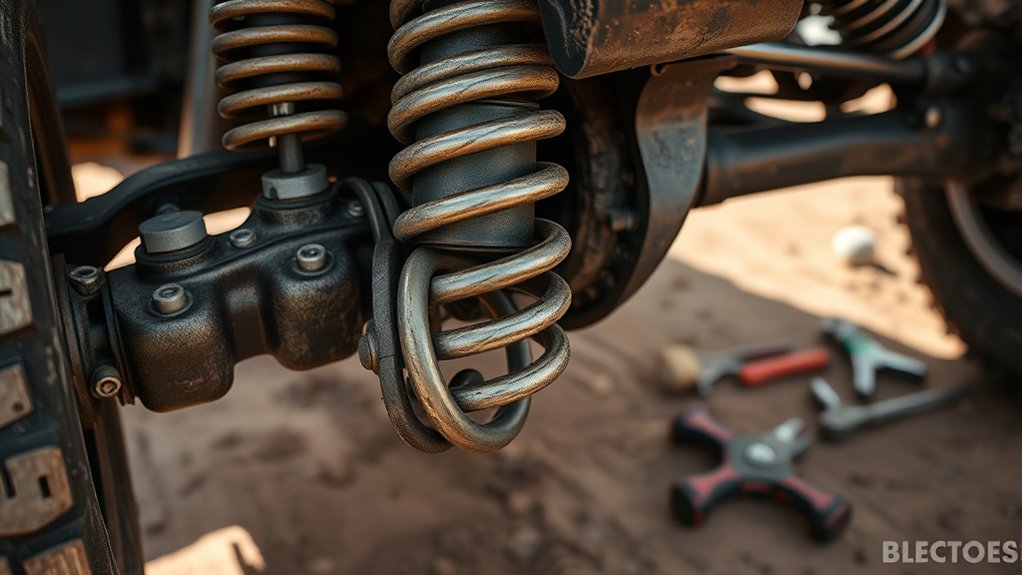
Axle wrap is a common issue that occurs when torque twists your vehicle’s axle housing during acceleration. This twisting action leads to wheel hop, vibrations, and increased drivetrain stress. Understanding axle wrap and how to fix it is essential for maintaining vehicle performance and safety.
You might notice clunking sounds, tire hop, or unusual suspension noises when axle wrap happens. To fix it quickly, start by tightening U-bolts or replacing worn bushings. Installing traction bars can also help stabilize the axle and reduce movement.
Upgrading your springs and shocks provides a long-term solution to minimize axle wrap. By addressing these causes and performing proper repairs, you can keep better control of your vehicle and prevent costly damage.
Key Takeaways
- Axle wrap is the twisting of the axle housing opposite to torque during acceleration, causing wheel hop and drivetrain stress. It commonly occurs in vehicles with leaf springs or soft suspension setups under heavy loads or high torque.
- Symptoms include tire hop, clunking noises, squeaks, vibrations, and uneven tire wear during acceleration. Fix axle wrap by tightening U-bolts, installing traction bars or axle wrap kits, and replacing worn suspension components.
- Prevent axle wrap long-term with upgraded leaf springs, shock absorbers, proper maintenance, and avoiding sudden, high-torque acceleration.
What Is Axle Wrap and Why Does It Happen
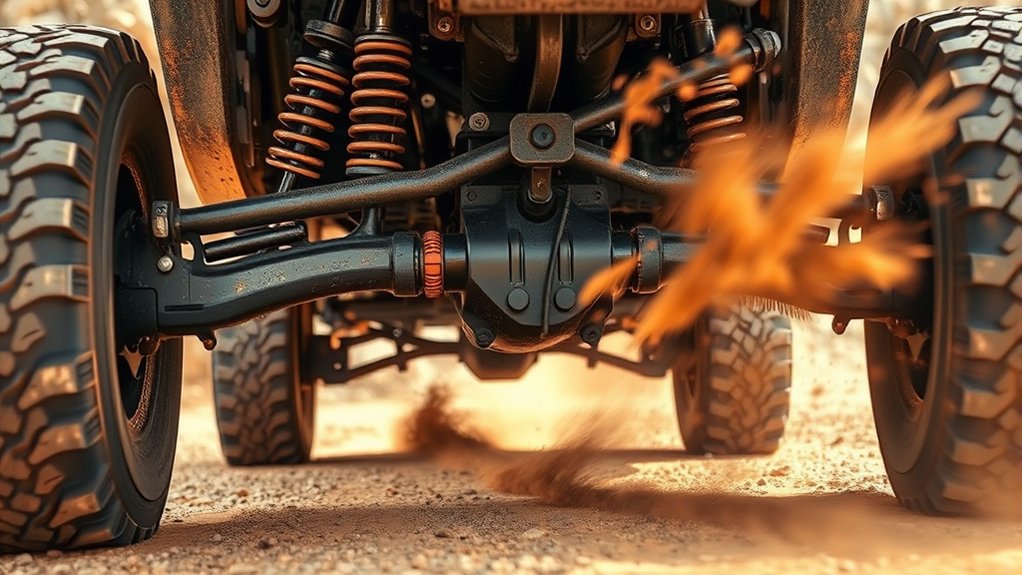
What exactly causes axle wrap, and why should you care? Axle wrap happens when your vehicle’s torque twists the axle housing during acceleration or heavy loads, causing it to rotate slightly in the opposite direction. This twisting action can make the axle “wrap” around itself, hence the name.
You’ll want to understand this because axle wrap puts extra stress on your drivetrain components, potentially leading to damage or failure over time. It mainly occurs in vehicles with leaf springs or soft suspension setups that allow excessive movement. When torque spikes, the axle tries to rotate, but the springs resist, causing that twisting motion.
Knowing why axle wrap happens helps you prevent it and protect your vehicle’s performance and reliability.
Common Signs You Have Axle Wrap Issues
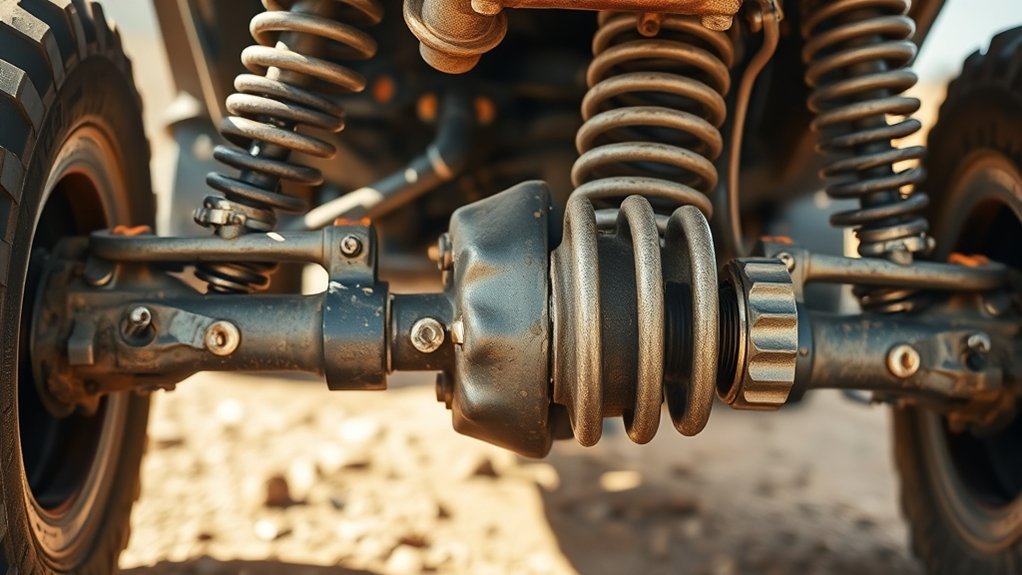
You’ll often notice axle wrap through visible tire hop when accelerating hard. If your suspension makes unusual noises, that’s another clear sign something’s off.
Paying attention to these symptoms can help you catch axle wrap issues early.
Visible Tire Hop
How can you tell if axle wrap is causing trouble? One clear sign is visible tire hop. When you accelerate hard, especially on loose or uneven surfaces, your tires might bounce rapidly instead of gripping smoothly.
This happens because the axle twists and then snaps back, causing the tires to lose and regain traction repeatedly. You’ll feel and see your tires hopping or jerking, which affects your vehicle’s stability and traction.
If you notice this tire hop during acceleration, it’s a strong indication that your axle isn’t staying firmly in place under torque. Addressing this issue quickly is important to prevent further drivetrain damage and maintain control while driving.
Visible tire hop isn’t just annoying—it’s a warning sign you shouldn’t ignore.
Unusual Suspension Noise
When your tires hop during acceleration, it often means the axle is twisting more than it should, putting extra strain on your suspension. This stress can cause unusual noises that you shouldn’t ignore.
If you hear clunks, squeaks, or rattles coming from your suspension, your axle wrap might be the culprit. These sounds usually appear when you accelerate, decelerate, or hit bumps.
Here are four common noise signs indicating axle wrap issues:
- Clunking sounds during acceleration or shifting gears
- Squeaking noises from leaf springs or bushings
- Rattling when driving over rough terrain
- Grinding or scraping from the differential or driveshaft area
Spotting these early helps prevent costly damage and keeps your ride smooth.
Diagnosing Axle Wrap on Your Vehicle
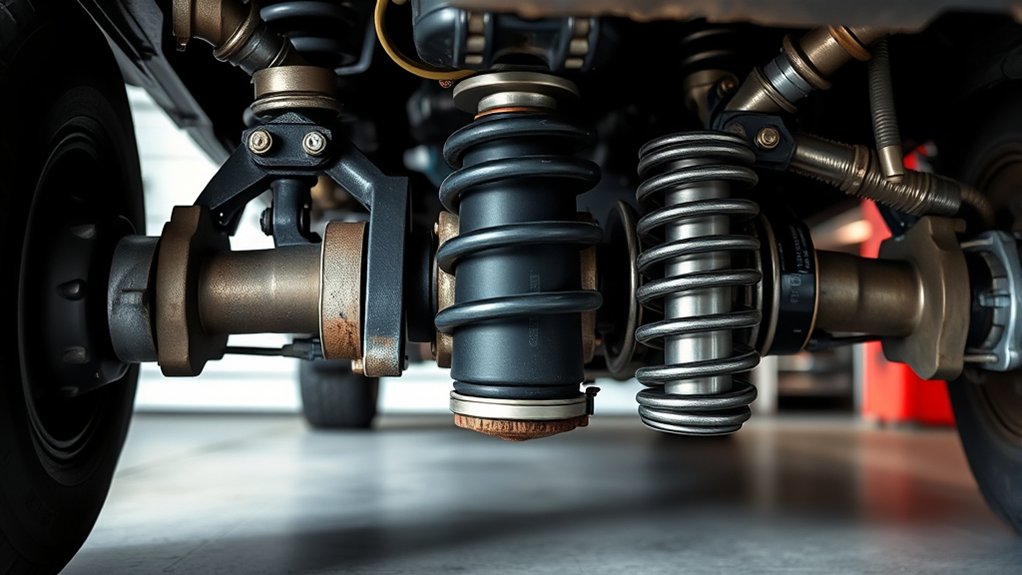
To diagnose axle wrap on your vehicle, start by recognizing common symptoms like unusual vibrations or clunking sounds during acceleration. Next, understand the main causes, such as torque twisting and worn suspension components.
Finally, perform a visual inspection for signs like bent or damaged axle parts to confirm the issue.
Identifying Common Symptoms
Why does your vehicle sometimes feel like it’s lurching or jerking under acceleration? This sensation often points to axle wrap issues. Axle wrap happens when the axle twists excessively, causing instability.
To identify if you’re dealing with axle wrap, watch for these common symptoms:
- Choppy or jerky acceleration – Noticeable surges or stops as you press the gas pedal.
- Clunking or banging noises – Sounds coming from the rear suspension during acceleration or deceleration.
- Axle movement or hopping – Visible or felt movement of the axle housing.
- Tire hop – Tires skipping or losing traction briefly under power.
Recognizing these signs early helps you address axle wrap before it worsens and causes damage.
Causes of Axle Wrap
If you’ve noticed symptoms like jerky acceleration or axle hopping, understanding what causes axle wrap can help you pinpoint the problem. Axle wrap happens when your vehicle’s engine torque twists the axle housing more than it should. This usually occurs if your suspension or drivetrain components aren’t handling the power properly.
Weak or worn-out leaf springs, especially in trucks, often fail to keep the axle stable. Additionally, if your U-bolts are loose or your shocks aren’t strong enough, the axle can move excessively during acceleration or deceleration. High horsepower or sudden torque spikes also increase the risk.
Visual Inspection Tips
Although axle wrap can be tricky to spot at first, performing a thorough visual inspection can reveal telltale signs on your vehicle. Start by examining the leaf springs and mounting points for any unusual bending or twisting. Look closely at the U-bolts and axle housing for cracks or looseness.
Check the tires for uneven wear patterns, which might indicate axle movement during acceleration. Finally, observe the driveshaft and differential for any signs of misalignment or damage.
- Inspect leaf springs for twisting or deformation
- Check U-bolts and axle housing for cracks or looseness
- Look for uneven tire wear patterns
- Examine driveshaft and differential alignment
Following these steps helps you accurately diagnose axle wrap early.
Main Causes of Axle Wrap
What causes axle wrap to happen in the first place? It typically occurs when your vehicle’s suspension or drivetrain components can’t handle the torque during acceleration. When you hit the gas hard, the axle twists because the torque overcomes the resistance of the leaf springs or coil springs holding it in place.
Worn or weak leaf springs, especially in trucks, make it easier for the axle to rotate excessively. Additionally, if your U-bolts aren’t tight enough or your traction bars are missing or damaged, the axle isn’t properly secured, allowing more wrap. High-powered engines and aggressive driving put extra stress on these components, increasing the chances of axle wrap.
Understanding these causes helps you pinpoint what needs fixing to stop the problem.
Why Wheel Hop and Vibrations Happen With Axle Wrap
When axle wrap occurs, you’ll often experience wheel hop and vibrations because the torque causes the axle to twist excessively. This movement can disrupt your vehicle’s stability, making it harder to control.
Your suspension components play a key role in managing these forces and keeping everything steady.
Causes Of Wheel Hop
Why does your vehicle sometimes jerk and vibrate under heavy acceleration? This is often due to wheel hop, caused by axle wrap. When torque twists your axle housing, it creates uneven traction between your tires and the road, leading to rapid, uncontrollable wheel movement.
Here are the main causes of wheel hop:
- Weak or worn leaf springs – They can’t hold the axle firmly, allowing excessive movement.
- Loose or damaged U-bolts – These fail to secure the axle, increasing instability.
- Inadequate traction control – Poor grip causes the wheels to slip and bounce.
- Excessive torque input – Aggressive acceleration pushes the axle beyond its limits.
Understanding these causes helps you address wheel hop before it worsens.
Effects On Vehicle Stability
Although axle wrap might seem like a minor issue, it considerably disrupts your vehicle’s stability by causing the wheels to lose consistent contact with the road. When the axle twists under torque, it leads to sudden wheel hop—rapid up-and-down wheel movement that breaks traction. This erratic motion creates vibrations you can feel through the floor and steering wheel, which not only makes driving uncomfortable but also reduces your control.
The loss of steady traction means your tires can’t grip the surface effectively during acceleration, braking, or cornering. These fluctuations destabilize your ride, making your vehicle harder to handle, especially on uneven or slippery surfaces. Understanding how axle wrap affects stability helps you recognize why addressing it promptly is *essential* to maintain safe and smooth driving.
Role Of Suspension Components
Since your suspension components directly link the axle to the vehicle’s frame, they play a crucial role in how axle wrap causes wheel hop and vibrations. When torque twists the axle, these components control how much movement transfers to the chassis.
If they’re not stiff or properly aligned, the axle can oscillate excessively, leading to wheel hop and vibrations.
Here’s why suspension parts matter:
- Control Arms: Limit axle movement, preventing excessive wrap.
- Leaf Springs or Coil Springs: Absorb and manage torque forces.
- Shock Absorbers: Dampen oscillations caused by axle twisting.
- Trailing Arms and Panhard Bars: Maintain axle position, reducing unwanted shifts.
How Your Suspension Helps Prevent Axle Wrap
When your suspension system works properly, it plays a crucial role in minimizing axle wrap by controlling the torque applied to the axle. Your suspension components, like leaf springs or coil springs combined with shock absorbers, help absorb and distribute the forces generated during acceleration and braking. This prevents the axle from twisting excessively under load.
Additionally, properly maintained suspension parts maintain correct alignment and positioning of the axle, reducing stress on the driveline. By keeping the axle stable and limiting its movement, your suspension system prevents the pinion gear from rotating out of mesh with the ring gear, which is a primary cause of axle wrap.
Regularly inspecting and servicing your suspension ensures it effectively manages these forces, protecting your drivetrain from damage and prolonging its life.
Fix Axle Wrap Using Axle Wrap Kits
Your suspension system helps manage axle movement, but sometimes it’s not enough to fully prevent axle wrap. That’s where axle wrap kits come in. These kits add extra support to your leaf springs, reducing axle rotation under heavy acceleration or load.
You can fix axle wrap by installing these kits yourself, improving traction and prolonging drivetrain life.
Here’s how axle wrap kits help:
- Clamp firmly onto leaf springs, limiting unwanted axle twist
- Absorb torque forces that cause axle wrap
- Provide consistent pressure to keep the axle aligned
- Reduce wheel hop for a smoother ride
Stop Axle Wrap Using Traction Bars
Although axle wrap kits provide solid support, traction bars offer a more robust solution to stop axle wrap completely. When you install traction bars, you’re effectively limiting the axle’s rotation under heavy torque by anchoring it firmly to the vehicle’s frame. This setup prevents the leaf springs from twisting, which stops the axle from “wrapping” and reduces wheel hop during acceleration.
Traction bars are especially beneficial if you frequently haul heavy loads or tow, as they maintain better traction and stability. They attach using brackets on both the axle and frame, creating a rigid connection that counters the forces causing axle wrap. By choosing traction bars, you’re investing in durability and improved drivability, ensuring your suspension system handles torque without compromising control or safety.
Reduce Axle Wrap by Upgrading Leaf Springs
Since axle wrap often results from the leaf springs twisting under torque, upgrading them can substantially reduce the problem. When you replace your stock leaf springs with heavy-duty or multi-leaf springs, you increase resistance to the twisting forces that cause axle wrap. This upgrade stabilizes your axle and improves traction during acceleration.
Here’s how upgrading leaf springs helps:
- Increases spring stiffness to resist axle rotation
- Distributes torque more evenly across the suspension
- Reduces unwanted axle movement and wheel hop
- Enhances load-carrying capacity for improved control
How Shock Absorbers Help Control Axle Wrap
Upgrading your leaf springs helps reduce axle wrap by stiffening the suspension, but shock absorbers also play a key role in controlling axle movement. They dampen the oscillations caused by torque, preventing the axle from twisting excessively. When the leaf springs flex under load, shocks absorb and dissipate that energy, which keeps the axle more stable.
Without properly functioning shocks, axle wrap worsens because the suspension rebounds too quickly, causing wheel hop and reduced traction. By choosing high-quality, heavy-duty shock absorbers designed for your vehicle’s weight and driving conditions, you can considerably minimize axle wrap. Make sure your shocks are in good condition and replace worn ones promptly to maintain ideal control over axle movement and improve overall ride quality.
When to Get Professional Axle Wrap Repairs
If you notice persistent wheel hop, unusual noises, or uneven tire wear despite regular maintenance, it’s time to contemplate professional axle wrap repairs. Ignoring these signs can lead to costly damage or unsafe driving conditions. You should seek expert help when:
- Your vehicle’s rear suspension shows visible damage or sagging.
- DIY fixes haven’t stopped the axle wrap symptoms.
- You experience a harsh ride or loss of traction during acceleration.
- You notice metal-on-metal sounds or clunking from the rear axle area.
A professional technician can properly diagnose the extent of axle wrap and recommend repairs like installing traction bars, upgrading shocks, or replacing worn components. Getting timely repairs ensures your vehicle performs safely and smoothly.
Preventing Axle Wrap: Top Tips
When you’ve addressed axle wrap issues with professional repairs, the next step is to focus on preventing it from happening again. You can reduce axle wrap by improving suspension components, controlling torque, and distributing weight evenly. Upgrading to stronger leaf springs or adding traction bars helps keep the axle stable under load.
Also, avoid sudden, aggressive acceleration, which spikes torque and stresses the axle. Regular maintenance checks catch wear before it leads to problems.
| Tip | Action | Benefit |
|---|---|---|
| Upgrade Suspension | Use stronger leaf springs | Reduces axle movement |
| Add Traction Bars | Install traction bars | Controls axle rotation |
| Manage Driving Habits | Avoid sudden acceleration | Lowers torque spikes |
Following these tips keeps your axle secure and extends its lifespan.
Quick Fixes to Stop Axle Wrap Immediately
Three quick fixes can help you stop axle wrap immediately and protect your drivetrain from damage. Acting fast reduces wear and keeps your ride smooth.
Here’s what you can do right now:
- Tighten U-bolts – Loose U-bolts let your axle move excessively, so tighten them to secure the axle firmly.
- Use wheel chocks – Prevent sudden wheel spin by placing chocks behind the tires during heavy acceleration.
- Apply a traction bar – Installing a traction bar limits axle wrap by stabilizing the axle under torque.
- Check and replace worn bushings – Worn bushings increase axle movement; replace them to restore proper alignment.
Frequently Asked Questions
Can Axle Wrap Cause Permanent Damage to My Vehicle’s Drivetrain?
Yes, axle wrap can cause permanent damage to your drivetrain if left unchecked. It stresses components like U-joints and gears, leading to wear or failure. Catch it early and fix it to protect your vehicle.
Is Axle Wrap More Common in Certain Types of Vehicles?
You’ll find axle wrap more common in trucks and off-road vehicles; studies show over 70% of lifted trucks experience it due to increased torque.
You’ll want to upgrade your suspension to reduce this issue effectively.
How Does Tire Size Affect Axle Wrap Issues?
Larger tires increase axle wrap because they add more torque and strain on the drivetrain. If you upgrade your tires without upgrading suspension components, you’ll likely experience more axle wrap and related issues.
This added strain can cause increased wear and potential damage to drivetrain parts. Upgrading suspension components can help manage the additional forces from larger tires. Proper maintenance and timely upgrades are essential to prevent axle wrap problems.
Are There Any DIY Tools to Measure Axle Wrap Severity?
You don’t need a rocket scientist’s toolkit! You can use simple DIY tools like a dial indicator or even a straight edge and a ruler to measure axle wrap severity accurately.
It’s easier than you think!
Can Axle Wrap Impact Fuel Efficiency or Vehicle Performance?
Yes, axle wrap can reduce your vehicle’s fuel efficiency and performance by causing wheel hop and uneven power delivery. You’ll notice decreased traction and potential drivetrain wear, so addressing it promptly helps keep your ride smooth and efficient.
Ignoring axle wrap may lead to further mechanical issues, increasing repair costs over time. Proper maintenance and upgrades can minimize its impact.
Conclusion
If you’ve ever felt those annoying vibrations or wheel hop after a hard launch, you might’ve just stumbled onto axle wrap issues without even realizing it.
Luckily, once you know what causes it and how shocks play a role, you can stop the damage before it’s too late.
By catching axle wrap early and taking quick action, you’ll keep your ride smooth and safe—so don’t wait until it’s a bigger problem!
Understanding axle wrap and addressing it promptly with the right suspension upgrades or shock adjustments is key to maintaining optimal vehicle performance and safety.

