

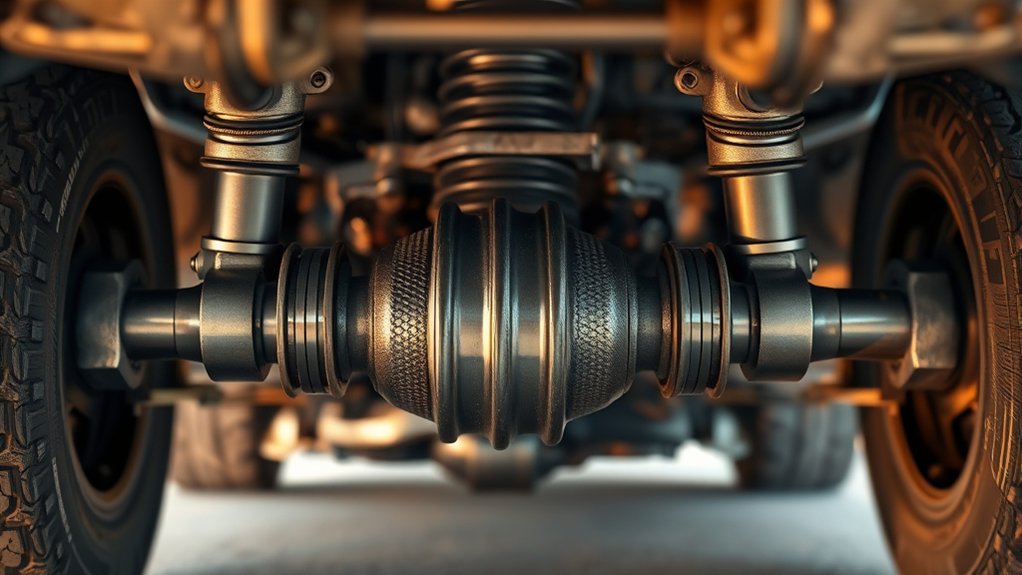
Your car’s axle is a crucial component in vehicle operation, directly affecting performance, stability, and handling. It powers your wheels while supporting your vehicle’s weight, helping to keep it balanced and stable on the road.
By connecting the wheels to the drivetrain, the axle enables smooth rotation and effective power transfer as you accelerate, brake, and turn.
Additionally, the axle absorbs shocks from uneven road surfaces, contributing to a comfortable ride. Understanding how different types of axles influence vehicle performance can help you make informed decisions about maintenance and replacement.
There’s more to discover about the role of axles and when servicing becomes necessary to keep your vehicle running smoothly.
Key Takeaways
- A car axle acts as the central shaft that supports the vehicle’s weight and allows wheels to rotate smoothly.
- It connects wheels to the drivetrain, transmitting power from the engine to the wheels for movement.
- The axle maintains wheel alignment, ensuring stability, proper handling, and smooth turning during driving.
- It absorbs shocks from road irregularities, contributing to ride comfort and vehicle control.
- The axle works with suspension and differential components to distribute forces during acceleration, braking, and turning safely.
Car Axle: Definition and Importance
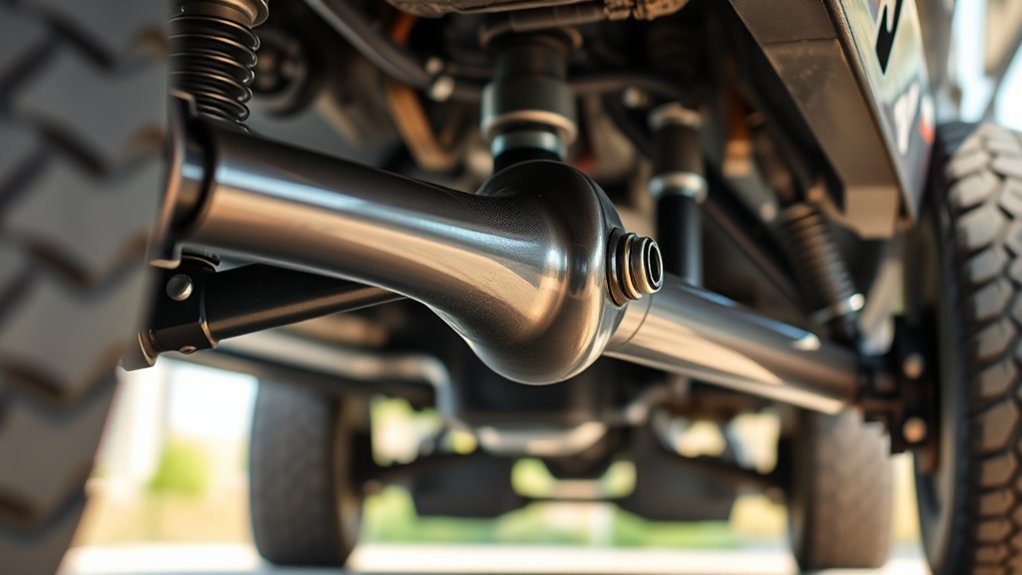
What exactly is a car axle, and why does it matter to your vehicle’s performance? Simply put, an axle is a central shaft for rotating wheels. It plays a vital role by bearing the vehicle’s weight and enabling smooth movement.
Without a properly functioning axle, your car wouldn’t handle well, and you’d risk damaging other parts. Axles also help maintain the alignment of your wheels, which is essential for safety and control. When you accelerate, brake, or turn, the axle absorbs and distributes forces, making your ride stable and comfortable.
How a Car Axle Connects and Supports Wheels
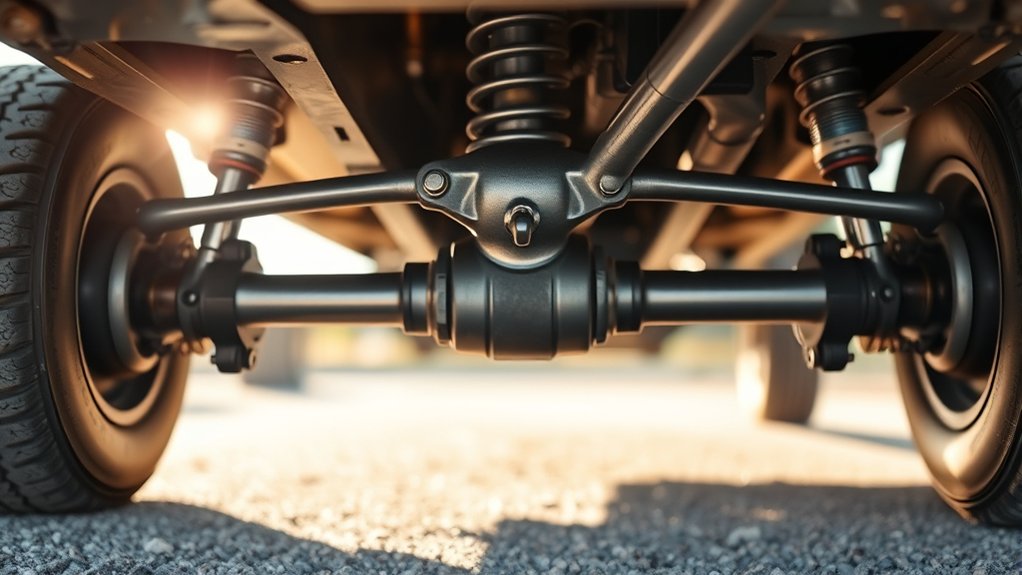
Although you might not see it, the car axle plays an essential role in connecting your vehicle’s wheels to the rest of the drivetrain. It acts as a central shaft that holds the wheels in place, allowing them to rotate smoothly while transmitting power from the engine. The axle guarantees your wheels stay aligned and move in unison, which is critical for stable driving and handling.
Here’s a simple breakdown:
| Component | Role | Effect on Wheels |
|---|---|---|
| Axle Shaft | Connects wheels | Enables rotation |
| Bearings | Reduce friction | Smooth wheel movement |
| Hub | Mounts wheels | Secures wheels |
| Differential Gear | Distributes power | Allows wheel speed difference |
| Suspension Mounts | Attach axle to frame | Maintains alignment |
This setup keeps your wheels connected and functioning reliably.
How Axles Support the Weight of a Car
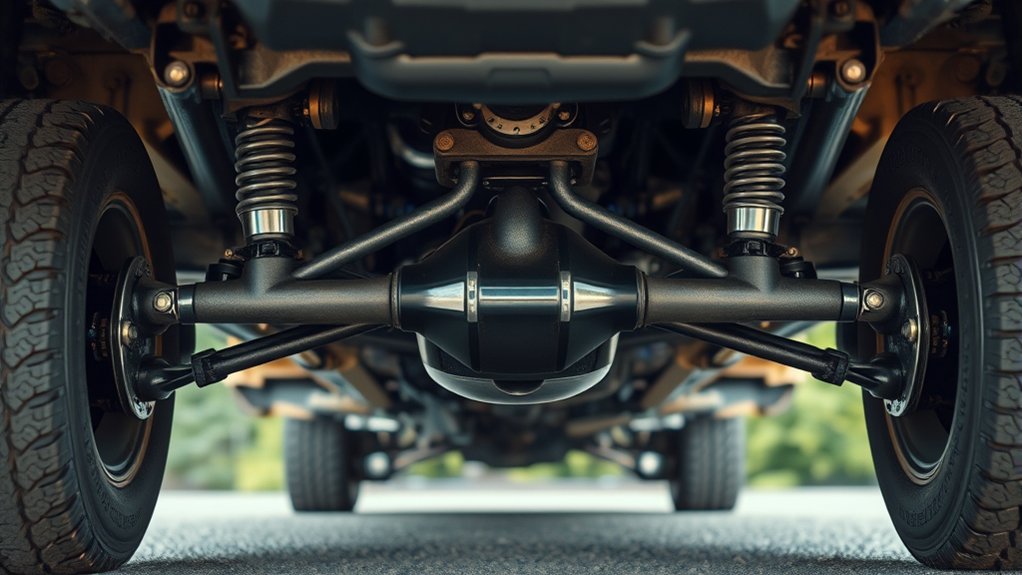
Two key axles in your car bear the entire weight of the vehicle, supporting it while keeping the wheels aligned. These axles act like strong beams, transferring the car’s weight evenly across the wheels so you get a smooth, stable ride. They’re designed to handle heavy loads without bending or breaking, which is vital for your safety.
The axles work with other components, like the suspension system, to balance the car’s weight and absorb shocks from the road.
Here’s how axles support your car’s weight:
- Distribute weight evenly between wheels
- Maintain wheel alignment for stability
- Resist bending under heavy loads
- Work with suspension to absorb road impacts
This guarantees your car stays balanced and rides comfortably.
Front vs. Rear Car Axles: Main Differences
When you look under your car, you’ll notice that front and rear axles serve different purposes and face distinct challenges. The front axle primarily handles steering and supports the wheels that turn when you steer. It also bears some weight and absorbs shocks from the road, helping maintain control and comfort.
On the other hand, the rear axle mainly provides power to the wheels, especially in rear-wheel and all-wheel-drive vehicles, propelling your car forward. It also supports additional weight, especially when carrying passengers or cargo. While the front axle often incorporates steering components, the rear axle is generally fixed and focused on delivering torque.
Understanding these differences helps you appreciate how each axle contributes uniquely to your vehicle’s performance and handling.
Live vs. Dead Car Axles: Key Differences
Now, let’s look at how live and dead axles differ in function and design.
You’ll see how each type affects your vehicle’s performance on the road.
Understanding these key points will help you recognize which axle suits your driving needs best.
Functionality Comparison Overview
How do live and dead axles differ in their roles within a vehicle? You’ll find that live axles actively transfer power from the engine to the wheels, enabling movement, while dead axles only support the vehicle’s weight and maintain wheel alignment without powering the wheels.
Here’s a quick functionality comparison:
- Live Axles: Drive wheels by transmitting torque, crucial for propulsion.
- Dead Axles: Serve as non-driven support, mainly for stability.
- Live Axles: Often found on rear-wheel or four-wheel drive vehicles.
- Dead Axles: Common in front-wheel drive cars or trailers.
Understanding these differences helps you grasp how each axle type contributes to your vehicle’s performance and handling.
Structural Design Differences
What sets live and dead axles apart structurally? You’ll find that live axles are designed to transmit power from the engine to the wheels, so they include components like the differential and drive shafts within the axle housing. Dead axles, on the other hand, serve only as support, carrying the vehicle’s weight without transmitting power.
Here’s a quick look at their key structural differences:
| Feature | Live Axle | Dead Axle |
|---|---|---|
| Power Transmission | Yes | No |
| Components | Differential, drive shafts | Simple beam or shaft |
| Load Support | Supports vehicle and power | Supports vehicle weight only |
Understanding these differences helps you appreciate how each axle type suits specific vehicle needs.
Performance Impact Factors
Why does axle type matter when it comes to vehicle performance? Knowing whether your car has live or dead axles can significantly affect handling, efficiency, and maintenance. Live axles transmit power directly to the wheels, improving traction and acceleration, especially in off-road or heavy-duty situations.
Dead axles, on the other hand, only support the vehicle’s weight without driving the wheels, often resulting in smoother rides but less traction.
Here’s how the differences impact performance:
- Traction: Live axles boost grip on uneven terrain; dead axles don’t.
- Fuel Efficiency: Dead axles generally weigh less, improving mileage.
- Handling: Dead axles provide better suspension freedom and comfort.
- Maintenance: Live axles require more upkeep due to moving parts.
Understanding these factors helps you make smarter vehicle choices.
How Power Gets From the Engine to Your Wheels
Although the engine generates the power, it’s the axle that delivers that energy to your wheels, making your vehicle move. When you press the gas pedal, the engine produces rotational force, which travels through the transmission. From there, this force reaches the driveshaft, spinning at high speed to transfer power efficiently.
The axle connects directly to the driveshaft, acting as the final link that channels this rotational energy into your wheels. Inside the axle, gears adjust the force and speed, ensuring your wheels turn correctly. Without the axle, the power wouldn’t reach your wheels, and your car wouldn’t move forward.
How Car Axles Affect Vehicle Stability and Handling
The axle doesn’t just transfer power—it also plays a key role in how your vehicle handles and stays stable on the road. It connects your wheels, ensuring they rotate smoothly and stay aligned, which directly impacts your control. When you steer or take a corner, the axle helps balance the forces, keeping your ride steady.
Here’s how car axles affect your vehicle’s stability and handling:
- Maintain wheel alignment to prevent wobbling or drifting
- Distribute weight evenly across the wheels for better traction
- Absorb shocks from road bumps, enhancing comfort and control
- Enable smooth turning by accommodating wheel movement differences
Understanding this helps you appreciate why a well-maintained axle is essential for safe, predictable driving.
Signs of a Worn or Damaged Car Axle
You’ll notice common signs when your car axle is worn or damaged, like unusual noises or vibrations. These symptoms can seriously affect your vehicle’s performance and safety.
Paying attention to these warning signs helps you address problems before they get worse.
Common Axle Damage Symptoms
How can you tell if your car axle is failing? You’ll notice a few clear warning signs that point to axle damage. Paying attention to these symptoms can help you address issues early and avoid costly repairs.
Here are common axle damage symptoms to watch for:
- Vibrations while driving: A damaged axle often causes noticeable shaking or vibrating.
- Clicking noises when turning: This usually indicates worn CV joints on the axle.
- Grease leaking near the tire: Torn axle boots can leak grease, signaling damage.
- Difficulty steering or unusual handling: Axle problems can affect your car’s stability.
If you spot any of these signs, it’s a good idea to have your axle inspected promptly.
Impact On Vehicle Performance
Noticing vibrations, strange noises, or steering difficulties are more than just annoyances—they directly impact how your vehicle performs on the road. When your axle wears down or gets damaged, it compromises your car’s stability and handling. You might feel uneven tire wear or experience difficulty turning, which can reduce your control, especially at higher speeds.
A faulty axle can also cause your vehicle to pull to one side, increasing the risk of accidents. Ignoring these signs not only affects your driving comfort but also jeopardizes your safety. Addressing axle problems promptly guarantees your car remains responsive and reliable, preventing costly repairs down the line.
Staying attentive to these performance changes helps you keep your vehicle in top shape.
Car Axle Problems and Their Impact on Safety
Why does a faulty car axle pose such a serious safety risk? When your axle is damaged or worn out, it directly affects your vehicle’s stability and control. You might experience vibrations, unusual noises, or difficulty steering, all of which compromise your ability to drive safely.
Ignoring axle problems can lead to sudden failure, causing loss of control or accidents.
Here’s what you should watch for:
- Unusual clunking or clicking sounds during turns
- Excessive vibrations felt through the steering wheel
- Difficulty maintaining a straight line while driving
- Visible damage or bending of the axle shaft
Common Causes of Car Axle Failure
Although car axles are built to withstand heavy use, several factors can cause them to fail prematurely. One common cause is hitting potholes or curbs, which can bend or crack the axle. Overloading your vehicle beyond its capacity puts extra stress on the axle, wearing it down faster.
Poor maintenance, such as neglecting to check and replace worn-out CV joints or axle boots, lets dirt and moisture in, leading to corrosion and damage. Additionally, accidents or collisions can severely damage the axle. Driving aggressively, like rapid acceleration or sharp turns, also increases the strain on your axles.
How Car Axles Interact With Other Drivetrain Parts
Because axles serve as the link between your vehicle’s wheels and the power generated by the engine, they play a crucial role in how the drivetrain components work together. Your engine produces power, which travels through the transmission and differential before reaching the axles. The axles then transfer that power directly to the wheels, enabling movement.
They also absorb torque and help maintain stability during turns.
Here’s how axles interact with other drivetrain parts:
- Transmission: Sends rotational force to the differential.
- Differential: Adjusts power distribution between wheels, especially when turning.
- Drive shafts: Connect the transmission or differential to the axles.
- Wheel hubs: Attach axles securely to the wheels for smooth rotation.
Understanding this interplay helps you appreciate your vehicle’s smooth operation.
Essential Maintenance to Keep Your Car Axle Healthy
You should check your car axle regularly for any signs of wear or damage to prevent bigger issues. Look out for unusual noises, vibrations, or grease leaks around the axle area.
Staying on top of these inspections keeps your axle functioning smoothly and extends its lifespan.
Regular Inspection Tips
When you regularly inspect your car axle, you catch potential issues before they turn into costly repairs. Start by checking the axle boots for cracks or tears since damaged boots can let dirt and moisture in, causing wear. Look for any signs of rust or corrosion on the axle shaft.
Make sure the axle nuts are tight and secure to prevent loosening during driving. Also, listen for unusual noises when turning or accelerating, which might indicate axle problems.
Here are four key inspection tips to follow:
- Examine axle boots for damage or leaks
- Check axle shaft for rust or corrosion
- Ensure axle nuts are properly tightened
- Listen for unusual sounds during driving
These steps keep your axle in good shape and extend its lifespan.
Signs of Wear
How can you tell if your car axle is showing signs of wear? Pay attention to unusual noises like clunking or clicking when turning, as these often indicate axle joint issues. You might also notice vibrations or shuddering during acceleration, which suggest imbalance or damage.
If your vehicle pulls to one side, it could be a sign the axle is compromised. Additionally, grease leaks near the axle or torn CV boots are red flags you shouldn’t ignore. Regularly check for visible damage or rust on the axle shaft.
Catching these signs early helps prevent more serious problems and costly repairs. If you experience any of these symptoms, have your axle inspected by a professional as soon as possible to keep your car running smoothly.
When and Why You Should Replace Your Car Axle
Although car axles are built to last, they can wear out or get damaged over time due to rough driving conditions or accidents. You should replace your car axle as soon as you notice signs of failure to avoid further damage or safety risks. Delaying replacement can lead to poor vehicle handling and even axle breakage.
Car axles endure wear and damage over time; replace them promptly to prevent safety risks and vehicle issues.
Here’s when and why you should replace your car axle:
- You hear clicking or clunking noises when turning.
- Your vehicle vibrates excessively at higher speeds.
- You notice grease leaking from the axle boot.
- The car struggles to move or handles unevenly.
Addressing these issues promptly keeps your vehicle safe and maintains smooth operation.
Frequently Asked Questions
Can Car Axles Be Upgraded for Off-Road Performance?
Yes, you can upgrade car axles for off-road performance. You’ll improve strength, durability, and traction by choosing heavy-duty or reinforced axles, which helps you handle rough terrain and challenging driving conditions more confidently.
What Materials Are Car Axles Typically Made From?
Car axles are typically made from steel alloys because they’re strong and durable. Sometimes, manufacturers use high-strength chromoly steel or even aluminum for lighter weight, especially in performance or off-road vehicles where durability and weight matter.
How Do Electric Vehicles Differ in Axle Design?
Electric vehicles often use simpler axles because they don’t need complex differentials like traditional cars. You’ll find they’re designed to handle instant torque from electric motors, making them stronger and sometimes integrated with the motor itself.
Are There Environmental Impacts of Axle Manufacturing?
Yes, axle manufacturing impacts the environment through energy use, raw material extraction, and emissions. You can reduce this by supporting companies using recycled materials and cleaner production methods, helping lower pollution and conserve resources.
Can Axle Issues Affect Fuel Efficiency?
Yes, axle issues can lower your fuel efficiency by causing increased friction or misalignment. When your axle isn’t working smoothly, your engine has to work harder, which uses more fuel and reduces overall performance.
This extra strain on the engine means you’ll see a noticeable drop in miles per gallon. Addressing axle problems promptly can help maintain optimal fuel economy and vehicle performance.
Conclusion
Just like the backbone holds your body upright, your car axle is essential for keeping your vehicle steady and moving smoothly. Neglecting it can lead to serious problems, much like ignoring a sprain can worsen an injury.
By understanding how axles work and maintaining them well, you’re not just preserving parts—you’re ensuring your car’s safety and performance.
So, treat your axle right, and it’ll keep your ride as reliable as a trusted friend. Proper axle maintenance is key to vehicle operation and overall driving safety.

