

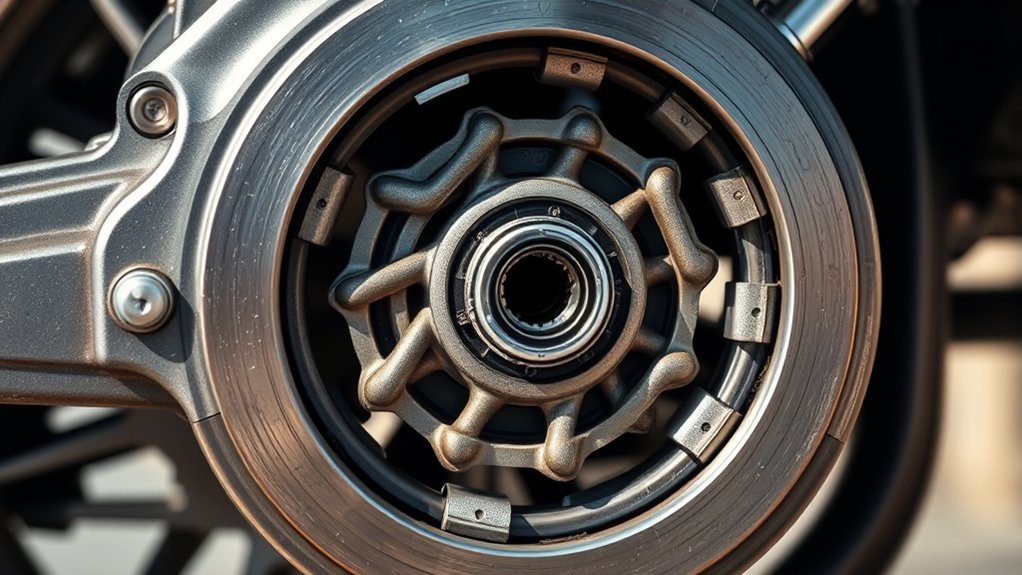
A slipper clutch is an essential component designed to prevent rear wheel lock-up and instability during aggressive downshifting on motorcycles. By allowing the clutch to slip slightly, it reduces the engine braking force, ensuring smoother and safer rides.
This feature is especially beneficial when navigating corners or riding on slippery surfaces.
You use a slipper clutch by smoothly rolling off the throttle and carefully coordinating the clutch release. This technique helps maintain stability and control, minimizing the risk of skidding or loss of traction.
Additionally, a slipper clutch reduces wear on drivetrain parts, extending the lifespan of your bike.
Keep exploring, and you’ll learn how a slipper clutch works and the best maintenance practices to ensure optimal performance and safety.
Key Takeaways
- A slipper clutch prevents rear wheel lock-up by allowing controlled slip during aggressive downshifts, enhancing stability and safety.
- It uses a ramp mechanism to detect back torque and partially disengage clutch plates for smoother deceleration.
- Slipper clutches reduce drivetrain wear and improve rider confidence in corners and slippery conditions.
- To use smoothly, gently roll off the throttle during downshifts and avoid abrupt clutch or throttle actions.
- Regular maintenance, including inspection of plates and springs, ensures reliable performance and prolongs clutch life.
What Is a Slipper Clutch and Why It Matters
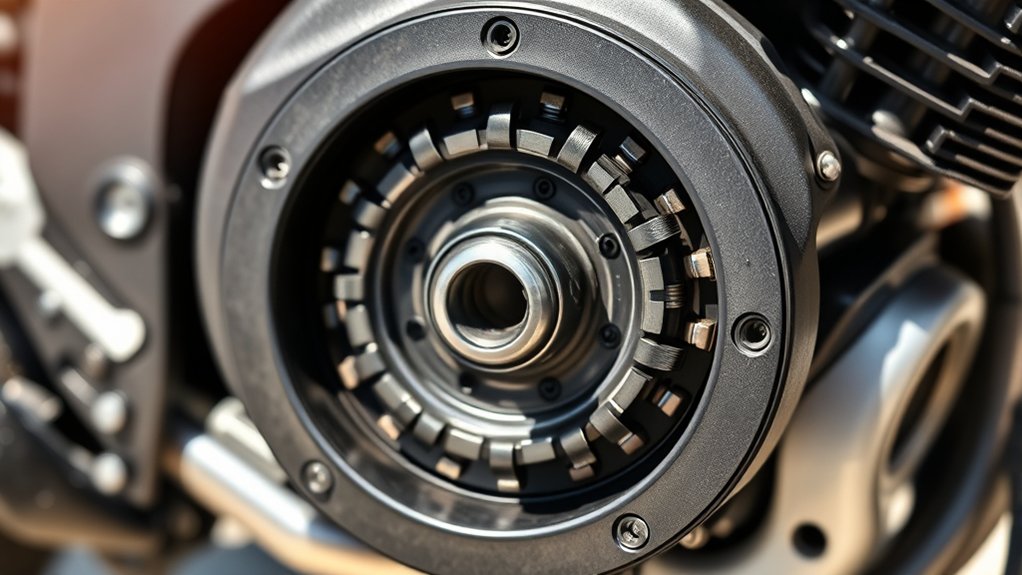
What exactly is a slipper clutch, and why should you care? Simply put, it’s a special type of clutch designed to prevent your motorcycle’s rear wheel from locking up or hopping during aggressive downshifting. When you’re riding fast and suddenly shift to a lower gear, the engine braking force can cause the rear wheel to lose traction.
A slipper clutch helps manage this force by partially disengaging, allowing the wheel to keep spinning smoothly. You’ll notice improved stability, especially in tight corners or sudden deceleration. Beyond safety, it also reduces wear on your drivetrain components, saving you money in the long run.
If you want a smoother, safer, and more controlled ride, understanding the slipper clutch’s importance is key.
How a Slipper Clutch Works in Your Motorcycle
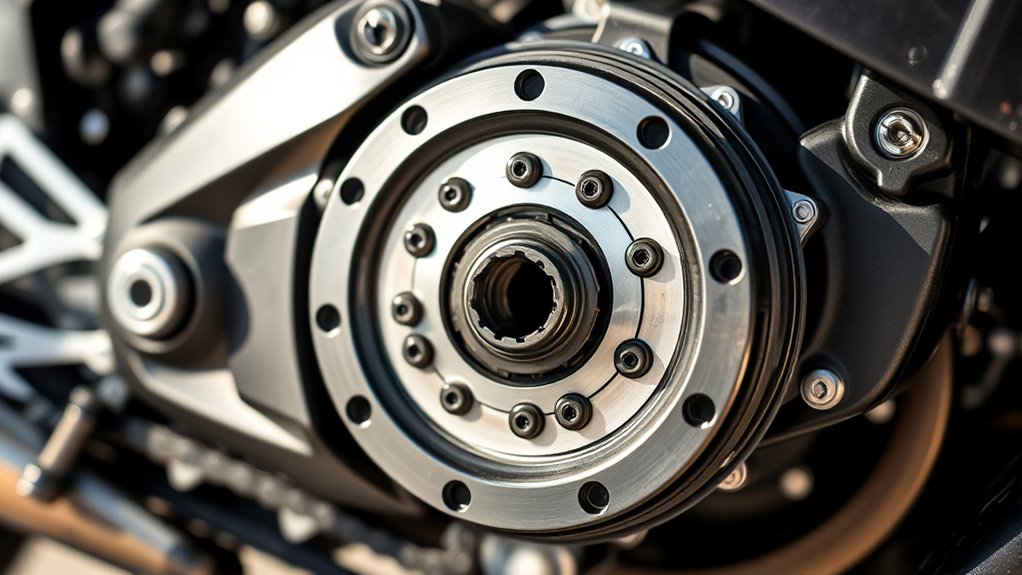
When you quickly downshift on your motorcycle, the slipper clutch kicks in by partially slipping to ease the engine’s braking force on the rear wheel. This prevents wheel hop and loss of traction, keeping you stable.
Here’s how it works:
- You downshift aggressively, causing a sudden increase in engine speed.
- The slipper clutch senses the back torque from the engine.
- Its ramp mechanism allows the clutch plates to slip slightly instead of locking up.
- This controlled slip reduces rear wheel drag and prevents skidding or bouncing.
Slipper Clutch vs. Standard Clutch: What’s the Difference?
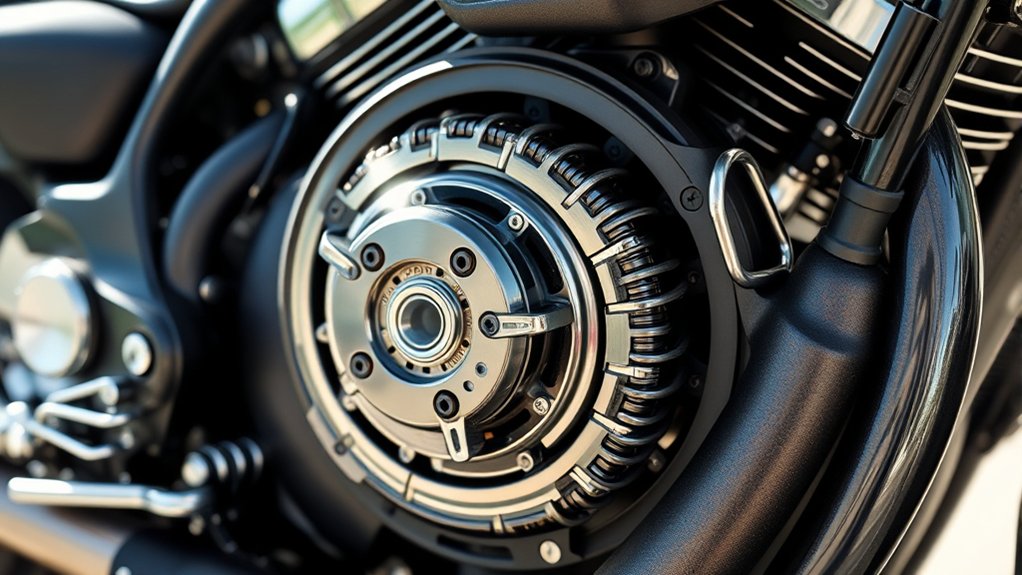
You’ll notice that a slipper clutch works differently than a standard clutch, especially when it comes to handling engine braking. Understanding how each affects your bike’s performance can help you choose the right one for your riding style.
Let’s compare their functionality, benefits, and when you might want to use each.
Functionality Comparison
How does a slipper clutch differ from a standard clutch in everyday use? When you’re riding, you’ll notice these key functional differences:
- Back-torque control: A slipper clutch partially disengages during aggressive downshifts, preventing rear-wheel hop—standard clutches don’t do this.
- Smooth deceleration: It modulates engine braking better, giving you smoother slowing without abrupt lock-ups.
- Clutch lever feel: You might feel a different lever resistance since the slipper mechanism adds complexity.
- Maintenance needs: Slipper clutches often require more careful upkeep due to their added components compared to standard clutches.
In short, while a standard clutch fully connects or disconnects power, a slipper clutch can slip under certain conditions, enhancing control without you needing extra input.
Performance Benefits
The unique ability of a slipper clutch to slip under specific conditions directly impacts your bike’s performance. When you downshift aggressively, it prevents the rear wheel from locking or skidding by partially disengaging, ensuring smoother deceleration. This means you maintain better control and stability, especially in corners or slippery surfaces.
Unlike a standard clutch, which fully engages or disengages, a slipper clutch modulates power delivery, reducing engine braking harshness. This lets you brake later and accelerate sooner without compromising safety or traction. By minimizing rear-wheel hop and chatter, it also reduces wear on your drivetrain components.
Usage Scenarios
Although both slipper clutches and standard clutches serve the same basic purpose of engaging and disengaging power from the engine to the rear wheel, their usage scenarios differ considerably. You’ll find slipper clutches particularly useful when dealing with aggressive downshifts or slippery road conditions.
Here are four scenarios where a slipper clutch shines compared to a standard clutch:
- Downshifting at high RPMs – It helps prevent rear-wheel lock-up, giving you smoother control.
- Riding on wet or loose surfaces – It reduces the risk of losing traction.
- Racing or sport riding – It lets you brake and downshift harder without upsetting the bike’s balance.
- Everyday street riding – It offers more forgiving clutch engagement, reducing rider fatigue.
In contrast, a standard clutch suits casual riding where aggressive downshifts are less common.
How to Use a Slipper Clutch Smoothly
When you want to get the most out of a slipper clutch, you’ll need to modulate the throttle and clutch lever carefully. Start by gently rolling off the throttle as you downshift, allowing the slipper clutch to engage smoothly without causing abrupt engine braking. Avoid snapping the throttle closed or releasing the clutch lever too quickly, as this can reduce the clutch’s effectiveness.
Instead, smoothly release the clutch lever while maintaining steady throttle control to let the slipper clutch do its job reducing rear-wheel hop and lock-up. Practice coordinating these inputs so the clutch slips just enough to ease the transition. With time, you’ll feel the bike settle naturally during deceleration or aggressive downshifts, making your ride smoother and more controlled.
When to Use a Slipper Clutch
If you want to maintain control during aggressive downshifts or sudden deceleration, using a slipper clutch is essential. It prevents rear wheel hop and keeps your bike stable by allowing the clutch to partially slip when engine braking is too strong.
Here’s when you should use it:
- When downshifting quickly before entering a corner.
- During hard braking to avoid rear wheel lockup.
- On slippery or uneven surfaces where traction is unpredictable.
- When riding aggressively in track or sport riding scenarios.
Using the slipper clutch in these situations helps you maintain smoother gear shifts and better control, letting you focus on your line and speed without worrying about rear wheel instability.
Benefits of Using a Slipper Clutch on the Road
Because road conditions can change rapidly, a slipper clutch offers you greater control and safety during everyday riding. It helps prevent rear-wheel lockup when you downshift aggressively, especially on wet or slippery roads. This means you can confidently reduce speed without worrying about losing traction or stability.
The slipper clutch also smooths out the gradual shift between engine braking and acceleration, making your ride more comfortable and less jerky. By reducing the chances of wheel hop or skidding, it keeps you safer in unexpected situations like sudden stops or sharp turns.
Motorcycles That Feature Slipper Clutches
Although not every motorcycle comes equipped with a slipper clutch, many modern sportbikes and performance models include this feature to enhance control and safety. If you’re looking for bikes that commonly feature slipper clutches, here are four popular examples:
- Yamaha YZF-R6 – Known for its sharp handling and track-ready performance.
- Kawasaki Ninja ZX-10R – A superbike designed for aggressive riding and racing.
- Ducati Panigale V4 – Combines Italian engineering with advanced clutch technology.
- Suzuki GSX-R1000 – Offers a smooth ride with enhanced downshifting stability.
When you ride any of these motorcycles, the slipper clutch helps you manage engine braking and prevents rear wheel hop during aggressive downshifts, improving your riding confidence and safety on twisty roads or the track.
Upgrading Your Bike With a Slipper Clutch
When you want to improve your bike’s performance and safety, upgrading to a slipper clutch is a smart move. It helps prevent rear-wheel lockup during aggressive downshifts, giving you smoother control and reducing the risk of losing traction. Installing one can make your rides more confidence-inspiring, especially on twisty roads or track days.
Before upgrading, check if your bike supports a direct replacement or if you need an aftermarket kit. Professional installation is recommended to guarantee proper adjustment and function. Also, consider your riding style and whether the slipper clutch’s benefits align with your needs.
Once installed, you’ll notice improved engine braking management, enhancing overall ride quality. This upgrade is well worth it for riders seeking better control and safety.
Troubleshooting Common Slipper Clutch Issues
If you’re experiencing unusual noises, slipping, or difficulty shifting, your slipper clutch might need some attention. Troubleshooting these issues early can save you from costly repairs.
Here’s what you should check:
- Inspect the clutch plates for wear or glazing, which can cause slipping.
- Check the clutch springs; weak or broken springs reduce clutch engagement.
- Examine the clutch cable or hydraulic system for proper adjustment and smooth operation.
- Look for oil contamination on the clutch plates, which affects performance and causes noise.
Maintaining Your Slipper Clutch for Longevity
To keep your slipper clutch working smoothly, you’ll want to set up a regular inspection routine and stick to it. Make sure you use proper lubrication techniques to prevent unnecessary wear.
Also, don’t wait too long to replace worn components to extend its lifespan.
Regular Inspection Routine
Although slipper clutches are designed for durability, you’ll need to perform regular inspections to keep them functioning smoothly and extend their lifespan. Staying proactive helps you catch wear or damage early, preventing costly repairs.
Follow these four steps for an effective inspection routine:
- Visual Check: Look for cracks, warping, or unusual wear on the clutch plates and housing.
- Spring Tension: Ensure the springs maintain proper tension; weak springs affect clutch performance.
- Engagement Test: Verify smooth engagement and disengagement by rotating the clutch manually.
- Noise Inspection: Listen for unusual noises during operation, which can indicate internal issues.
Proper Lubrication Techniques
Since slipper clutches rely on precise friction and smooth movement, maintaining proper lubrication is essential to prevent wear and guarantee peak performance. You should use a high-quality, manufacturer-recommended lubricant designed for clutch components. Avoid over-lubricating, as excess oil can cause slippage or attract dirt.
Apply lubricant sparingly to pivot points and friction surfaces, ensuring a thin, even layer. Regularly clean the clutch assembly before lubrication to remove debris and old oil residues. Use a lint-free cloth and appropriate cleaning solvent for best results.
After lubrication, manually operate the clutch to distribute oil evenly. By following these steps consistently, you’ll keep your slipper clutch functioning smoothly, extend its lifespan, and enjoy reliable performance every time you ride.
Timely Wear Component Replacement
How do you guarantee your slipper clutch stays reliable over time? Timely replacement of worn components is key. Ignoring wear can lead to clutch failure or poor performance.
To keep your slipper clutch in top shape, follow these steps:
- Inspect regularly: Check friction plates, springs, and clutch basket for signs of wear or damage.
- Replace friction plates: Worn plates reduce grip and cause slipping; swap them out as soon as you notice thinning or glazing.
- Change springs: Weakened springs can’t maintain proper pressure, so replace them to ensure consistent clutch engagement.
- Monitor clutch basket: Look for notches or grooves; these can interfere with smooth operation and should be addressed promptly.
How a Slipper Clutch Improves Safety and Performance
When you downshift aggressively or decelerate quickly, a slipper clutch helps prevent the rear wheel from locking up or skidding. It does this by partially disengaging the clutch when engine braking forces become too strong, allowing the wheel to maintain traction. This means you can brake harder or downshift faster without losing control, especially on slippery or uneven surfaces.
Frequently Asked Questions
Can a Slipper Clutch Affect Fuel Efficiency?
Yes, a slipper clutch can improve fuel efficiency by reducing engine braking and allowing smoother gear shiftovers.
You’ll notice less fuel wasted during aggressive downshifts, helping your bike run more efficiently overall.
Is a Slipper Clutch Compatible With All Motorcycle Brands?
No, a slipper clutch isn’t compatible with all motorcycle brands. You’ll need to check your bike’s make and model, as some require specific designs or modifications to fit and function properly with a slipper clutch system.
How Much Does Installing a Slipper Clutch Typically Cost?
Installing a slipper clutch typically costs between $300 and $700, including parts and labor. Prices vary by bike model and mechanic rates, so you’ll want to get a quote tailored to your specific motorcycle and location.
The overall cost depends on the complexity of the installation and the type of slipper clutch you choose. Labor charges can fluctuate based on the mechanic’s expertise and hourly rates.
Additionally, some models may require extra parts or modifications, which can increase the price. Always check with your mechanic for a detailed estimate before proceeding.
Does a Slipper Clutch Require Special Riding Techniques on Wet Roads?
No, a slipper clutch doesn’t require special techniques on wet roads, but you should still ride carefully. It helps prevent wheel hop during aggressive downshifting, so focus on smooth throttle and brake control in slippery conditions.
Can a Slipper Clutch Be Used in Off-Road or Dirt Bikes?
Yes, you can use a slipper clutch on off-road or dirt bikes. It helps prevent rear wheel lockup during aggressive downshifts, improving control and stability on loose or uneven terrain. This makes your ride safer and smoother.
Conclusion
Now that you know how a slipper clutch works and why it matters, aren’t you ready to enhance your riding experience? Using it smoothly lets you avoid rear-wheel lockups and improves control during aggressive downshifts.
Whether you’re upgrading or maintaining your bike, a slipper clutch boosts both safety and performance. This essential motorcycle component ensures better handling and reduces the risk of losing traction.
So, why settle for less when you can ride smarter and safer every time you hit the road? Embrace the benefits of a slipper clutch to improve your motorcycle’s responsiveness and overall riding confidence.

