

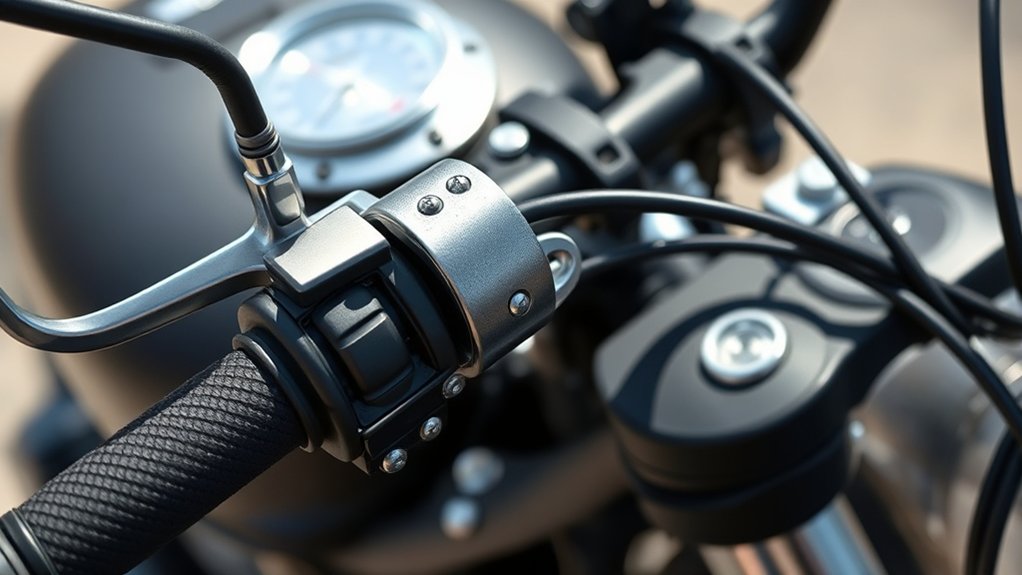
You’ll find the clutch lever on the left handlebar of your motorcycle, making it easily accessible for your left hand. This essential part of a motorcycle’s control system allows you to disengage the engine from the transmission.
Proper use of the clutch lever is crucial for smooth gear shifts and maintaining power control while riding.
The clutch lever is typically a metal lever connected to either a clutch cable or a hydraulic system. Its correct positioning ensures you can operate your motorcycle safely and confidently.
Understanding where the clutch is located helps you become a more skilled and aware rider.
Keep reading to discover how to use the clutch effectively and avoid common mistakes that can affect your riding experience.
Mastering the clutch lever will enhance your control and overall safety on the road.
Key Takeaways
- The clutch on a motorcycle is located on the left handlebar near the handgrip.
- It is operated by pulling a lever with the left hand.
- The clutch lever is typically longer and thinner than the brake lever on the right side.
- It connects to the clutch cable or hydraulic system to engage and disengage the engine from the transmission.
- Positioned within easy reach for comfortable and precise control during riding.
Where Is the Clutch Located on a Motorcycle?
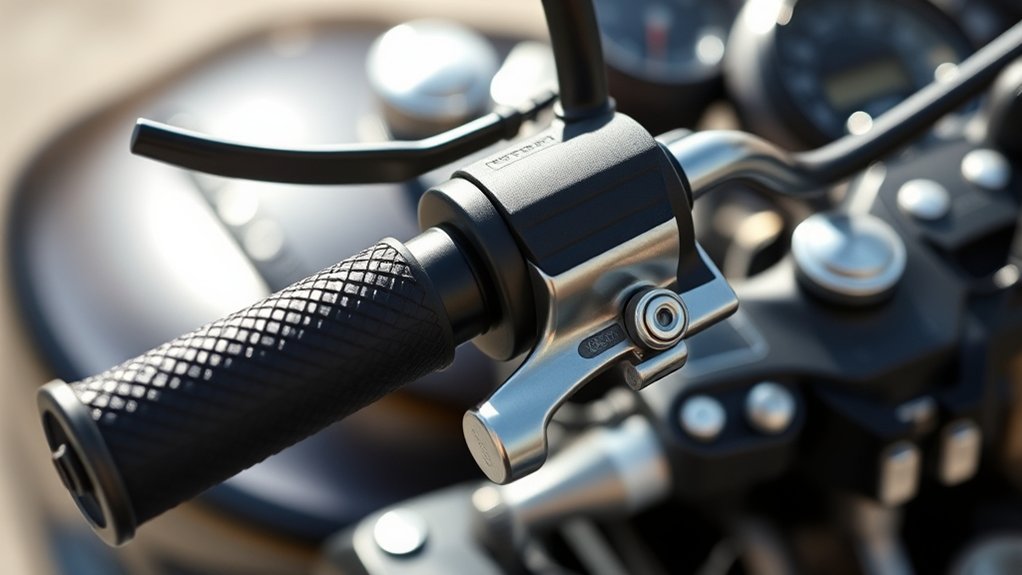
Although it might seem tricky at first, you’ll find the clutch on a motorcycle located on the left handlebar, just like the brake lever is on the right. It’s a lever designed for your left hand to operate, allowing you to disengage the engine from the transmission. This setup helps you shift gears smoothly while riding.
You’ll notice the clutch lever sits within easy reach, so you can pull it in and release it comfortably without letting go of the handlebar. This position is consistent across most motorcycles, making it intuitive once you get used to it.
Understanding this basic placement is essential before moving on to identifying the clutch lever itself or learning how to use it properly on the road.
How to Identify the Clutch Lever on Your Left Handlebar
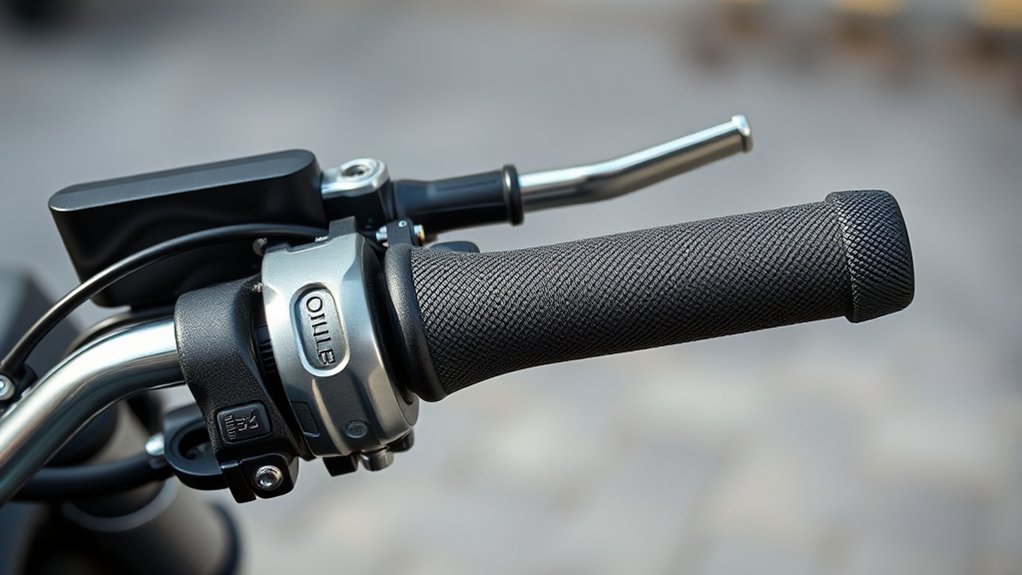
Now that you know the clutch is on the left handlebar, you can focus on spotting the clutch lever itself. The clutch lever is a metal arm extending from the left handlebar, positioned just in front of your left hand. It’s typically longer and thinner than the brake lever on the right side.
When you grip the left handlebar, your fingers should naturally wrap around the clutch lever, allowing you to pull it toward the handlebar to disengage the clutch. Look for a lever that moves smoothly when you pull it back and returns to its original position when released.
The clutch lever often has a small pivot point near the handlebar and may feature a textured surface or rubber grip for better control.
Why the Clutch Lever’s Position Matters for Control and Safety
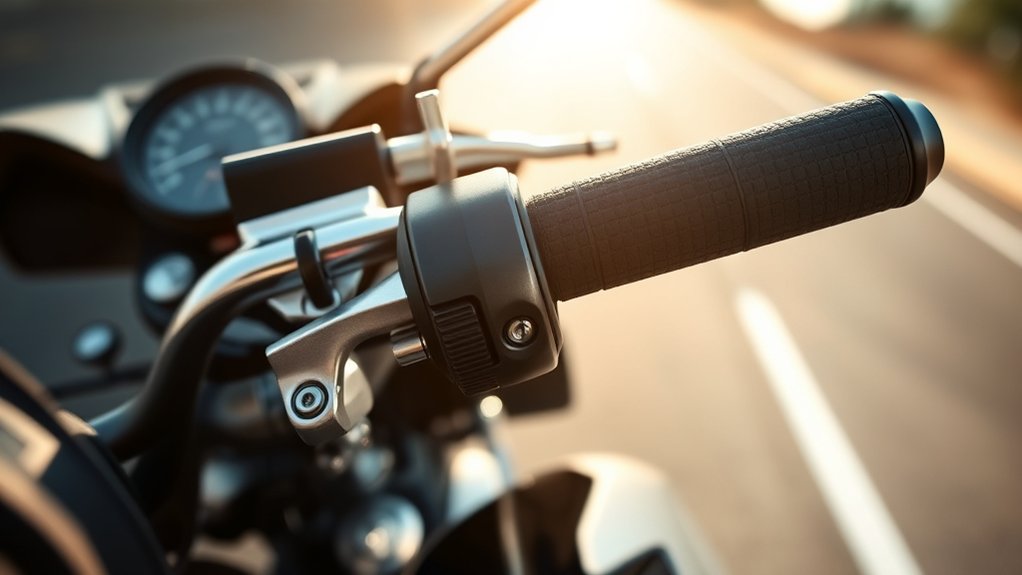
Because the clutch lever is your primary tool for controlling power delivery, its position directly affects your ability to ride safely and smoothly. If the lever is too far or too close, you might struggle to engage or release the clutch quickly, which can cause jerky starts or stalled engines.
A properly positioned lever lets you maintain a relaxed grip, reducing hand fatigue and improving precision during gear shifts. This precision helps you react swiftly to traffic changes or emergencies, enhancing overall control. Additionally, the right lever position guarantees you don’t overextend your fingers, preventing strain or injury.
Taking the time to adjust the clutch lever to fit your hand size and reach is essential for maintaining both control and safety on every ride.
What the Clutch Does in a Motorcycle’s Transmission System
You control how power flows from the engine to the wheels by using the clutch. It lets you smoothly engage and disengage gears, so shifting feels natural and precise.
Understanding this process helps you ride more confidently and keep your bike running smoothly.
Clutch Function Basics
Although it might seem like a simple lever on the handlebar, the clutch plays an essential role in controlling power flow between the engine and the rear wheel. When you pull the clutch lever, it disengages the engine from the transmission, allowing you to change gears smoothly without damaging the gearbox.
Releasing the lever gradually reconnects the engine to the transmission, letting power flow back to the rear wheel. This action helps you start moving from a stop, shift gears while riding, and control the bike’s speed effectively. Without the clutch working properly, you’d struggle to manage power delivery, leading to jerky movements or stalled engines.
Understanding these basic functions helps you handle your motorcycle more confidently and safely.
Power Transfer Control
The clutch not only lets you shift gears smoothly but also controls how power moves from the engine to the rear wheel through the transmission system. When you pull the clutch lever, you temporarily disconnect the engine’s power, allowing you to change gears without damaging the transmission.
Releasing the lever gradually reconnects the engine to the drivetrain, letting power flow smoothly and preventing sudden jolts.
| Clutch Action | Power Transfer Effect |
|---|---|
| Lever pulled in | Power flow stops |
| Lever slowly released | Power flow gradually increases |
| Lever fully released | Full power reaches rear wheel |
Understanding this helps you manage acceleration and deceleration effectively while protecting your motorcycle’s transmission system.
Gear Engagement Process
How exactly does the clutch engage gears in a motorcycle’s transmission system? When you pull the clutch lever, you temporarily disconnect the engine’s power from the transmission. This allows you to shift gears smoothly without damaging the gearbox.
Here’s how the process works:
- Pulling the clutch lever separates clutch plates, stopping power flow.
- You shift the gear lever to select the desired gear.
- Releasing the clutch lever gradually reconnects the clutch plates.
- Power resumes transmission through the chosen gear, moving the bike.
How to Operate the Clutch Lever for Smooth Gear Shifting
When you operate the clutch lever smoothly, you’ll make gear shifting feel seamless and avoid jerky movements. Begin by pulling the clutch lever fully toward the handlebar to disengage the engine from the transmission. This stops power transfer, letting you shift gears without damaging the bike.
Next, gently roll the throttle slightly as you shift gears with your foot. Slowly release the clutch lever while gradually increasing throttle pressure. This controlled release reconnects the engine to the wheels smoothly.
Avoid releasing the clutch too quickly, which can cause the bike to lurch or stall. Practice this timing to find the right balance between clutch release and throttle input. With consistent effort, you’ll master smooth gear changes, making your ride more comfortable and controlled.
How Clutch Lever Placement Varies by Motorcycle Type
Since different motorcycles serve various purposes, clutch lever placement can vary to suit their design and rider needs. You’ll notice these differences mainly based on the bike’s style and intended use.
- Sport Bikes: The clutch lever sits close to the handlebar, allowing quick, precise control for aggressive riding.
- Cruisers: Positioned slightly lower and more relaxed, the lever offers comfort for long, easy rides.
- Off-Road Bikes: The lever is often more robust and positioned for easy reach even when standing on the pegs.
- Touring Bikes: You’ll find the lever placed ergonomically to reduce hand fatigue during extended trips.
Understanding these variations helps you adapt your grip and improves overall riding experience.
Signs Your Clutch Lever Needs Adjustment or Maintenance
If your clutch lever feels stiff, loose, or unresponsive, it’s a clear sign that it needs adjustment or maintenance. You might notice difficulty in shifting gears smoothly or the clutch not fully disengaging. A lever that sticks or requires excessive force can indicate worn cables or low lubrication.
Conversely, if the lever has too much free play, it means the clutch isn’t engaging properly, causing slipping or delayed power transfer. Pay attention to any unusual noises when you pull the lever, as this can signal internal wear or damage.
Regularly inspect the lever, cables, and hydraulic system for wear, corrosion, or leaks. Addressing these signs promptly guarantees your clutch operates safely and prolongs your motorcycle’s lifespan.
Common Clutch Lever Mistakes New Riders Make
Though the clutch lever might seem straightforward, new riders often make mistakes that affect their control and safety. You might unintentionally grip the lever too tightly or release it too quickly, causing jerky starts or stalls.
Here are some common clutch lever mistakes to watch out for:
- Squeezing the lever fully without feathering – This causes abrupt engagement and can lead to loss of balance.
- Releasing the lever too fast – It results in sudden power delivery and possible wheel spin.
- Holding the clutch lever in too long – This wears out the clutch and reduces bike responsiveness.
- Using excessive force – It tires your hand and reduces fine control needed for smooth riding.
Avoid these pitfalls to ride more confidently and safely.
Tips to Practice Clutch Control and Improve Your Riding Skills
To improve your clutch control, start by practicing gradual clutch engagement to avoid jerky starts. Make sure you coordinate the throttle smoothly with your clutch movements for better balance.
Focus on mastering smooth shifts between gears to enhance your overall riding skills.
Gradual Clutch Engagement
Mastering gradual clutch engagement lets you ride smoother and maintain better control over your motorcycle. When you ease the clutch lever out slowly, you prevent sudden jerks and reduce wear on your bike’s components.
Here’s how to practice:
- Find a safe, flat area with little traffic.
- Slowly release the clutch lever until you feel the bike start to move — this is the friction zone.
- Hold the lever steady in this zone for a few seconds, feeling how the bike responds.
- Gradually release the lever fully while keeping the bike balanced with your body.
Repeat these steps regularly to build muscle memory and improve your confidence in clutch control. This skill is essential for smooth starts and precise maneuvering.
Coordinated Throttle Control
When you coordinate the throttle with the clutch, you gain smoother acceleration and better control over your motorcycle’s power delivery. Start by gently releasing the clutch lever while simultaneously rolling on the throttle. This balance prevents the engine from bogging down or stalling.
Practice this on a flat surface at low speeds to get a feel for how your bike responds. Pay attention to the friction zone—the point where the clutch starts to engage—and gradually increase throttle input as you ease off the clutch. Avoid abrupt throttle twists or rapid clutch releases, which can cause jerky movements or loss of control.
With consistent practice, you’ll develop a natural rhythm that enhances your riding confidence and makes your bike respond precisely to your inputs.
Practicing Smooth Transitions
Coordinating the throttle with the clutch sets a solid foundation, but developing smooth shifts takes deliberate practice. You want to avoid jerky starts and rough gear changes by mastering clutch control. Here’s how you can practice:
- Find a quiet, flat area with minimal traffic to focus without distractions.
- Slowly release the clutch lever while gently rolling on the throttle—aim for a seamless changeover.
- Shift gears up and down repeatedly, paying attention to the clutch’s bite point and engine response.
- Practice stopping and starting smoothly, using the clutch to prevent stalling or sudden jolts.
Frequently Asked Questions
What Type of Clutch Fluid Does a Motorcycle Use?
You’ll typically use DOT 3 or DOT 4 brake fluid for your motorcycle’s clutch, but some bikes require specific hydraulic fluid.
Always check your owner’s manual to avoid damage and guarantee smooth clutch operation.
How Often Should I Replace My Motorcycle Clutch Cable?
You should replace your motorcycle clutch cable every 12,000 to 15,000 miles or if you notice fraying, stiffness, or slipping.
Regularly inspect and lubricate it to keep your clutch smooth and responsive.
Can a Slipping Clutch Cause Engine Damage?
Yes, a slipping clutch can cause engine damage. It wears out the clutch plates, overheats the engine, and strains transmission components.
If you don’t fix it quickly, you’ll face costly repairs and reduced motorcycle performance.
Are There Aftermarket Clutch Levers for Better Ergonomics?
Yes, you can find aftermarket clutch levers designed for better ergonomics. They offer adjustable reach and improved grip, helping you ride more comfortably and reduce hand fatigue during long rides or stop-and-go traffic.
How Does a Wet Clutch Differ From a Dry Clutch?
Back in the days of knights, you’d know a wet clutch stays cool, bathed in oil, offering smooth engagement and longer life. A dry clutch runs without oil, giving quicker response but heats up faster—you’ll feel the difference riding.
Conclusion
Now that you know where the clutch is and how it works, you’re ready to take control of your ride confidently. Remember, “practice makes perfect”—so keep using your clutch lever smoothly to master gear shifts and enhance your safety.
Pay attention to its position and maintenance to avoid common mistakes. With time and care, you’ll handle every twist and turn like a pro, making your motorcycle experience both enjoyable and safe.
Mastering the clutch on a motorcycle is essential for smooth riding and control. Keep practicing your clutch control to improve your skills and ensure a safer ride every time.

