

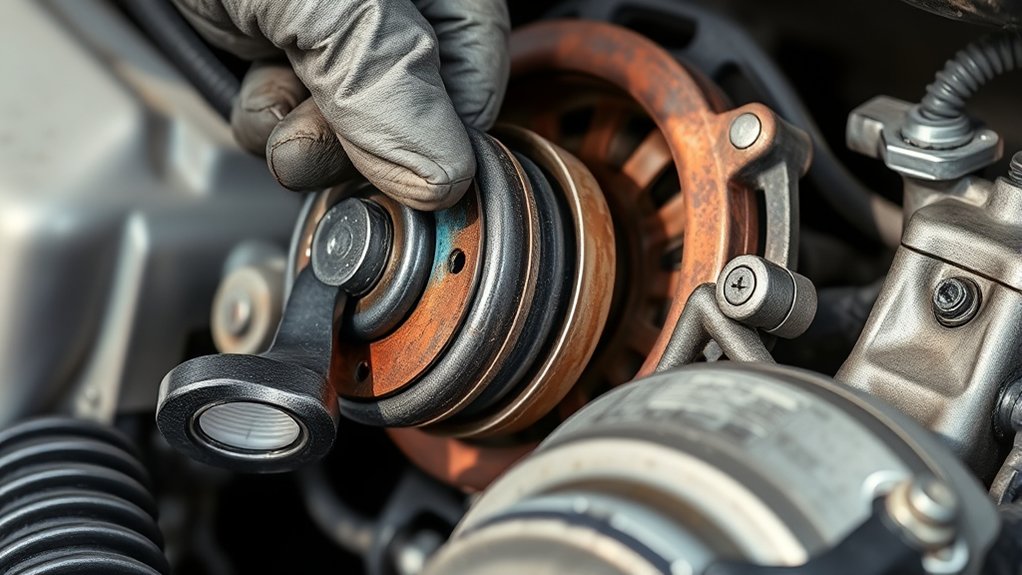
To fix a seized air conditioner clutch pulley, start by disconnecting the battery and unplugging the clutch wiring to ensure safety. This step prevents electrical hazards while working on the air conditioning system.
Next, release the serpentine belt tension to relieve pressure on the pulley.
Use a pulley puller along with penetrating oil to carefully remove the stuck pulley without causing damage.
Inspect the pulley for any signs of wear or damage. Clean and lubricate minor wear areas, but replace the pulley if you notice warping or cracks.
Reassemble the components with proper alignment and correct belt tension to ensure smooth operation.
Finally, test the air conditioner system to confirm the clutch pulley is functioning properly.
Keep following for detailed inspection, removal, and maintenance tips on fixing a seized air conditioner clutch pulley.
Key Takeaways
- Disconnect the battery and release serpentine belt tension before attempting to remove the seized AC clutch pulley safely.
- Use penetrating oil on stuck bolts and a pulley puller tool to carefully extract the seized pulley without causing damage.
- Inspect the pulley and compressor shaft for damage, cleaning and lubricating minor wear or replacing the pulley if severely damaged.
- Reassemble by aligning the pulley properly, tightening bolts securely, reconnecting wiring, reinstalling the belt, and testing AC function.
- Prevent future seizure by regularly lubricating bearings, maintaining belt tension, and inspecting for wear, corrosion, and electrical issues.
How to Identify a Seized AC Clutch Pulley
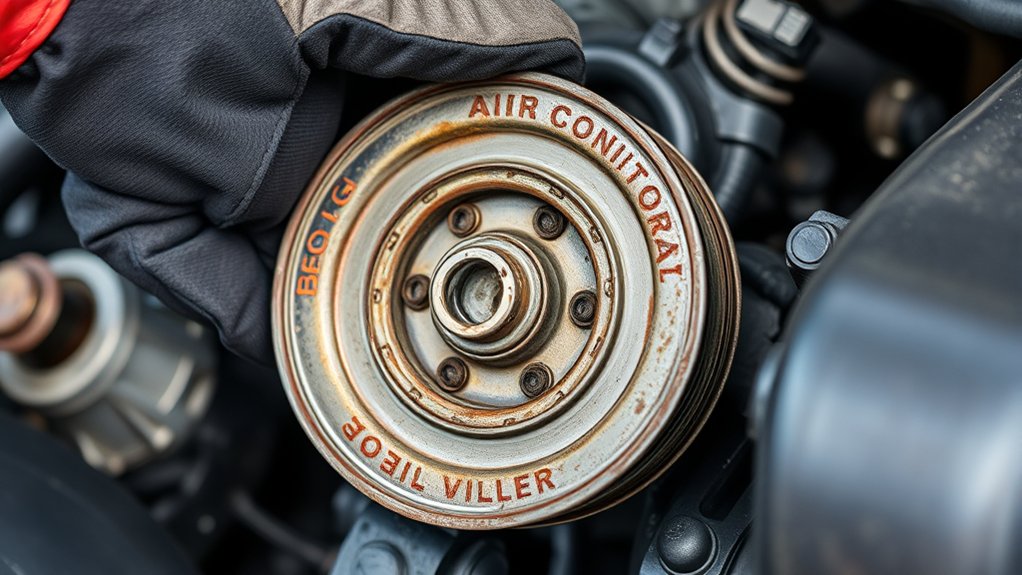
Although it might seem tricky at first, you can identify a seized AC clutch pulley by paying attention to specific symptoms like unusual noises, the AC not engaging, or visible pulley damage. When the pulley seizes, it often produces a grinding or squealing sound when you start the engine. You might also notice the AC compressor failing to turn on despite the system being activated.
Take a close look at the pulley itself—if it appears warped, cracked, or shows signs of rust and corrosion, that’s a strong indicator of seizure. Another test is to try spinning the pulley by hand with the engine off; if it doesn’t rotate smoothly or is stuck, the pulley is likely seized and needs attention.
What Causes an AC Clutch Pulley to Seize?
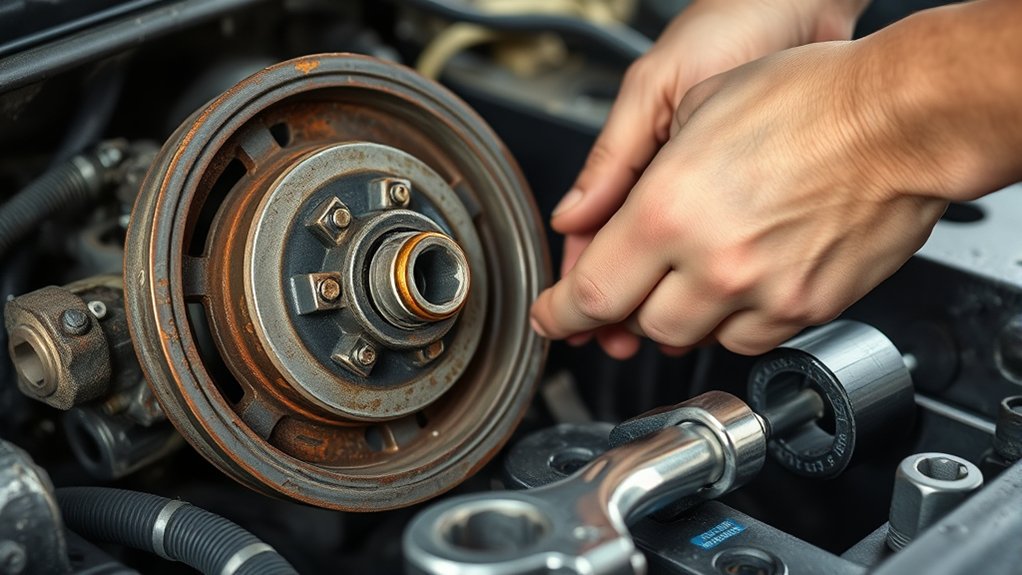
When your AC clutch pulley seizes, it’s usually because of wear, lack of lubrication, or contamination. Over time, the pulley’s bearings can wear out from constant friction, causing the pulley to lock up. If the bearing loses lubrication, it generates excessive heat and resistance, leading to seizure.
Dirt, debris, or moisture can also get inside the pulley assembly, contaminating the bearings and accelerating wear. Additionally, a misaligned belt or pulley can place uneven stress on the clutch, increasing the chances of failure. Neglecting regular maintenance allows these issues to build up, so you’ll want to keep an eye on your AC system.
Understanding these causes helps you address the problem effectively and prevent future pulley seizures.
Essential Tools for Fixing an AC Clutch Pulley
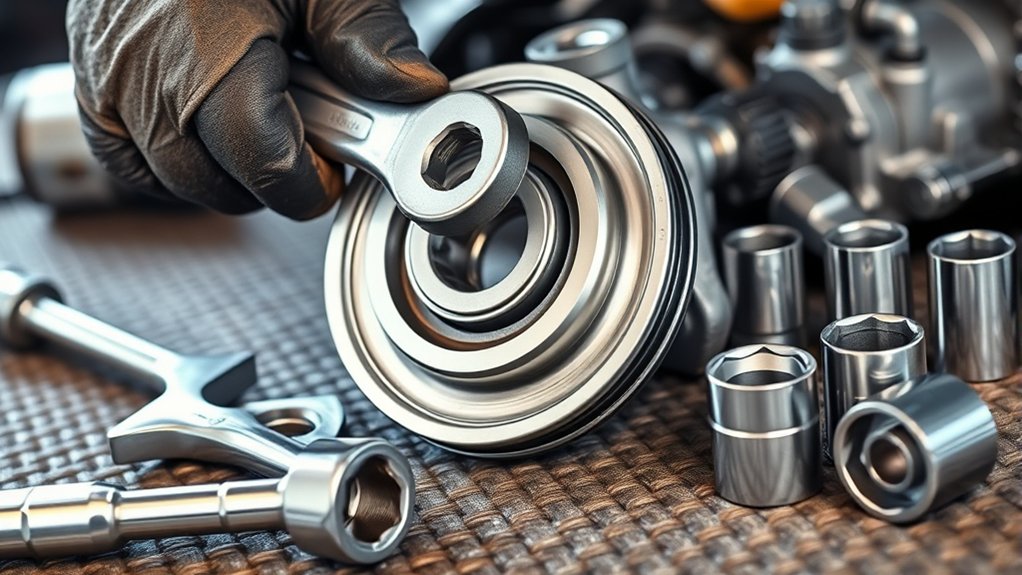
Before you start fixing a seized AC clutch pulley, make sure you have the right tools on hand to save time and avoid frustration. You’ll need a socket set to remove bolts securing the pulley and clutch assembly. A pulley puller tool is essential to safely extract the pulley without damaging surrounding components.
Don’t forget a torque wrench to tighten bolts accurately during reassembly. A flathead screwdriver and pliers will help with clips and electrical connectors. Additionally, having penetrating oil can loosen rusted or stuck parts, making removal easier.
Finally, gloves and safety glasses protect you while working. Gathering these tools beforehand guarantees a smoother, safer repair process and helps you tackle the seized AC clutch pulley efficiently.
Safely Disconnecting the AC Clutch Pulley System
Before you start, make sure to disconnect the battery power to prevent any electrical hazards. Next, locate the AC clutch connector carefully to avoid damaging any wires. Don’t forget to wear proper safety gear to protect yourself throughout the process.
Disconnect Battery Power
Since the air conditioner clutch pulley system relies on electrical power, you’ll need to disconnect the battery to prevent any accidental engagement or electrical shorts while working. Start by opening your vehicle’s hood and locating the battery. Using a wrench, loosen the negative terminal clamp first, then carefully lift it off the battery post.
This step is essential because disconnecting the negative terminal cuts power safely and reduces the risk of sparks. Avoid touching the terminals together or letting your tools bridge them to prevent short circuits. After the negative terminal, you can loosen the positive terminal if necessary.
Once both terminals are disconnected, secure the cables away from the battery to avoid accidental contact. Now, you’re ready to work on the AC clutch pulley system without electrical hazards.
Locate Clutch Connector
Once you’ve disconnected the battery, your next step is to locate the clutch connector for the air conditioner pulley. This connector supplies power to the clutch coil and must be unplugged to avoid electrical hazards. Typically, it’s a small plastic plug near the compressor’s front or side.
You might need to remove a few clips or covers to access it. Use the table below to identify common connector types and their locations:
| Connector Type | Location on Vehicle | Notes |
|---|---|---|
| Two-pin | Near compressor front | Snap-fit, press tab to release |
| Single-pin | Side of compressor housing | May have a locking clip |
| Multi-pin | Behind engine bay fuse box | Requires gentle prying |
| Weatherproof | Under hood wiring harness | Sealed with rubber gasket |
| Plastic plug | Compressor bracket area | Pull straight to disconnect |
Make sure to handle the connector gently to avoid damage.
Use Proper Safety Gear
Although disconnecting the AC clutch pulley system might seem straightforward, you need to wear proper safety gear to protect yourself from electrical shocks, sharp edges, and debris. Start by putting on insulated gloves to reduce the risk of electrical shock when handling connectors and wires. Safety glasses are essential to shield your eyes from dust, metal shards, or accidental sparks.
Wear long sleeves and durable clothing to protect your skin from sharp edges on pulleys or mounting brackets. If you’re working under the vehicle, make sure you have sturdy footwear with good grip. Never skip these precautions; they minimize injury risks and help you focus on the repair.
How to Inspect the AC Clutch Pulley and Compressor
Start by visually inspecting the clutch pulley and compressor for any signs of wear or damage. Next, check the pulley alignment to guarantee it spins smoothly without wobbling.
Finally, assess the overall condition of the compressor to spot any issues that might affect performance.
Visual Inspection Techniques
Before you plunge into repairs, carefully examining the AC clutch pulley and compressor can help you spot signs of wear or damage early. Start by cleaning the pulley surface to remove dirt or grease that might hide cracks or corrosion. Look closely for any grooves, rust, or wobbling when you spin the pulley by hand—it should rotate smoothly without resistance or noise.
Inspect the clutch plate for uneven wear or burnt spots, which indicate slipping. Check the compressor body for oil leaks or physical damage that might affect performance. Don’t forget to examine the clutch coil for any burnt wires or broken connectors.
Catching these issues early can save you time and prevent further damage during repairs.
Checking Pulley Alignment
How can you tell if your AC clutch pulley is properly aligned with the compressor? First, visually inspect the pulley and compressor shaft from multiple angles. The pulley should sit evenly and parallel to the compressor face without any wobbling.
Next, spin the pulley by hand; it should rotate smoothly without any noticeable side-to-side movement or resistance. Use a straightedge or alignment tool across the pulley surface and compressor housing to confirm they’re flush and in line. Misalignment can cause belt wear and clutch failure, so take your time with this step.
If you spot any uneven gaps or the pulley seems off-center, you’ll need to adjust or replace components before proceeding. Proper alignment guarantees your AC clutch operates efficiently and prevents further damage.
Assessing Compressor Condition
Once you’ve confirmed the pulley alignment, the next step is to assess the compressor and clutch pulley condition. Begin by visually inspecting the clutch pulley for signs of wear, rust, or damage. Spin the pulley by hand; it should rotate smoothly without wobbling or resistance.
If it feels rough or stuck, the clutch bearing may be seized. Next, check the compressor body for oil leaks or cracks, which indicate internal issues. Listen for unusual noises when the compressor runs, such as grinding or squealing, signaling mechanical failure.
Also, verify the clutch engages properly when the AC is turned on. If the clutch doesn’t engage or slips frequently, the compressor might need repair or replacement. This thorough inspection helps pinpoint the exact problem before proceeding.
How to Remove the Seized AC Clutch Pulley
Although removing a seized AC clutch pulley can be challenging, having the right tools and a clear plan will make the process much smoother. First, disconnect the vehicle’s battery to avoid electrical hazards. Next, remove the serpentine belt by releasing tension with a wrench on the tensioner pulley.
Then, unbolt the clutch coil wiring to prevent damage. Use a pulley removal tool or a clutch pulley puller to carefully extract the seized pulley from the compressor shaft. Avoid using excessive force to prevent damaging the compressor.
If the pulley resists, apply penetrating oil and let it sit for a while before trying again. Once removed, inspect the pulley and shaft for damage before proceeding with repairs or replacements.
How to Replace or Repair an AC Clutch Pulley
After removing the seized AC clutch pulley and inspecting the components, you can decide whether to repair or replace the pulley. If the pulley shows minor wear or damage, you might clean and lubricate it.
However, deep grooves, cracks, or warping mean replacement is the safer choice.
Use the table below to quickly assess your options:
| Condition | Action |
|---|---|
| Minor surface rust | Clean & lubricate |
| Slight noise | Inspect bearing |
| Deep grooves | Replace pulley |
| Visible cracks | Replace pulley |
| Bearing seized | Replace pulley |
When replacing, make sure the new pulley matches your AC model. Repairing is cheaper but may only be a temporary fix.
Always prioritize safety and proper function.
How to Reassemble and Test Your Air Conditioner
Before reassembling your air conditioner, make sure all components are clean and properly aligned to prevent future issues. Start by carefully placing the clutch pulley back onto the compressor shaft, ensuring it fits snugly.
Next, reattach the clutch coil and secure all bolts tightly. Don’t forget to reconnect the electrical wiring to restore power to the clutch. Finally, reinstall the drive belt, making sure it’s tensioned correctly.
To test your work:
- Reconnect the battery.
- Start the engine.
- Turn on the AC system.
- Listen for smooth clutch engagement.
- Check for any unusual noises or vibrations.
If everything operates quietly and the AC cools effectively, you’ve successfully completed the repair.
How to Prevent Your AC Clutch Pulley From Seizing Again
To keep your AC clutch pulley from seizing again, you need to maintain proper lubrication and regularly inspect the pulley for wear or damage. Check the pulley’s bearings and apply the recommended lubricant as specified in your vehicle’s manual. Avoid over-lubricating, which can attract dirt and cause more harm.
Make sure the tension on the AC belt is correct; a loose or overly tight belt puts extra stress on the pulley. Inspect the clutch coil and electrical connections too, since electrical issues can cause the clutch to engage improperly.
Finally, clean the pulley and surrounding components to prevent dirt buildup. By following these steps consistently, you’ll extend the life of your AC clutch pulley and keep your air conditioner running smoothly.
Frequently Asked Questions
How Much Does It Cost to Replace an AC Clutch Pulley?
You can expect to pay between $150 and $400 to replace an AC clutch pulley, depending on your car model and labor rates.
It’s best to get a quote from a trusted mechanic to avoid surprises.
Can a Seized AC Clutch Pulley Damage the Compressor?
Yes, a seized AC clutch pulley can damage the compressor. When it locks up, the compressor struggles to turn, causing excessive strain that may lead to failure.
You should address it promptly to avoid costly repairs.
How Long Does It Take to Fix a Seized AC Clutch Pulley?
Fixing a seized AC clutch pulley usually takes about 1 to 2 hours, depending on your experience and tools.
You’ll remove the pulley, replace or repair it, then reassemble everything carefully to guarantee proper function.
Are There Brands Known for More Reliable AC Clutch Pulleys?
Like choosing a sturdy shield, you’ll find brands like Denso, Delphi, and AC Delco known for reliable AC clutch pulleys.
They’re trusted for durability, so you can count on them to keep your system running smoothly.
Can I Drive Safely With a Seized AC Clutch Pulley?
You shouldn’t drive with a seized AC clutch pulley because it can cause belt damage or engine overheating. Get it checked and repaired promptly to avoid further mechanical issues and guarantee your vehicle runs safely and smoothly.
Conclusion
So, your AC clutch pulley decided to throw a tantrum and seize up—congratulations on revealing a new hobby: mechanical frustration! But seriously, fixing it isn’t rocket science. With the right tools and a bit of patience, you’ll have it spinning smoothly again.
Just remember, treating your AC like a neglected pet only invites more drama. Stay proactive, or be ready for future pulley meltdowns—because who doesn’t love unexpected mechanical chaos?
By following these steps to fix a seized air conditioner clutch pulley, you can avoid costly repairs and keep your AC system running efficiently. Regular maintenance and timely repairs are key to preventing clutch pulley issues and ensuring long-term performance.

