


Yes, fog lights and high beams are different automotive lighting features designed to enhance your visibility in varying driving conditions.
Fog lights are positioned low on your vehicle and emit a wide, low beam that helps cut through fog, rain, or snow without causing glare.
High beams, on the other hand, are mounted higher and project a bright, focused light far ahead for dark, open roads.
Fog lights improve safety by illuminating the road close to the ground, reducing reflections in foggy or snowy weather.
High beams provide maximum visibility at night but must be used cautiously to avoid blinding other drivers.
Using each correctly not only boosts your safety but also helps you avoid legal trouble—explore more to understand their best uses and rules.
Key Takeaways
- Fog lights emit a wide, low beam to improve visibility in fog, rain, or snow by reducing glare close to the road.
- High beams produce a bright, focused, long-range beam for maximum visibility on dark, open roads without oncoming traffic.
- Fog lights are mounted lower on the vehicle, while high beams are positioned higher near the main headlights.
- Fog lights are used in adverse weather conditions, whereas high beams are for clear, poorly lit roads.
- Legal use and proper operation differ, with fog lights restricted to bad weather and high beams requiring dimming near other vehicles.
What Are Fog Lights and How Do They Work?
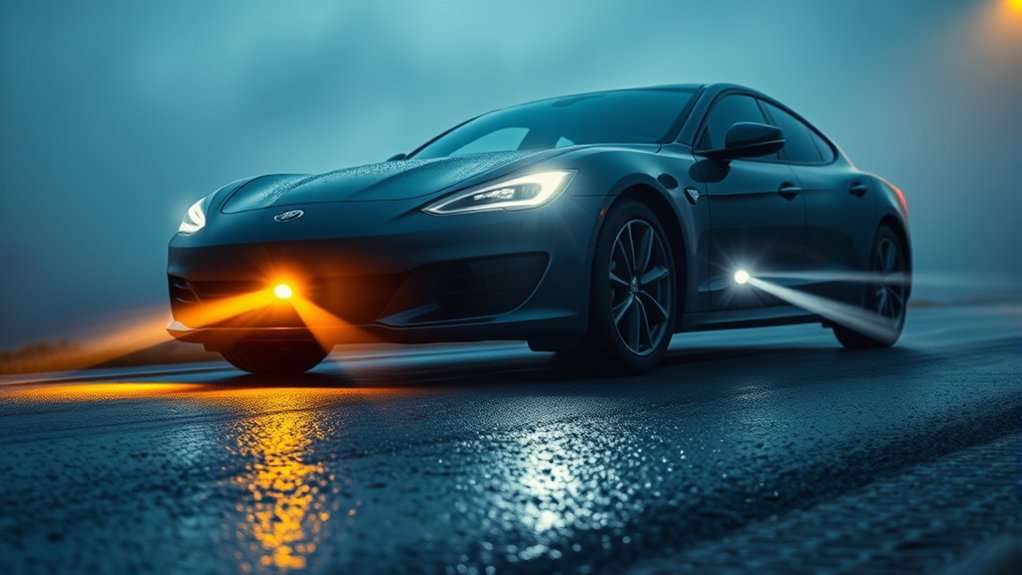
Although fog lights might seem similar to your regular headlights, they serve a very different purpose. You use fog lights specifically to improve visibility in fog, heavy rain, or snow, where regular headlights can reflect off moisture and create glare.
Positioned lower on your vehicle, fog lights cast a wide, low beam that hugs the road, cutting through the fog instead of bouncing off it. This helps you see the edges of the road and any obstacles more clearly. When you turn them on, fog lights illuminate the area directly in front of you without blinding other drivers.
What Are High Beams and When Should You Use Them?
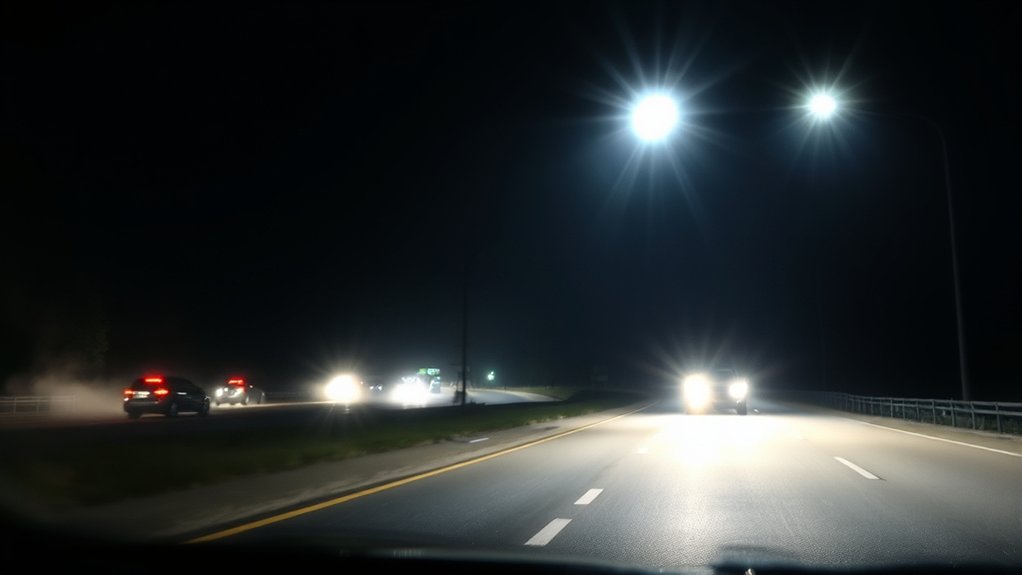
While fog lights help you see clearly in foggy or wet conditions by casting a wide, low beam, high beams serve a different function. High beams provide a bright, focused light that illuminates a long distance ahead, helping you spot obstacles or road signs on dark, open roads. You should use high beams when driving in rural or poorly lit areas without oncoming traffic.
However, remember to switch back to low beams when another vehicle approaches or when you’re following another car closely to avoid blinding other drivers. Using high beams responsibly enhances your visibility and safety, especially on highways or country roads. So, knowing when to use high beams can make a significant difference in your nighttime driving experience.
Fog Lights vs. High Beams: Key Differences Explained
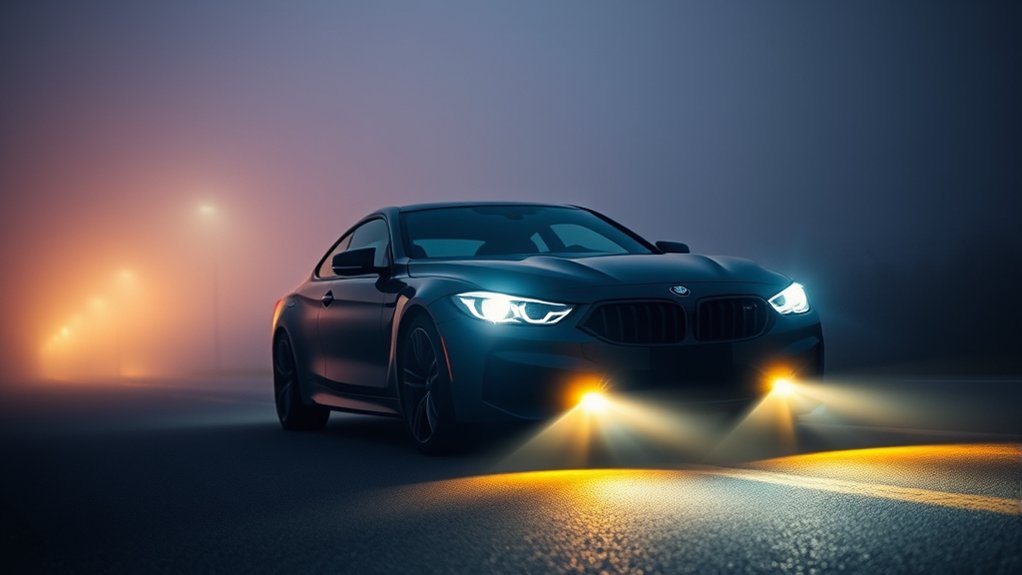
You might wonder how fog lights and high beams differ in purpose and function. Each serves a specific role to improve your visibility under different conditions.
Let’s explore when and why you should use each for the best results.
Purpose And Function
Because fog lights and high beams serve distinct purposes, understanding their functions can help you use them effectively and safely. Fog lights are designed to cut through fog, rain, or snow by producing a wide, low beam that reduces glare and illuminates the road close to your vehicle.
High beams, on the other hand, shine a bright, focused light far ahead to maximize visibility on clear, dark roads.
| Feature | Fog Lights |
|---|---|
| Beam Pattern | Wide, low |
| Purpose | Improve visibility in fog/rain |
| Position | Mounted low on the vehicle |
| Feature | High Beams |
| Beam Pattern | Narrow, long-range |
| Purpose | Maximize visibility on clear roads |
| Position | Mounted higher, near headlights |
Usage And Visibility
Understanding how fog lights and high beams differ in their intended functions sets the stage for using them properly in various driving conditions. You’ll use fog lights when visibility drops due to fog, rain, or snow because they cast a wide, low beam that cuts through the haze without reflecting back into your eyes.
In contrast, high beams shine a powerful, focused light straight ahead, ideal for dark, open roads where no other vehicles are nearby. When you switch to high beams, you increase your visibility distance, but they can blind oncoming drivers if used improperly.
Remember to turn off your high beams when approaching traffic or in well-lit areas, and reserve fog lights strictly for poor weather conditions to enhance safety for everyone on the road.
When to Use Fog Lights vs. High Beams for Safer Driving
You should use fog lights when visibility is low due to fog, rain, or snow to reduce glare and improve your view close to the road. High beams are best for open, dark roads without oncoming traffic, helping you see farther ahead.
Knowing when to switch between these lights keeps you and others safer while driving.
Fog Lights Usage Tips
Although fog lights and high beams both improve visibility, knowing when to use each can considerably enhance your safety on the road. Use your fog lights only during fog, heavy rain, snow, or dust storms when visibility drops markedly. Fog lights sit low on your vehicle, cutting through fog without reflecting light back into your eyes, unlike high beams.
Avoid using fog lights in clear conditions—they can blind other drivers and are often illegal when visibility is good. Also, remember that fog lights complement your low beams; they’re not a replacement. Turn them off once conditions improve to prevent confusing other drivers.
High Beams Safety Guidelines
When driving at night or in poorly lit areas, knowing when to switch between high beams and fog lights can make all the difference in your safety and the comfort of others on the road. Use your high beams to maximize visibility on open roads without oncoming traffic.
However, remember to dim them when you:
- Approach another vehicle within 500 feet to avoid blinding the driver.
- Follow a car closely, as high beams reflect in their mirrors and cause glare.
- Drive in fog, heavy rain, or snow, since high beams can reflect off moisture and reduce visibility.
In these situations, switch to fog lights to better illuminate the road without creating glare. Being mindful of when to use each light helps you see clearly and keeps everyone safer.
Legal Guidelines for Using Fog Lights and High Beams
Because fog lights and high beams serve different purposes, laws regulate their use to guarantee safety on the road. You need to know when and where each light is legally allowed. Misusing them can lead to fines or dangerous driving conditions.
| Light Type | Legal Use Guidelines |
|---|---|
| Fog Lights | Use only in fog, heavy rain, or snow; avoid bright conditions |
| High Beams | Use on dark roads without oncoming traffic or vehicles ahead |
| Prohibited | Using fog lights in clear weather or high beams in city limits |
| Penalties | Fines or warnings for improper usage |
| Exceptions | Some states allow fog lights as auxiliary lighting |
Following these rules keeps you safe and compliant with the law.
Why You Shouldn’t Use Fog Lights and High Beams Together
Understanding the legal guidelines for fog lights and high beams helps you use them correctly, but it’s equally important to know why combining these lights can cause problems.
When you use fog lights and high beams together, you risk:
- Blinding other drivers – The intense brightness can create glare, reducing visibility for oncoming traffic.
- Reduced effectiveness – Fog lights are designed to cut through fog low to the ground, while high beams shine far ahead; using both can scatter light and impair your own vision.
- Legal trouble – Many jurisdictions prohibit using both simultaneously, and you may face fines or penalties.
How Weather Affects Using Fog Lights and High Beams
Although fog lights and high beams serve different purposes, weather conditions greatly influence when and how you should use each. In fog, rain, or snow, high beams can reflect off moisture droplets, creating glare that reduces your visibility. That’s where fog lights come in—they cast a low, wide beam that stays close to the road, cutting through the mist without bouncing light back into your eyes.
Conversely, in clear weather or on open roads, high beams help you spot distant hazards by illuminating a much larger area. You should switch off fog lights when conditions improve since their lower positioning can cause glare for other drivers. Understanding these weather-related differences helps you use your lights wisely, ensuring safer driving in varying conditions.
Maintenance Tips for Fog Lights and High Beams
Properly maintaining your fog lights and high beams guarantees they perform well when you need them most. Regular upkeep ensures clear visibility and safer driving in challenging conditions. Here are three essential maintenance tips:
- Clean the Lenses: Dirt and grime can dim your lights. Use a soft cloth and mild cleaner to wipe fog light and high beam lenses regularly.
- Check for Damage: Inspect bulbs and housing for cracks or moisture buildup, which can reduce light effectiveness.
- Test Functionality: Turn on your fog lights and high beams periodically to confirm they’re working properly. Replace any burnt-out bulbs promptly.
Frequently Asked Questions
Can Fog Lights Improve Visibility in Heavy Rain?
Yes, fog lights can improve visibility in heavy rain because they sit low and reduce glare. You’ll see better close to the road, helping you drive safer without blinding other drivers during poor weather conditions.
Do High Beams Drain More Battery Than Low Beams?
High beams harvest higher power, so yes, they do drain your battery more than low beams. When you want wattage wisely, watch your usage—switching to low beams lessens load, letting your battery last longer.
Are LED Fog Lights Better Than Halogen Ones?
Yes, LED fog lights are better than halogen ones. They use less power, last longer, and provide brighter, clearer light.
You’ll get improved visibility in foggy conditions while saving energy and reducing replacements.
Can Fog Lights Be Used as Daytime Running Lights?
You generally shouldn’t use fog lights as daytime running lights since they’re designed for low visibility, not constant use.
Instead, use dedicated DRLs to guarantee safety and avoid draining your battery or confusing other drivers on the road.
How Do Fog Lights Affect Other Drivers’ Vision?
Imagine driving through a thick fog—your fog lights cut through the haze without blinding others. You won’t dazzle oncoming drivers like high beams; instead, you help everyone see safely without creating glare or discomfort.
Conclusion
You might think fog lights and high beams do the same job, but they don’t—and using them together can actually blind you and others.
Coincidentally, knowing when to switch between them means safer, smarter driving in tricky weather or dark roads.
So, remember: fog lights cut through mist close to the ground, while high beams light up far ahead.
Master this, and you’ll drive confidently no matter what’s ahead. Understanding the difference between fog lights and high beams is key to improving your visibility and safety on the road.

