

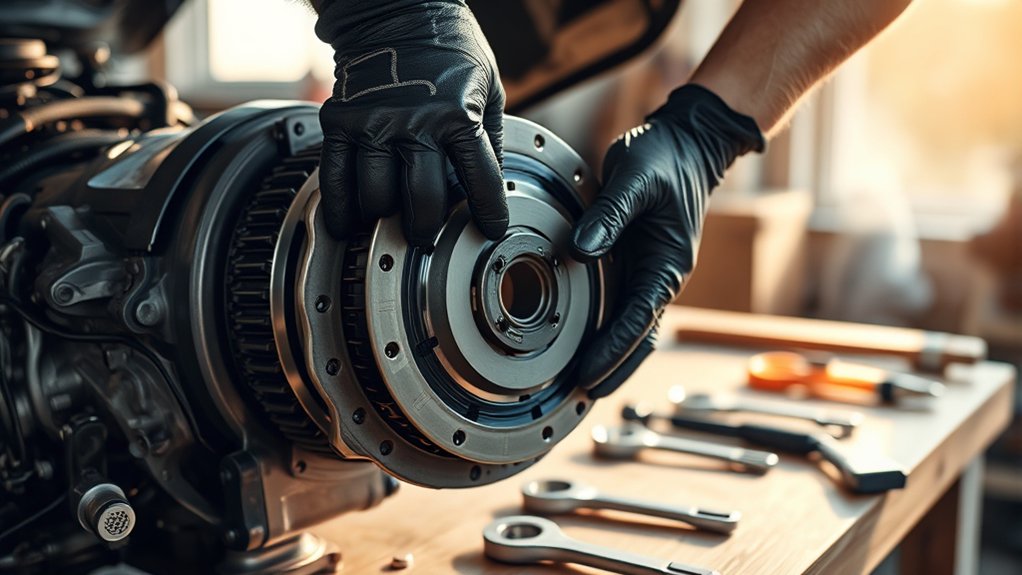
Clutch replacement time varies depending on several factors, including your vehicle’s make, model, and transmission type. Typically, clutch replacement usually takes about 3 to 5 hours. However, the duration can differ significantly based on these variables.
Manual transmissions often require more time since the transmission must be removed.
Simpler setups or front-wheel drive cars generally take less time to repair.
Additionally, your mechanic’s experience and the tools available can impact how quickly the job is completed.
Unexpected issues, such as worn parts or delays in obtaining replacements, can add hours or even days to the repair process.
Keep exploring if you want to understand how these factors affect your clutch replacement timeline.
Key Takeaways
- Clutch replacement typically takes 3 to 5 hours, depending on vehicle make, model, and complexity.
- Manual transmissions require more time due to transmission removal, while automatic and dual-clutch systems add complexity.
- Accessibility of the clutch assembly and vehicle design significantly affect repair duration.
- Additional repairs like flywheel resurfacing or parts delays can extend the total replacement time.
- Skilled mechanics with proper tools can reduce labor time and ensure efficient clutch replacement.
How Long Does Clutch Replacement Usually Take?
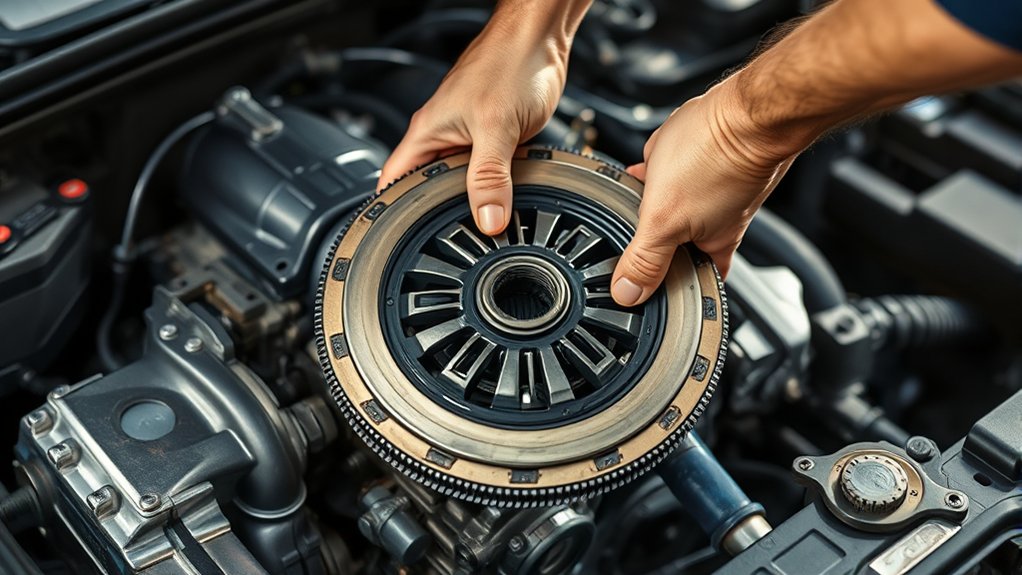
Although the exact time can vary depending on your vehicle’s make and model, clutch replacement usually takes between 3 to 5 hours. You’ll find that factors like the complexity of your car’s design and the experience of the mechanic influence how quickly the job gets done.
If your vehicle has a straightforward setup, the process tends to be quicker. On the other hand, cars with compact engine bays or additional components may require extra time to access and replace the clutch. Scheduling an appointment with a trusted mechanic can help you get a more accurate estimate based on your specific vehicle.
Being aware of this timeframe helps you plan your day and manage transportation needs while your car is in the shop.
What Parts and Steps Are Involved in Replacing a Clutch?
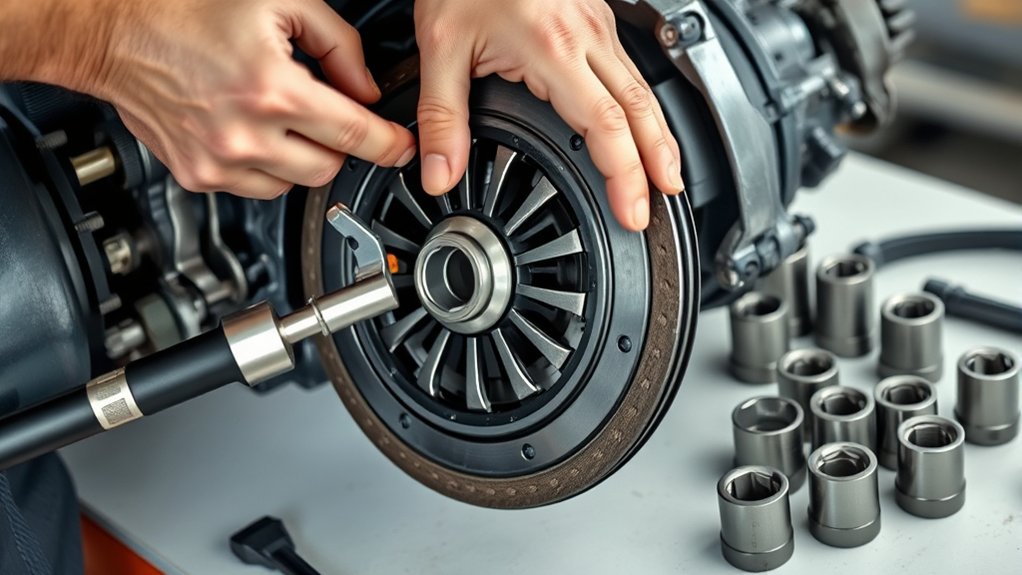
To replace your clutch, you’ll work with key parts like the clutch disc, pressure plate, and release bearing. The process involves carefully removing the transmission, swapping out worn components, and then reassembling everything.
Understanding these steps helps you see why the job takes the time it does.
Essential Clutch Components
Before you plunge into replacing a clutch, you need to understand the essential components involved. The clutch assembly mainly consists of the clutch disc, pressure plate, and flywheel. The clutch disc connects to the transmission input shaft and engages with the flywheel, which is attached to the engine.
The pressure plate applies force to the clutch disc, enabling power transfer from the engine to the transmission. You’ll also encounter the release bearing, which allows smooth disengagement when you press the clutch pedal, and the pilot bearing, supporting the transmission’s input shaft inside the flywheel. Knowing these parts helps you grasp what needs inspection or replacement.
Each component must be in good shape to ensure your vehicle shifts smoothly and efficiently once your clutch replacement is done.
Step-by-Step Replacement Process
Since replacing a clutch involves several intricate parts, you’ll want to follow a clear, step-by-step process to avoid mistakes. First, disconnect the battery and lift the vehicle.
Then, remove the transmission to access the clutch assembly. Next, take off the old clutch disc, pressure plate, and release bearing.
After inspecting the flywheel for wear, install the new clutch components carefully. Finally, reattach the transmission and reconnect everything.
| Step Number | Task | Key Parts Involved |
|---|---|---|
| 1 | Disconnect & lift vehicle | Battery, jack stands |
| 2 | Remove transmission | Transmission bolts |
| 3 | Remove old clutch | Clutch disc, pressure plate, release bearing |
| 4 | Inspect & replace parts | Flywheel, clutch kit |
| 5 | Reassemble | Transmission, bolts |
How Your Car’s Make and Model Affect Replacement Time
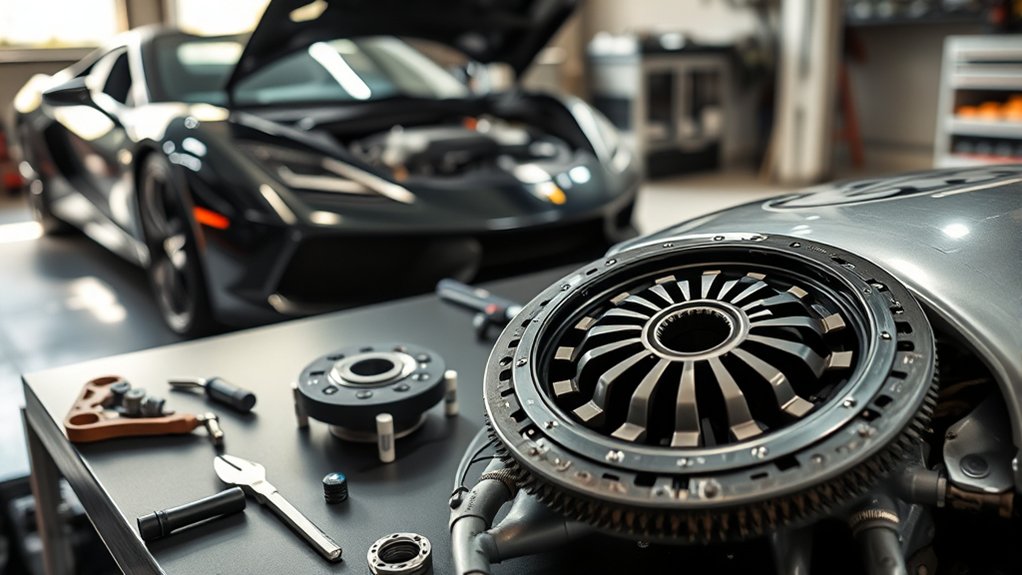
Although clutch replacement generally follows the same basic steps, the time it takes can vary considerably depending on your car’s make and model. Some vehicles have more accessible clutch assemblies, letting mechanics work faster, while others require removing additional components, which adds time. For example, compact cars often have simpler setups, making replacements quicker.
On the other hand, luxury or performance models might have tightly packed engine bays or specialized parts, extending the process. Additionally, vehicles with front-wheel drive usually allow easier access than rear-wheel or all-wheel drive cars. Knowing your specific make and model helps set realistic expectations for the repair duration.
How Transmission Type Changes Clutch Replacement Duration
If your car has a manual transmission, replacing the clutch usually takes longer than it would on an automatic. Manual transmissions require you to remove the entire transmission to access the clutch, which is a labor-intensive process. You’ll spend time detaching components like the driveshaft, axles, and shift linkages.
On the other hand, automatics don’t have a traditional clutch system, so the process involves replacing the torque converter or clutch packs inside the transmission, which can be quicker or require specialized equipment. Some dual-clutch transmissions combine elements of both, potentially adding complexity. Understanding your transmission type helps set realistic expectations for the job’s duration.
How Mechanic Experience and Tools Influence Replacement Time
Your clutch replacement time can vary a lot depending on the mechanic’s experience. Skilled mechanics work faster and more efficiently, especially when they have specialized tools designed for the job. These tools help reduce the time needed and improve the overall quality of the repair.
Mechanic Skill Impact
When a mechanic has extensive experience and the right tools, they can considerably reduce the time it takes to replace a clutch. You’ll notice that a skilled mechanic works efficiently without compromising quality. Their familiarity with different car models helps them anticipate challenges and avoid delays.
Here’s how their skill impacts replacement time:
- Quickly diagnose clutch issues
- Navigate complex components with ease
- Avoid unnecessary disassembly
- Maintain steady workflow even under pressure
- Use proper techniques to prevent damage
Specialized Tools Benefits
Although a mechanic’s experience plays an essential role, having the right specialized tools can substantially speed up clutch replacement. You’ll find that tools designed specifically for clutch jobs reduce guesswork and streamline each step, from removing the transmission to aligning the clutch disc.
Using precision tools also lowers the risk of damage, saving you time on repairs. Here’s a quick comparison of common tools and their benefits:
| Tool | Purpose | Time Saved (approx.) |
|---|---|---|
| Clutch Alignment Tool | Aligns clutch disc | 15-20 minutes |
| Transmission Jack | Supports transmission | 10-15 minutes |
| Torque Wrench | Ensures correct torque | 5-10 minutes |
| Impact Wrench | Removes bolts quickly | 10-12 minutes |
| Pry Bars | Separates components | 5-8 minutes |
Having these tools means you get a faster, safer clutch replacement.
Why Some Clutch Replacements Take a Full Day
Why does a clutch replacement sometimes stretch into a full day? It boils down to several factors that can slow down the process. When you’re getting your clutch replaced, expect these challenges to add time:
- Removing parts obstructing the clutch, like the transmission
- Dealing with rusted or seized bolts that need careful loosening
- Accessing tight spaces, requiring patience and precision
- Inspecting and prepping components for proper fit and function
- Ensuring all adjustments and tests are done correctly before reassembly
Each step demands attention to detail and care. If you’re in a hurry, know that rushing can lead to mistakes. Taking the full day guarantees your clutch replacement is done right and lasts longer.
How Extra Repairs Can Extend Clutch Replacement Time
When you replace your clutch, mechanics might find other issues that need fixing, which adds to the diagnosis time. Waiting for parts can also cause delays, especially if they’re not readily available.
These extra repairs naturally increase the overall labor time, extending how long your car is in the shop.
Diagnosing Additional Issues
Since clutch replacement often involves dismantling several components, mechanics may uncover additional issues that require attention. When this happens, your repair time can extend beyond the initial estimate. You’ll want to be prepared for these common findings:
- Worn or damaged flywheel needing resurfacing or replacement
- Leaking transmission seals that must be fixed
- Faulty release bearing requiring replacement
- Damaged clutch fork or hydraulic components
- Excessive wear on pilot bearings or bushings
Each extra repair adds labor time and complexity. Your mechanic will usually inform you before proceeding with any additional work.
Being aware of these potential issues helps you understand why a straightforward clutch job can sometimes turn into a more involved repair, affecting how long your vehicle stays in the shop.
Parts Availability Delays
Although your mechanic may identify all needed repairs quickly, parts availability can greatly delay completing your clutch replacement. If the required components aren’t in stock, you might wait days or even weeks for them to arrive.
This delay extends the total repair time, keeping your vehicle off the road longer than expected.
Here’s how parts availability impacts your clutch replacement timeline:
| Part Needed | Availability Status | Estimated Delay |
|---|---|---|
| Clutch Kit | In Stock | None |
| Release Bearing | Backordered | 3-5 Days |
| Flywheel | Special Order | 1-2 Weeks |
Knowing this helps you plan better and manage expectations during your clutch repair.
Labor Time Increases
Parts availability can slow your clutch replacement, but unexpected issues during the repair often add more time. When your mechanic uncovers extra damage or worn components, the labor time can increase considerably.
You should be prepared for these common surprises that extend the job:
- Damaged flywheel needing resurfacing or replacement
- Worn or broken release bearing
- Faulty clutch master or slave cylinder requiring repair
- Transmission fluid leaks discovered during disassembly
- Corroded or seized bolts complicating removal
Each of these problems demands additional work, sometimes hours more. If you’re not ready for these potential setbacks, your clutch replacement won’t be as quick as you hoped.
Communicate with your mechanic to understand possible delays and keep your expectations realistic.
What Signs Show Your Clutch Needs Replacement Soon?
When your clutch starts showing signs of wear, you’ll want to address the issue before it leads to more serious damage. Pay attention if you notice your clutch pedal feels spongy or sticks to the floor. If the engine revs rise without a corresponding increase in speed, your clutch is slipping and likely worn out.
You might also experience difficulty shifting gears or hear grinding noises when changing gears. A burning smell during heavy acceleration is another red flag. Additionally, if the clutch engages very high on the pedal travel or feels inconsistent, it’s time to get it checked.
Ignoring these signs can lead to complete clutch failure, leaving you stranded and facing higher repair costs. Stay alert to these symptoms to keep your car running smoothly.
How to Prepare Your Car and Schedule for Clutch Replacement
Before you schedule your clutch replacement, make sure you understand the process and prepare your car accordingly. Proper preparation helps the repair go smoothly and minimizes downtime.
Here’s how you can get ready:
- Check your vehicle’s manual for any specific instructions.
- Remove any personal items from the car to avoid damage or loss.
- Arrange alternative transportation for the day your car is in the shop.
- Confirm the appointment with your mechanic and ask about estimated time frames.
- Make sure your car is in a safe, accessible location for pickup and drop-off.
What to Expect During Clutch Replacement Testing and Adjustments
Once your car is in the shop and the clutch replacement is underway, you’ll want to know what happens next. After installing the new clutch, the mechanic will perform testing to guarantee everything works smoothly. They’ll check for proper clutch engagement and disengagement, making sure the pedal feels right and there’s no slipping or unusual noise.
Adjustments may be necessary to fine-tune clutch cable tension or hydraulic fluid levels. You might also notice a brief test drive to verify shifting performance under real conditions. These steps guarantee your clutch operates safely and efficiently before you drive away.
Clutch Replacement Time Estimates for Popular Car Brands
Although clutch replacement times can vary widely, knowing the average duration for popular car brands helps you plan better. Generally, the complexity of your vehicle’s design and the availability of parts influence how long the job takes.
Here’s a quick look at typical clutch replacement times for some common brands:
- Toyota: Around 3 to 5 hours, thanks to straightforward engineering
- Honda: Usually 4 to 6 hours, depending on the model’s transmission layout
- Ford: Often 5 to 7 hours, especially for trucks and larger vehicles
- BMW: Can take 6 to 8 hours due to intricate components and tight spaces
- Volkswagen: Typically 4 to 6 hours, but varies with engine type
Knowing these estimates helps you schedule your repair without surprises.
Tips to Speed Up Your Clutch Replacement Experience
If you want to minimize downtime and get back on the road quickly, taking a few proactive steps can speed up your clutch replacement. First, schedule your appointment in advance and confirm parts availability to avoid delays. Bring your vehicle in with a clear description of symptoms, so the mechanic can diagnose efficiently.
Opting for a trusted, experienced mechanic guarantees the job gets done right without repeated visits. While the car is in the shop, arrange alternative transportation to prevent stress. Also, keep all necessary documentation and service history handy to help the technician work faster.
Finally, ask your mechanic about any preparatory maintenance you can handle yourself, like checking fluid levels, to streamline the entire process and reduce total repair time.
Frequently Asked Questions
What Is the Average Cost of a Clutch Replacement?
You can expect to pay between $500 and $1,500 for a clutch replacement, depending on your car’s make, model, and labor costs. Some luxury or performance vehicles might cost even more, so budget accordingly.
Can I Drive My Car With a Failing Clutch?
You shouldn’t drive with a failing clutch because it can cause slipping, difficulty shifting, and potential damage.
It’s safer to get it checked and repaired promptly to avoid being stranded or facing costly repairs later.
How Often Should a Clutch Be Inspected or Serviced?
You should inspect your clutch every 30,000 to 50,000 miles, as 70% of clutch failures happen due to lack of maintenance. Regular checks catch wear early, keeping your car running smoothly and avoiding costly repairs.
Performing timely inspections helps ensure your vehicle’s performance and safety. Ignoring clutch maintenance can lead to sudden breakdowns and expensive replacements.
Scheduling routine checks with a professional mechanic can extend the lifespan of your clutch and save money in the long run.
Are There Aftermarket Clutch Options Available?
Yes, you’ll find plenty of aftermarket clutch options tailored to different performance levels and budgets. They often offer better durability or enhanced grip compared to stock parts, so you can choose one that fits your driving style perfectly.
What Warranty Typically Covers Clutch Replacement Parts?
You’ll typically find clutch replacement parts covered by a manufacturer’s warranty or a warranty from the parts supplier, usually lasting 12 months or 12,000 miles.
Always check specific terms before purchasing or installing parts.
Conclusion
So, you’re ready to replace your clutch and wondering how long it’ll take? Ironically, while you might expect a quick fix, clutch replacement often demands a good chunk of your day—sometimes even longer.
But don’t worry, with the right prep and a skilled mechanic, you’ll be back on the road sooner than you think. Just remember, patience is part of the package when it comes to clutch repairs!
In conclusion, clutch replacement time can vary, but understanding the process and working with experienced professionals ensures the best results. Proper clutch replacement and timely repairs will keep your vehicle running smoothly for miles to come.

