


To unclog a fuel filter in seven easy steps, start by recognizing common signs like engine sputtering, poor acceleration, or stalling. These symptoms often indicate a clogged fuel filter that restricts fuel flow to the engine.
Gathering essential tools such as wrenches, screwdrivers, gloves, and a fuel catch container will prepare you for the job.
Next, locate the fuel filter using your vehicle’s manual to ensure accuracy. Safely relieve the fuel system pressure by disconnecting the battery and removing the fuel pump fuse to avoid spills or accidents.
Carefully remove the filter, then either clean it if reusable or replace it with a new one.
Reinstall the fuel filter, making sure all connections are tight and secure.
Finally, test your vehicle’s performance to confirm the issue is resolved.
By following these straightforward steps, you can confidently unclog your fuel filter and restore smooth engine operation.
Key Takeaways
- Relieve fuel system pressure by disconnecting the battery, removing the fuel pump fuse, and running the engine until it stalls.
- Locate the fuel filter using the owner’s manual and identify it as a cylindrical or canister-shaped component.
- Use proper tools like wrenches and fuel line disconnect tools to carefully remove the clogged fuel filter.
- Catch any draining fuel in a sealed container and wear gloves and safety glasses for protection during the process.
- Install the cleaned or new fuel filter in the correct orientation, tighten connections securely, and reconnect the fuel system.
Spot the Signs of a Clogged Fuel Filter
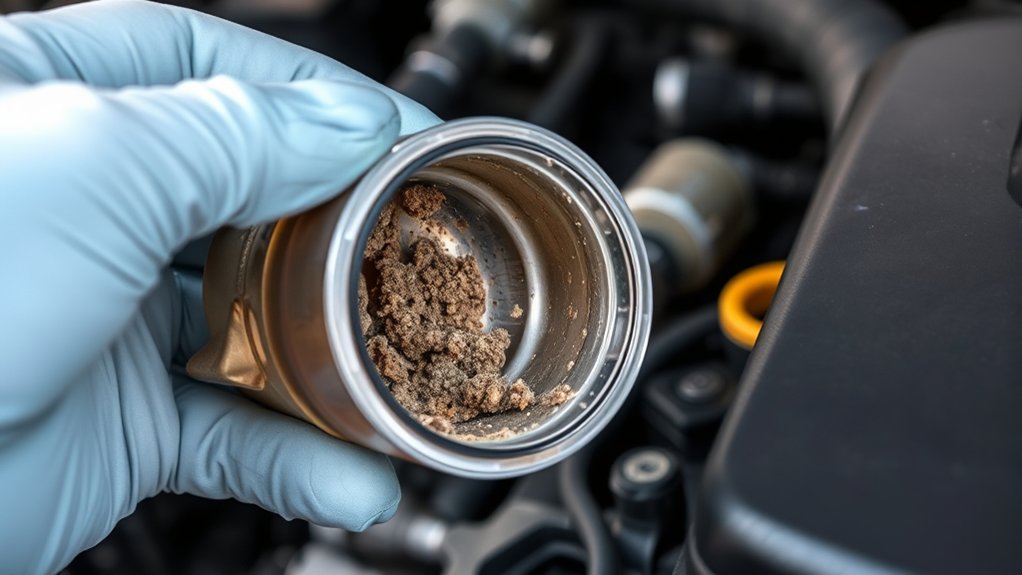
How can you tell if your fuel filter is clogged? You’ll notice your engine struggling to start or sputtering during acceleration. If your vehicle hesitates or stalls, especially when you hit higher speeds or climb hills, that’s a red flag.
You might also experience a drop in fuel efficiency because the clogged filter restricts fuel flow, forcing the engine to work harder. Another sign is unusual engine misfires or rough idling. Pay attention to any sudden loss of power or hesitation when you press the gas pedal.
If you detect these symptoms, your fuel filter could be the culprit. Catching these signs early helps prevent more serious engine issues, so keep an eye out and act promptly.
What Tools You’ll Need to Unclog Your Fuel Filter
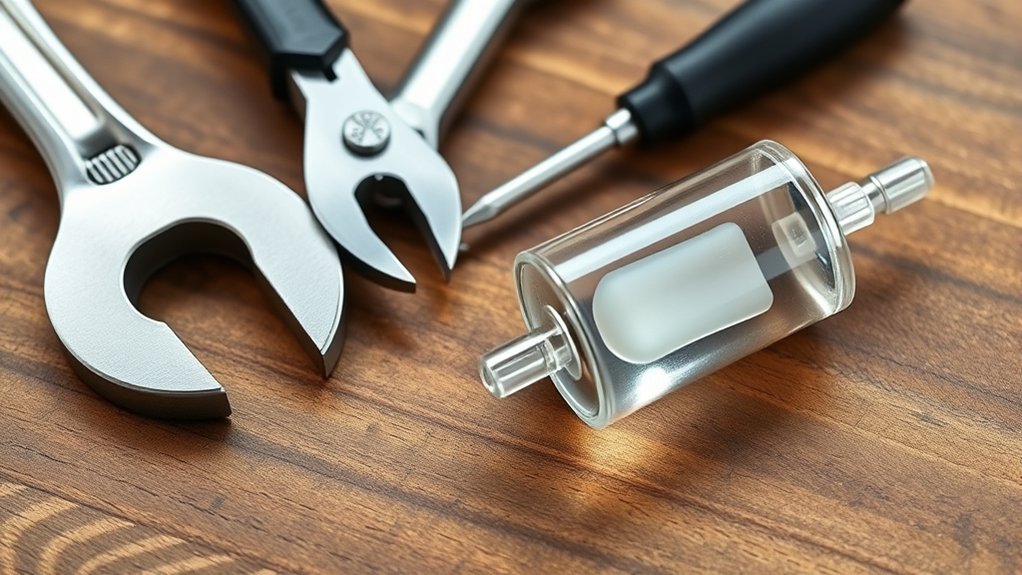
Before you start unclogging your fuel filter, gather the right tools to make the job easier and safer. Having everything ready helps you work efficiently and avoid interruptions.
Here’s a quick list of essential tools:
| Tool | Purpose | Tip |
|---|---|---|
| Wrenches | To loosen and tighten fittings | Use the right size |
| Screwdrivers | To remove clamps or covers | Flathead or Phillips |
| Container | To catch fuel draining out | Use a sealed, safe one |
Additionally, gloves and safety glasses protect you from fuel spills. A rag or shop towel is handy for cleanup. With these tools, you’re set to tackle the job confidently and safely.
Find the Fuel Filter in Your Vehicle
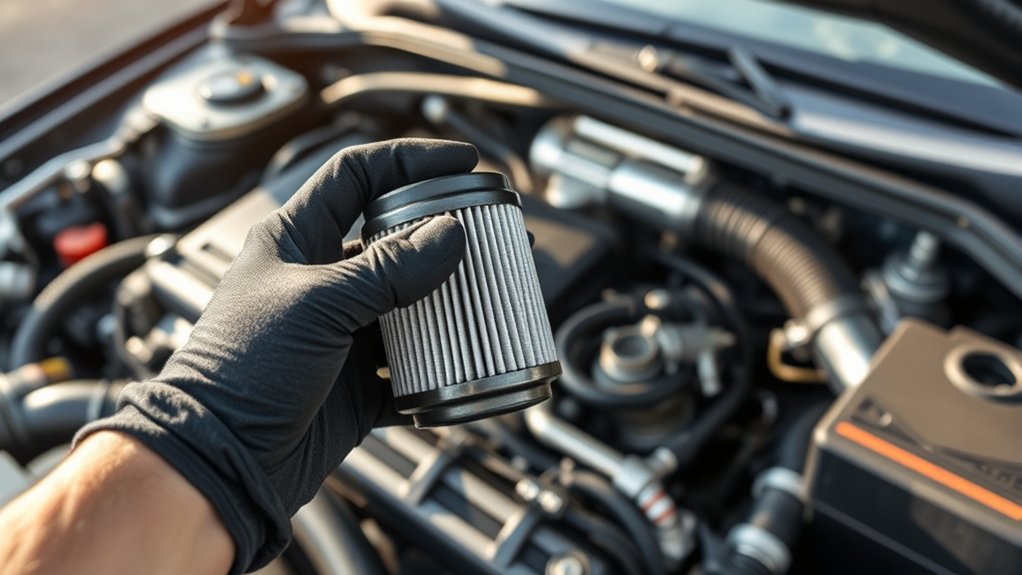
Where exactly is your fuel filter located? It depends on your vehicle’s make and model. Most fuel filters sit along the fuel line, either under the car near the fuel tank or in the engine bay.
Some vehicles have an in-line filter mounted on the frame or under the car, while others place it inside the fuel tank as part of the fuel pump assembly. To find it, start by checking your owner’s manual or searching online for your specific vehicle. Look for a cylindrical or canister-shaped component connected to the fuel line with metal or rubber hoses.
Identifying the fuel filter correctly is essential before you start unclogging it, so take your time and make sure you’ve pinpointed the right part.
How to Safely Relieve Fuel System Pressure
Now that you’ve located your fuel filter, the next step is to safely relieve the pressure in the fuel system. Start by disconnecting the vehicle’s battery to prevent any sparks. Next, find the fuel pump fuse or relay in the fuse box and remove it.
Then, start the engine and let it run until it stalls, which uses up the remaining fuel pressure. Turn the ignition off to guarantee no fuel is pumped during the process. If your vehicle has a fuel pressure relief valve, carefully attach a rag and press the valve to release any leftover pressure—wear safety glasses and gloves.
Taking these precautions helps you avoid fuel spray, which can be dangerous and messy. Once the pressure’s relieved, you’re ready for the next step.
Remove the Fuel Filter Without Causing Damage
To remove the fuel filter without causing damage, you’ll need the right tools that fit your specific filter type. Take your time and use careful techniques to avoid breaking any connections or spilling fuel.
Following these steps will help you keep the fuel system intact and ready for cleaning.
Proper Tool Selection
Although selecting the right tools might seem straightforward, using improper equipment can easily damage your fuel filter or its connections. To avoid costly mistakes, you need the correct tools that fit well and provide control.
Here’s what you should use:
- Fuel line disconnect tool: Designed to release clips without bending or breaking them.
- Wrenches or spanners: Choose the right size to avoid rounding off nuts or bolts.
- Pliers with soft jaws: Prevent squeezing too hard and damaging delicate fittings.
- Safety gloves: Protect your hands while ensuring a good grip on slippery parts.
Using these tools properly sets you up for a smooth, damage-free fuel filter removal.
Safe Removal Techniques
Having the right tools in hand makes removing the fuel filter much easier and safer. First, relieve the fuel system pressure to prevent fuel spray. Locate the fuel filter and clean the surrounding area to avoid debris entering the fuel line.
Use the appropriate wrench or fuel line disconnect tool to carefully loosen the fittings without twisting or bending the filter. Support the filter as you disconnect it to avoid damaging the fuel lines. Always wear safety goggles and gloves to protect yourself from fuel exposure.
Once detached, cap the fuel lines immediately to prevent contamination and fuel leakage. Handle the filter gently to avoid damaging seals or connectors. Following these steps guarantees you remove the fuel filter without causing damage or creating hazards.
Clean or Replace Your Fuel Filter the Right Way
When you notice your engine struggling or fuel efficiency dropping, it’s a clear sign you should clean or replace your fuel filter. Here’s how to do it right:
- Locate the filter—refer to your vehicle’s manual for the exact spot.
- Depressurize the fuel system—this prevents fuel spray and makes removal safer.
- Remove the old filter carefully, noting the flow direction marked on it.
- Install the new or cleaned filter in the correct orientation, then secure all connections tightly.
Be sure to use the right replacement filter specified for your vehicle. Avoid forcing parts and always wear gloves to protect your hands.
Following these steps ensures a clean fuel system and better engine performance.
Test Your Vehicle After Unclogging the Fuel Filter
After you’ve replaced or cleaned your fuel filter, it’s important to check how your vehicle runs to confirm the problem is fixed. Start by turning on the engine and listening for smooth, steady operation without sputtering or hesitation. Take your car for a short drive, paying attention to acceleration and responsiveness.
If the engine runs smoothly and performs well, your fuel flow is likely restored. Watch for any signs of stalling or power loss, which could indicate further issues. Also, check for leaks around the fuel filter area.
If everything looks and feels normal, you’ve successfully unclogged the filter. If problems persist, you may need to inspect other fuel system components or consult a professional mechanic to avoid further damage.
Frequently Asked Questions
Can a Clogged Fuel Filter Affect Fuel Economy?
Yes, a clogged fuel filter can reduce your fuel economy because it restricts fuel flow, making your engine work harder.
You’ll notice decreased performance and increased fuel consumption until you replace or clean the filter.
How Often Should I Replace My Fuel Filter?
You should replace your fuel filter every 20,000 to 40,000 miles, depending on your vehicle. Don’t wait until problems start—doing it on time keeps your engine running smoothly and avoids costly repairs down the road.
Is It Safe to Drive With a Clogged Fuel Filter?
No, it’s not safe to drive with a clogged fuel filter. You’ll experience poor engine performance, stalling, and potential damage.
Replace it promptly to keep your vehicle running smoothly and avoid costly repairs.
What Causes a Fuel Filter to Clog Prematurely?
You’ll find that poor-quality fuel, dirt, rust, or debris in your tank usually causes your fuel filter to clog prematurely. Neglecting regular maintenance and ignoring fuel system issues can also speed up clogging, so stay vigilant.
Can Using Fuel Additives Prevent Filter Clogging?
You wouldn’t paint a masterpiece with dirty brushes, so you shouldn’t ignore fuel additives—they can help keep your fuel filter clean by dissolving deposits.
Still, relying solely on additives won’t guarantee clog-free performance every time.
Conclusion
Unclogging your fuel filter might seem tricky, but following these simple steps makes it manageable—even if you’re not a pro. Don’t worry about messing things up; taking your time and working carefully guarantees a smooth process.
Once done, you’ll notice improved engine performance and fuel efficiency. So, roll up your sleeves and give it a try—you’ll save money and gain confidence in maintaining your vehicle!
By learning how to unclog a fuel filter, you ensure your car runs smoothly and avoid costly repairs. Regular maintenance like this keeps your fuel system clean and your engine in top shape. Start today and experience the benefits of a well-maintained vehicle.

