


You should change your diesel fuel filter every 10,000 to 25,000 miles to ensure optimal engine performance and fuel efficiency. Regular diesel fuel filter replacement is crucial because it traps contaminants that can harm your engine.
Ignoring this maintenance can lead to reduced engine power, rough idling, or noticeable fuel odors.
Replacing your fuel filter on time keeps your engine running smoothly and prevents costly repairs. Always use quality filters and follow your vehicle’s maintenance schedule, especially if you drive in dusty or harsh conditions.
Proper care safeguards engine components and guarantees the correct flow of fuel.
By maintaining your diesel fuel filter regularly, you protect your engine and extend its lifespan. Keep going, and you’ll discover how to pick the right filter and maintain your engine best.
Key Takeaways
- Change the diesel fuel filter every 10,000 to 25,000 miles or as recommended in the vehicle owner’s manual.
- Replace the filter immediately if you notice engine sluggishness, stalling, or warning lights related to fuel issues.
- Regularly drain water from the fuel filter and inspect fuel lines to prevent contamination and clogging.
- Use high-quality filters with appropriate micron ratings (2-10 microns) for effective fuel filtration and engine protection.
- Warm up the engine in cold weather before heavy use to prevent fuel system damage and ensure optimal performance.
Why Regular Diesel Fuel Filter Maintenance Matters
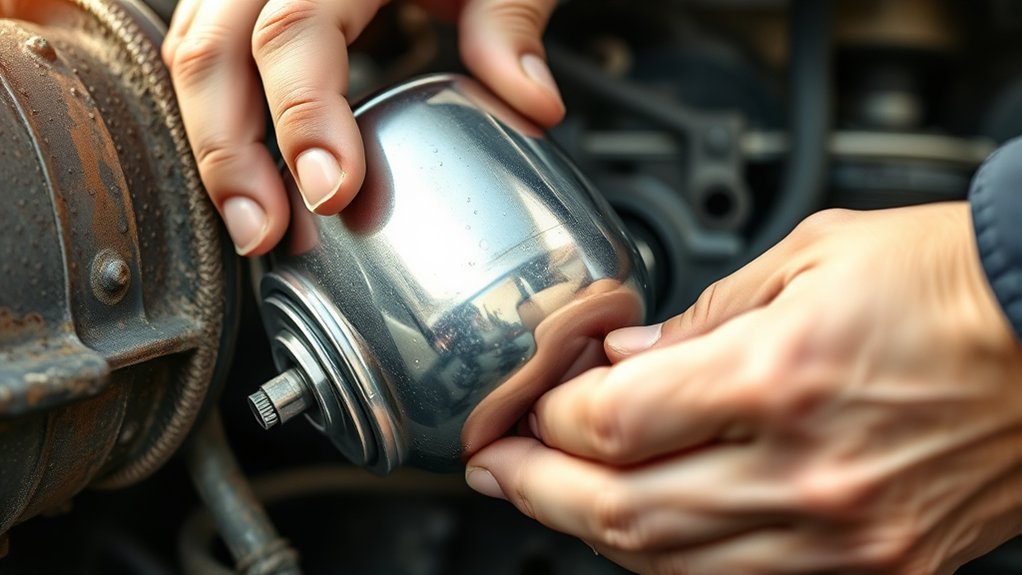
Although it’s easy to overlook, maintaining your diesel fuel filter regularly keeps your engine running smoothly and prevents costly repairs. Your fuel filter traps dirt, rust, and other contaminants before they reach the engine. If you skip maintenance, these impurities can clog the filter, restricting fuel flow and causing your engine to struggle or stall.
You might also experience reduced fuel efficiency and power loss. Regular upkeep guarantees clean fuel reaches the engine, optimizing performance and extending its lifespan. Plus, it protects sensitive components like injectors and pumps from damage.
Key Signs Your Diesel Fuel Filter Needs Changing
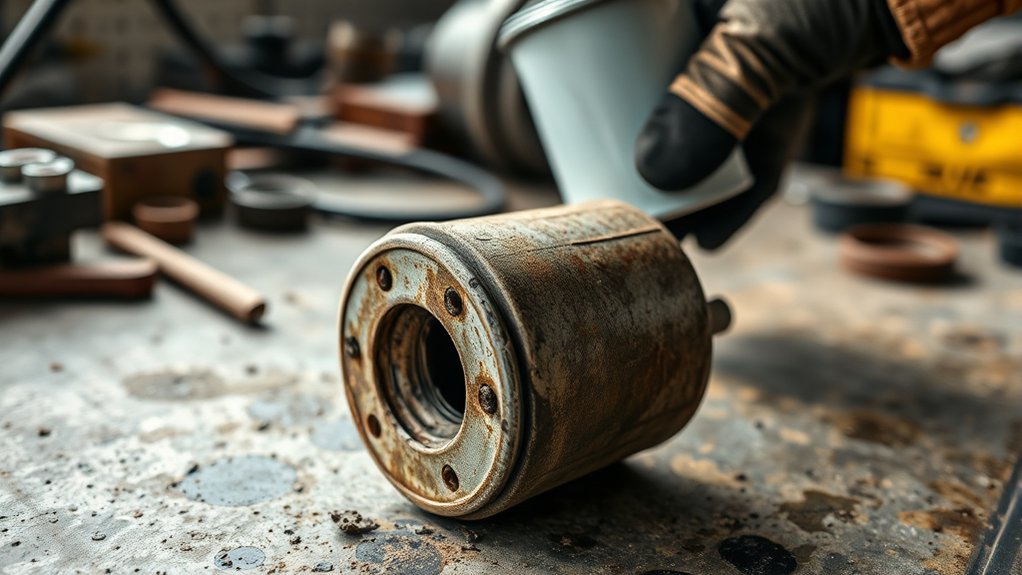
Regular maintenance keeps your diesel engine running efficiently, but knowing when to replace the fuel filter can be tricky. You need to watch for specific signs that signal the filter’s time for a change. Ignoring these can lead to poor performance or engine damage.
Look out for:
- Reduced engine power or sluggish acceleration
- Difficulty starting your engine or frequent stalling
- Noticeable decrease in fuel efficiency
- Unusual noises from the fuel pump or engine
- Warning lights on the dashboard related to fuel or engine systems
If you notice any of these symptoms, it’s a strong indication that your diesel fuel filter is clogged or dirty and needs replacement to keep your engine running smoothly.
How Often Should You Replace Your Diesel Fuel Filter?
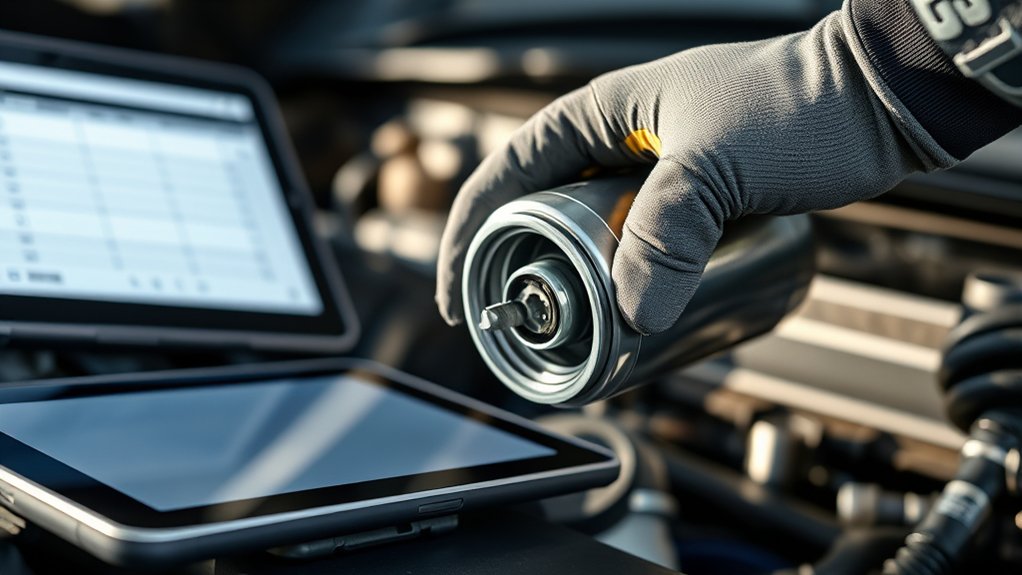
You should replace your diesel fuel filter based on the manufacturer’s recommended intervals, usually every 10,000 to 25,000 miles. However, if you notice signs of filter wear like reduced engine performance or difficulty starting, don’t wait to change it.
Staying proactive helps keep your engine running smoothly and prevents costly damage.
Recommended Replacement Intervals
Since diesel fuel filters play a crucial role in protecting your engine from contaminants, knowing when to replace them is necessary. Generally, manufacturers recommend changing the filter every 10,000 to 25,000 miles, but this varies based on your driving conditions and fuel quality.
To maintain peak performance, consider these factors:
- Follow your vehicle’s owner manual guidelines.
- Replace more frequently if you drive in dusty or harsh environments.
- Change the filter during every major service interval.
- Use quality replacement filters to ensure proper filtration.
- Monitor fuel quality; contaminated fuel accelerates filter clogging.
Sticking to these intervals helps prevent engine damage and keeps your diesel running smoothly. Always prioritize timely replacement to avoid costly repairs down the road.
Signs of Filter Wear
Knowing the recommended replacement intervals sets a good baseline, but paying attention to signs of filter wear can help you avoid unexpected engine issues. If you notice your engine struggling to start or running roughly, your diesel fuel filter might be clogged. Reduced engine power during acceleration or frequent stalling are also red flags.
You might smell fuel odors or see black smoke from the exhaust, suggesting poor fuel combustion caused by a dirty filter. Additionally, check for warning lights on your dashboard related to fuel or engine performance. If any of these signs appear, it’s time to inspect and likely replace your diesel fuel filter.
Staying alert to these symptoms ensures your engine runs smoothly and prevents costly repairs down the road.
What You Need to Replace Your Diesel Fuel Filter
To replace your diesel fuel filter, you’ll need a few essential tools like wrenches and a drain pan to catch any spills. Picking the right filter is just as important, so make sure it matches your vehicle’s specifications.
With the proper tools and filter on hand, you’ll be ready to get the job done efficiently.
Essential Replacement Tools
Before you start replacing your diesel fuel filter, gather the essential tools to make the job smooth and efficient. Having the right gear prevents delays and guarantees a clean, precise replacement. Here’s what you’ll need:
- Wrenches or socket set (commonly 10mm or 13mm) for loosening filter housing bolts
- Screwdrivers (flathead and Phillips) for clamps and covers
- A drain pan to catch fuel spills and avoid messes
- Replacement fuel filter designed for your diesel engine
- Clean rags or shop towels for wiping spills and cleaning the area
With these tools ready, you’ll tackle the replacement confidently. Avoid rushing or improvising with incorrect tools, as that might damage components or cause leaks.
Next, you’ll learn how to choose the right filter for your engine.
Choosing The Right Filter
While selecting a diesel fuel filter might seem straightforward, choosing the right one for your engine is crucial to guarantee peak performance and avoid damage.
You need to consider factors like compatibility, filtration efficiency, and durability. Picking a filter that matches your engine’s specifications ensures your diesel system stays clean and runs smoothly.
Here’s a quick guide to help you choose:
| Feature | What to Look For | Why It Matters |
|---|---|---|
| Compatibility | Exact model fit | Prevents leaks and damage |
| Filtration Rating | Micron size (2-10 microns) | Captures contaminants |
| Material Quality | Durable casing and media | Ensures long filter life |
Use this table to find a filter that fits your needs perfectly.
Step-by-Step Guide to Changing Your Diesel Fuel Filter
Although changing a diesel fuel filter may seem intimidating at first, you can handle the process efficiently with the right tools and steps. Start by locating the fuel filter and gathering necessary tools like wrenches and a container for old fuel.
Changing a diesel fuel filter is manageable with the right tools and clear, simple steps.
Then, follow these steps:
- Turn off the engine and relieve fuel system pressure.
- Place a container under the filter to catch spills.
- Loosen and remove the old filter carefully.
- Install the new filter, ensuring it’s properly sealed.
- Prime the fuel system to remove air before restarting.
How to Choose the Right Diesel Fuel Filter for Your Engine
Choosing the right diesel fuel filter matters because it directly affects your engine’s performance and longevity. Start by checking your vehicle’s manual to find the recommended filter type and specifications. Look for filters that meet or exceed OEM standards to guarantee compatibility and efficiency.
Consider the filter’s micron rating—it determines how well it traps contaminants; a lower rating means finer filtration but may reduce flow if too restrictive. Also, pay attention to the filter’s capacity to hold dirt, especially if you drive in dusty conditions. Opt for a brand with a solid reputation and good reviews to avoid quality issues.
Finally, verify the filter fits your engine model perfectly to avoid leaks and installation problems. Choosing wisely keeps your diesel engine running smoothly and protects it from damage.
Troubleshooting Common Diesel Fuel Filter Problems After Replacement
If your diesel engine starts acting up after replacing the fuel filter, you might be dealing with common issues that are often easy to fix. First, check for air trapped in the fuel lines, which can cause rough idling or stalling.
Next, confirm the filter is installed correctly—an improper fit can lead to leaks or poor fuel flow. Also, inspect for contaminated or incorrect fuel, as this affects performance. Don’t overlook clogged fuel lines or a faulty fuel pump, which might mimic filter problems.
Finally, verify that the replacement filter matches your engine’s specifications.
- Air trapped in fuel lines
- Incorrect filter installation
- Using contaminated or wrong fuel
- Clogged fuel lines
- Faulty fuel pump
Addressing these will help restore your engine’s smooth operation.
Tips to Keep Your Diesel Engine Running Smoothly
To keep your diesel engine running smoothly, you need to stay proactive with regular maintenance and timely inspections. Always use high-quality fuel and replace your diesel fuel filter according to the manufacturer’s recommendations to prevent contaminants from clogging the system. Check for water accumulation in the fuel filter and drain it regularly to avoid corrosion and poor engine performance.
Keep an eye on your engine’s air filter and replace it when dirty to ensure proper airflow. Regularly inspect fuel lines and connections for leaks or damage. Also, warm up your engine before heavy use, especially in cold weather, to reduce wear.
Following these tips helps you avoid costly repairs and keeps your diesel engine efficient and reliable.
Frequently Asked Questions
Can Diesel Fuel Filters Improve Fuel Efficiency?
Yes, diesel fuel filters can improve your fuel efficiency by keeping contaminants out of the engine. When your filter’s clean, your engine runs smoother and burns fuel more effectively, saving you money and boosting performance.
Are Diesel Fuel Filters Recyclable?
Think of your diesel fuel filter as a worn canvas; yes, you can recycle it, but it needs special handling. Don’t toss it in regular bins—take it to hazardous waste centers where it can be properly processed and reborn.
What Causes Diesel Fuel Filter Clogging Besides Dirt?
You’ll find diesel fuel filters clogging not just from dirt but also from water contamination, microbial growth, and degraded fuel additives. These factors create sludge and blockages, reducing fuel flow and harming your engine’s performance.
Can Using Additives Extend Fuel Filter Life?
You might think additives are magic, but they can actually extend your fuel filter’s life by cleaning deposits and improving fuel quality.
Still, don’t rely solely on them; regular filter changes are essential for your engine’s health.
How Do Diesel Fuel Filters Differ by Vehicle Type?
Diesel fuel filters differ by vehicle type in size, filtration level, and design. You’ll find heavier-duty filters in trucks for higher contaminants, while smaller engines use compact filters. Always match the filter to your vehicle’s specs for best performance.
Conclusion
Think of your diesel fuel filter as a guardian at the gate, protecting your engine’s heart from harmful intruders. Changing it on time keeps the flow pure and steady, just like clearing a river of debris ensures life downstream thrives.
By staying attentive and replacing your filter when needed, you’re not just maintaining a part—you’re nurturing the lifeblood of your engine. This practice guarantees smooth journeys and long-lasting performance every mile you drive.
Regular diesel fuel filter changes are essential for optimal engine health and efficiency. Don’t overlook the importance of timely maintenance to keep your diesel engine running strong.

