

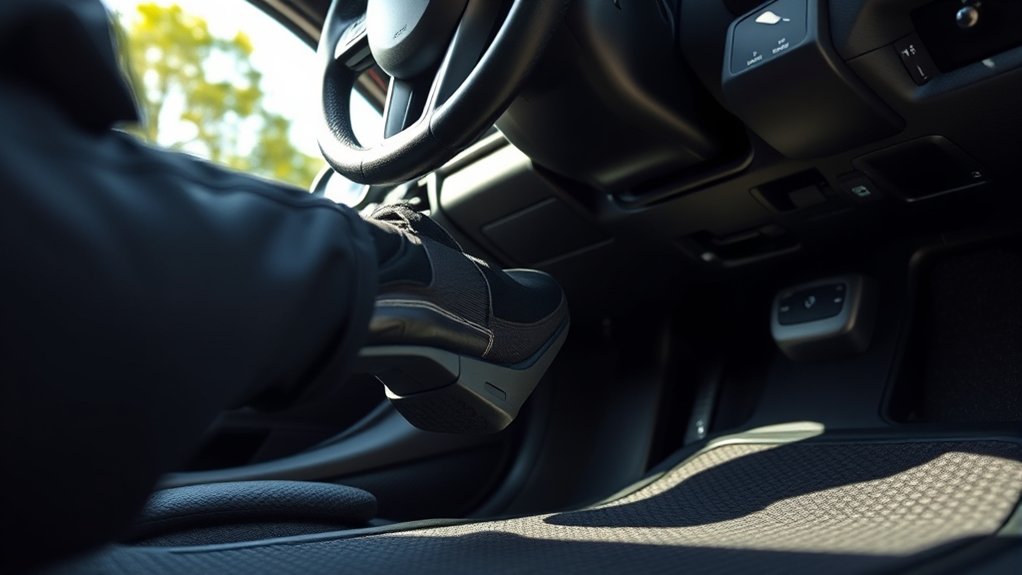
To clutch kick in 10 steps effectively, it’s important to understand the basics of clutch control and weight transfer. Clutch kicking is a drifting technique that involves quickly engaging and disengaging the clutch to break rear traction.
Mastering this skill requires practice and a responsive clutch pedal that allows you to find the bite point easily.
First, accelerate to your desired speed, then quickly depress the clutch pedal. Tap the brake briefly to shift the car’s weight forward, increasing grip on the front tires.
Next, release the clutch while giving a sharp throttle blip to break rear traction and initiate the drift.
Steer smoothly to maintain control throughout the maneuver. Adjust your timing and input as needed based on the car’s response.
Keep practicing this rhythm consistently to improve your clutch kicking technique. Learning these finer details will help you master clutch kicking perfectly and enhance your drifting skills.
Key Takeaways
- Depress the clutch pedal quickly while maintaining steady speed approaching the turn.
- Tap the brake briefly to shift weight forward for better rear traction break.
- Release the clutch smoothly while giving a sharp throttle blip to transfer torque to rear wheels.
- Coordinate clutch release and throttle input to induce controlled oversteer and initiate the drift.
- Use subtle steering adjustments to maintain a balanced, smooth drift through the corner.
What Is Clutch Kicking and Why Use It in Racing Games?
Although it might sound complex, clutch kicking is a simple technique that helps you quickly break traction and initiate a controlled slide in racing games. You use it by rapidly pressing and releasing the clutch pedal while maintaining throttle, causing a sudden surge in engine speed. This jolt breaks the rear wheels’ grip, letting you slide into corners more aggressively.
It’s especially useful when tight turns demand quick adjustments or when you want to maintain speed through a drift. Clutch kicking gives you better control over your car’s angle and momentum, making it easier to navigate challenging tracks.
If you want to improve your racing skills, mastering clutch kicking lets you handle corners with precision and flair, giving you an edge over opponents.
Master Your Controls and Tune Your Car Setup for Clutch Kicking
Before you can effectively clutch kick, you need to master your controls and fine-tune your car setup to respond accurately. Start by familiarizing yourself with your clutch, brake, and throttle inputs—smooth, precise control is key. Adjust your controller or wheel sensitivity so you can quickly engage and release the clutch without delay.
Next, tune your car’s drivetrain and suspension settings to balance power delivery and traction; too much grip can kill the slide, while too little makes control difficult. Ideally, soften the suspension slightly and set the differential to allow easier wheel spin. Also, optimize gear ratios for quick throttle response during the clutch kick.
How to Clutch Kick: Step-by-Step Execution Guide
Now that you’ve mastered your controls and tuned your setup, it’s time to focus on preparing your clutch properly.
You’ll learn exactly when and how to execute the clutch kick for maximum effect.
Follow each step carefully to get the timing and feel just right.
Preparing Your Clutch Setup
Since mastering your clutch setup directly impacts your clutch kick’s effectiveness, you’ll want to verify everything is dialed in perfectly. Start by checking your clutch pedal’s travel—too much free play can delay engagement, so adjust it to a firm, responsive feel. Make sure your clutch engages smoothly without slipping or grabbing.
Inspect the hydraulic system for leaks or air bubbles and bleed it if necessary to maintain consistent pressure. If your car has a cable clutch, ensure the cable tension is just right—not too loose or tight. Finally, familiarize yourself with your car’s specific clutch bite point; this awareness lets you modulate the clutch precisely when you initiate a kick.
A well-prepared setup gives you the confidence and control needed for a clean, effective clutch kick.
Executing the Clutch Kick
With your clutch setup dialed in, you’re ready to put it to work. Start by accelerating to your desired speed, then quickly depress the clutch pedal. Immediately tap the brake to shift the weight forward.
As you release the clutch, give the throttle a sharp blip to break rear traction and initiate the slide. Timing is key—too slow or too fast can ruin the maneuver.
Here’s a quick breakdown:
| Step | Action |
|---|---|
| 1. Accelerate | Build speed |
| 2. Clutch & Brake | Depress clutch, tap brake |
| 3. Throttle Blip | Release clutch, blip gas |
Practice this rhythm to master clutch kicking and control your drift with precision.
Mastering Clutch Kick Timing for Perfect Drifts
Although clutch kicking might seem straightforward, mastering its timing is essential to executing perfect drifts. You need to release and press the clutch at just the right moment—too early or too late, and you’ll lose control or fail to break traction properly. Pay attention to your car’s speed and angle as you approach the turn.
Just before entering the corner, quickly depress the clutch and tap the throttle to momentarily increase engine RPM, then release the clutch smoothly to induce oversteer. Practice makes perfect, so experiment with different timings to find what works best for your car and driving style. With precise timing, you’ll feel the rear wheels break loose exactly when you want, giving you smooth, controlled drifts every time.
Tapping the Throttle to Boost Your Clutch Kick
When you tap the throttle during a clutch kick, you momentarily raise the engine’s RPM, which helps break the rear tires loose more effectively. This quick burst of power increases torque, giving your rear wheels the extra force needed to initiate a stronger and more controlled slide.
To do this right, press the gas pedal sharply but briefly just as you engage the clutch kick. Avoid holding the throttle down too long, or you risk spinning out or losing control. Timing your throttle tap carefully guarantees the car responds instantly without overwhelming the tires.
Practice this balance to boost your clutch kick’s effectiveness and gain better control over your drift’s entry angle and speed, making your maneuvers sharper and more consistent.
Releasing the Clutch to Start a Smooth Drift
Now that you’ve tapped the throttle, it’s time to release the clutch with perfect timing to start your drift smoothly. You’ll need to maintain your engine’s RPM while shifting to keep control and momentum.
Focus on a steady, controlled release to avoid jerky movements and keep the drift flowing.
Timing the Clutch Release
Because the clutch release directly affects the car’s balance and momentum, you need to time it perfectly to initiate a smooth drift. If you release too early or too late, you risk unsettling the car or losing control. Here’s how to nail the timing:
- Start the clutch kick by pressing the clutch and revving the engine.
- Release the clutch quickly but smoothly to transfer torque to the wheels.
- Coordinate with your steering input to break rear traction at the right moment.
- Feel the car’s response; adjust your release speed in real-time to maintain momentum.
Mastering this timing lets you control the drift’s entry, ensuring a fluid and controlled slide every time.
Maintaining Engine RPM
Once you’ve mastered timing the clutch release, the next focus is keeping the engine RPM steady to maintain a smooth drift. As you release the clutch, gently apply throttle to prevent the engine from bogging down or over-revving. Your goal is to balance the power delivery so the rear wheels continue spinning without interruption.
Pay close attention to the tachometer and listen to the engine’s sound—this feedback helps you adjust throttle input in real time. Avoid sudden throttle changes; smooth application maintains traction and drift angle. By controlling engine speed precisely, you guarantee your car responds predictably, making your drift fluid and controlled.
Practice this balance until it becomes second nature, as consistent RPM maintenance is key to successful clutch kick drifting.
Smooth Transition Techniques
As you release the clutch to initiate your drift, you’ll need to shift smoothly between power and control to keep the car balanced. A jerky release can unsettle your vehicle, so focus on timing and finesse. Here’s how to master the smooth progression:
- Gradually ease off the clutch to avoid sudden traction changes.
- Modulate the throttle to maintain consistent engine power.
- Use your steering input to guide the drift angle without abrupt movements.
- Feel the car’s feedback and adjust your inputs to keep the drift fluid and controlled.
Steering Techniques to Control Your Drift After Clutch Kick
To master steering techniques for controlling your drift after a clutch kick, you need to focus on precise and timely inputs. As you initiate the drift, quickly counter-steer in the opposite direction of the slide to maintain balance. Avoid oversteering; subtle steering adjustments help keep the drift smooth and controlled.
Feel the car’s weight shifting through the tires and react accordingly. If the car starts to straighten too early, gently feed in more steering angle to sustain the slide. Conversely, if the rear end kicks out more than expected, ease off the steering slightly to prevent spinning out.
Your hands should remain relaxed but ready to make quick corrections. Remember, mastering these steering inputs is vital to maintaining control and finesse during your drift after a clutch kick.
Practice Tips to Build Muscle Memory and Consistency
Although mastering the clutch kick requires understanding technique, building muscle memory through consistent practice is what truly makes your drifts smooth and reliable. To develop this, focus on practicing regularly and deliberately.
- Start Slow: Begin in a safe, controlled environment to get the feel for the clutch kick without pressure.
- Repeat Key Movements: Drill the clutch kick motion repeatedly to engrain the timing and coordination in your muscles.
- Focus on Feedback: Pay attention to how the car responds; adjust your inputs based on what you feel and see.
- Gradually Increase Speed: As you get comfortable, increase your speed to simulate real drifting conditions and build confidence.
Stick to these steps, and your clutch kick will become second nature, improving your overall drifting consistency.
Mistakes to Avoid When Clutch Kicking
When clutch kicking, you need to nail your timing to avoid jerky motions that throw off your drift. Don’t engage the clutch too early or too late, or you’ll lose control.
Also, be careful not to rely on clutch kicks too much, since overusing them can wear out your car and slow your progress.
Common Timing Errors
If you mistime your clutch kick, you’ll lose control and miss the intended effect. Timing is everything when clutch kicking, so avoid these common errors:
- Too Early – Releasing the clutch before the rear wheels have enough slip can cause a loss of power and no kick effect.
- Too Late – Waiting too long means the car may not respond properly, reducing the slide or causing a spin.
- Inconsistent RPM – Not holding a steady engine speed before the kick disrupts the power delivery.
- Poor Brake Timing – Applying the brake unevenly or too abruptly before the kick can upset balance and traction.
Mastering timing takes practice, so focus on syncing your clutch release with the engine and brake inputs for smooth, controlled kicks.
Incorrect Clutch Engagement
Timing your clutch kick is just one piece of the puzzle; how you engage the clutch can make or break your control. If you slam the clutch too hard or release it too fast, you risk jerky motion or losing traction.
Conversely, engaging it too softly can delay the kick’s effect, reducing responsiveness. Avoid half-clutching, which wears out components and hampers smoothness.
Here’s a quick guide to clutch engagement mistakes and their impact:
| Mistake | Effect | How to Fix |
|---|---|---|
| Too abrupt | Loss of control, jerky kicks | Smooth, deliberate clutch release |
| Too slow release | Delayed power transfer | Practice quick but controlled release |
| Half-clutching | Excessive wear, poor response | Fully engage or disengage clutch |
Mastering engagement improves your clutch kick’s precision and longevity.
Overusing the Technique
Although clutch kicking can dramatically enhance your control and style, relying on it too much can backfire. Overusing this technique wears out your clutch faster and can make your driving unpredictable. You want to use clutch kicks strategically, not habitually.
Here are four mistakes to avoid when overusing clutch kicks:
- Constantly slipping the clutch, which leads to premature clutch wear.
- Using clutch kicks in every turn, reducing their effectiveness.
- Neglecting to modulate throttle and steering, making your drifts sloppy.
- Ignoring alternative techniques that might suit different situations better.
Adapting Clutch Kicking for Different Tracks and Cars
Mastering clutch kicking means adjusting your technique to fit the unique challenges each track and car present. Tight tracks require quicker, more precise kicks to maintain control through sharp corners, while wider tracks allow for smoother, longer kicks to build momentum. Different cars respond differently: lighter vehicles react faster, so you’ll want to be gentler with the clutch to avoid spinning out, whereas heavier cars may need a more aggressive kick to break rear traction effectively.
Pay attention to your car’s power delivery, drivetrain, and tire grip when applying the clutch kick. Practicing on each track and with each car helps you tailor your timing and force, ensuring you maximize control and speed without overdoing it. Adaptation is key to mastering clutch kicking.
Frequently Asked Questions
Can Clutch Kicking Damage My Car’s Transmission in Real Life?
Yes, clutch kicking can damage your car’s transmission if you do it aggressively or frequently. You’ll wear out the clutch and stress the drivetrain, so use it sparingly and with proper technique to avoid costly repairs.
Is Clutch Kicking Effective in All Racing Game Genres?
About 70% of racing gamers find clutch kicking effective primarily in drift and rally games. You won’t see much use in arcade or kart racers since their physics don’t support the technique well.
The technique relies heavily on realistic physics to work properly. In games with simplified or exaggerated mechanics, clutch kicking is often ineffective or unnecessary.
Therefore, its effectiveness varies significantly across different racing game genres.
What Controllers or Setups Are Best for Clutch Kicking?
You’ll want a controller with a responsive clutch pedal or a setup that supports one, like a high-end racing wheel with pedals. This precision helps you time your clutch kicks perfectly for better drifting control.
How Does Clutch Kicking Compare to Other Drifting Techniques?
Clutch kicking gives you quick, sharp rear-wheel spin, making it more aggressive than other drifting techniques. You’ll find it easier to initiate slides fast, but it demands precise timing and control compared to smoother methods.
Can Clutch Kicking Be Used in Multiplayer Online Racing Games?
Yes, you can use clutch kicking in multiplayer online racing games. It helps you maintain control and execute sharp drifts, giving you an edge over opponents.
Just practice timing it perfectly for smooth, competitive racing.
Conclusion
Now that you know how to clutch kick like a pro, you’re just moments away from transforming your drifting skills into absolute perfection. With practice, your timing and control will become so sharp they’ll feel like second nature—almost as if you have a sixth sense for the track.
Keep experimenting with different cars and tracks, and soon, clutch kicking will be your secret weapon to dominating every race. Mastering clutch kick techniques will elevate your drifting game to new heights. Get out there and own the drift!

