

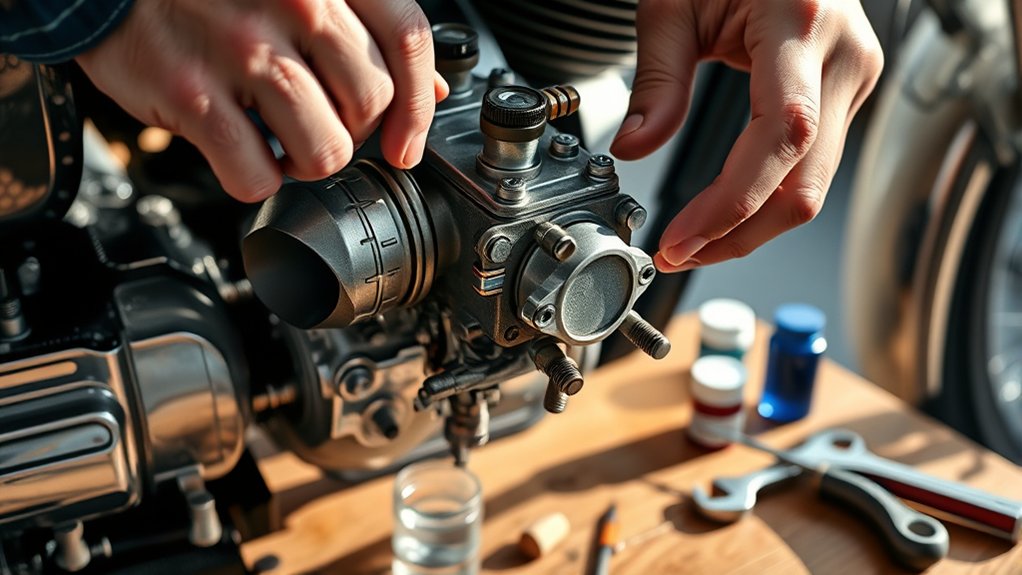
To calibrate your carburetor in 7 easy steps, it’s important to first understand how this crucial component mixes air and fuel to ensure optimal engine performance. Proper carburetor calibration can improve fuel efficiency, reduce emissions, and extend engine life.
Before you begin, gather essential tools like screwdrivers and a tachometer to make the process smoother and more accurate.
Next, prep your engine by allowing it to cool, removing the air filter, and checking for any leaks that might affect calibration.
Start by setting the idle speed to the manufacturer’s specifications to establish a baseline.
Then, fine-tune the air-fuel mixture screws to achieve smooth engine performance and responsiveness.
After adjusting, test the engine’s response under different conditions.
Make any final tweaks to optimize performance.
Regular maintenance after calibration will help keep your engine running efficiently.
Follow these steps closely, and you’ll enjoy smoother engine operation and increased longevity.
Key Takeaways
- Gather and prepare necessary tools, clean the carburetor, and inspect fuel flow before calibration.
- Cool the engine, remove the air filter, and seal any vacuum leaks for accurate adjustments.
- Warm the engine, adjust the idle speed screw to manufacturer specs, and set a steady idle.
- Fine-tune the air-fuel mixture screws for smooth idle and responsive throttle performance.
- Test engine response, make small incremental adjustments, and perform regular maintenance for long-term reliability.
Learn How Your Carburetor Works Before You Start
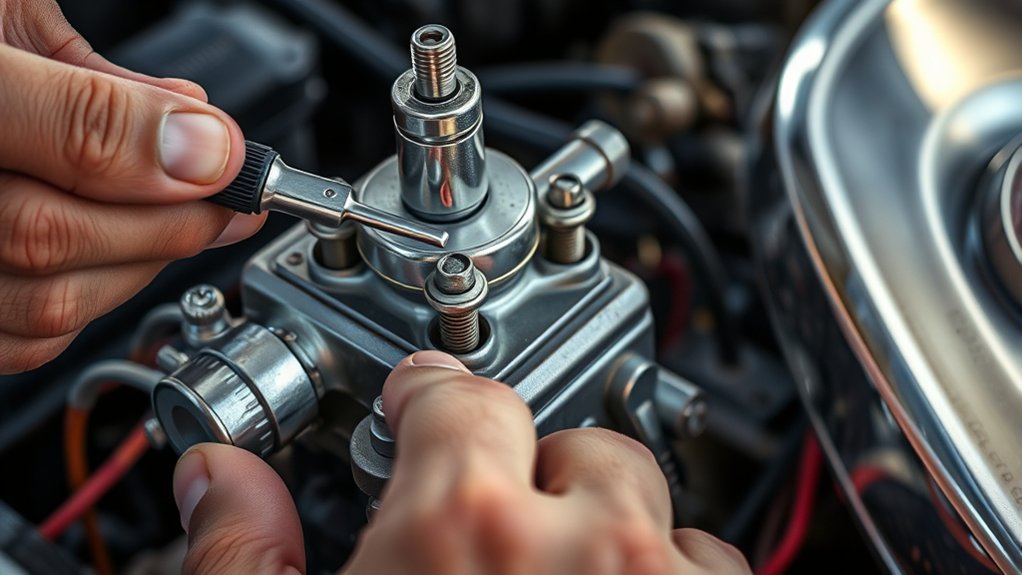
Before you begin calibrating your carburetor, it’s important to understand how it functions. Your carburetor mixes air and fuel in the right ratio to power your engine efficiently. When you start the engine, air flows through the carburetor’s venturi, creating a vacuum that draws fuel from the float bowl.
This fuel then mixes with the air before entering the combustion chamber. If this mixture is off, your engine won’t run smoothly or might stall. Knowing how the throttle, choke, and idle screws influence this mix helps you adjust the carburetor effectively.
Gather Tools Needed for Carburetor Calibration
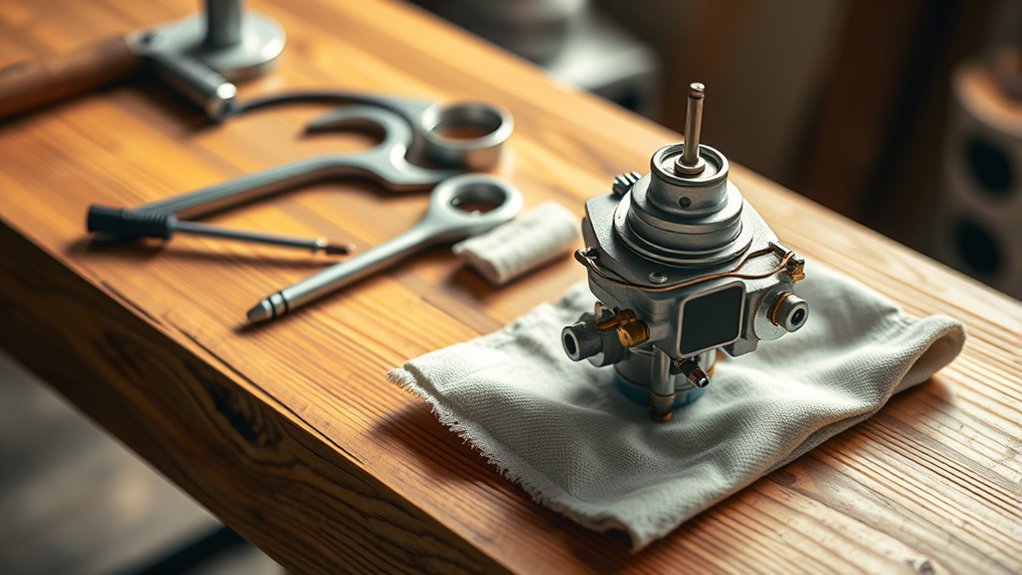
Before you start adjusting your carburetor, make sure you have all the essential calibration tools on hand, like screwdrivers, a tachometer, and a vacuum gauge. Take a moment to prepare your tools by checking they’re clean and in good working order.
Having everything ready will save you time and help you work more efficiently.
Essential Calibration Tools
Although calibrating a carburetor can seem complex, having the right tools makes the process much smoother. You’ll need a few essentials to get started. First, grab a flathead and Phillips screwdriver for adjusting screws.
A socket set or wrench helps remove and reinstall the carburetor. A fuel pressure gauge allows you to check fuel flow accurately. Don’t forget a tachometer to monitor engine RPM during adjustments.
Additionally, a vacuum gauge lets you measure manifold vacuum, ensuring proper air-fuel mixture. A clean rag or paper towels are handy for wiping spills. Finally, safety goggles and gloves protect you while working.
With these tools ready, you’ll be well-equipped to fine-tune your carburetor efficiently and safely.
Tools Preparation Tips
When you gather your tools for carburetor calibration, organizing them beforehand saves time and keeps the process efficient. Lay out all your essential instruments where you can easily reach them. Double-check each tool to make sure it’s clean and in good working condition—this prevents delays and errors during calibration.
Group similar items together to avoid confusion, and keep a small container handy for screws or tiny parts.
Here’s a quick reference table to help you prepare:
| Tool | Preparation Tip |
|---|---|
| Screwdrivers | Clean tips, check for wear |
| Wrenches | Ensure correct sizes available |
| Carburetor Gauge | Calibrate before use |
Following these tips will streamline your workflow and help you calibrate accurately.
Get Your Engine Ready for Carburetor Calibration
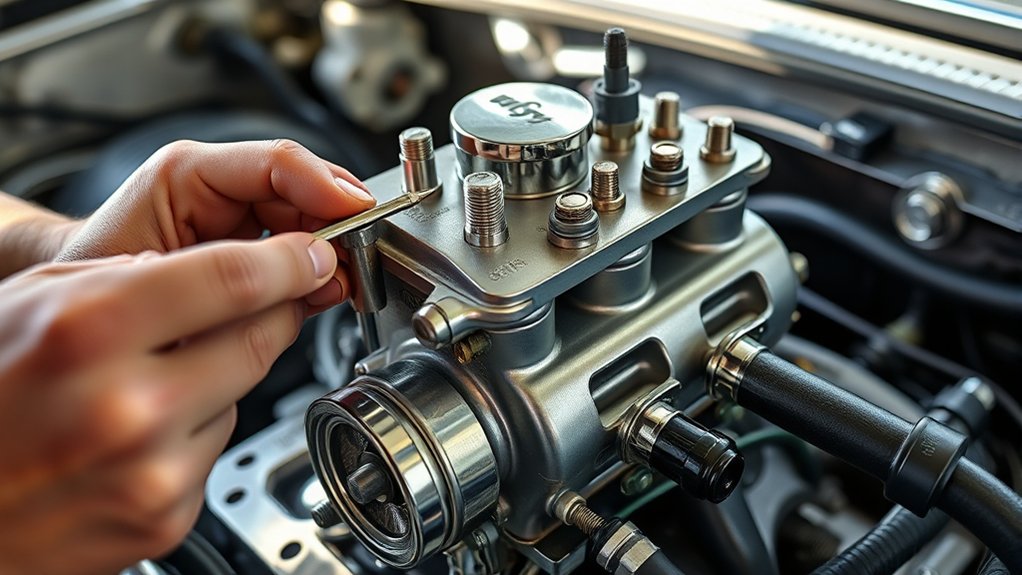
To guarantee accurate carburetor calibration, you need to prepare your engine properly. Start by ensuring the engine is cool to prevent burns and get reliable readings. Next, disconnect the air filter to allow better access and airflow.
Then, check for any vacuum leaks around hoses and gaskets, as leaks can throw off your calibration. Finally, make sure the fuel system is clean and the fuel filter isn’t clogged to maintain steady fuel delivery. Follow these steps:
- Let the engine cool completely.
- Remove the air filter assembly.
- Inspect and seal all vacuum lines.
- Clean or replace the fuel filter if needed.
Taking these preparatory steps sets a solid foundation for precise carburetor calibration.
Set Idle Speed to Manufacturer Specs
How do you know if your engine is running smoothly at idle? One key step is setting the idle speed to the manufacturer’s specifications. First, locate the idle speed screw on your carburetor—usually a small, adjustable screw near the throttle linkage.
Start your engine and let it warm up to normal operating temperature. Using a tachometer, check the current RPM. Then, turn the idle speed screw slowly clockwise to increase RPM or counterclockwise to decrease it until you reach the recommended idle speed stated in your service manual.
Make sure the engine runs steadily without stalling or racing. Adjusting the idle speed correctly ensures smooth operation and prevents unnecessary wear. Don’t rush—small adjustments go a long way.
Fine-Tune Air-Fuel Screws for Best Performance
Once you’ve set the idle speed correctly, turn your attention to the air-fuel screws. These screws control the mixture of air and fuel at idle, so fine-tuning them ensures smooth performance and fuel efficiency.
After setting idle speed, fine-tune air-fuel screws for smooth, efficient engine performance at idle.
Here’s how to adjust them:
- Start with the screws gently seated, then back them out 1 to 1.5 turns as a baseline.
- Slowly turn each screw in clockwise increments of 1/8 turn, listening for a rise in engine RPM.
- When the RPM peaks and starts to drop, back the screw out slightly to find the most suitable setting.
- Repeat the process for both screws if your carburetor has two, aiming for the smoothest idle and best throttle response.
This precise adjustment helps your engine run clean and stable at idle.
Test Engine Response and Make Final Adjustments
Now it’s time to test the engine’s throttle response to see how it reacts. You’ll want to adjust the idle speed to keep the engine running smoothly.
Finally, fine-tune the air mixture to guarantee peak performance and efficiency.
Assess Throttle Response
Why does throttle response matter when calibrating your carburetor? It directly affects how smoothly and quickly your engine reacts when you press the gas pedal. Poor throttle response means hesitation or lag, signaling your carburetor isn’t tuned right.
To assess throttle response, follow these steps:
- Warm up your engine to operating temperature.
- Slowly open the throttle and listen for smooth acceleration without stumbles.
- Quickly snap the throttle open to check for immediate engine reaction.
- Note any hesitation, bogging, or backfiring during these tests.
If you detect issues, fine-tune the fuel mixture screws or adjust the accelerator pump. Getting this right ensures your engine responds promptly and efficiently under varying conditions.
Adjust Idle Speed
How should you set your idle speed to keep your engine running smoothly without stalling or wasting fuel? Start by locating the idle speed screw on your carburetor. With the engine warmed up, slowly turn the screw clockwise to increase RPM or counterclockwise to decrease it.
Aim for the manufacturer’s recommended idle speed, usually listed in your engine manual. As you adjust, listen closely to the engine’s response—if it stutters or stalls, you might be too low; if it revs too high, you’re wasting fuel.
After setting the idle speed, gently rev the engine a few times and let it return to idle to ensure stability. Make small tweaks if needed to achieve a steady, consistent idle without hesitation or overspeed.
Fine-Tune Air Mixture
When should you adjust the air mixture to get the best engine performance? You do it right after setting the idle speed. At this stage, you want to test the engine’s response and make final tweaks for maximum efficiency.
Here’s how to fine-tune the air mixture:
- Slowly turn the mixture screw in small increments.
- Listen for changes in engine RPM and smoothness.
- Stop adjusting when the engine runs smoothly at the highest RPM without hesitation.
- Double-check by revving the throttle; the engine should respond quickly without bogging down.
This process ensures your carburetor delivers the right fuel-to-air ratio, improving performance, fuel economy, and reducing emissions. Take your time—precision here pays off in overall engine health.
Maintain Your Carburetor to Keep It Calibrated Longer
Although calibrating your carburetor is essential, you’ll extend its accuracy by performing regular maintenance. Start by cleaning the carburetor thoroughly to remove dirt, varnish, and debris that can clog jets and passages. Use a carburetor cleaner spray and compressed air to guarantee all components are spotless.
Check and replace worn gaskets or seals to prevent air leaks that disrupt the air-fuel mixture. Inspect the float level and needle valve for proper function, as these affect fuel flow. Regularly change your fuel filter to avoid contaminants reaching the carburetor.
Finally, store your engine properly during long periods of inactivity by draining the fuel to prevent gum buildup. By maintaining your carburetor consistently, you’ll keep it calibrated longer and maximize engine performance.
Frequently Asked Questions
Can I Calibrate a Carburetor Without Removing It From the Engine?
Yes, you can calibrate a carburetor without removing it from the engine. You’ll adjust the idle mixture screws and idle speed screw while the engine runs, ensuring proper tuning for smooth performance without disassembly.
This method allows you to make precise adjustments while the engine is operating. It saves time and effort compared to removing the carburetor. Just be sure to follow safety precautions during the process.
How Often Should I Recalibrate My Carburetor for Optimal Performance?
Wondering how often you should recalibrate your carburetor? You should check it at least once a year or every 10,000 miles to keep your engine running smoothly and avoid performance issues before they start.
What Are Common Signs That My Carburetor Needs Recalibration?
You’ll notice rough idling, poor acceleration, black smoke, or increased fuel consumption when your carburetor needs recalibration.
If your engine stalls or hesitates, it’s time to check and adjust it for smoother performance.
Can a Dirty Carburetor Affect Engine Fuel Efficiency?
Can you imagine your engine running rough and using more fuel? Yes, a dirty carburetor can definitely hurt fuel efficiency by disrupting the air-fuel mix.
You’ll notice poorer performance and higher fuel costs if you don’t clean it.
Is It Necessary to Use Premium Fuel After Carburetor Calibration?
You don’t have to use premium fuel after calibrating your carburetor unless your engine specifically requires it. Regular fuel usually works fine, saving you money while maintaining performance and efficiency.
Using regular fuel is often sufficient for most engines once the carburetor is properly calibrated. However, always check your engine’s specifications to be sure. This can help you avoid unnecessary expenses.
Conclusion
Now that you’ve mastered calibrating your carburetor, you’ll notice how smoothly your engine runs—almost as if your efforts and the machine’s perfect timing coincided by chance. But it’s no coincidence; it’s your careful tuning that makes all the difference.
Keep up with regular maintenance, and your engine will thank you with consistent performance. Remember, a well-calibrated carburetor isn’t just about precision—it’s about harmony between you and your machine.
By following these simple steps to calibrate a carburetor, you ensure optimal engine function and fuel efficiency. Proper carburetor calibration enhances engine performance and longevity, making regular tuning essential. Embrace the process and keep your engine running at its best.

