


If your Mustang is losing fuel pressure due to a clogged fuel filter, it’s important to address the issue promptly to maintain optimal engine performance. A clogged fuel filter restricts fuel flow, causing pressure drops that can lead to poor acceleration or stalling.
Fixing loss of fuel pressure from a clogged Mustang fuel filter involves careful steps to ensure safety and effectiveness.
Start by safely relieving the fuel system pressure to avoid spills or sparks. Then, locate the fuel filter and replace it with the correct one designed for your specific Mustang model. Make sure the new filter is installed in the correct direction to ensure proper fuel flow.
After replacement, use a fuel pressure gauge to check that the pressure is restored to the proper level. If the problem persists, inspect the fuel pump and fuel lines for any additional issues.
Keep following for guidance on avoiding common mistakes and troubleshooting further.
Key Takeaways
- Relieve fuel system pressure by disconnecting the battery and removing the fuel pump fuse before replacing the clogged fuel filter.
- Locate the fuel filter near the fuel tank or engine bay, then safely remove it using appropriate tools and safety gear.
- Install a compatible, correctly oriented replacement filter to ensure proper fuel flow and prevent future pressure loss.
- After installation, check fuel pressure at the fuel rail with a gauge to confirm it is within the 35-45 psi normal range.
- If pressure remains low, inspect the fuel pump, pressure regulator, and fuel lines for damage or clogs needing repair or replacement.
How To Spot Signs Of A Clogged Mustang Fuel Filter
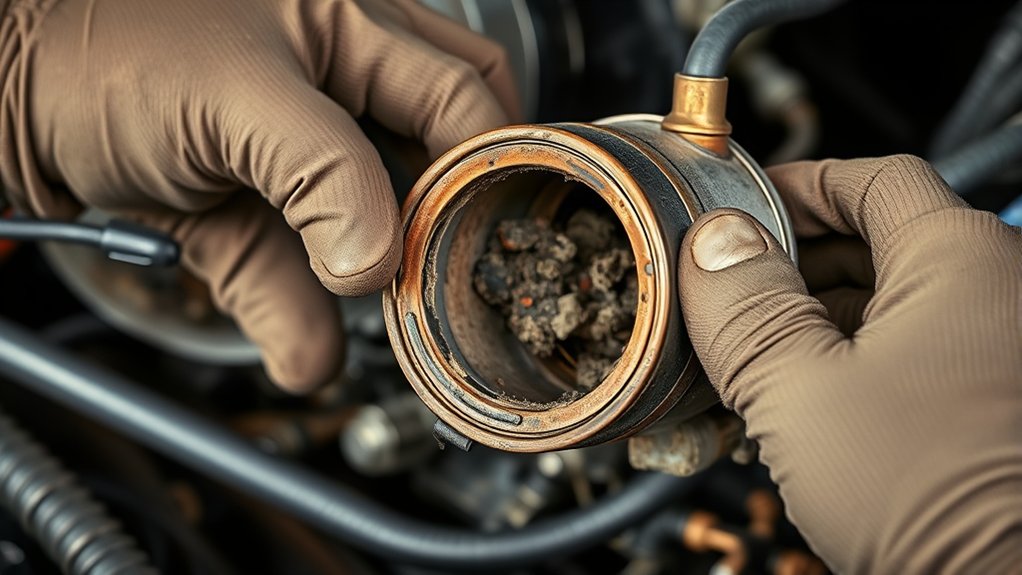
Although a clogged fuel filter may seem like a minor issue, it can quickly cause noticeable problems with your Mustang’s performance. You’ll likely notice your engine struggling to accelerate or hesitating during throttle response. Your Mustang might feel sluggish, especially when you press the gas pedal hard.
You could also experience rough idling or stalling, as the engine isn’t getting the fuel it needs consistently. Another sign is a drop in fuel efficiency, meaning you’re filling up more often than usual. If you hear sputtering or coughing sounds from the engine, that’s another red flag.
Paying attention to these symptoms early lets you address the clogged filter before it leads to more serious issues or impacts your driving safety.
Why A Clogged Fuel Filter Causes Loss Of Fuel Pressure
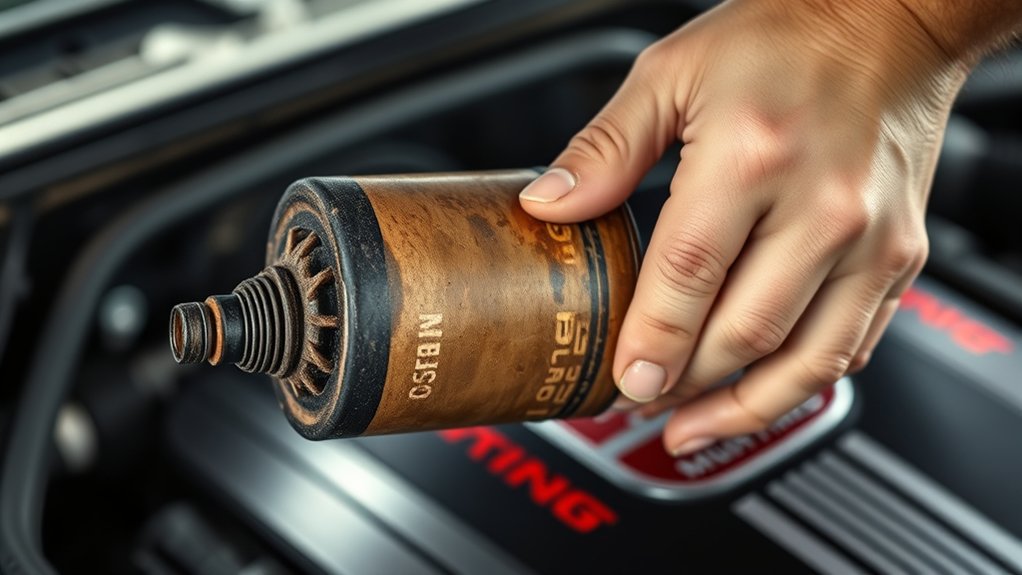
Noticing your Mustang’s performance issues often leads back to how well fuel flows through the system. When the fuel filter gets clogged, it restricts the amount of fuel reaching the engine. This restriction causes a drop in fuel pressure, which means your engine doesn’t get enough fuel to run efficiently.
As a result, you might experience hesitation, stalling, or reduced power. The fuel pump works harder to push fuel through the clogged filter, which can strain the pump and further reduce pressure. Essentially, the clogged filter acts like a bottleneck, limiting fuel delivery and causing the loss of fuel pressure you’re noticing.
Understanding this helps you identify why replacing the filter is key to restoring proper fuel flow and engine performance.
Tools Needed To Replace Your Mustang’s Fuel Filter
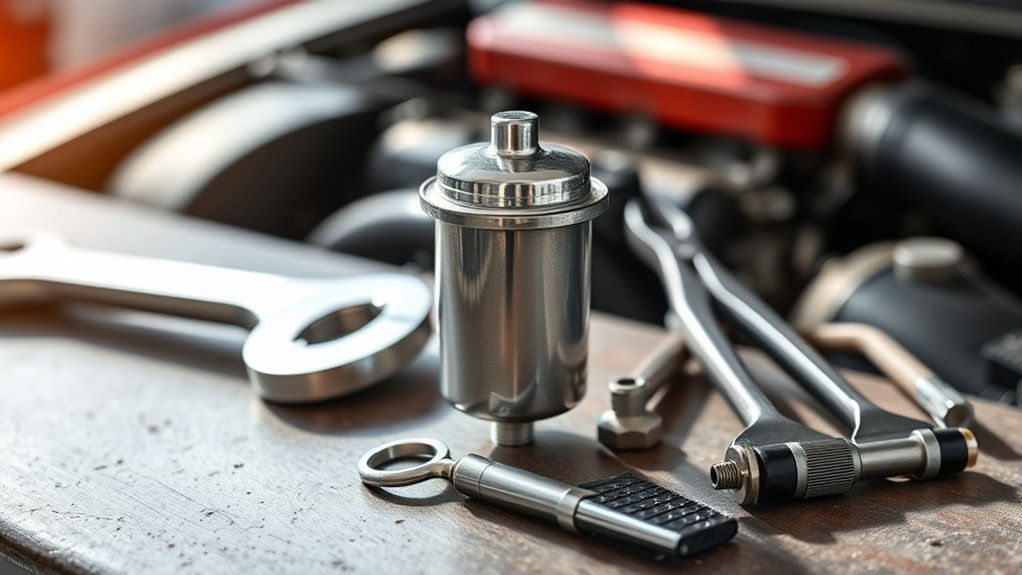
To replace your Mustang’s fuel filter, you’ll need a few essential hand tools like wrenches and screwdrivers. Don’t forget safety equipment such as gloves and eye protection to keep yourself safe. Having the right tools ready will make the job much smoother.
Essential Hand Tools
Before you start replacing your Mustang’s fuel filter, gather the essential hand tools to make the job smoother and faster. Having the right tools handy will help you avoid delays and frustration during the process.
Here’s a quick list of what you’ll need:
| Tool | Purpose |
|---|---|
| Wrench Set | Loosening fuel line fittings |
| Screwdrivers | Removing clamps and covers |
| Pliers | Gripping and pulling hoses |
These tools cover all basic tasks, from detaching fuel lines to removing the filter housing. Make sure your wrenches fit the fuel line nuts snugly to prevent rounding off.
A flathead and Phillips screwdriver will handle all types of clamps and screws involved. Finally, pliers provide extra grip when hoses are stubborn or tight. With these essentials ready, you’ll be set for a quick and efficient fuel filter swap.
Safety Equipment Needed
Although replacing your Mustang’s fuel filter might seem straightforward, using the right safety equipment is essential to protect yourself from fuel spills, fumes, and potential injuries. First, always wear safety goggles to shield your eyes from harmful fuel spray. Gloves are a must—nitrile or chemical-resistant gloves prevent skin contact with gasoline, which can cause irritation.
A long-sleeve shirt and pants help minimize skin exposure. Work in a well-ventilated area or use a respirator mask to avoid inhaling fuel fumes, which are toxic and flammable. Keep a fire extinguisher rated for flammable liquids nearby in case of emergencies.
Finally, use a drip tray or absorbent pads to catch any fuel leaks, keeping your workspace clean and safe throughout the job.
How To Safely Relieve Fuel Pressure On Your Mustang
Since fuel systems operate under high pressure, you’ll need to release that pressure carefully to avoid fuel spray or injury. Start by disconnecting the negative battery cable to prevent sparks. Locate the fuel pump relay or fuse in the fuse box and remove it to stop the pump from running.
Next, start the engine and let it run until it stalls—this uses up the remaining fuel pressure in the lines. After it stalls, turn the ignition off. To be extra safe, press the fuel rail Schrader valve (if equipped) using a rag to catch any residual fuel.
Always wear safety glasses and gloves during this process. Releasing fuel pressure this way ensures you can work on your Mustang’s fuel system without risking fuel spray or injury.
Where To Find The Fuel Filter On Your Mustang
You’ll usually find the fuel filter along the fuel line, either near the fuel tank or under the hood. To access it, you might need a jack or some basic hand tools depending on your Mustang’s model year.
Knowing the exact location and having the right tools ready will make removing and replacing the filter much easier.
Common Fuel Filter Locations
Where exactly is the fuel filter located on your Mustang? Knowing where to find it is key to diagnosing and fixing fuel pressure problems. Common fuel filter locations vary depending on your Mustang’s year and model, but here are the top three spots to check:
- Under the car near the fuel tank: Many Mustangs have the fuel filter mounted along the frame rail close to the gas tank.
- Inside the engine bay: Look near the firewall or along the fuel lines; some models place the filter here for easier access.
- Integrated with the fuel pump: In newer Mustangs, the filter might be built into the fuel pump assembly inside the tank.
Identifying the exact location helps you prepare for replacement or inspection.
Accessing The Fuel Filter
How do you access the fuel filter on your Mustang? First, locate it under the car near the fuel tank or along the frame rail. On most Mustangs, the fuel filter sits on the driver’s side frame rail, close to the rear wheel.
You’ll find it mounted in a metal bracket with fuel lines connected at both ends. For some models, the fuel filter is inside the engine bay near the firewall. Before you start, make sure the car is parked on a flat surface and the engine is cool.
Raise the vehicle safely with jack stands if necessary to get better access. Keep in mind, the filter’s position can vary slightly depending on your Mustang’s year and model.
Tools Needed For Removal
Before removing the fuel filter, gather the right tools to make the job smoother and safer. Knowing where to find the fuel filter on your Mustang helps, but having the proper equipment is essential to prevent damage and ensure a quick fix.
Most Mustangs have the fuel filter located along the frame rail under the car or near the fuel tank.
Here’s what you’ll need:
- Wrench set – To loosen and tighten fuel line fittings without stripping them.
- Fuel line disconnect tool – Some models require this to safely detach fuel lines.
- Safety gloves and goggles – Protect your hands and eyes from fuel spills.
With these tools ready, you’ll be set to replace the clogged filter confidently.
How To Remove A Clogged Fuel Filter From Your Mustang
Wondering what steps to take when your Mustang’s fuel filter is clogged? First, relieve fuel system pressure by removing the fuel pump fuse and running the engine until it stalls. Next, disconnect the battery to guarantee safety.
Locate the fuel filter, usually along the frame rail or near the fuel tank. Use a wrench or fuel line disconnect tool to carefully loosen the fuel lines from the filter—be ready with a rag for spills. Remove any mounting bolts holding the filter in place.
Take note of the filter’s orientation to install the new one correctly. Once detached, dispose of the clogged filter properly. With the filter removed, you’re ready to install a replacement and restore proper fuel flow.
How To Choose The Right Replacement Fuel Filter For Your Mustang
After removing the clogged fuel filter, selecting the right replacement guarantees your Mustang’s fuel system runs smoothly. You want a filter that matches your engine’s specifications and withstands your driving conditions.
Choosing the correct fuel filter ensures your Mustang’s engine performs reliably under all driving conditions.
Here’s how to choose the best one:
- Check Compatibility: Use your Mustang’s year, make, and model to find filters designed specifically for it. This ensures proper fit and function.
- Consider Fuel Type: Match the filter to your fuel type—regular gasoline, racing fuel, or ethanol blends—to avoid damage and maintain flow.
- Look for Quality Brands: Opt for reputable manufacturers offering durable filters with good filtration ratings to protect your fuel injectors and pump.
Picking the right filter now saves you from future headaches and keeps your Mustang running strong.
How To Install A New Mustang Fuel Filter Without Losing Fuel
How do you replace your Mustang’s fuel filter without spilling fuel everywhere? First, relieve the fuel system pressure by removing the fuel pump fuse and running the engine until it stalls. Disconnect the negative battery cable to prevent sparks.
Next, place a container or rags under the filter to catch any drips. Carefully disconnect the fuel lines using quick-connect tools or wrenches, depending on your model. Remove the old filter and install the new one in the correct direction, matching the arrow with fuel flow.
Reconnect the fuel lines securely and double-check for leaks. Finally, reinstall the fuel pump fuse and reconnect the battery. Turn the ignition on to pressurize the system before starting the engine—this helps avoid fuel spills and ensures proper installation.
How To Check Fuel Pressure On Your Mustang After Replacement
To check your Mustang’s fuel pressure after replacing the filter, start by locating the fuel pressure test port under the hood. You’ll need a proper pressure gauge designed for your Mustang’s fuel system to get an accurate reading.
Once connected, you can interpret the gauge readings to verify your fuel pressure is within the correct range.
Locate Fuel Pressure Test Port
Although it might seem tricky at first, locating the fuel pressure test port on your Mustang is straightforward once you know where to look. This port allows you to connect a fuel pressure gauge to check if your fuel system is working properly after replacing the filter.
Here’s how to find it:
- Open the hood and locate the fuel rail, which is usually on top of the engine near the injectors. Look for a small valve resembling a tire valve stem; this is the Schrader valve, your test port.
- If you can’t spot it immediately, refer to your Mustang’s service manual for the exact location since it may vary between models and years.
Once you’ve found the test port, you’re ready for the next step in diagnosing fuel pressure.
Use Proper Pressure Gauge
Since accurate fuel pressure readings are essential for diagnosing your Mustang’s fuel system, you’ll need a proper pressure gauge designed for automotive use. Choose a gauge that fits the fuel pressure test port you located earlier; most Mustangs use a Schrader valve-compatible gauge. Verify the gauge can measure the expected pressure range—usually between 30 to 60 psi, depending on your model.
Connect the gauge securely to avoid leaks, and double-check the connection before turning the ignition on. Using a digital or analog gauge with clear markings helps you get precise readings quickly. Avoid using generic or low-quality gauges, as inaccurate readings can lead to misdiagnosis.
With the right pressure gauge, you’ll confidently check if your fuel system is performing correctly after replacing the clogged fuel filter.
Interpret Pressure Gauge Readings
With your proper pressure gauge connected and ready, the next step is to understand what the readings tell you about your Mustang’s fuel system. Interpreting these numbers helps confirm if your fuel filter replacement solved the pressure loss or if further diagnosis is needed.
Here’s how to interpret those readings:
- Normal Range: A healthy Mustang fuel system usually reads between 35-45 psi at key-on engine off (KOEO). If your reading falls here, your filter is likely not restricting flow.
- Low Pressure: Readings below 30 psi suggest a possible clogged filter, weak fuel pump, or leaks.
- High Pressure: Over 50 psi could mean a faulty pressure regulator or blockage downstream.
Use these benchmarks to decide your next move confidently.
Mistakes To Avoid When Changing Your Mustang’s Fuel Filter
When changing your Mustang’s fuel filter, you’ll want to steer clear of common pitfalls that can lead to poor performance or even damage. First, never forget to relieve the fuel system pressure before disconnecting the filter—failing to do so can cause fuel spray, risking fire or injury. Avoid using the wrong replacement filter; always choose one that matches your Mustang’s year and engine specs.
Don’t overtighten the fittings; this can crack plastic components or cause leaks. Also, make sure the filter’s flow direction matches the fuel flow; installing it backward will restrict fuel and cause pressure loss. Finally, double-check all connections for leaks before starting the engine.
Taking these precautions ensures a smooth, safe filter replacement and restores proper fuel flow.
What To Do If Replacing The Fuel Filter Doesn’t Fix Fuel Pressure
If replacing the fuel filter doesn’t restore your Mustang’s fuel pressure, you’ll need to dig deeper into the fuel system. Start by checking the fuel pump, as it may be failing or delivering insufficient pressure. Next, inspect the fuel pressure regulator for leaks or malfunctions that can cause pressure drops.
If the fuel filter swap doesn’t help, check the pump and pressure regulator for issues causing low fuel pressure.
Finally, examine the fuel lines for clogs, cracks, or leaks that might restrict fuel flow.
Here’s what to do next:
- Test the fuel pump’s output with a fuel pressure gauge to verify it meets specifications.
- Look for signs of a faulty fuel pressure regulator, such as fuel smell or uneven idling.
- Inspect and replace damaged or clogged fuel lines to restore proper fuel delivery.
Addressing these areas will help you pinpoint and fix the pressure issue.
How Regular Fuel Filter Maintenance Keeps Your Mustang Running Smoothly
Although you might not notice it daily, regularly maintaining your Mustang’s fuel filter plays a crucial role in keeping the engine running smoothly and efficiently. A clean fuel filter ensures that contaminants don’t clog your fuel lines or injectors, which can cause poor engine performance, stalling, or even damage.
By replacing the filter at recommended intervals, you maintain consistent fuel pressure and ideal fuel flow. This helps your Mustang deliver the power and responsiveness you expect. Neglecting this simple task can lead to costly repairs and reduced fuel economy.
Frequently Asked Questions
Can a Clogged Fuel Filter Damage My Mustang’s Fuel Pump?
Yes, a clogged fuel filter can damage your Mustang’s fuel pump because it forces the pump to work harder to push fuel through.
You should replace the filter regularly to avoid costly pump repairs.
How Often Should I Replace My Mustang’s Fuel Filter?
You should replace your Mustang’s fuel filter every 30,000 miles or as recommended in your owner’s manual. Regular replacements keep fuel flowing smoothly and prevent clogs that can damage your fuel pump or reduce performance.
Are There Any Fuel Additives That Can Clean the Filter?
You won’t find fuel additives that clean clogged filters—they’re like trying to polish a rusty chain by spraying oil.
Instead, you’ll need to replace the filter to restore proper fuel flow and keep your Mustang running smoothly.
Can a Clogged Fuel Filter Affect My Mustang’s Engine Performance?
Yes, a clogged fuel filter can definitely affect your Mustang’s engine performance. It restricts fuel flow, causing hesitation, stalling, or reduced power.
You’ll want to replace it promptly to keep your engine running smoothly.
Is It Safe to Drive With a Partially Clogged Fuel Filter?
Driving with a partially clogged fuel filter isn’t safe. You’ll experience stalling, sputtering, and sluggish starts. Don’t delay—replace it promptly to prevent potential engine damage.
Keep your Mustang running smoothly and safely on the streets.
Conclusion
Imagine your Mustang’s engine roaring back to life, fuel flowing smoothly like a river after a spring rain. By spotting signs early, safely relieving pressure, and carefully replacing that clogged filter, you keep your ride running strong and responsive.
Avoid common mistakes, and don’t hesitate to dig deeper if pressure issues persist. Regular filter maintenance is your key to feeling that powerful, unbroken connection between you and the open road.
Fixing loss of fuel pressure from a clogged Mustang fuel filter ensures optimal engine performance. Keeping your fuel system clean and well-maintained helps prevent costly repairs and keeps your Mustang running at its best.

