

You can drive safely with a bad CV axle by steering gently and avoiding sharp turns or sudden moves. Maintaining a steady speed and choosing smooth, well-maintained roads helps reduce stress on the axle. These precautions are essential to prevent further damage and ensure safer driving conditions.
Pay close attention to any vibrations, unusual noises, or grease leaks, as these are signs the CV axle is worsening. Limit your driving to short trips when symptoms appear more frequently or intensify. Staying cautious is key to avoiding sudden breakdowns on the road.
If problems arise, use your hazard lights to alert other drivers. Seek repairs promptly to avoid costly damage or complete failure. Keep following for tips on handling and repair preparation to maintain your vehicle’s safety and performance.
Key Takeaways
- Maintain smooth, steady steering and avoid sharp turns to reduce stress on the bad CV axle.
- Ease off the accelerator and drive slower if you notice increased vibrations or noises.
- Limit driving to short, low-speed trips on smooth roads to minimize further damage.
- Keep a firm grip on the steering wheel for better control and quicker response.
- Avoid highways and rough terrain, prioritizing safe routes with wide curves and good road conditions.
How to Recognize a Bad CV Axle Early
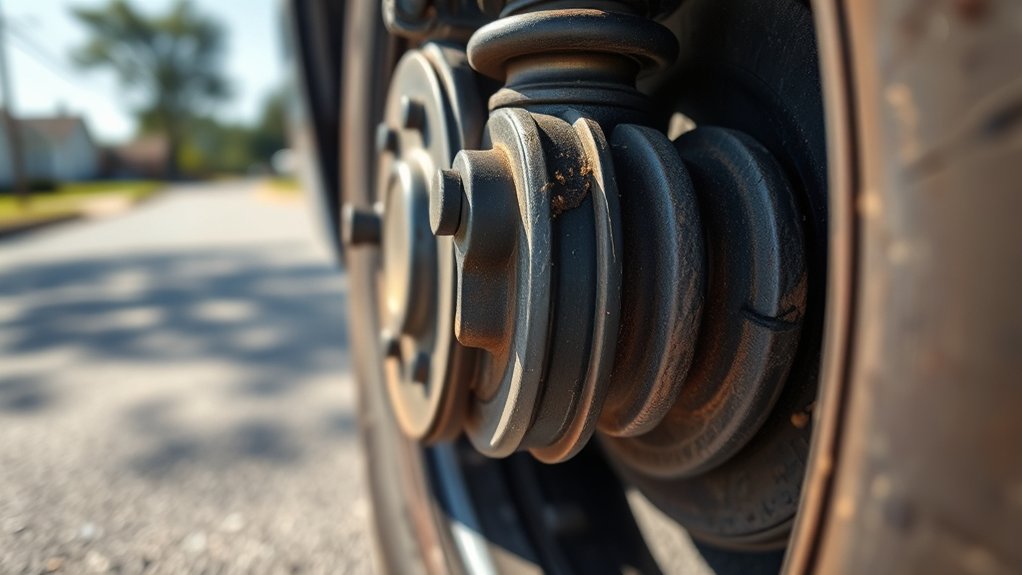
Although you might not notice it right away, recognizing the signs of a bad CV axle early can save you from costly repairs and unsafe driving conditions. You’ll often hear clicking noises when turning sharply, which is a classic warning sign.
If you feel vibrations or shuddering while driving, especially during acceleration, it’s another indicator that your CV axle might be failing. You might also spot grease leaking around the CV joint due to a torn boot, which means dirt and debris have likely caused damage.
Ignoring these symptoms can lead to complete axle failure, leaving you stranded or causing accidents. By paying attention to these early signals, you can take action before the problem worsens and affects your safety on the road.
How to Check Your CV Axle Condition Before Driving
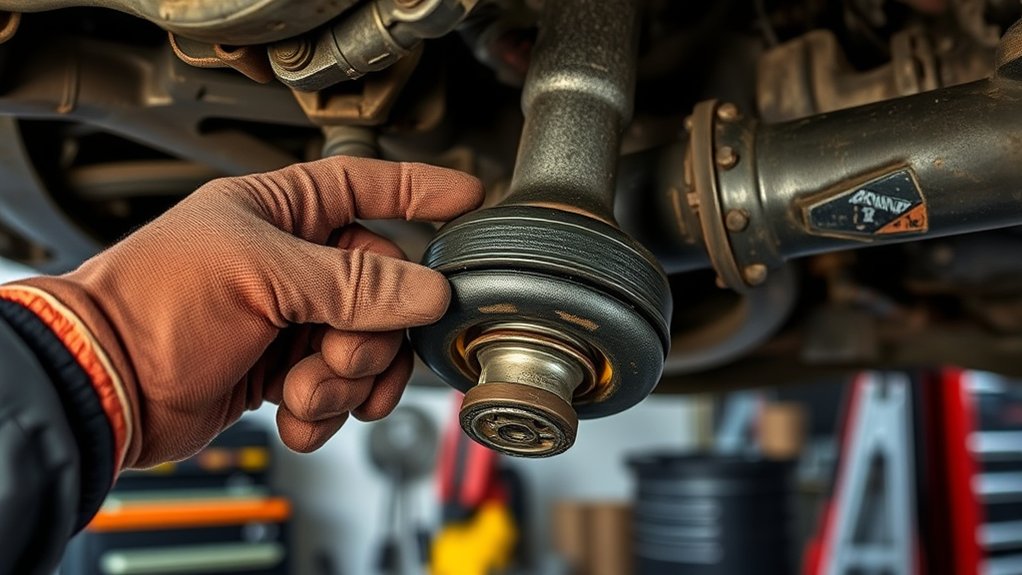
Before you hit the road, take a moment to visually inspect your CV axle for any cracks, tears, or grease leaks. Look closely at the boots and joints for signs of wear or damage that could cause problems while driving.
Catching these issues early can help you avoid a breakdown or unsafe driving conditions.
Visual Inspection Tips
When you want to guarantee your CV axle is safe to drive on, start by visually inspecting the axle boots for any cracks, tears, or leaks. These rubber boots protect the joint from dirt and moisture, so damage here can lead to bigger problems.
Next, check for grease splattered around the wheel well, which often signals a leaking boot. Look closely at the axle shaft itself for any bends, rust, or damage. Make sure the clamps holding the boots are secure and not loose or missing.
Also, gently wiggle the axle near the joints to see if there’s excessive play or looseness. Performing these quick checks before driving helps you catch issues early and avoid sudden breakdowns on the road.
Signs of Wear
Since your CV axle plays a crucial role in transferring power to your wheels, you need to recognize signs of wear that can affect its performance. Listen for clicking or popping noises when turning, which often indicate a worn CV joint.
Feel for vibrations or shuddering during acceleration, as these can signal axle imbalance or damage. Check if your vehicle pulls to one side, which may result from an uneven axle. Look for grease splattered around your tires or undercarriage, a sign that the CV boot is torn and leaking lubricant.
If you notice any of these symptoms, don’t ignore them. Addressing wear early helps prevent complete axle failure and keeps you safer on the road. Regularly checking these signs ensures you catch issues before they worsen.
How to Spot Urgent CV Axle Problems
If your car starts making clicking noises during turns or you feel vibrations while driving, these signs could indicate urgent CV axle problems. You need to act fast to prevent further damage. Watch for these clear warning signals:
- Loud clicking or popping sounds when turning sharply
- Excessive vibrations felt through the steering wheel or floor
- Grease splattered around the inside edge of the wheels
- Difficulty steering or unusual resistance while turning
- Visible damage or cracks in the CV boot
Spotting these issues early helps you decide when to get your CV axle inspected or replaced. Don’t ignore these urgent signs—they’re your car’s way of telling you it needs immediate attention.
How Driving on a Faulty CV Axle Risks Your Safety
How can you guarantee your safety on the road when your CV axle is failing? Driving with a faulty CV axle puts you at serious risk. The axle connects your transmission to the wheels, so any damage can cause sudden loss of power or control.
You might experience unexpected vibrations or noises, which are warning signs you shouldn’t ignore. Ignoring these risks can lead to accidents or breakdowns.
| Risk | Consequence |
|---|---|
| Sudden axle breakage | Loss of vehicle control |
| Vibrations while driving | Reduced steering precision |
| Noise from joints | Distraction and delayed reaction |
| Complete axle failure | Vehicle immobilization |
Stay alert to these risks and address CV axle issues promptly to keep yourself and others safe.
How a Bad CV Axle Affects Your Vehicle’s Handling
When your CV axle starts failing, you’ll notice your vehicle responding unpredictably to your steering inputs. This happens because the axle is crucial for transferring power while allowing smooth wheel movement. A bad CV axle can affect your handling in several ways:
- Vibrations that increase with speed, making steering feel shaky
- Clunking noises during turns, indicating joint wear
- Delayed or inconsistent steering response, reducing control
- Pulling to one side, causing uneven handling and tire wear
- Difficulty maintaining alignment, resulting in drifting or wandering
These symptoms make it harder to keep your vehicle on the intended path, especially during sharp turns or sudden maneuvers. Recognizing these changes early helps you avoid further damage and maintain better control until you can fix the axle.
Tips for Driving Smoothly With a Bad CV Axle
Although a bad CV axle can make driving challenging, you can still maintain control by adjusting your habits. First, keep your steering inputs smooth and steady to avoid putting extra strain on the damaged axle. Avoid sharp turns or sudden maneuvers that could worsen the issue.
Stay aware of any unusual noises or vibrations, and gently ease off the accelerator if they become more pronounced. Maintain a consistent grip on the steering wheel to respond quickly but calmly to any changes in handling. Check your tire pressure regularly, as uneven pressure can amplify the effects of a failing CV axle.
How to Adjust Speed and Acceleration Safely With a Bad CV Axle
You’ll want to make gradual speed changes to avoid putting extra strain on your bad CV axle. Keep your acceleration smooth and steady to maintain control and reduce jerking.
Always watch how your vehicle responds so you can adjust accordingly and stay safe.
Gradual Speed Changes
Since a bad CV axle can cause vibrations and jerking, it’s important to adjust your speed and acceleration gradually to maintain control. Sudden changes can worsen these symptoms and make handling unpredictable. To keep your ride safe and smooth, follow these tips:
- Increase or decrease your speed slowly, avoiding abrupt throttle changes
- Anticipate stops and starts to give yourself plenty of time
- Use gentle pressure on the gas and brake pedals
- Stay in lower gears if driving a manual to better control power delivery
- Avoid rapid lane changes or quick maneuvers that demand sudden speed adjustments
Smooth Acceleration Control
Maintaining gradual speed changes sets the foundation for smooth acceleration control when driving with a bad CV axle. You need to avoid sudden throttle inputs that could worsen vibrations or cause jerking. Instead, apply gentle pressure on the gas pedal, allowing your vehicle to accelerate steadily.
This careful approach reduces stress on the damaged axle and helps maintain better traction. When starting from a stop or merging onto highways, ease into acceleration slowly, giving your car time to adjust to the load without abrupt movements.
Monitor Vehicle Response
Although driving with a bad CV axle requires extra caution, closely monitoring how your vehicle responds to speed and acceleration changes can help you adjust safely. Pay attention to any unusual vibrations, noises, or pulling sensations as you accelerate or decelerate. These signs can indicate worsening axle issues.
To maintain control, focus on feeling for jerks or clunks during acceleration. Notice vibrations that increase with speed and watch for uneven pulling to one side.
Listen for clicking or knocking sounds and observe how the car handles turns and stops.
How to Avoid Sharp Turns and Rough Roads With a Faulty CV Axle
When you have a faulty CV axle, steering clear of sharp turns and rough roads can prevent further damage and keep you safer on the road. Avoiding sudden maneuvers reduces stress on the axle joints, and choosing smoother paths minimizes vibrations that could worsen the issue.
Plan your route ahead, looking for wide curves and well-maintained streets.
Here’s a quick guide to help you visualize the best choices:
| Road Type | Risk Level | Driving Tip |
|---|---|---|
| Smooth highway | Low | Maintain steady speed |
| Pothole-filled | High | Slow down or detour |
| Sharp curves | High | Take turns slowly |
| Well-paved city | Moderate | Avoid sudden lane changes |
When to Limit Driving to Short Trips Only
Choosing smoother routes and avoiding sharp turns can help protect your CV axle, but there are times when even careful driving isn’t enough. If your axle shows worsening symptoms, it’s best to limit driving to short trips only. This reduces stress on the part and lowers the risk of complete failure.
Opt for smoother routes and short trips to protect your CV axle and prevent complete failure.
You should consider restricting your drives when:
- You hear clicking noises during acceleration
- Vibrations increase noticeably
- Driving involves mainly stop-and-go traffic
- Your destination is less than 5 miles away
- You need to avoid highways or high-speed conditions
Short trips allow you to manage the issue safely until you can get the axle repaired. Always prioritize safety and avoid pushing your car beyond these limits.
What to Do If Your CV Axle Fails on the Road
What should you do if your CV axle fails while you’re driving? First, stay calm and safely reduce your speed. Avoid sudden braking or sharp turns to maintain control.
Gently steer your vehicle to the side of the road or a safe location. Once stopped, turn on your hazard lights to alert other drivers. Avoid trying to drive further, as a broken CV axle can cause additional damage or loss of control.
If you’re in a dangerous spot, call roadside assistance or emergency services for help. Don’t attempt repairs yourself unless you have the proper tools and experience. Staying calm and taking these steps can keep you safe until professional help arrives.
How to Signal Your Car Trouble to Other Drivers
If your CV axle is acting up, start by turning on your hazard warning lights to alert drivers behind you. You can also use hand signals to communicate your situation clearly.
Make sure to position your car safely off the road whenever possible to prevent accidents.
Use Hazard Warning Lights
When your CV axle starts acting up, turning on your hazard warning lights is one of the quickest ways to alert other drivers that your car may not respond as expected.
This simple step helps you communicate the urgency of your situation without needing to pull over immediately. Use your hazard lights to:
- Signal unpredictable vehicle movement
- Warn drivers behind you to keep distance
- Indicate you’re driving slower than usual
- Alert others when stopping on the roadside
- Help emergency responders identify your vehicle
Employ Hand Signal Techniques
Although your hazard lights are essential, employing hand signal techniques lets you communicate more clearly with other drivers about your car trouble, especially if your electronic signals fail or aren’t visible enough.
Using simple, recognized hand gestures can warn nearby drivers to slow down or stop, increasing your safety on the road. Always keep your window down to make signals visible and use your arm confidently.
| Hand Signal | Meaning |
|---|---|
| Arm straight out | Turning left |
| Arm bent upward | Turning right |
| Arm bent downward | Slowing or stopping |
| Waving arm | Need assistance |
| Palm facing out | Stop or hazard warning |
Practicing these signals helps other drivers understand your situation quickly.
Position Vehicle Safely
Since your CV axle is compromised, you’ll want to position your vehicle where other drivers can easily see it and avoid potential accidents. Find a safe spot off the road to minimize risk and alert others to your situation effectively. Use your hazard lights to signal trouble, and place reflective triangles or flares if you have them.
Here’s how to position your vehicle safely:
- Pull over to the shoulder or emergency lane whenever possible
- Avoid blind curves or hills where visibility is limited
- Turn on hazard lights immediately to warn other drivers
- Use reflective warning devices if available
- Keep your vehicle visible by parking with headlights on at dusk or night
These steps help communicate your issue clearly, keeping you and others safe.
When to Schedule CV Axle Repair or Replacement
How do you know it’s time to schedule a CV axle repair or replacement? If you hear clicking noises when turning or feel vibrations during acceleration, these are clear signs your CV axle needs attention. You should also act quickly if you notice grease leaking near the tires, which indicates a torn CV boot.
Ignoring these symptoms can lead to more severe damage and costly repairs. Don’t wait until your car won’t move at all—schedule a repair as soon as you detect these issues. If your CV axle is damaged, driving becomes unsafe and can cause further harm to your vehicle.
Trust your instincts and consult a mechanic promptly to avoid unexpected breakdowns.
Getting Your Car Ready for CV Axle Repair
Before you take your car in for CV axle repair, there are a few steps you should take to prepare your vehicle and make sure a smooth process. Getting your car ready helps your mechanic work efficiently and prevents delays.
Here’s what you can do:
- Gather your car’s maintenance records to provide helpful context.
- Clear out the area around your vehicle for easy access.
- Check the tire pressure and condition; replace if necessary.
- Remove any personal items from the car to avoid damage or loss.
- Confirm you have a reliable ride arranged for after the repair.
Frequently Asked Questions
What Is the Average Cost of CV Axle Replacement?
You’ll usually pay between $300 and $800 to replace a CV axle, depending on your vehicle and labor costs.
It’s smart to get it fixed soon to avoid further damage and guarantee safe driving.
Can a Bad CV Axle Cause Uneven Tire Wear?
You might notice your tires aren’t aging gracefully—yes, a bad CV axle can cause uneven tire wear. It disrupts your vehicle’s balance, making your tires wear out faster on one side, so watch for this subtle warning.
Are There Temporary Fixes for a Damaged CV Axle?
Yes, you can temporarily wrap the damaged CV axle with strong tape or a rubber boot to keep dirt out. However, these fixes won’t last long, so you’ll need to replace the axle promptly to avoid further damage.
How Long Does a CV Axle Typically Last?
A CV axle typically lasts between 70,000 and 130,000 miles. You can extend its life by avoiding harsh turns and maintaining your vehicle well.
Replacing it promptly when damaged is essential for safety and performance.
Can Driving With a Bad CV Axle Affect Fuel Efficiency?
Like a leaky faucet wasting water, a bad CV axle can hurt your fuel efficiency. You’ll notice your car working harder, burning more gas, so fixing it promptly keeps your wallet and ride smooth.
Conclusion
Driving with a bad CV axle isn’t something to take lightly—did you know that nearly 25% of roadside breakdowns involve axle issues? Catching problems early keeps you safe and prevents costly repairs. Always check for unusual noises or vibrations before hitting the road, and never ignore warning signs.
If your CV axle fails, signal clearly and pull over safely. Staying proactive helps you avoid accidents and keeps your vehicle running smoothly. By following these tips, you can drive safely with a bad CV axle and protect both yourself and your car from further damage.

