

CV stands for “Constant Velocity,” a crucial term in automotive mechanics, especially when discussing a CV axle. The CV axle plays a key role in transferring power from your vehicle’s transmission to the wheels smoothly and efficiently.
This is particularly important for front-wheel-drive cars, where maintaining consistent power delivery is essential for control and safety.
In a CV axle, the constant velocity joint allows power to be transmitted even as the wheels turn and move up and down with the suspension. This flexibility ensures you can steer and drive without losing power or feeling vibrations.
Understanding how a CV axle works helps you know when it’s time to maintain or replace it, keeping your vehicle running safely and smoothly.
Key Takeaways
- CV stands for “Constant Velocity,” describing the axle’s ability to maintain consistent rotational speed.
- The CV axle transfers torque from the transmission to the wheels while accommodating steering and suspension movement.
- CV joints use ball bearings to evenly distribute torque and allow flexible movement without power loss.
- They ensure smooth power delivery at varying angles, essential for vehicle stability during turns.
- CV axles are critical in front-wheel and all-wheel-drive vehicles to support both power transfer and steering.
What Does CV Mean in a CV Axle?
What exactly does CV stand for in a CV axle? CV means “Constant Velocity.” When you hear that term, it refers to the axle’s ability to transfer power smoothly at a constant speed, even when the wheels turn or the suspension moves.
The CV axle is essential for front-wheel-drive and some all-wheel-drive vehicles because it connects the transmission to the wheels while allowing for flexible motion. You rely on the CV axle to maintain consistent power delivery, no matter the angle of the wheels. Without the “constant velocity” feature, your car would experience jerky movements or vibrations during turns.
How the CV Axle’s Constant Velocity Joint Works
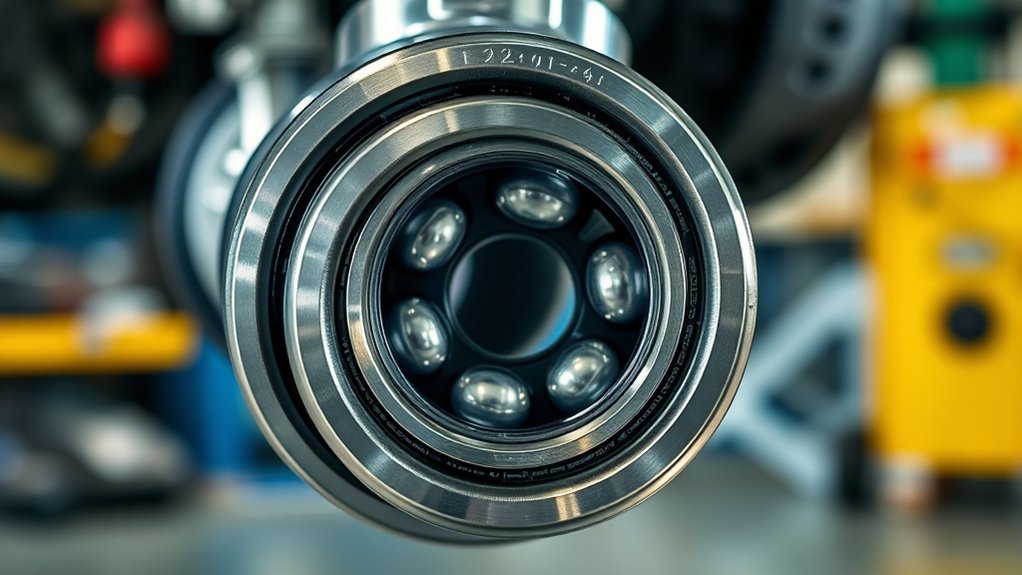
You’ll notice the CV joint lets the axle move smoothly while handling different angles. It stays flexible under torque, so power gets transmitted efficiently to your wheels.
Let’s look at how this joint’s movement mechanics make that possible.
Joint Movement Mechanics
Although the CV axle constantly changes angles as your vehicle moves, its constant velocity joint keeps power flowing smoothly to the wheels. It does this by allowing the axle to bend while maintaining a steady rotational speed. The joint uses a set of ball bearings inside a cage that moves within grooves, adjusting to the angle changes without losing power transmission.
Here’s a quick look at how the joint’s movement mechanics work:
| Component | Function |
|---|---|
| Ball Bearings | Transfer torque evenly |
| Cage | Holds bearings in place |
| Grooves | Guide bearing movement smoothly |
| Joint Housing | Supports structural integrity |
| Axle Shaft | Transmits rotational force |
This design guarantees your wheels get consistent power, even when turning or going over bumps.
Flexibility Under Torque
How does the CV axle handle the intense twisting forces when you accelerate or turn sharply? The answer lies in its constant velocity joint, designed to maintain smooth power delivery despite the axle’s changing angles. It flexes under torque while keeping the rotational speed steady.
Here’s how it works:
- The joint uses ball bearings inside a cage, allowing movement without speed loss.
- It adjusts to suspension and steering changes, accommodating sharp turns.
- The design evenly distributes torque, preventing binding or vibrations.
- A protective boot keeps grease in and contaminants out, ensuring flexibility under stress.
This clever engineering lets your vehicle maintain control and power, no matter the driving conditions or wheel angles.
Power Transmission Efficiency
The constant velocity joint not only manages twisting forces but also plays a key role in delivering power efficiently from the engine to your wheels. It guarantees that the rotational force remains constant, no matter the angle of the joint. This means you won’t experience power loss or uneven torque, which can cause vibrations or reduce performance.
By maintaining a steady speed between input and output shafts, the CV joint optimizes power transfer, helping your vehicle accelerate smoothly. It also reduces wear on drivetrain components, extending their lifespan.
The Importance of CV Axles in Front-Wheel Drive Cars
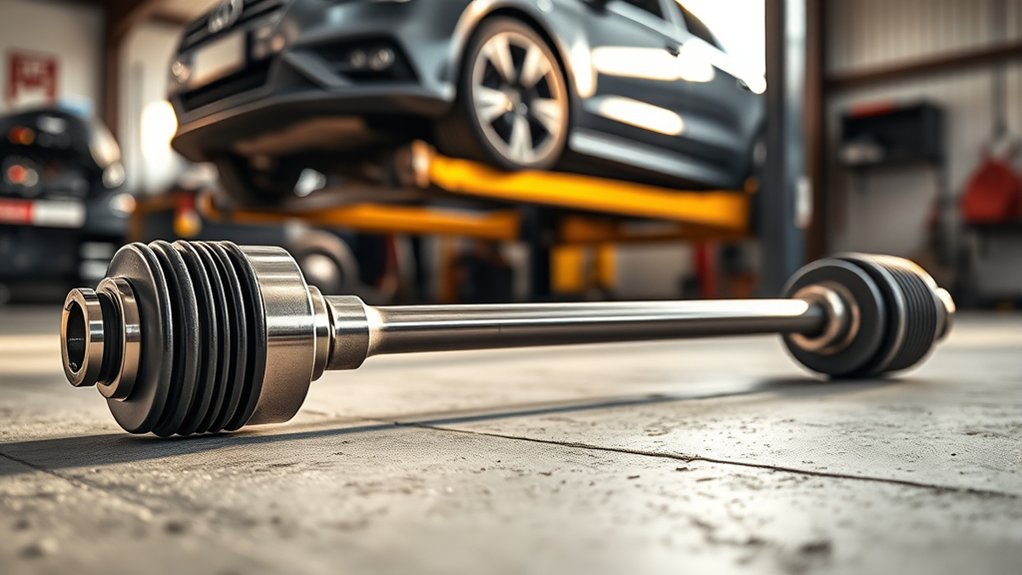
You rely on CV axles to transfer power smoothly from the engine to your front wheels, ensuring steady performance. When these axles wear out, you’ll notice vibrations or difficulty steering, which can affect your driving experience.
Understanding their role helps you spot common wear and tear before it becomes a bigger problem.
Essential Functionality Explained
Because your front-wheel drive car relies on its CV axles to transfer power from the transmission to the wheels, understanding their role becomes essential. CV axles are designed to handle both power delivery and steering angles, ensuring smooth movement. Without them, your car wouldn’t be able to turn or drive efficiently.
Here’s what CV axles do for you:
- Transmit torque from the engine to the wheels
- Allow the wheels to move up and down with suspension travel
- Enable smooth steering by accommodating changes in wheel angle
- Maintain constant rotational speed despite suspension and steering movements
Impact on Vehicle Performance
How does a faulty CV axle affect your car’s performance? When your CV axle isn’t working properly, you’ll notice problems like vibrations during acceleration or difficulty steering smoothly. Since the CV axle transfers power from the transmission to your wheels while allowing for flexible movement, any damage compromises this process.
In front-wheel drive cars, this means less efficient power delivery, leading to reduced acceleration and handling issues. You might also hear clicking noises when turning, signaling joint wear that impacts your vehicle’s responsiveness. Ignoring these symptoms can lead to more serious drivetrain damage.
Keeping your CV axles in good shape guarantees your car drives smoothly, handles well, and maintains consistent power transfer, which is vital for your safety and vehicle performance.
Common Wear And Tear
A front-wheel drive car relies heavily on its CV axles to deliver power smoothly from the transmission to the wheels while allowing for steering and suspension movement. Over time, these axles face common wear and tear that can affect your driving experience. You might notice issues like clicking noises when turning or vibrations during acceleration, indicating worn-out CV joints or damaged boots.
Dirt, moisture, and road debris can deteriorate the protective boots, leading to grease loss and joint failure. To keep your car running smoothly, watch for:
- Torn or cracked CV boots
- Grease leaks around the axle
- Clicking or popping sounds when turning
- Excessive vibration during driving
Addressing these signs early helps you avoid costly repairs and guarantees your car’s safety.
What Causes CV Axles to Wear Out or Get Damaged?
When you drive regularly, your CV axles endure constant stress from turning, accelerating, and absorbing shocks from the road. Over time, this stress wears down the components, especially the CV joints. One major cause of damage is a torn or cracked CV boot, which lets dirt, water, and debris enter the joint, leading to contamination and accelerated wear.
Hitting potholes, curbs, or rough terrain can also physically damage the axle or joints. Additionally, exposure to harsh weather conditions and corrosive substances like road salt can cause rust and weaken the axle. Neglecting routine maintenance, such as failing to inspect or replace a damaged boot, often speeds up the wear process.
Staying proactive helps protect your CV axles from premature failure.
Common Signs of a Failing CV Axle
Damaged or worn CV axles often show clear signs that you shouldn’t ignore. If you notice these symptoms early, you can prevent further damage and costly repairs.
Here are some common signs of a failing CV axle:
- Clicking or popping noises when turning, especially sharp corners
- Grease splattered around the inside of the wheel or on suspension components
- Vibration during acceleration or at higher speeds
- Difficulty steering or a feeling of looseness in the steering wheel
If any of these signs appear, it’s a strong indicator that your CV axle needs attention. Addressing these issues promptly helps maintain your vehicle’s reliability and performance. Don’t wait until a minor problem turns into a major failure.
How a Faulty CV Axle Impacts Handling and Safety
Since your CV axle plays an essential role in transferring power from the transmission to the wheels, any fault in it can directly affect how your vehicle handles. When a CV axle is damaged, you may experience vibrations, making steering feel unstable or jerky. This instability can reduce your control, especially during turns or sudden maneuvers, increasing the risk of an accident.
A faulty CV axle can also cause uneven tire wear, further compromising traction and safety. If the axle fails completely, your vehicle might lose the ability to move one or both wheels, leaving you stranded or causing dangerous situations on the road. Paying attention to how your car responds while driving helps you spot issues early and keep yourself and others safe.
Tips for Maintaining Your CV Axles for Longer Life
Noticing vibrations or uneven tire wear can signal CV axle problems, but you don’t have to wait for symptoms to appear before taking action. Regular maintenance helps extend your CV axles’ lifespan and prevents costly repairs. Keep an eye on the CV boots, as tears or cracks allow dirt and moisture to damage the joints.
Cleaning and lubricating the joints when possible protects against wear. You should also avoid harsh driving conditions that stress the axles, like sudden acceleration or rough terrain. Here are some key tips:
- Inspect CV boots regularly for damage or leaks
- Clean and lubricate joints during routine maintenance
- Avoid aggressive driving and sharp turns
- Schedule professional inspections if you notice unusual noises
When to Replace Your CV Axle and Step-by-Step Guide
If your vehicle starts making clicking noises during turns or you feel vibrations while driving, it’s a clear sign that your CV axle might need replacing. To replace it, first, verify your car is parked on a flat surface and use wheel chocks. Loosen the lug nuts, then lift the vehicle with a jack and secure it with stands.
Remove the wheel and the axle nut. Next, disconnect the lower ball joint to allow movement and carefully pull the CV axle out from the transmission. Install the new CV axle by reversing these steps, making sure it seats properly in the transmission.
Finally, reattach the wheel, lower the car, and tighten the lug nuts. If you’re unsure, consult a professional to avoid complications.
Frequently Asked Questions
Can I Drive With a Damaged CV Axle Temporarily?
You can drive temporarily with a damaged CV axle, but you shouldn’t. It risks further damage and unsafe handling.
Get it repaired or replaced as soon as possible to avoid costly repairs and guarantee your safety.
Are CV Axles the Same for All Car Models?
No, CV axles aren’t the same for all car models. You’ll need the specific axle designed for your vehicle’s make, model, and year to guarantee proper fit and function.
Always check compatibility before buying.
How Much Does It Typically Cost to Replace a CV Axle?
Replacing a CV axle typically costs you between $300 and $800, including parts and labor. Prices vary depending on your car model and repair shop, so it’s smart to get a few quotes before deciding.
Can CV Axle Issues Cause Tire Wear?
Yes, CV axle issues can cause uneven tire wear because a damaged or worn CV joint affects your vehicle’s alignment and suspension. If you don’t fix it, you’ll notice your tires wearing out faster on certain edges.
Is It Possible to Repair a CV Joint Instead of Replacing It?
Yes, you can repair a CV joint if the damage is minor, like a torn boot.
However, if it’s severely worn or noisy, replacing the entire CV axle is usually more reliable and cost-effective.
Conclusion
If you ignore your CV axles, you might as well invite disaster to take the wheel! These little constant velocity joints keep your car’s wheels spinning smoothly, and when they fail, handling turns into a nightmare.
Don’t wait for that ominous clicking sound or wobble to ruin your drive. Stay ahead by maintaining and replacing your CV axles on time—you’ll save yourself from a breakdown drama that could feel like the end of the world on the road!
Remember, CV stands for constant velocity, which means these joints are crucial for transferring power efficiently to your wheels. Proper care of your CV axles ensures smooth driving and helps avoid costly repairs down the line.

