

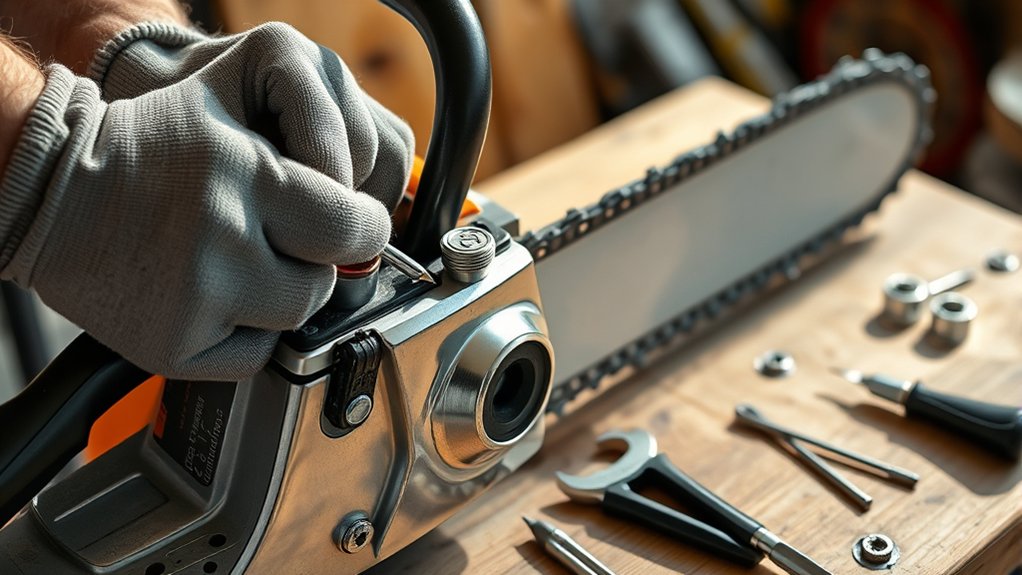
To set your chainsaw carburetor in 7 easy steps, start by preparing your chainsaw and gathering the necessary tools. Understanding how to adjust the carburetor is essential for maintaining optimal chainsaw performance and ensuring smooth operation.
Locate the low-speed (L), high-speed (H), and idle (T) screws on the carburetor to begin the tuning process.
Adjust the low-speed screw first to achieve a smooth idle. Then, tweak the high-speed screw to provide power without bogging down the engine.
Next, fine-tune the idle screw to keep the engine steady at rest.
Finally, test your chainsaw under various loads and make small adjustments as needed.
Keep following these steps regularly to optimize performance and troubleshoot your chainsaw efficiently.
Key Takeaways
- Ensure the chainsaw engine is cool and disconnect the spark plug for safety before starting adjustments.
- Identify the three carburetor screws: low-speed (L), high-speed (H), and idle speed (T or LA).
- Adjust the low-speed screw (L) clockwise to lean fuel mixture and counterclockwise to enrich for a smooth idle.
- Warm up the engine, then adjust the high-speed screw (H) for peak RPM without causing sputtering or bogging.
- Fine-tune the idle speed screw (T or LA) for stable idle RPM and test performance under load by cutting wood.
Prepare Your Chainsaw and Gather Tools
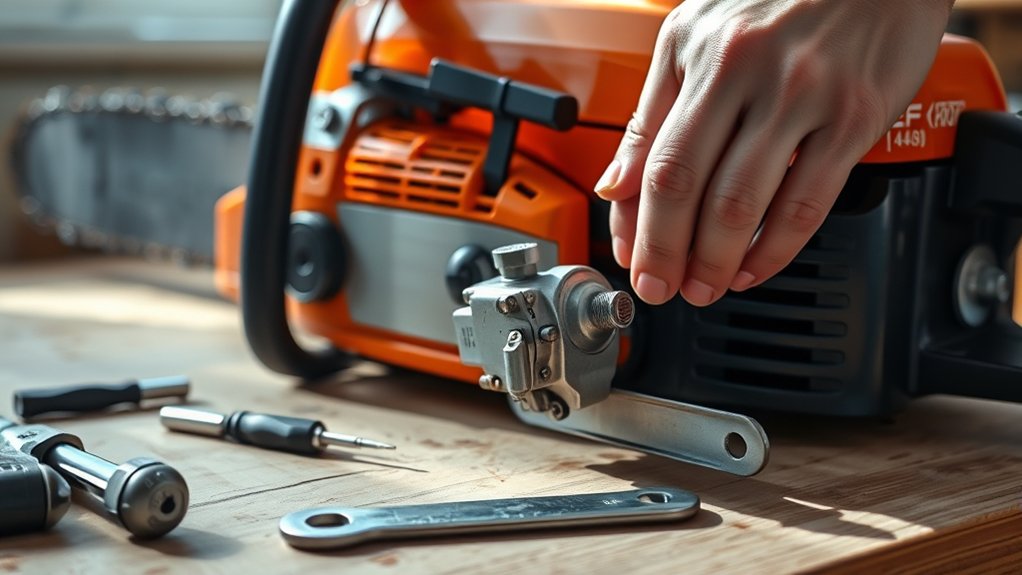
Before adjusting your chainsaw’s carburetor, make sure you prepare the saw properly and gather all the necessary tools. Start by placing your chainsaw on a stable, flat surface to prevent accidents. Make sure the engine is cool to avoid burns.
Remove the spark plug cover and disconnect the spark plug wire to prevent accidental starting. Next, clean the air filter and surrounding area to keep debris from entering the carburetor during adjustment. You’ll need a few basic tools: a flathead screwdriver, a small socket wrench or screwdriver for the adjustment screws, and safety gloves.
Having a service manual for your specific chainsaw model handy will help you follow exact steps. Preparing thoroughly sets you up for a safe and precise carburetor adjustment.
Find Carburetor Adjustment Screws and Understand Their Functions
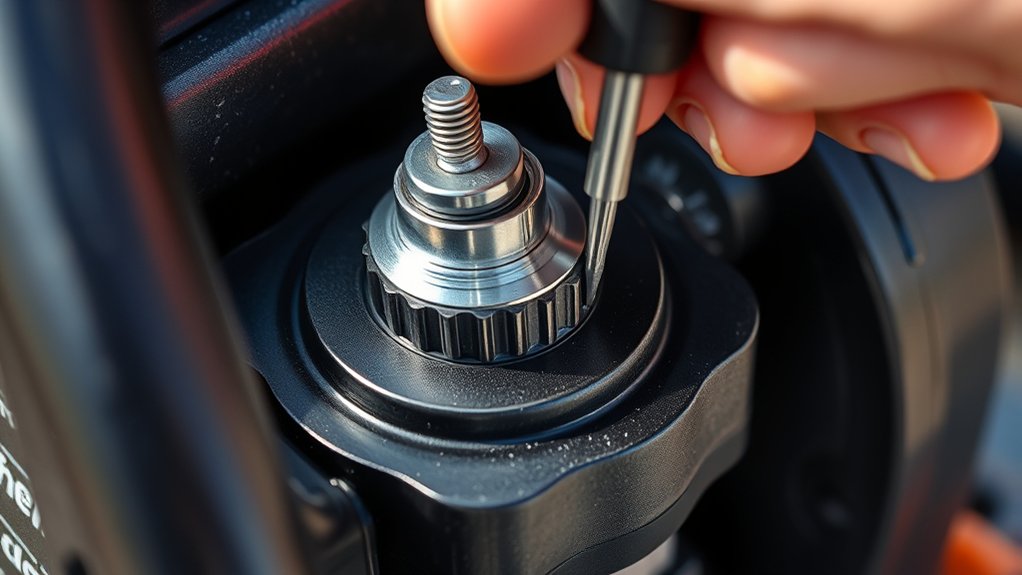
Where exactly are the carburetor adjustment screws located, and what roles do they play? You’ll find these screws on the side of the carburetor body, usually three in number: the low-speed screw (L), the high-speed screw (H), and the idle speed screw (T or LA). Each has a distinct function.
The low-speed screw controls the fuel mixture at idle and low RPMs, ensuring smooth running when the chainsaw isn’t under load. The high-speed screw adjusts the fuel mixture at full throttle, affecting performance and engine power. The idle speed screw sets the throttle plate’s resting position, controlling how fast the engine idles.
Knowing these screws and their roles is essential before you start making adjustments to optimize your chainsaw’s performance.
Adjust the Carburetor Low-Speed Screw for Smooth Idle
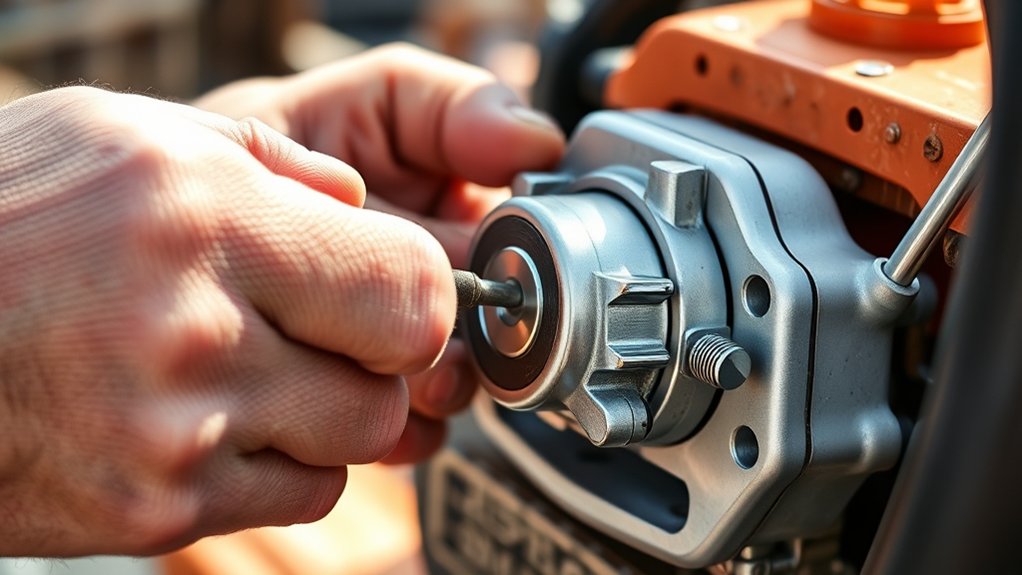
Now that you know where the carburetor adjustment screws are, focus on the low-speed screw. This screw controls the fuel mixture at idle, so adjusting it correctly guarantees your chainsaw runs smoothly without stalling.
Turn it slowly to find the perfect balance for a steady, smooth idle.
Identifying Low-Speed Screw
How can you quickly locate the low-speed screw on your chainsaw carburetor? First, find the carburetor, usually housed near the air filter. Look for small, adjustable screws on the carburetor body—there are typically two or three.
The low-speed screw often sits closest to the engine or marked with an “L.” It controls the fuel mixture when the engine runs at low RPM. The screw’s head might be flat or Phillips, so have a matching screwdriver ready.
Avoid confusing it with the idle speed screw, which adjusts the throttle plate and is usually marked “T” or “LA.” If your chainsaw’s manual is handy, consult it to confirm the exact screw. Identifying this screw correctly ensures you can fine-tune your chainsaw’s idle performance effectively.
Adjusting Idle Smoothly
Once you’ve located the low-speed screw on your chainsaw carburetor, you can begin adjusting it to achieve a smooth idle. Turn the screw slowly clockwise or counterclockwise while the engine is running at low throttle. Listen carefully for changes in engine sound and behavior.
Your goal is a steady, even idle without sputtering or stalling.
Here’s how to adjust for the best idle:
- Turn the screw clockwise to lean the mixture and increase idle speed, but don’t overdo it.
- Turn it counterclockwise to richen the mixture, which can smooth rough idling.
- Find a balance where the chainsaw runs steadily without revving up or dying.
With patience, you’ll enjoy a reliable start and smooth operation every time.
Set the Carburetor High-Speed Screw for Best Engine Power
Although it might seem tricky at first, adjusting the high-speed screw on your chainsaw carburetor is essential for achieving the best engine power. This screw controls the fuel and air mixture when your engine runs at full throttle. Start by warming up the chainsaw so it operates under normal conditions.
Then, slowly turn the high-speed screw clockwise until the engine speeds up, but avoid over-tightening. Next, turn it counterclockwise just until the engine reaches its peak speed and runs smoothly without sputtering. Listen carefully for changes in engine sound and power output.
If you notice the engine bogging down or revving too high, adjust accordingly. Properly setting this screw guarantees maximum performance and prevents damage from running too lean or too rich.
Fine-Tune the Idle Screw for Smooth Running
After setting the high-speed screw, you’ll want to fine-tune the idle screw to guarantee your chainsaw runs smoothly at low speeds. This step prevents stalling and ensures your saw is ready the moment you need it.
To fine-tune the idle screw:
- Slowly turn the idle screw clockwise until the chain starts to move—then back it off slightly to stop the chain.
- Listen closely for a steady, smooth engine sound without any sputtering or surging.
- Adjust in small increments, testing the engine each time to find the perfect balance between idle speed and chain stillness.
Taking this time means less frustration and more confidence when you power up your chainsaw for any task.
Test Your Chainsaw Carburetor and Finalize Adjustments
How do you know if your chainsaw carburetor adjustments are spot on? Start by revving the engine at different speeds. Your chainsaw should respond quickly without sputtering or stalling.
Listen for smooth acceleration and stable idle. If it hesitates or bogs down, tweak the screws slightly. Once you’re satisfied, test the saw under load by cutting wood.
This final test guarantees the carburetor settings handle real working conditions.
| Test Condition | Expected Result | Action if Off |
|---|---|---|
| Idle Speed | Stable, no stalling | Adjust idle screw |
| Acceleration | Quick, smooth | Adjust high-speed screw |
| Deceleration | No backfiring or stalling | Adjust low-speed screw |
| Load Cutting | Consistent power | Fine-tune all screws |
| Engine Temperature | Normal | Check carburetor settings |
Make small adjustments and retest until performance is flawless.
Troubleshoot Common Carburetor Problems
When your chainsaw struggles despite careful adjustments, it’s time to troubleshoot common carburetor problems. Don’t let frustration take over; identifying the issue quickly keeps you productive and safe.
Here’s where to focus:
- Fuel Flow Blockage – Check for clogged fuel lines or a dirty fuel filter. This chokes your engine and causes stalling.
- Air Leaks – Inspect the carburetor mounting and gasket for leaks. Even a small gap disrupts the air-fuel mix and reduces power.
- Incorrect Needle Settings – Revisit the high and low-speed needle adjustments. If they’re off, your chainsaw won’t run smoothly or might stall under load.
Frequently Asked Questions
What Type of Fuel Mixture Is Best for My Chainsaw?
You should use a 50:1 gasoline-to-oil mixture for most chainsaws, mixing fresh unleaded gas with two-stroke engine oil. This guarantees proper lubrication and performance, so your chainsaw runs smoothly without damaging the engine.
How Often Should I Clean the Carburetor?
You should clean your carburetor at least twice a year; studies show 70% of chainsaw issues stem from carburetor buildup. Cleaning keeps your saw running smoothly and prevents costly repairs down the line.
Can a Dirty Air Filter Affect Carburetor Performance?
Yes, a dirty air filter can reduce airflow, causing your carburetor to run rich or inefficiently. You’ll notice poor performance or rough idling, so clean or replace the filter regularly to keep your chainsaw running smoothly.
What Safety Gear Is Recommended When Adjusting the Carburetor?
Don’t jump in blind—wear safety glasses, gloves, and ear protection when adjusting the carburetor. These shield your eyes from sparks, your hands from cuts, and your ears from loud noise, keeping you safe throughout the process.
How Do Altitude Changes Affect Carburetor Settings?
You’ll notice your chainsaw runs leaner at higher altitudes because the air is thinner. You’ll need to adjust the carburetor to enrich the mixture, ensuring it runs smoothly without overheating or stalling.
Conclusion
Don’t worry if you’re new to adjusting a chainsaw carburetor—it’s simpler than it seems. By following these seven easy steps, you’ll get your chainsaw running smoothly and efficiently in no time.
Remember, a well-set carburetor boosts performance and extends your saw’s life. Take your time, make small adjustments, and test as you go.
With a bit of patience, you’ll master this skill and tackle any job confidently. Properly setting a chainsaw carburetor is key to optimal saw performance and longevity.

