

You should soak your motorcycle clutch plates in oil long enough to fully saturate them without weakening the friction material. Proper soaking time is crucial for clutch performance and longevity.
Different types of clutch plates require varying soak durations to achieve optimal results.
For wet organic plates, soak 15-30 minutes; sintered plates may need 30-45 minutes, and steel plates about 10-20 minutes. Dry plates require much longer, up to 24 hours.
Using the right oil temperature and type helps attain proper absorption.
Getting this timing right ensures smooth clutch performance and durability. Keep following along to understand the full process and avoid common pitfalls.
Key Takeaways
- Soak wet organic clutch plates for 15-30 minutes, and sintered wet plates for 30-45 minutes to ensure proper oil absorption.
- Dry plates require much longer soaking, typically 12-24 hours depending on material type, with organic dry plates needing close to 24 hours.
- Use oil warmed to around 100°F-120°F to speed absorption without damaging clutch materials during soaking.
- Fully submerge plates flat in clean oil, then drain excess oil after soaking for optimal saturation and performance.
- Avoid under- or over-soaking, as insufficient soaking causes slipping, while excessive soaking weakens friction material and reduces grip.
Why Soaking Motorcycle Clutch Plates in Oil Is Essential
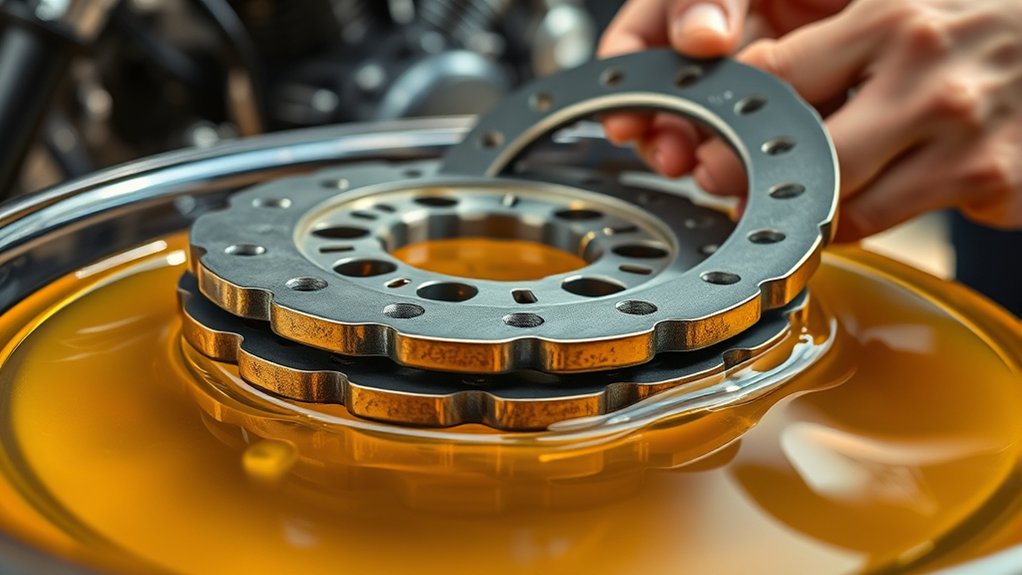
Although it might seem like a simple step, soaking motorcycle clutch plates in oil is crucial because it guarantees proper lubrication and prevents premature wear. When you soak the plates, the oil penetrates their fibers and surfaces, ensuring smooth engagement and disengagement. If you skip this step, dry plates can cause uneven friction, overheating, and even warping.
Soaked plates also help maintain consistent clutch performance, reducing slippage and improving your bike’s overall ride quality. By soaking the clutch plates, you’ll extend their lifespan and avoid costly repairs down the road. Essentially, this simple preparation step protects your investment and keeps your motorcycle operating safely and efficiently.
Don’t underestimate the importance of properly lubricated clutch plates for your bike’s health.
Recommended Soaking Times for Different Clutch Plates
You’ll need to adjust soaking times depending on the type of clutch plates you have. Wet plates usually require longer soaking, while dry plates soak for a shorter period.
If your clutch uses mixed materials, you’ll want to find a balanced soaking time to protect all components.
Soaking Time for Wet Plates
When soaking wet clutch plates, the recommended time varies depending on the type and material of the plates. You want to guarantee they absorb enough oil to perform smoothly without being over-soaked, which can cause slippage.
Typically, organic plates soak faster than sintered or steel plates.
| Plate Type | Material | Soaking Time (minutes) |
|---|---|---|
| Organic Wet | Fiber-based | 15-30 |
| Sintered Wet | Metal-based | 30-45 |
| Steel Plates | Pure steel | 10-20 |
| Hybrid Plates | Mixed materials | 20-35 |
| Carbon Fiber Wet | Carbon composite | 25-40 |
Follow these times closely to maintain clutch performance and longevity.
Dry Clutch Plate Soaking
Since dry clutch plates haven’t been exposed to oil yet, they require a longer soaking time to fully absorb the lubricant and guarantee ideal performance. Typically, you’ll want to soak dry plates for at least 12 to 24 hours, depending on the manufacturer’s recommendations. This extended period allows the fibers and materials in the plates to saturate completely, preventing premature wear or slipping once installed.
If you’re working with organic dry plates, aim closer to 24 hours, while sintered dry plates might need slightly less time, around 12 to 18 hours. Always use the specified type of oil for soaking. Skipping or shortening this step risks clutch chatter and reduced lifespan, so patience here assures your clutch performs smoothly and reliably from the start.
Mixed Material Plate Timing
Although different clutch plate materials demand varying soak times, knowing the recommended duration for each type guarantees ideal performance and longevity. When dealing with mixed material clutch plates, you’ll need to balance soak times carefully. Organic plates usually require about 20 to 30 minutes to fully absorb oil, while steel plates don’t need soaking since they’re metal and rely on oil for lubrication, not absorption.
If your clutch pack combines both, soak the organic plates separately for their full recommended time before assembling. This ensures the organic plates are properly saturated without overexposing the steel plates. Over-soaking steel plates won’t help and may lead to unnecessary delays.
What Happens If You Soak Clutch Plates Too Little or Too Long
If you soak clutch plates too little, they won’t absorb enough oil, leading to poor performance and increased wear. Soaking them too long can cause the plates to become oversaturated, risking slippage and reduced clutch efficiency.
You need to find the right balance to keep your clutch working smoothly.
Effects Of Insufficient Soaking
When you don’t soak your motorcycle clutch plates long enough, they won’t absorb enough oil, causing poor grip and increased wear. The plates rely on oil to create a smooth friction surface and to prevent overheating. Without proper soaking, your clutch may slip, making it harder to control your bike and reducing overall performance.
Insufficient oil saturation also leads to faster plate deterioration, forcing you to replace parts more frequently. Additionally, dry plates can generate excessive heat, risking damage to other clutch components. Soaking the plates properly ensures they are fully lubricated, improving longevity and reliability.
To avoid these issues, follow the recommended soaking time for your specific clutch plates to maintain ideal function and protect your motorcycle’s drivetrain.
Risks Of Over-Soaking
Getting the soaking time right is just as important as avoiding under-soaking. If you soak clutch plates too long, they can become overly saturated, causing the oil to drip excessively and reduce friction where it’s needed most. This leads to clutch slippage, making your bike harder to control and potentially causing premature wear.
On the flip side, soaking too little leaves the plates dry and rigid, which can cause harsh engagement and faster damage. You want the plates to absorb just enough oil to stay flexible and responsive without becoming saturated. Sticking to the manufacturer’s recommended soaking time guarantees peak performance and longevity.
How Soaking Time Affects Clutch Performance and Longevity
Because the clutch plates rely on proper oil saturation to function smoothly, the soaking time directly impacts both performance and durability. If you soak them too briefly, they won’t absorb enough oil, leading to poor engagement and faster wear. On the other hand, soaking too long won’t necessarily improve performance and might risk over-saturation, which can cause slipping.
Proper clutch plate soaking time ensures smooth function, preventing poor engagement and excessive wear or slipping.
Finding the right balance ensures your clutch operates efficiently and lasts longer.
Consider these points:
- Proper soaking time enables ideal friction and smooth clutch operation.
- Insufficient soaking results in dry spots, causing uneven wear.
- Excessive soaking can weaken friction materials, reducing grip.
- Correct oil absorption helps dissipate heat, extending clutch life.
Preparing Oil for Soaking Clutch Plates
Proper oil preparation plays a vital role in ensuring your clutch plates soak correctly and perform effectively. Start by using the exact oil recommended for your motorcycle, as the right viscosity and additives impact clutch function. Avoid mixing oils or using old, contaminated oil since impurities can affect soaking quality.
Before soaking, warm the oil slightly to improve absorption, but don’t overheat it—lukewarm is ideal. Pour the oil into a clean container that’s large enough to fully submerge the clutch plates without crowding. Make sure the container is free of dirt or debris to prevent contamination.
Taking these steps helps your clutch plates absorb oil evenly, promoting smooth engagement and extending their lifespan. Proper oil prep sets the stage for ideal soaking results.
How to Soak Clutch Plates Step-by-Step
Once you’ve prepared the oil and container, you can start soaking the clutch plates by fully submerging them in the warmed oil. Make certain each plate is completely covered to allow thorough absorption. Let them soak for the recommended time, usually around 30 minutes, to guarantee peak performance.
Fully submerge clutch plates in warmed oil for about 30 minutes to ensure optimal absorption and performance.
During soaking:
- Gently separate plates occasionally to prevent sticking.
- Maintain oil temperature, avoiding overheating or cooling.
- Use a clean container to avoid contamination.
- Place plates flat and avoid stacking unevenly.
After soaking, drain excess oil before reinstalling the plates. This step guarantees the plates are properly saturated, improving clutch engagement and reducing wear. Following these steps carefully helps keep your clutch functioning smoothly and extends its lifespan.
Signs Your Clutch Plates Are Ready After Soaking
Although soaking times can vary, you’ll know your clutch plates are ready when they feel fully saturated and no longer absorb excess oil. When you remove a plate, it should feel heavier and visibly darker, indicating it’s soaked through. If oil beads up or drips off instead of soaking in, that’s a good sign the plate is saturated.
Also, the plates won’t feel dry or stiff when you bend them slightly; instead, they’ll have some flexibility due to the absorbed oil. Avoid rushing this process—plates that aren’t properly soaked can lead to poor clutch performance. Check each plate individually, and if you notice any that still seem dry or lighter in weight, give them more time in the oil before reassembling your clutch.
Temperature’s Effect on Oil Absorption in Clutch Plates
You’ll want to soak your clutch plates in oil at the right temperature to guarantee proper absorption. Warmer oil lets the plates soak up faster, while cooler oil slows the process down.
Understanding how heat and cooling affect soaking can help you get the best clutch performance.
Optimal Oil Temperature
Because oil temperature directly affects its viscosity, you need to soak your motorcycle clutch plates at an ideal temperature to guarantee proper absorption. If the oil is too cold, it becomes thick and slows absorption, while oil that’s too hot thins out excessively, reducing its ability to saturate the plates evenly.
Aim for a moderate temperature—typically around 100°F to 120°F (38°C to 49°C)—to balance viscosity and penetration. This range helps the oil flow smoothly into the clutch plates without causing damage or uneven soaking.
Consider these points when soaking clutch plates:
- Warm oil absorbs faster, reducing soaking time
- Excessively hot oil can degrade clutch material
- Cold oil leads to incomplete saturation
- Consistent temperature guarantees even oil distribution
Heat Impact on Absorption
Maintaining the right oil temperature doesn’t just influence how quickly your clutch plates soak—it also affects how well the oil penetrates the material. When oil is warmer, it becomes less viscous, allowing it to seep deeper into the clutch plates’ fibers. Conversely, cooler oil tends to absorb slower and less thoroughly.
If the oil is too hot, it might degrade the plate material or reduce oil effectiveness. You want a balance where oil absorption is maximized without damaging components.
| Temperature (°F) | Absorption Rate | Effect on Plates |
|---|---|---|
| 70 (Room Temp) | Slow | Minimal penetration |
| 100 | Moderate | Good absorption |
| 130 | Fast | Ideal for soaking |
| 160+ | Very Fast | Risk of damage |
Cooling Effects on Soaking
How quickly does cooling affect the soaking process of clutch plates? When the oil and plates cool down, the oil’s viscosity increases, meaning it flows slower and soaks into the plates less efficiently. You’ll notice that cooler temperatures slow oil absorption, which can extend the soaking time needed to achieve ideal saturation.
This is critical because under-soaked plates may cause poor clutch performance.
Consider these points when dealing with cooling effects:
- Cooler oil thickens, reducing penetration speed.
- Plates absorb oil slower as temperature drops.
- Prolonged soaking compensates for reduced absorption.
- Warming the oil slightly before soaking improves efficiency.
Soaking Clutch Plates in Cold and Warm Climates
When you soak clutch plates in different climates, temperature plays a crucial role in how the oil penetrates the friction material. In cold climates, the oil thickens, slowing absorption and requiring you to soak the plates longer to guarantee full saturation. You might need to leave them in the oil for a few extra hours or gently warm the oil beforehand to improve flow.
In warm climates, the oil thins out, allowing faster penetration, so you can reduce soak time without sacrificing effectiveness. However, avoid overheating the oil, as that can degrade its properties. Adjusting your soaking time based on the ambient temperature helps maintain clutch performance and prevents premature wear, assuring your motorcycle runs smoothly regardless of where you ride.
Common Mistakes to Avoid When Soaking Clutch Plates
Adjusting soaking times based on climate is just one part of the process, but many riders make avoidable errors that can reduce the effectiveness of soaking clutch plates. To get the best results, you need to avoid these common mistakes:
- Soaking plates for too short or too long, which can lead to insufficient oil absorption or oversaturation.
- Using the wrong type of oil, as this affects friction and clutch performance.
- Skipping thorough cleaning before soaking, which prevents proper oil penetration.
- Neglecting to fully submerge the plates, causing uneven soaking and wear.
Maintaining Your Clutch After Soaking and Installation
Once you’ve soaked and installed your clutch plates correctly, maintaining them becomes essential to guarantee smooth performance and longevity. Regularly check the clutch cable tension, fluid levels, and inspect plates for wear or oil contamination. Avoid harsh riding that overheats the clutch, which can damage the plates.
Keep an eye on clutch engagement; if it feels rough or slips, address it promptly.
| Maintenance Task | Frequency | Key Tip |
|---|---|---|
| Inspect clutch plates | Every 3,000 miles | Look for warping or wear |
| Check oil level | Before every ride | Use recommended oil type |
| Adjust cable tension | Monthly | Ensure proper free play |
| Clean clutch cover | Every oil change | Prevent dirt buildup |
| Monitor clutch feel | Daily | Detect early signs of issues |
When to Replace Clutch Plates Instead of Soaking
Although soaking clutch plates in oil can restore their flexibility and performance, you should replace them if you notice persistent slipping, warping, or excessive wear.
Soaking won’t fix plates that have deep grooves, burnt spots, or are physically damaged.
Ignoring these signs can lead to poor clutch engagement and potential safety hazards.
Consider replacing your clutch plates if you experience:
- Continuous slipping despite proper soaking and adjustment
- Visible warping or bending of plates
- Excessive thinning or worn friction material
- Burn marks or discoloration indicating overheating
Frequently Asked Questions
What Type of Oil Is Best for Soaking Motorcycle Clutch Plates?
You’ll want to use the same type of oil recommended for your motorcycle, usually a high-quality, synthetic or semi-synthetic engine oil with the correct viscosity. Avoid using automotive oils, as they may cause slipping or damage.
Using the proper oil ensures optimal clutch performance and longevity. Always check your owner’s manual for specific recommendations. This helps maintain the clutch plates in good condition.
Can Soaking Clutch Plates in Oil Improve Slipping Issues?
You can’t make a silk purse out of a sow’s ear, but soaking clutch plates in oil can help reduce slipping by improving friction and flexibility.
Still, if slipping persists, you’ll need to check for wear or damage.
How Often Should Clutch Plates Be Soaked During Regular Maintenance?
You should soak clutch plates during every major maintenance or rebuild, typically every 15,000 to 20,000 miles. This guarantees proper oil absorption, preventing slipping and maintaining smooth clutch operation through your riding sessions.
Is It Necessary to Soak Clutch Plates When Using Synthetic Oil?
You don’t have to soak clutch plates when using synthetic oil; you can trust it to lubricate quickly, protect thoroughly, and perform consistently.
However, soaking still helps guarantee even oil absorption and peak clutch function every time.
Can Soaking Clutch Plates in Oil Prevent Overheating Problems?
Yes, soaking clutch plates in oil helps prevent overheating by ensuring proper lubrication and reducing friction.
You’ll keep the plates cooler, extend their lifespan, and maintain smoother clutch performance during rides.
Conclusion
Soaking your motorcycle clutch plates in oil isn’t just a step—it’s essential for smooth, reliable performance. Skipping or rushing this process can lead to slipping or premature wear.
So, how long is long enough? Typically, a few hours to overnight works best, depending on your clutch type and oil temperature. Taking the time to soak properly means you’re protecting your bike’s heart and extending its life.
Isn’t your ride worth that care? Properly soaking clutch plates in oil ensures optimal clutch operation and durability. This simple step is key to maintaining your motorcycle’s performance and longevity.

