

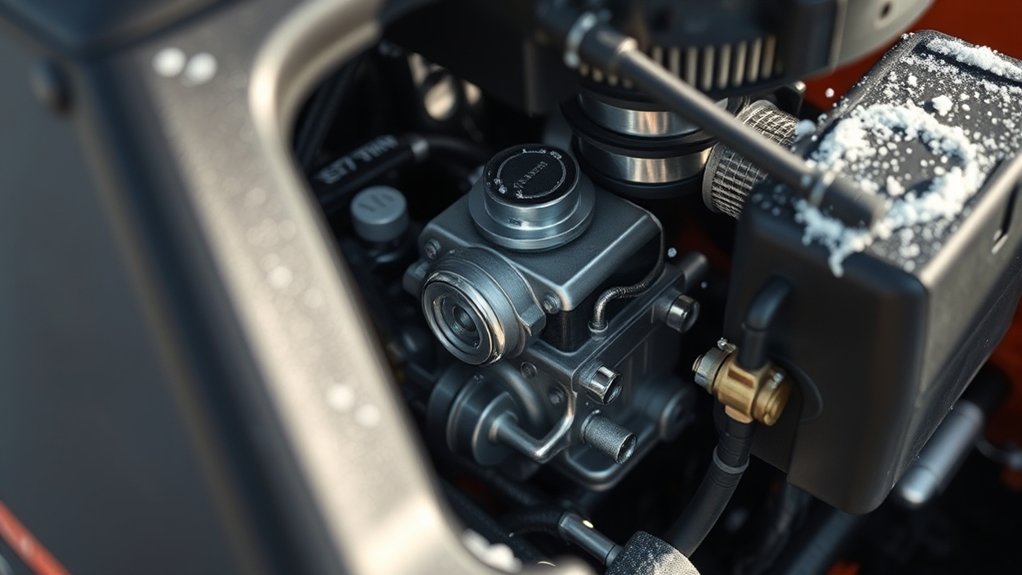
To locate the carburetor on your snowblower, start by focusing on the engine’s intake manifold area. The carburetor is typically positioned behind or beneath the air filter housing, making it somewhat easy to find once you know where to look.
This small but crucial component mixes air and fuel to power your snowblower efficiently.
You’ll notice a small, metal, boxy part connected to fuel lines and throttle linkages. It usually features a rounded bowl at the bottom and a choke lever on the side for adjusting the air-fuel mixture.
This carburetor is distinct from the larger fuel tank or the spark plug wires.
Knowing how to find the carburetor helps you keep your snowblower running smoothly. Proper inspection and maintenance of this part are essential for optimal performance.
Keep reading to uncover useful tips on caring for your snowblower carburetor.
Key Takeaways
- The carburetor is mounted near the engine’s intake manifold, between the air filter and engine cylinder.
- It is usually located behind or beneath the air filter housing, attached to the engine block.
- Look for a compact, metal, box-like component with tubes and screws protruding.
- Identify the carburetor by its float bowl, throttle linkage, choke lever, and fuel inlet.
- Fuel lines connect directly to the carburetor, distinguishing it from spark plug wires and the fuel tank.
Where the Carburetor Usually Sits on a Snowblower
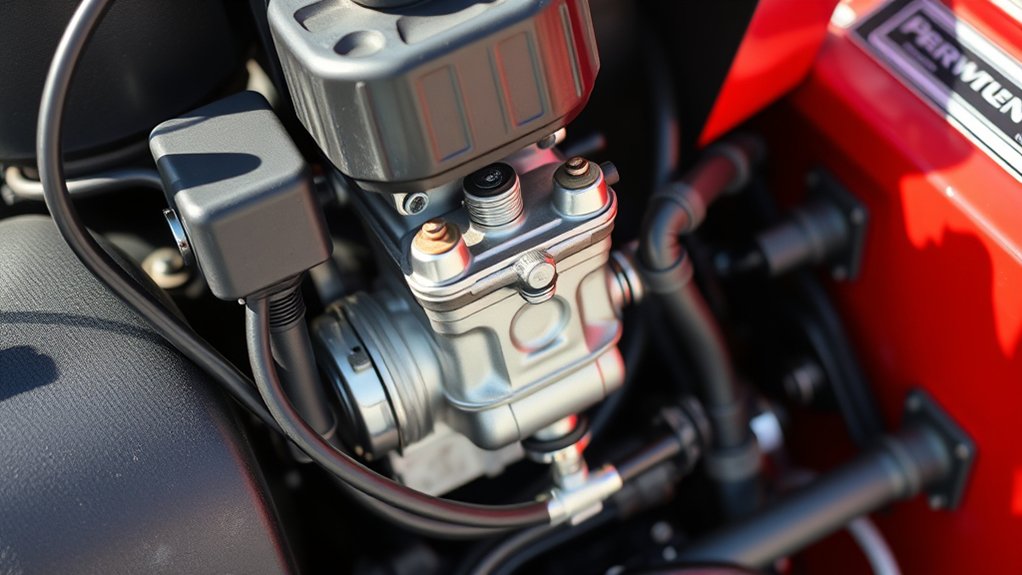
Although snowblower models vary, you’ll usually find the carburetor mounted near the engine’s intake manifold. It sits between the air filter and the engine cylinder, controlling the air-fuel mixture that powers your snowblower. When you open the engine cover, look for a small, box-like component attached to the engine block with fuel lines connected to it.
The carburetor is often tucked close to the throttle linkage, making it easier to adjust the engine speed. Its position is strategic, allowing it to mix fuel efficiently before combustion. Knowing this location helps when you need to inspect or clean the carburetor, especially after heavy use in snowy conditions.
Spotting it quickly can save you time during routine maintenance or troubleshooting.
Identifying the Carburetor by Shape and Key Parts
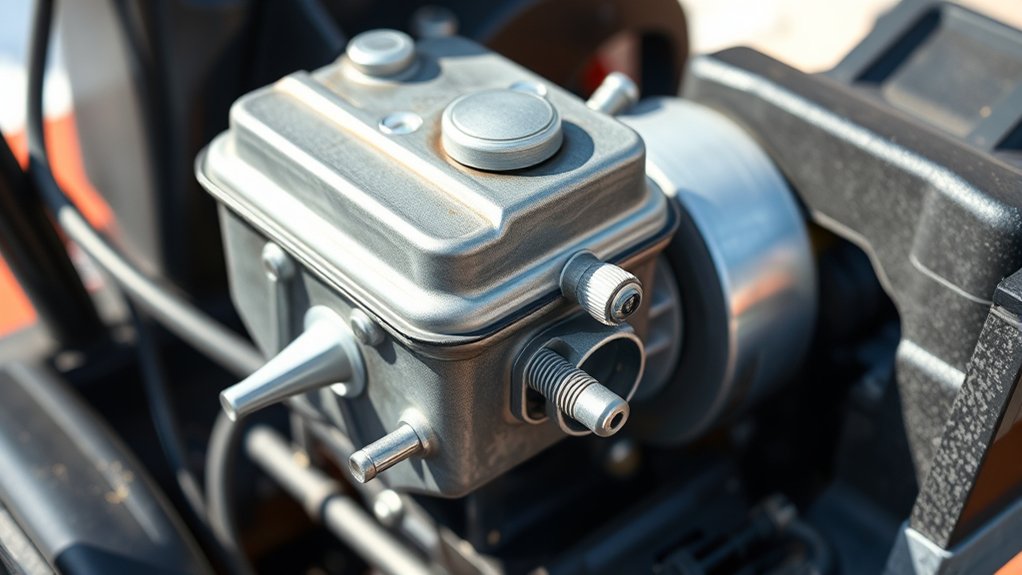
You’ll recognize the carburetor by its boxy shape with several small tubes and screws attached. Look for key parts like the throttle linkage, fuel bowl, and choke lever to confirm you’ve found it.
Typically, the carburetor sits near the engine’s intake manifold, making it easier to spot once you know what to look for.
Carburetor Shape Overview
When you’re trying to find the carburetor on your snowblower, recognizing its shape and key parts makes the task much easier. The carburetor typically has a compact, boxy form with several protruding tubes and a throttle lever. It’s usually made of metal or a sturdy alloy, often with a dull silver or gray finish.
You’ll notice it connected directly to the engine’s intake manifold and attached to the fuel line. Its shape is distinct compared to surrounding components like the air filter or fuel pump, which helps you spot it quickly. Keep in mind, while sizes and minor designs vary, the carburetor’s basic shape remains consistent across most snowblower models, so focusing on these visual cues will guide you right to it.
Key Parts To Spot
Recognizing the carburetor’s shape gets you halfway to locating it, but knowing its key parts helps you confirm you’ve found the right component. Look for the float bowl—a small, rounded chamber at the bottom—that stores fuel before mixing it with air. The throttle linkage, a thin metal arm or lever, controls airflow and fuel mixture; spotting this confirms you’re on the right track.
Check for the choke lever or knob, which adjusts the air-fuel ratio to help start the engine. Also, notice the fuel inlet where the fuel line connects. These parts together form a compact unit, often attached to the engine block.
Once you identify these elements, you can confidently locate the carburetor and proceed with maintenance or inspection.
Common Carburetor Locations
Although carburetor designs can vary, most snowblowers position this essential part in a few common spots. You’ll typically find the carburetor mounted directly behind or beneath the air filter housing. It often sits on the side of the engine, connected to the intake manifold.
Its shape is usually compact and boxy, with a small bowl at the bottom where fuel collects. Look for key parts like the throttle lever, fuel inlet, and choke control. The carburetor’s body often has metal linkages or screws that adjust fuel flow.
How to Tell the Carburetor Apart From Other Engine Parts
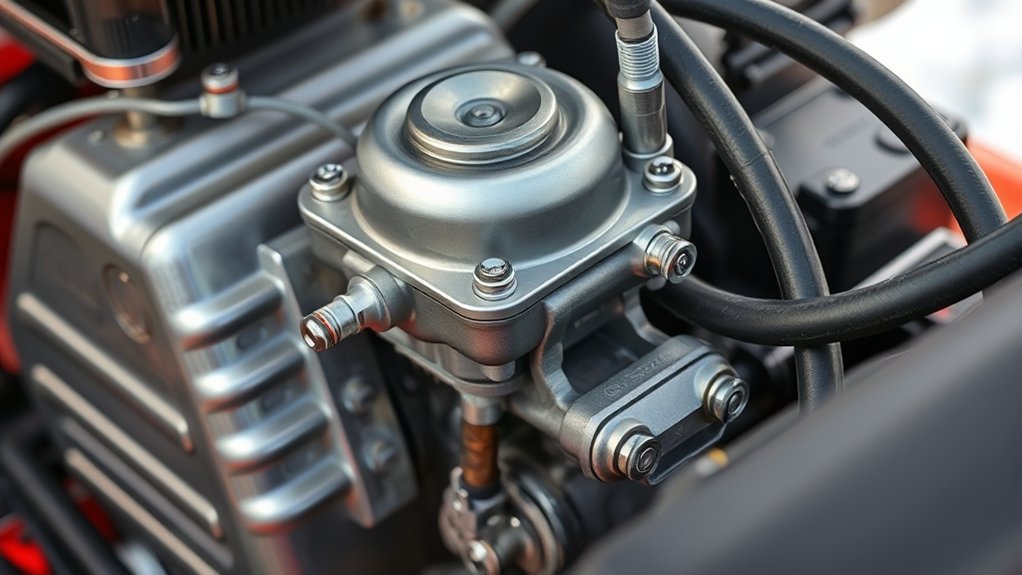
Because the carburetor plays a crucial role in mixing air and fuel, you’ll want to identify it clearly among the many components of your snowblower’s engine. Look for a metal, box-like part attached to the engine block, usually near the air filter. It has fuel lines connected to it and a throttle linkage or choke lever.
Unlike the spark plug wires, which are thin and insulated, the carburetor involves small tubes and passages. You won’t mistake it for the fuel tank, which is larger and plastic or metal with a cap. The carburetor often has a bowl-shaped bottom where fuel collects briefly.
Accessing the Carburetor on Different Snowblowers
When you need to access the carburetor on your snowblower, the approach varies depending on the model and design. On most single-stage snowblowers, you’ll find the carburetor near the engine’s intake manifold, often behind a protective cover or panel. You’ll usually need to remove this cover by loosening a few screws.
For two-stage models, the carburetor might be tucked deeper within the engine compartment, sometimes requiring you to remove the air filter housing first. On some modern snowblowers, accessing the carburetor means detaching additional components like the fuel line or throttle linkage carefully. Always keep track of parts as you work, so reassembly is straightforward.
Knowing your specific model’s layout helps you locate and access the carburetor quickly without causing damage.
Tools You Need to Locate and Inspect the Carburetor
To locate and inspect your snowblower’s carburetor, you’ll need a few essential tools like screwdrivers, wrenches, and a flashlight. Don’t forget to wear safety gear such as gloves and eye protection to keep yourself safe.
Keeping your tools organized will make the process quicker and less frustrating.
Essential Inspection Tools
Although locating the carburetor may seem straightforward, having the right tools on hand makes the inspection process much smoother. You’ll want a socket wrench set to remove bolts securing the carburetor and an adjustable screwdriver for loosening clamps or adjusting screws. A flashlight or headlamp is essential to illuminate tight spaces and help you see clearly.
Carry a clean rag or paper towels for wiping away dirt and grime around the carburetor. Needle-nose pliers come in handy to disconnect fuel lines or small clips carefully. Finally, keep a small container nearby to hold screws and parts so they don’t get lost during your inspection.
With these tools, you’ll be well-prepared to locate and inspect your snowblower’s carburetor efficiently and effectively.
Safety Gear Recommendations
Because working on your snowblower involves fuel and small parts, you’ll want to prioritize safety by wearing the right gear. Start with safety goggles to protect your eyes from debris or fuel splashes. Gloves are essential too—they shield your hands from sharp edges and prevent skin contact with gasoline or cleaning solvents.
Wear long sleeves and pants to avoid cuts and scrapes while you reach into tight spaces. If you’re working in a poorly ventilated area, consider a mask to avoid inhaling fumes. Finally, verify your footwear is sturdy with good grip to prevent slips, especially on icy or wet surfaces.
These simple precautions help you focus confidently on locating and inspecting the carburetor without risking injury.
Tool Organization Tips
Wearing the right safety gear sets you up for a smooth repair session, but having your tools organized keeps the process efficient and hassle-free. Before you start, gather essential tools like screwdrivers, wrenches, pliers, and a flashlight. Use a magnetic tray or small containers to keep screws and bolts from getting lost.
Lay out your tools in the order you’ll use them, so you don’t waste time searching. Keep a clean workspace free of clutter to avoid misplacing parts. Label any tools or parts if needed, especially if you plan to disconnect hoses or linkages around the carburetor.
Staying organized not only speeds up locating and inspecting the carburetor but also reduces frustration and errors during your snowblower maintenance.
Common Signs of Snowblower Carburetor Problems
When your snowblower’s carburetor starts acting up, you’ll notice several clear signs that something’s wrong. First, your engine may struggle to start or won’t start at all. You might also experience uneven idling or the engine stalling soon after you start it.
If you see black smoke coming from the exhaust, that’s a strong indicator of a rich fuel mixture caused by carburetor issues. Another sign is poor performance, like reduced power or sputtering while you’re using the snowblower. Additionally, excessive fuel consumption or flooding can point to carburetor troubles.
Paying attention to these symptoms early helps you avoid bigger problems and guarantees your snowblower stays reliable throughout the winter season.
Cleaning and Maintaining Your Snowblower Carburetor
Noticing signs of carburetor problems means it’s time to give your snowblower’s carburetor some attention. Start by removing the air filter cover and inspecting it for dirt. Clean or replace the filter as needed.
Next, remove the carburetor bowl to check for debris or gum buildup. Use a carburetor cleaner spray to dissolve deposits and a soft brush for stubborn spots. Regular maintenance keeps your engine running smoothly and prevents costly repairs.
| Task | Recommended Action |
|---|---|
| Air Filter | Clean or replace regularly |
| Carburetor Bowl | Remove and clean thoroughly |
| Carburetor Cleaner | Use spray to dissolve buildup |
| Inspection | Check for damage or wear |
Perform these steps before each winter season for prime performance.
When to Call a Professional for Carburetor Issues
Although regular maintenance can solve many carburetor problems, some issues require professional expertise. If your snowblower frequently stalls or won’t start despite cleaning the carburetor, it’s time to call a pro. Complex issues like internal damage, worn-out parts, or fuel delivery problems need specialized tools and knowledge.
Also, if you notice fuel leaks, persistent flooding, or strange engine noises, don’t try to fix these yourself. A professional mechanic can diagnose and repair these issues safely and effectively. Attempting advanced repairs without experience might cause more damage or create safety hazards.
When in doubt, reaching out to a certified technician guarantees your snowblower runs smoothly and lasts longer. Don’t hesitate to get expert help to avoid costly mistakes.
Frequently Asked Questions
What Type of Fuel Is Best for My Snowblower’s Carburetor?
You should use fresh, unleaded gasoline with an octane rating of 87 or higher for your snowblower’s carburetor. Avoid ethanol blends over 10%, as they can cause damage and reduce performance over time.
How Often Should I Replace the Carburetor Gasket?
You should replace the carburetor gasket about once every season or whenever you notice leaks or performance issues.
Think of it as your snowblower’s heartbeat—keeping things sealed tight to run smoothly through the cold.
Can Carburetor Issues Affect Snowblower Starting in Cold Weather?
Yes, carburetor issues can make your snowblower hard to start in cold weather. When it’s cold, fuel delivery problems or clogged jets can cause poor combustion, so keeping your carburetor clean helps guarantee reliable starts.
Are Aftermarket Carburetors Compatible With All Snowblower Models?
Aftermarket carburetors aren’t universal magic wands for every snowblower model. You’ll need to check your specific model’s compatibility carefully, or you might end up with parts that fit like trying to squeeze a square peg into a round hole.
What Safety Precautions Should I Take When Working on the Carburetor?
You should disconnect the spark plug, work in a well-ventilated area, wear gloves and safety glasses, avoid open flames, and keep fuel away from sparks.
Always handle fuel carefully to prevent accidents or fires.
Conclusion
Finding and maintaining your snowblower’s carburetor is like tuning a musical instrument—it keeps your engine humming smoothly through winter’s toughest conditions. By knowing where to look and how to identify key parts, you’ll tackle minor issues before they grow. Keep your tools ready and clean the carburetor regularly.
Don’t hesitate to call a professional if needed. With proper care, your snowblower will stay in perfect harmony, ready to clear any snowstorm with ease. Remember, locating the carburetor is the first step to effective snowblower maintenance and ensuring optimal performance all winter long.

