

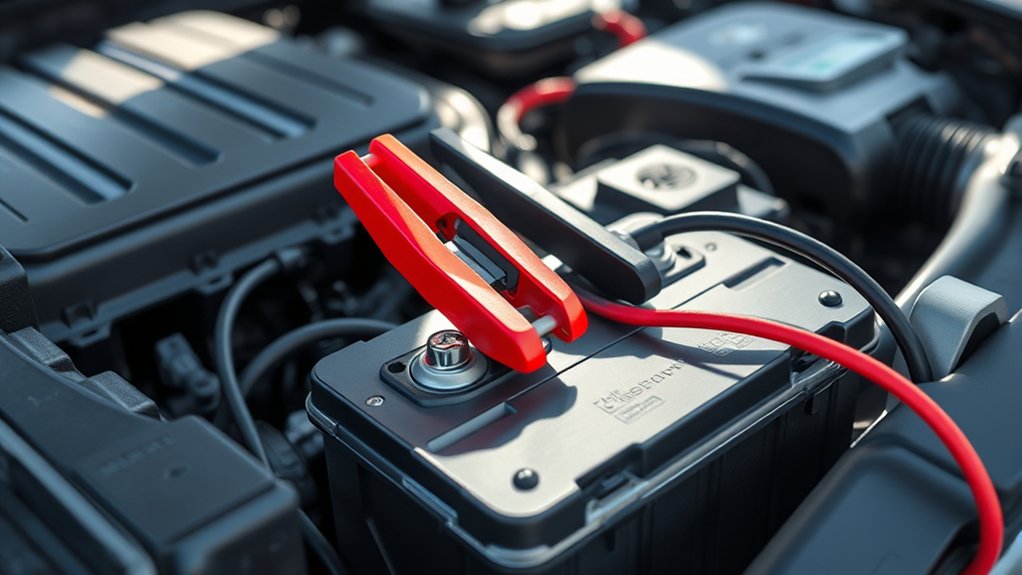
First, gather your battery charger, gloves, and safety glasses. Using a battery charger to jump a car is a safe and effective method to bring life back to a dead 12V battery. Make sure your charger matches your 12V battery and inspect cables for damage.
Turn off your car and locate clean battery terminals. Set the charger to the correct voltage and mode, then securely connect the red clamp to the positive terminal and the black clamp to the negative.
Charge the battery for 30–60 minutes, start your car, and check its performance.
Disconnect clamps safely once done. Keep following to uncover more tips for a smooth jump-start.
Key Takeaways
- Gather safety gear, ensure charger matches 12V battery, and prepare the vehicle in a safe, well-ventilated area with the engine off.
- Clean battery terminals, connect the positive clamp to the positive terminal and the negative clamp to the negative terminal securely.
- Set the charger to the correct voltage and charging mode based on battery condition before plugging in and turning it on.
- Charge the battery for at least 30 minutes, monitoring the charger’s indicators to ensure proper operation throughout the process.
- After charging, turn off the charger, disconnect the negative clamp first, then the positive clamp, and safely store the equipment.
Gather Your Battery Charger and Safety Gear
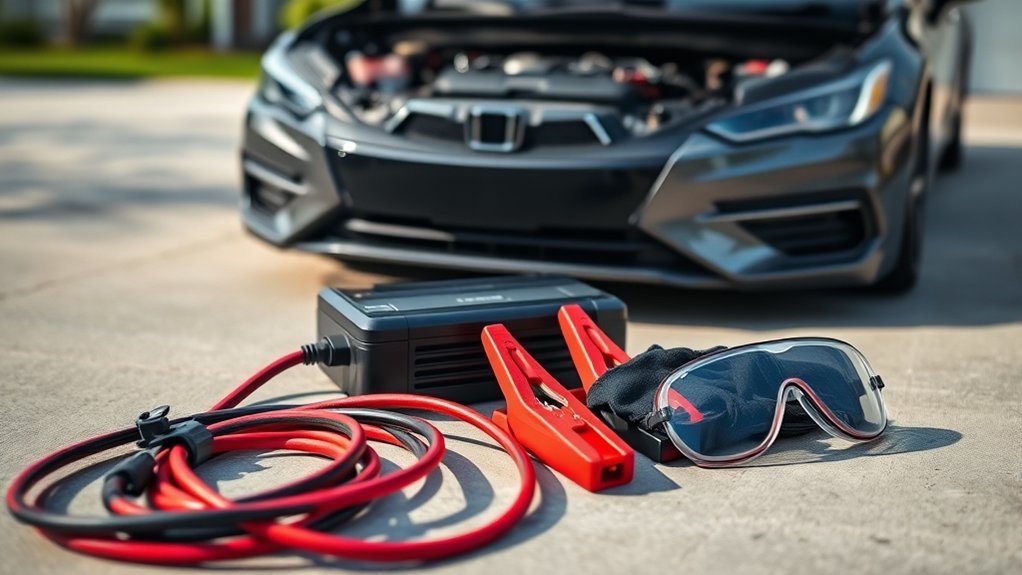
Before you begin jump-starting your car, make sure you have a reliable battery charger and the necessary safety gear on hand. You’ll want gloves and safety glasses to protect yourself from sparks or acid leaks. Choose a battery charger that matches your car’s battery voltage, usually 12 volts, and check that it’s in good working condition.
Inspect the charger’s cables and clamps for any damage or corrosion. Have a flashlight nearby if you’re working in a dim area, and keep a fire extinguisher within reach just in case. Gathering these essentials before you start not only makes the process smoother but also keeps you safe throughout.
Once everything’s ready, you’ll be set to proceed with jump-starting your car efficiently and securely.
Understand Why Using a Battery Charger Is Safer
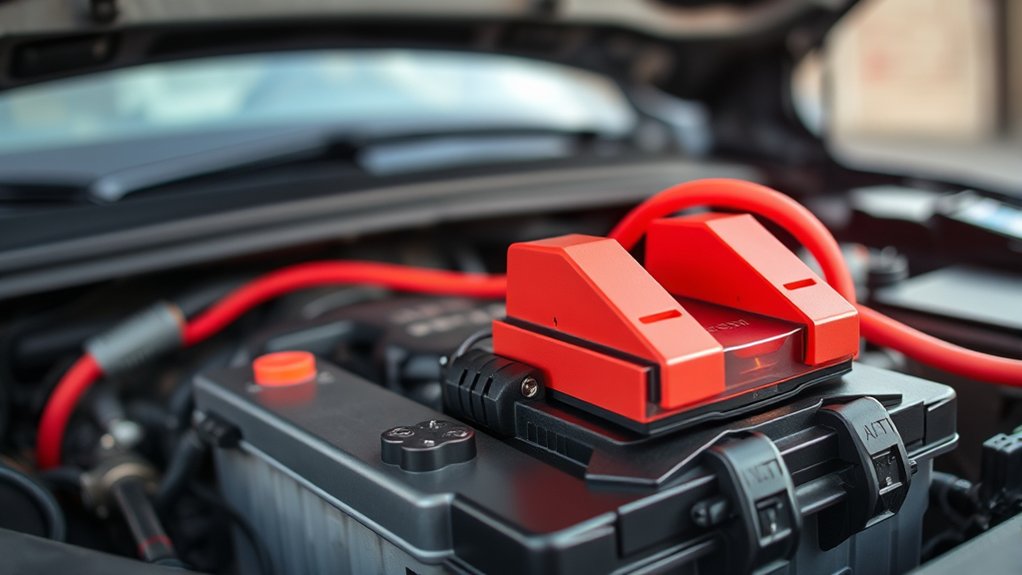
When you use a battery charger, you cut down the risk of sparks that can happen with jumper cables. It delivers power in a controlled way, protecting both your car and yourself.
This makes the whole process much safer and easier to manage.
Reduced Risk Of Sparks
Although jump-starting a car with traditional cables can create sparks that pose safety risks, using a battery charger considerably reduces this danger. When you use a battery charger, the current flow is controlled and steady, minimizing the chance of sudden electrical arcs. This means fewer sparks and a safer jump-start process for you.
Here’s a quick comparison:
| Method | Spark Risk | Safety Level |
|---|---|---|
| Traditional Jumper Cables | High | Moderate |
| Battery Charger | Low | High |
| Direct Battery Connection | Moderate to High | Moderate |
| Jump Pack Power Supply | Low | High |
| Push Start | None | Variable |
Using a battery charger keeps you safer by lowering spark risk, especially in tight engine spaces.
Controlled Power Delivery
Since a battery charger regulates the electrical current, it delivers power in a controlled and steady manner, which makes jump-starting your car much safer. You won’t have to worry about sudden surges that can damage your battery or electronic components. Unlike using jumper cables, a charger slowly builds up the battery’s charge, reducing stress on both vehicles’ electrical systems.
This controlled delivery also lowers the risk of overheating and extends your battery’s lifespan. When you use a battery charger, you maintain a consistent flow of power, giving you more control over the jump-start process. This means fewer surprises and a smoother, safer experience every time you need to get your car running again.
Prepare Your Car and Battery Charger for Jump-Starting
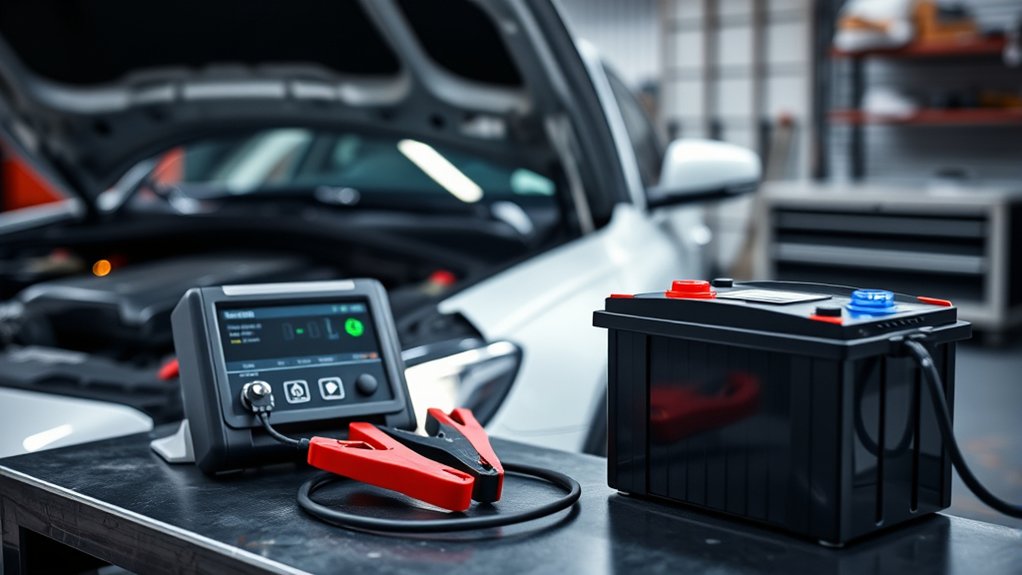
Before you start jump-starting, make certain your car is in a safe location with the engine off and the keys removed. Open the hood and locate the battery terminals—usually marked with a plus (+) for positive and a minus (-) for negative. Inspect the battery for any corrosion or damage; clean the terminals if necessary using a wire brush.
Next, confirm your battery charger is unplugged before attaching any cables. Identify the charger’s positive and negative clamps to match the battery terminals correctly. Keep the charger away from any moving engine parts or belts.
Double-check that the cables are free of frays or damage to avoid electrical hazards. Taking these precautions helps prevent accidents and ensures a smooth jump-starting process.
Set Your Battery Charger to the Correct Voltage and Mode
You’ll need to set your battery charger to match your car battery’s voltage, usually 12 volts for most vehicles.
Next, pick the correct charging mode—whether it’s a slow charge or a quick boost—based on your charger’s options and your battery’s condition.
Getting these settings right guarantees a safe and effective jump-start.
Selecting Proper Voltage
Although it might seem straightforward, setting your battery charger to the correct voltage and mode is essential for safely and effectively jump-starting your car. Most vehicles use either a 12-volt or 6-volt battery, so you’ll need to confirm which one your car requires by checking the battery label or owner’s manual. Using the wrong voltage can damage your battery or charger and may even cause harm to your vehicle’s electrical system.
Once you identify the right voltage, adjust the charger accordingly before connecting it. Don’t rush this step—double-check the settings to avoid any issues. Proper voltage ensures efficient charging and prevents overloading or undercharging your battery, helping you get back on the road quickly and safely.
Choosing Charging Mode
How do you know which charging mode to select on your battery charger? It depends on your battery’s condition and how quickly you need it charged. Most chargers offer multiple modes, so here’s how to choose:
- Trickle or Maintenance Mode – Use this for a slow, steady charge that won’t overheat the battery. It’s perfect if you’re not in a rush and want to maintain battery health.
- Standard or Fast Charge Mode – This mode delivers a quicker charge but should be used cautiously to avoid overheating, especially if the battery is severely discharged.
- Jump Start or Boost Mode – Select this only if your charger supports it and you need to jump-start your car immediately. It provides high current for a short burst.
Match the mode to your situation for safe, effective charging.
Find the Positive and Negative Battery Terminals
Where exactly do you connect the cables on your car battery? First, locate the battery under your car’s hood. You’ll see two terminals sticking out: one marked with a plus sign (+) and the other with a minus sign (–).
The positive terminal usually has a red cover or cable, while the negative is often black. Sometimes, the terminals might be labeled as “POS” and “NEG.” Make sure you clearly identify both before proceeding.
If the battery is dirty or corroded, clean the terminals gently to guarantee a good connection. Knowing which terminal is positive and which is negative is vital because connecting cables incorrectly can damage your car or the battery charger. Take your time to find these terminals accurately before moving on.
Connect the Battery Charger’s Positive Clamp Securely
First, grab the battery charger’s positive clamp, usually marked with a red color or a plus sign. Make sure you attach it securely to the positive terminal you identified earlier.
A firm connection is key to safely transferring power without sparks or interruptions.
Identifying Positive Clamp
Two key details will help you quickly spot the positive clamp on your battery charger. First, look for the color: the positive clamp is almost always red.
Second, check for the plus (+) symbol stamped or painted on the clamp or cable, indicating the positive terminal.
To identify it clearly, follow these three tips:
- Color Check: Confirm the clamp is red, as red universally signals positive.
- Symbol Spot: Look for a plus (+) sign near the clamp or on the cable.
- Cable Thickness: The positive cable is often thicker or more robust than the negative one.
Recognizing these features guarantees you connect the charger correctly, preventing damage or safety hazards during the jump-start process.
Ensuring Secure Connection
Although identifying the positive clamp is crucial, you must also guarantee it’s connected securely to the battery terminal. A loose connection can prevent the charger from working properly or even cause sparks. Firmly attach the clamp to the positive terminal, ensuring it grips the metal surface without any wiggle.
Double-check for corrosion or dirt, and clean if necessary to improve contact.
Here’s a quick reminder of why a secure connection matters:
| Feeling | Reason |
|---|---|
| Confidence | Stable power flow |
| Safety | Reduced risk of sparks or shorts |
| Success | Faster, reliable jump start |
Taking this step seriously keeps you safe and gets your car running smoothly.
Clip the Negative Clamp Safely to the Battery
When you connect the negative clamp, make sure you attach it to a clean, unpainted metal surface on the car’s frame or engine block rather than directly to the battery’s negative terminal. This helps prevent sparks near the battery, reducing explosion risk. Follow these steps for safety and effectiveness:
- Locate a sturdy metal part on the engine or frame, free from paint, rust, or grease.
- Securely clip the negative clamp onto this surface, ensuring a firm grip to maintain a solid electrical connection.
- Double-check that the clamp is stable and won’t slip during charging.
Charge the Dead Battery Safely and Wait the Recommended Time
Before you start charging, make sure your battery charger is set to the correct voltage and amperage for your car’s battery. Once everything is set, plug in the charger and turn it on. Keep an eye on the charger’s indicators to verify it’s working properly.
Charging times vary depending on your battery’s condition and charger type, but typically, you’ll want to wait at least 30 minutes to an hour. Avoid rushing this step; a slow, steady charge helps restore your battery safely without causing damage. During this time, don’t disconnect the clamps or turn off the charger prematurely.
Once the recommended charging time passes, you can move on to starting your car. Patience here ensures your battery regains enough power to start your engine reliably.
Start Your Car and Check Battery Performance
Once you’ve allowed the battery to charge sufficiently, go ahead and start your car to see if it powers up smoothly. If it does, that’s a good sign your battery is regaining strength.
If not, you may need to charge it longer or check for other issues.
To properly check battery performance after starting:
- Listen for any unusual sounds like clicking or slow cranking, which might indicate insufficient charge.
- Observe the dashboard lights; if they dim or flicker, the battery might not be holding a charge.
- Use a multimeter to measure voltage. A healthy battery should read around 12.6 volts when the engine is off and 13.7–14.7 volts when running.
These steps help confirm your battery is ready for the road.
Disconnect the Battery Charger Clamps in the Right Order
After confirming your battery is holding a charge and your car starts smoothly, you’ll want to disconnect the battery charger clamps carefully to avoid sparks or damage. Start by turning off the battery charger to cut power flow.
Then, remove the black (negative) clamp from the car’s negative battery terminal first. Next, take off the red (positive) clamp from the positive terminal. This order reduces the risk of short circuits or sparks since the negative side is grounded.
Avoid touching the clamps together or letting them contact metal surfaces. Once both clamps are safely disconnected, store the charger properly.
Following this sequence guarantees your safety and protects your car’s electrical system after jump-starting with a battery charger.
Frequently Asked Questions
Can I Jump-Start a Battery Charger With Another Charger?
No, you can’t jump-start a battery charger with another charger. Chargers are designed to supply power, not receive it.
Instead, you should use a car battery or a jump starter designed for that purpose.
How Often Should I Maintain My Car Battery?
Think of your car battery as a heartbeat; you should maintain it every three to six months. Regular checks keep your engine’s pulse strong, preventing sudden stalls and ensuring your rides stay smooth and reliable.
What Are Signs My Battery Needs Replacement, Not Charging?
You’ll notice slow engine cranking, dim headlights, or warning lights on your dashboard. If your battery frequently dies despite charging, or it’s over three years old, it’s time to replace it rather than just recharge.
Can Extreme Weather Affect Battery Charging Success?
Extreme weather is like a storm battering your battery’s chances—it can definitely affect charging success. Cold slows chemical reactions, while heat speeds up wear, making your battery less reliable when you need it most.
Is It Safe to Jump-Start a Hybrid or Electric Vehicle?
You shouldn’t jump-start a hybrid or electric vehicle yourself because their high-voltage systems can be dangerous.
Instead, you should follow the manufacturer’s guidelines or call a professional to avoid damaging the battery or harming yourself.
Conclusion
Congrats, you’ve just mastered the art of jump-starting a car with a battery charger—because who doesn’t want to play electrician before their morning coffee? Now you can impress friends by not calling roadside assistance or dramatically pushing your car uphill.
Just remember, with great power comes great responsibility: don’t get zapped or turn your battery into a science experiment. Follow these steps, and you’ll be the hero your stalled engine deserves—minus the super suit.
By mastering these 10 easy steps to jump a car with a battery charger, you’re equipped with the knowledge to handle dead batteries confidently. Keep this guide handy, and you’ll never be caught off guard when your car won’t start. Safe jump-starting!

