

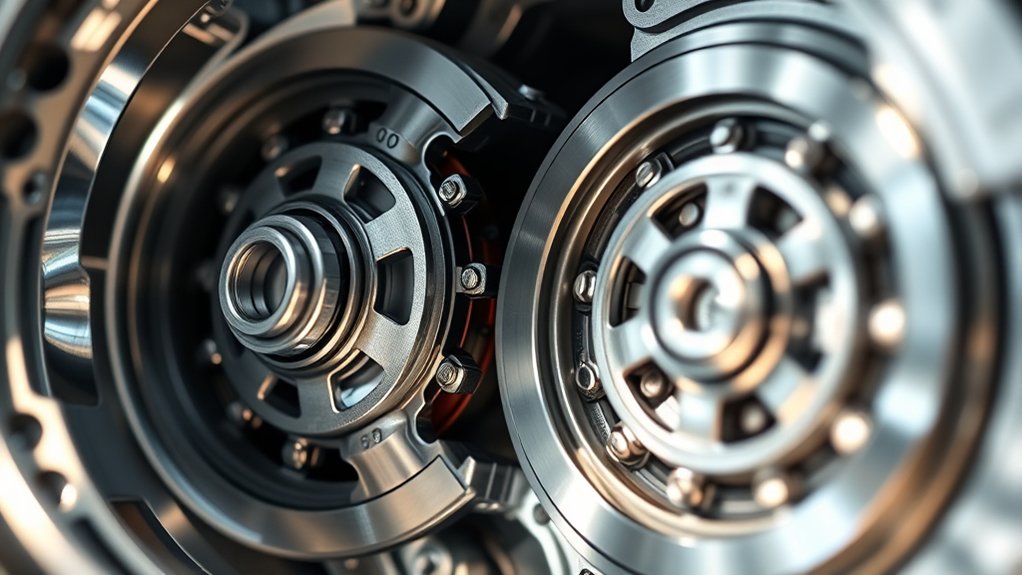
A dual clutch automatic transmission is an advanced type of transmission that uses two clutches to shift odd and even gears almost instantly. This technology combines the control and engagement of a manual transmission with the convenience and ease of an automatic, making it a popular choice for drivers seeking both performance and fuel efficiency.
By seamlessly switching between clutches, it delivers smooth, lightning-fast gear changes that enhance driving dynamics. It excels in sporty driving scenarios, providing quick acceleration and responsive handling.
However, it can sometimes feel jerky at low speeds, which may affect comfort in stop-and-go traffic. Additionally, dual clutch systems tend to be more complex, potentially leading to higher maintenance costs.
Keep exploring to see how this transmission stacks up against traditional automatics and manuals, and to understand the key factors to consider before choosing one for your vehicle.
Key Takeaways
- A Dual Clutch Transmission (DCT) uses two separate clutches to enable faster and smoother gear shifts by preselecting the next gear.
- It combines the control of a manual gearbox with the convenience of an automatic, enhancing driving performance and efficiency.
- DCT shifts quicker than traditional automatics by minimizing power interruption during gear changes with dual clutch engagement.
- Commonly found in sporty and performance cars, it offers rapid acceleration but can feel jerky at low speeds.
- Maintenance and reliability vary by model, often requiring specialized service and potentially higher repair costs than conventional transmissions.
What Is a Dual Clutch Transmission?
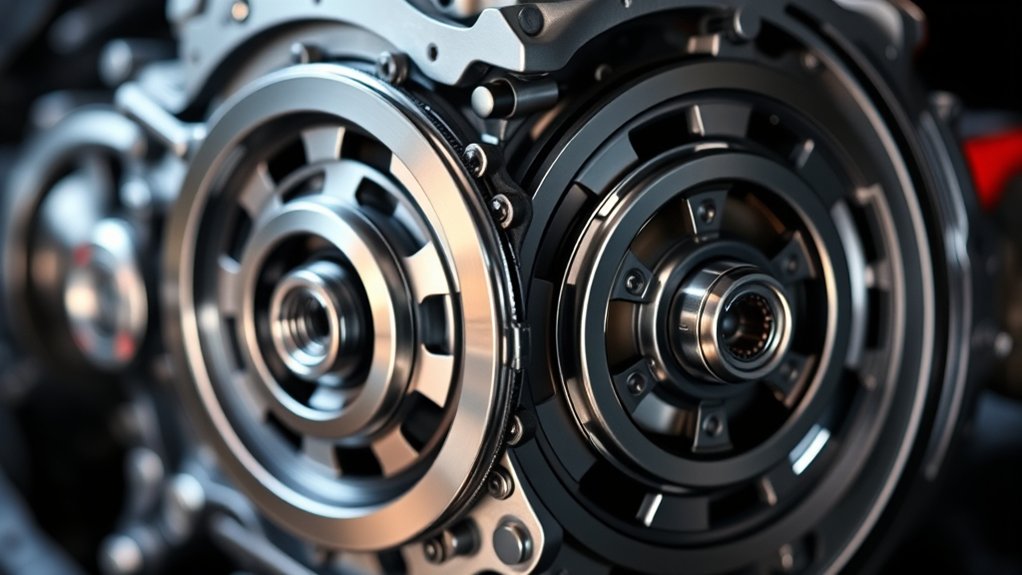
Although it might sound complex, a dual clutch transmission (DCT) is designed to make your driving smoother and faster. It uses two separate clutches—one handles the odd gears, and the other manages the even gears. This setup lets the transmission preselect the next gear while you’re still driving in the current one.
When it’s time to shift, the changeover happens almost instantly, without the lag you might notice in other transmissions. You don’t have to worry about manually changing gears, but you still get quick, precise shifts that improve acceleration and efficiency. Fundamentally, it combines the control of a manual with the convenience of an automatic.
This gives you a more engaging and responsive driving experience every time you hit the road.
How Do Dual Clutch Transmissions Compare to Traditional Automatics?
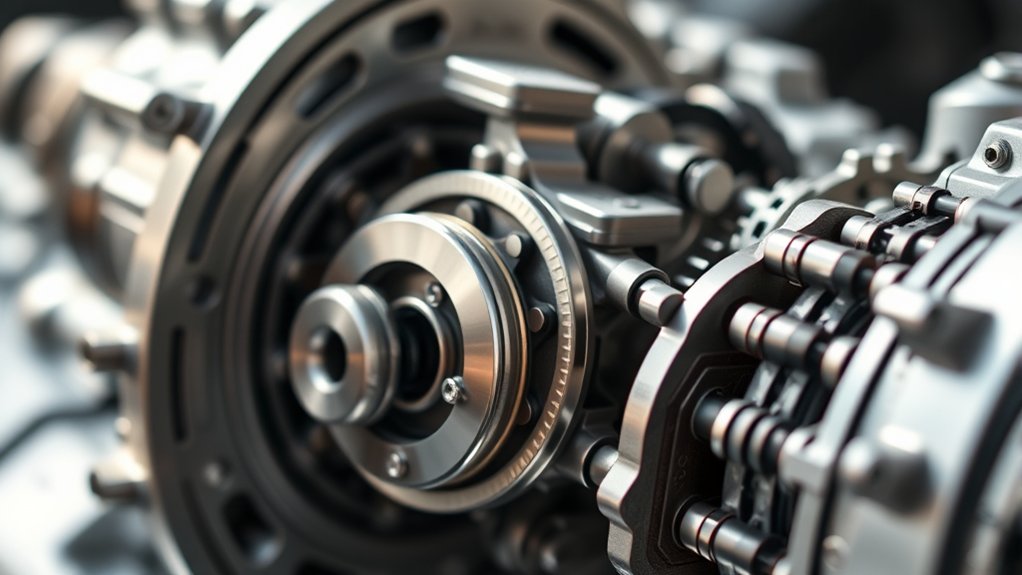
You’ll notice dual clutch transmissions shift faster than traditional automatics, giving you a smoother and quicker ride. They also tend to boost fuel efficiency by reducing power loss during gear changes.
Let’s explore how these differences impact your driving experience.
Shift Speed Differences
How quickly a transmission shifts can dramatically affect your driving experience. Dual clutch transmissions (DCTs) outpace traditional automatics by seamlessly preselecting the next gear, so shifts happen almost instantaneously. When you accelerate or decelerate, a DCT swaps gears without interrupting power delivery, giving you smoother and faster progressions.
In contrast, conventional automatics use torque converters that create slight delays and often noticeable shifts, especially under rapid acceleration. You’ll feel DCTs respond quicker, which enhances performance and driving enjoyment. However, this speed can sometimes make low-speed maneuvers feel less smooth compared to traditional automatics.
Fuel Efficiency Comparison
Beyond shift speed, another key factor to take into account is fuel efficiency. Dual clutch transmissions (DCTs) often outperform traditional automatics here because they reduce power loss during gear changes. With two clutches working independently, DCTs shift faster and keep your engine in its ideal power range, which means less wasted fuel.
Traditional automatics, especially older models with torque converters, tend to have more energy loss, lowering efficiency. However, modern automatics with advanced designs and more gears are closing the gap. Still, if you want sharper fuel economy and quicker responses, a DCT usually delivers better mileage.
Keep in mind, though, your driving style and conditions also play a big role in real-world fuel efficiency with either transmission type.
Key Parts Inside a Dual Clutch Transmission
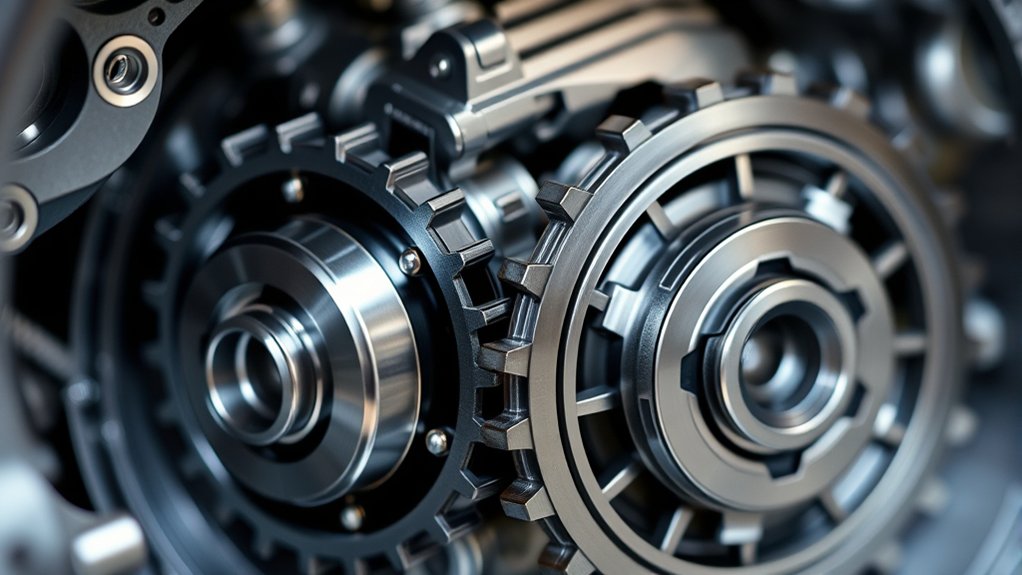
Although a dual clutch transmission might seem complex, understanding its key parts helps you appreciate how it delivers smooth and quick gear changes. At its core, it has two clutches—one handles odd gears, the other even. These clutches work together to pre-select the next gear, minimizing shift time.
The transmission also includes a hydraulic system that controls clutch engagement and gear shifts with precision. Finally, an electronic control unit (ECU) coordinates these components, ensuring seamless operation.
| Component | Function |
|---|---|
| Dual Clutches | Engage and disengage odd and even gears |
| Hydraulic System | Controls clutch pressure and gear shifts |
| Electronic ECU | Manages timing and coordination of shifts |
Knowing these parts helps you grasp how dual clutch systems offer both performance and efficiency.
Why Dual Clutch Transmissions Shift Faster
You’ll notice dual clutch transmissions shift faster because they use pre-engaged gear sets that prepare the next gear in advance. This setup lets the system switch gears almost instantly without interrupting power flow.
As a result, you get seamless power transfer and smoother acceleration every time you shift.
Pre-Engaged Gear Sets
How do dual clutch transmissions manage to shift gears so quickly and smoothly? It’s all about pre-engaged gear sets. In a dual clutch system, two separate clutches control odd and even gears independently.
While you’re driving in one gear, the transmission pre-selects the next gear on the other clutch. This means when it’s time to shift, the system simply switches clutches instead of disengaging and re-engaging a single clutch. You get nearly instantaneous gear changes without interrupting power delivery.
Because one gear set is always ready, the transmission minimizes lag and keeps acceleration seamless. This clever setup lets you enjoy faster shifts and better performance compared to traditional automatics or manuals, making your drive feel smooth and responsive every time.
Seamless Power Transfer
The secret behind those lightning-fast shifts lies in the way dual clutch transmissions handle power flow. Unlike traditional automatics that interrupt power during gear changes, dual clutch systems use two separate clutches for odd and even gears. While one clutch engages the current gear, the other pre-selects the next gear, ready to take over instantly.
When it’s time to shift, the system simply swaps clutches, transferring power seamlessly without any pause. You won’t feel the typical lag or jerk because the changeover happens so quickly and smoothly. This clever setup lets you enjoy rapid acceleration and efficient performance, making your driving experience both responsive and enjoyable.
That’s why dual clutch transmissions shift faster than conventional automatics.
How Dual Clutch Transmissions Improve Fuel Efficiency
Because dual clutch transmissions shift gears faster and more smoothly than traditional automatics, they help you save fuel by keeping the engine in its ideal power range. This precise control means the engine doesn’t waste energy revving too high or lugging too low. You’ll notice less fuel consumption during acceleration and steady cruising, as the transmission optimizes every gear change.
Additionally, dual clutch systems reduce energy loss by minimizing the time the engine spends between gears, unlike conventional automatics that rely on torque converters. By maintaining efficient engine speeds and reducing drag, these transmissions let you get more miles out of each gallon.
Everyday Benefits of Dual Clutch Automatic Transmissions
Fuel efficiency is just one way dual clutch transmissions enhance your driving experience. You’ll notice smoother, quicker gear changes that feel almost seamless, making your ride more enjoyable and responsive. Because the system pre-selects the next gear, you won’t experience the typical lag or hesitation found in traditional automatics.
This means better acceleration when you need it, whether merging onto a highway or overtaking. You’ll also benefit from reduced wear and tear on the transmission, which can translate into lower maintenance costs over time. Plus, these transmissions often weigh less than conventional automatics, helping your vehicle handle better.
Popular Cars and Brands With Dual Clutch Transmissions
Several leading car manufacturers have embraced dual clutch transmissions to deliver sharper performance and efficiency. If you’re looking to experience this technology firsthand, you’ll find it in a variety of popular models. These cars combine quick gear shifts with fuel economy, making them a smart choice whether you want sporty driving or daily practicality.
Here are four notable examples:
- Volkswagen Golf GTI – Known for its sporty feel and smooth shifts.
- Ford Focus ST – Offers a dynamic drive with efficient gear changes.
- Audi S3 – Blends luxury with lightning-fast dual clutch technology.
- Porsche 911 – Delivers high-performance driving with precision gear control.
Exploring these brands can help you find a dual clutch car that fits your style and needs.
Things to Know Before Buying a Dual Clutch Car
Before you decide on a dual clutch car, it’s important to understand how this transmission differs from traditional automatics and manuals. Dual clutch systems offer lightning-fast shifts and improved fuel efficiency, but they can feel less smooth at low speeds compared to conventional automatics. You might notice some hesitation or jerking when crawling in traffic.
Maintenance costs can also be higher, so check if your local mechanics are familiar with servicing these systems. Additionally, reliability varies by manufacturer—some dual clutch transmissions have known issues, so research specific models carefully. Finally, consider your driving style; if you want sporty performance and quick shifts, a dual clutch is ideal.
But if you prioritize smoothness and simplicity, a traditional automatic might be a better fit.
Frequently Asked Questions
How Much Does It Cost to Repair a Dual Clutch Transmission?
You’re looking at repair costs between $1,500 and $3,000, depending on the damage. Since dual clutch transmissions are complex, you’ll want a specialist, and labor can push the price higher if parts need replacement.
Are Dual Clutch Transmissions Suitable for Off-Road Driving?
Think dual clutch transmissions handle off-road roughness well? They’re generally less suited for harsh off-road conditions due to complex mechanics and heat sensitivity.
You’ll want something more robust and forgiving for serious off-roading adventures.
Can I Manually Override Gear Shifts in a Dual Clutch Transmission?
Yes, you can manually override gear shifts in a dual clutch transmission. Most models offer paddle shifters or a manual mode, letting you control gear changes for a sportier or more precise driving experience whenever you want.
This feature provides greater control over your vehicle’s performance. It can enhance driving enjoyment, especially on winding roads or during spirited driving.
However, the extent of manual control may vary depending on the manufacturer and model. Always refer to your vehicle’s manual for specific instructions and limitations.
How Long Do Dual Clutch Transmissions Typically Last?
You can expect a dual clutch transmission to last around 100,000 to 150,000 miles with proper care. Regular maintenance helps you avoid costly repairs and keeps your shifts smooth and responsive for years.
Taking care of your transmission involves timely fluid changes and inspections. This prevents wear and tear on the internal components.
Do Dual Clutch Transmissions Require Special Maintenance Fluids?
Yes, you’ll need special dual clutch transmission fluid for your DCT. It’s designed to handle higher temperatures and friction.
Always check your owner’s manual and use the recommended fluid to keep your transmission running smoothly.
Conclusion
So, you’re thinking about a dual clutch transmission? Great choice—because who doesn’t want a car that shifts faster than your morning coffee kicks in? It’s like having two gearboxes arguing over who gets to drive next, making your ride smoother and more efficient.
Just remember, behind that slick tech is a complex dance of gears, so if you love simplicity, maybe stick to your old faithful. But hey, progress waits for no one!
In conclusion, a dual clutch automatic transmission offers quicker shifts, improved fuel efficiency, and a seamless driving experience. If you value performance and innovation, this transmission might just be the upgrade your car needs.

