

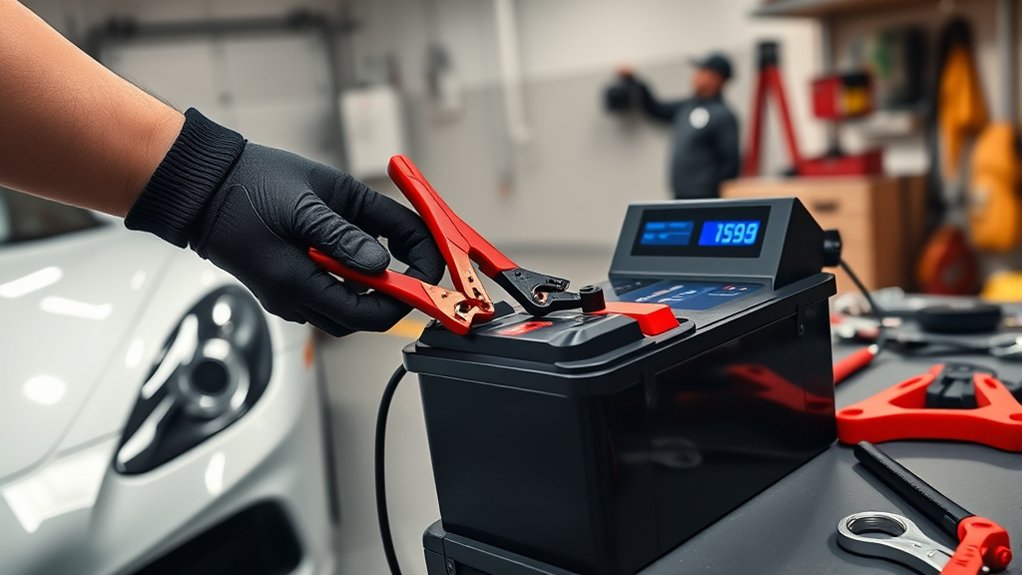
First, check your car battery charger and battery for any visible damage and verify they are compatible. Using the right charger is essential for safe and effective charging. Ensure your charger matches your battery type and voltage requirements.
Next, park your car in a well-ventilated area, turn off the engine, and open the hood to access the battery. Proper ventilation helps prevent the buildup of harmful gases during charging. Safety is key before you begin connecting the charger.
Connect the positive clamp to the positive terminal of the battery. Then attach the negative clamp to an unpainted metal surface on the car, away from the battery. This grounding step helps avoid sparks and ensures a safe connection.
Select the proper charger mode and voltage for your battery. Turn on the charger and carefully monitor the charging process. Avoid overcharging by keeping an eye on the charger’s indicators.
Once the battery is fully charged, turn off the charger and unplug it from the power source. Safely disconnect the clamps, starting with the negative one first.
Finally, test the battery to ensure it operates reliably.
Keep following for a detailed guide on safe and effective car battery charging. Proper steps will extend your battery’s life and keep your vehicle running smoothly.
Key Takeaways
- Inspect the battery and charger for damage, ensuring compatibility and proper settings before starting.
- Connect the positive (red) clamp to the battery’s positive terminal and the negative (black) clamp to an unpainted metal surface.
- Select the appropriate charger mode and voltage based on the battery type and condition.
- Monitor the charging process for any issues and turn off the charger once fully charged.
- Disconnect clamps in reverse order—negative first—after unplugging the charger, wearing protective gear.
Check Your Battery and Charger Before Starting
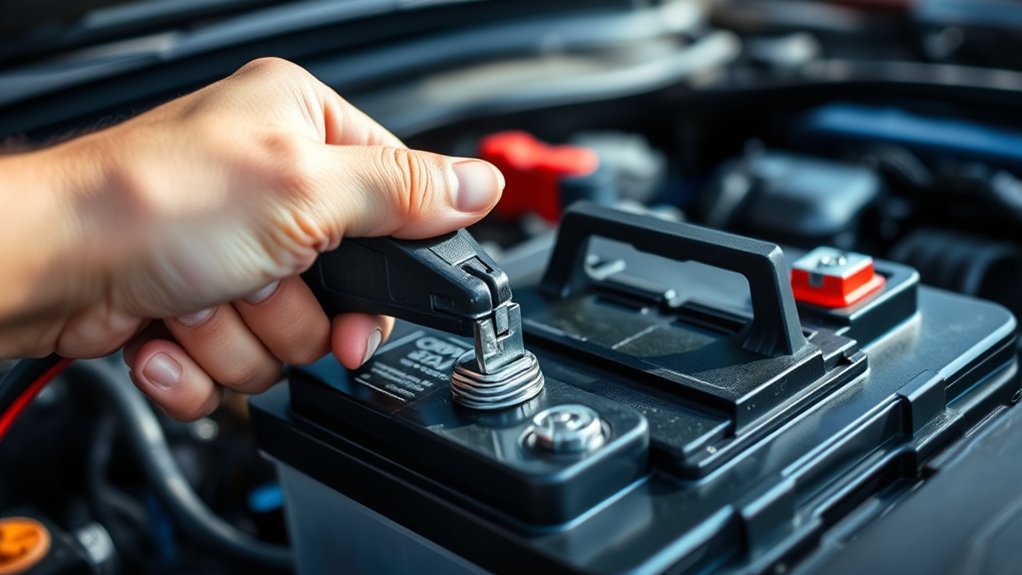
Before you begin charging, make sure you inspect both your car battery and the charger carefully. Look for any cracks, leaks, or corrosion on the battery terminals; these issues can affect charging efficiency or cause safety hazards. Check the charger’s cables and connectors for any signs of damage or fraying.
Confirm your charger is compatible with your battery type and voltage to avoid potential damage. Verify the charger is unplugged before connecting it to the battery. Also, verify that the charger’s settings match your battery’s requirements.
Taking these steps helps prevent accidents and ensures a smooth charging process. By doing a thorough inspection, you’ll be ready to charge your battery safely and effectively without surprises.
Prepare Your Car for Safe Charging
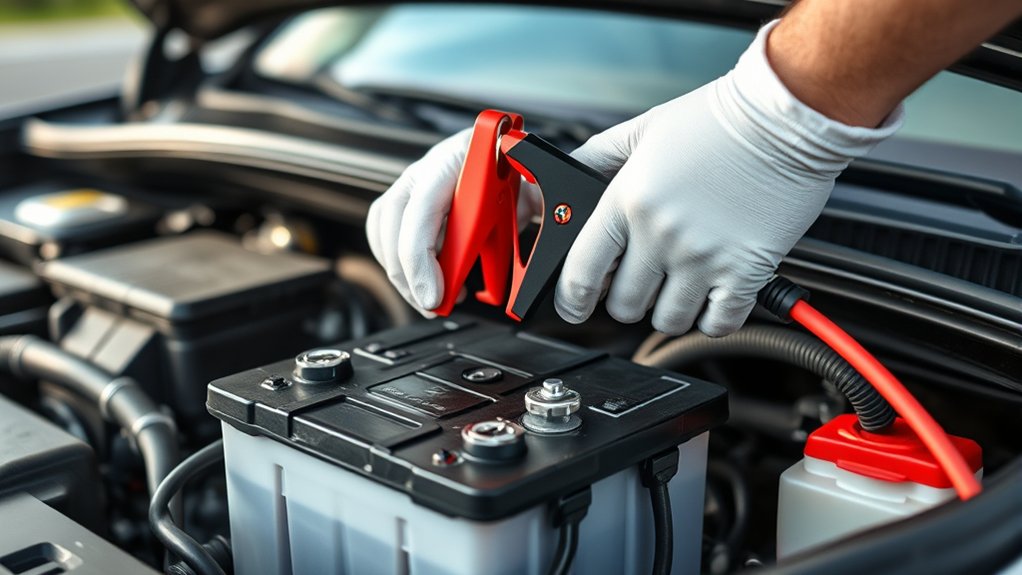
While you’re getting ready to charge your battery, make certain your car is parked in a well-ventilated area and the engine is turned off. This prevents harmful gases from building up and keeps you safe.
Next, open the hood and locate the battery. Remove any debris, dirt, or corrosion from the terminals using a wire brush or cloth. If your battery has removable caps, carefully open them to allow gases to escape during charging.
Confirm all electrical accessories like lights, radio, and air conditioning are turned off to avoid power drain. Finally, double-check that the battery is secured in its tray to prevent movement during charging. Taking these steps helps you charge safely and effectively without risking damage or injury.
Connect the Charger Cables the Right Way

You’ll want to start by identifying the positive and negative terminals on your battery. Make sure you connect the charger cables to the correct terminals to avoid any damage.
Avoid common mistakes like reversing the connections or letting the cables touch each other.
Identifying Positive And Negative Terminals
Two terminals on your car battery serve very different purposes, so it’s vital to connect the charger cables correctly. The positive terminal is usually marked with a plus sign (+) and often has a red cover or cable. The negative terminal features a minus sign (-) and typically has a black cover or cable.
Before you connect your charger, carefully inspect both terminals to identify these markings. Connecting the positive charger clamp to the positive terminal and the negative clamp to the negative terminal ensures proper current flow and prevents damage. If you mix them up, you risk short circuits or battery damage.
Always double-check the symbols and colors on your battery and charger cables before proceeding to keep everything safe and functioning as it should.
Ensuring Proper Cable Connection
After identifying the positive and negative terminals, the next step is to connect the charger cables correctly. You’ll want to start by attaching the positive (red) clamp to the battery’s positive terminal.
Then, connect the negative (black) clamp to a solid, unpainted metal surface on the car’s frame or engine block, away from the battery. This helps prevent sparks near the battery. Remember these key points:
- Always connect the positive cable first to avoid accidental short circuits.
- Secure clamps firmly to guarantee a stable connection.
- Avoid touching the clamps together while connecting to prevent sparks.
Following these steps ensures a safe and effective charging process, protecting both you and your vehicle.
Avoiding Common Connection Mistakes
Although connecting charger cables seems straightforward, making common mistakes can lead to dangerous sparks or damage. First, always connect the positive (red) clamp to the positive battery terminal before attaching the negative (black) clamp. Never reverse these connections; mixing them up can short-circuit the battery or charger.
Next, avoid attaching the negative clamp directly to the battery’s negative terminal—connect it to an unpainted metal surface on the car’s frame instead. This reduces the risk of sparks near the battery, which could ignite flammable gases. Also, double-check that clamps are secure and free of corrosion to guarantee a solid connection.
Choose the Right Charger Mode and Voltage
You’ll need to pick the right charger mode based on your battery type and condition. Make sure the voltage matches your car battery to avoid damage.
Choosing the correct settings helps your battery charge safely and efficiently.
Selecting Charger Modes
When selecting charger modes, understanding your battery’s voltage and condition helps you choose the right settings for efficient and safe charging. Most chargers offer multiple modes, like trickle, fast, and maintenance charging. Picking the right mode ensures your battery charges properly without damage.
Here are key points to take into account:
- Trickle mode: Charges slowly and is ideal for battery maintenance over long periods.
- Fast mode: Charges quickly but suits only batteries that need a quick boost or are moderately discharged.
- Maintenance mode: Keeps the battery topped off after a full charge, perfect for seasonal vehicles or infrequent use.
Always match the mode to your battery’s current state to maximize its lifespan and performance.
Understanding Voltage Requirements
Since different car batteries require specific voltages, choosing the right charger mode and voltage is essential for safe and effective charging. Most car batteries operate at either 12 volts or 6 volts, so you need to set your charger accordingly. Using a charger with a voltage that doesn’t match your battery can cause damage or fail to charge properly.
Many modern chargers offer multiple voltage settings—make sure you select the one that matches your battery’s rating. If you’re unsure, check your battery label or owner’s manual for the correct voltage. Also, pick a charging mode that suits your battery type and voltage to avoid overcharging or undercharging.
This *guarantees* your battery gets the right power without risk.
Matching Charger To Battery
How do you guarantee your charger matches your car battery’s needs? Start by checking your battery’s voltage—most car batteries are 12 volts, but some larger vehicles use 24 volts.
Next, pick the right charging mode. Modern chargers offer modes like trickle, fast, or maintenance charging. Using the wrong mode can harm your battery or reduce its lifespan.
Finally, consider the battery type—whether it’s lead-acid, AGM, or gel—since chargers often have specific settings for each. Keep these points in mind:
- Confirm battery voltage matches charger output
- Select the appropriate charging mode for your battery’s condition
- Use the charger’s setting that corresponds to your battery type
Matching these factors ensures efficient, safe charging every time.
Turn On the Charger and Monitor Charging
Why is it important to monitor your car battery charger as soon as you turn it on? Because keeping an eye on the charging process helps you catch any issues early, such as overheating, overcharging, or incorrect connections.
Once you plug in and switch on the charger, watch the indicators closely. Most chargers have lights or digital displays showing charging status and battery health. If you notice unusual signs like excessive heat, strange smells, or no charging progress, turn the charger off immediately.
Monitoring also guarantees the battery charges at the right rate, preventing damage and extending its lifespan. Staying attentive during charging helps you maintain safety and ensures your battery gets the proper care it needs to perform reliably.
Disconnect the Charger Safely
When should you disconnect the charger to guarantee safety? You should only disconnect the charger once the battery is fully charged and the charger is turned off. This prevents sparks and electrical shocks.
Follow these steps to disconnect safely:
- Unplug the charger from the power outlet first to cut off the electricity supply.
- Remove the negative (black) clamp from the battery terminal to stop the current flow.
- Finally, remove the positive (red) clamp from the battery terminal.
Always wear protective gloves and eyewear during this process to avoid injury. Never disconnect clamps while the charger is still plugged in or powered on, as this can cause dangerous sparks or damage your battery.
Test Your Battery After Charging and When to Replace It
After charging your car battery, you should test its voltage and performance to verify it holds a proper charge. Use a multimeter to check the voltage; a fully charged battery should read around 12.6 volts or higher.
Next, start your car and observe if the engine cranks smoothly without hesitation. If the voltage drops considerably under load or the engine struggles to start, your battery may be weak. Also, consider the battery’s age—most last about 3 to 5 years.
If your battery frequently fails to hold a charge or shows signs of swelling or corrosion, it’s time to replace it. Regular testing helps prevent unexpected breakdowns and guarantees your car runs reliably.
Frequently Asked Questions
Can I Use a Car Battery Charger on Other Types of Batteries?
You can’t use a car battery charger on most other batteries because they have different voltage and chemistry. Using it on incompatible batteries could damage them or be unsafe.
Always check the battery type before charging.
How Long Does It Take to Fully Charge a Car Battery?
Like waiting for a slow-cooked meal, charging your car battery typically takes 4 to 24 hours, depending on the charger’s speed and battery size.
You’ll want patience to avoid rushing and damaging it.
Are There Risks of Overcharging My Car Battery?
Yes, you can damage your battery if you overcharge it. Overcharging causes overheating, reduces battery life, and might lead to leaks or explosions.
Use a smart charger or monitor charging time to avoid these risks.
Can a Charger Damage a Frozen or Very Old Battery?
Yes, charging a frozen or very old battery can damage it. You should never charge a frozen battery, and an old one might fail or leak.
Always inspect and test batteries before charging to avoid harm.
What Safety Gear Should I Wear When Charging a Battery?
You should wear safety goggles to protect your eyes, gloves to shield your hands from acid, and work in a well-ventilated area to avoid inhaling fumes.
Avoid loose clothing and keep sparks away from the battery.
Conclusion
Now that you’ve mastered the art of gently waking your battery back to life, you’re ready to keep your car humming smoothly.
Remember, treating your battery with care isn’t just about charging—it’s about giving it a little TLC to extend its lifespan.
Follow these simple steps, and you’ll avoid unexpected “silent treatments” from your car, ensuring it’s always ready to take you on your next adventure without a hitch.
Using a car battery charger properly is key to maintaining your vehicle’s performance.
By regularly charging and caring for your battery, you can maximize its lifespan and reliability.
Keep these tips in mind to ensure your car battery charger helps you stay on the road without any surprises.

