

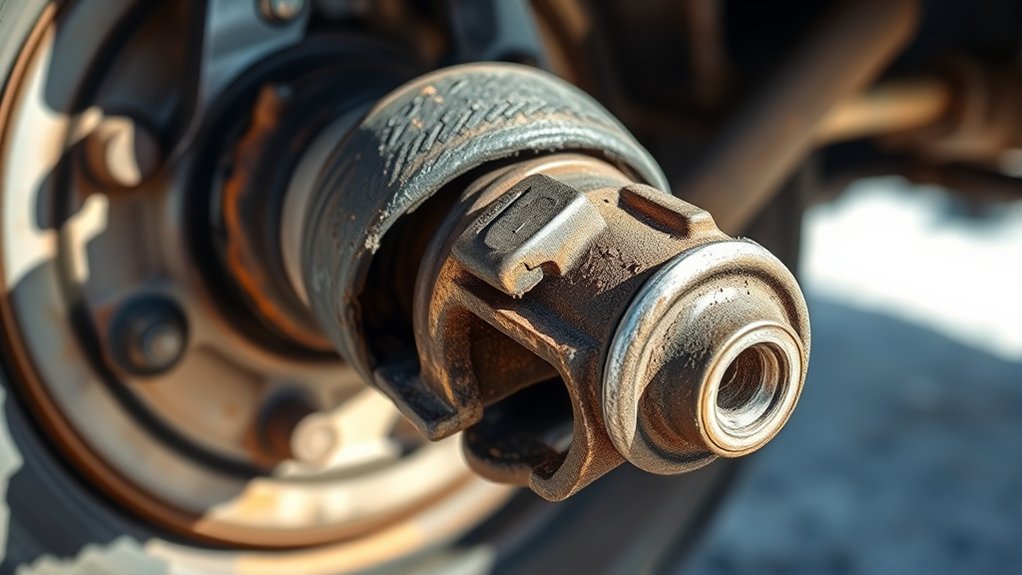
You’ll know your CV axle is bad if you hear clicking or popping sounds when turning, feel vibrations during acceleration, or notice grease leaking around your wheel or torn CV boots. These common CV axle failure symptoms often indicate worn joints or damage that can impair driving safety.
Paying attention to these warning signs is crucial for maintaining vehicle performance and safety.
You might also see grease splattered on suspension parts or find rust and cracks on the axle. These visible signs often accompany CV axle problems and signal the need for inspection. Keep going to uncover how to check and fix these issues properly.
Key Takeaways
- Listen for clicking or popping noises when turning sharply, indicating possible CV axle joint wear.
- Feel for vibrations or shaking during acceleration or steering, suggesting axle or joint damage.
- Inspect CV boots for cracks, tears, or grease leaks around the axle and wheel area.
- Check for excessive play by moving the axle near the joint; noticeable movement signals wear.
- Notice grease splatters on suspension parts, which often indicate torn boots and joint contamination.
What Does a CV Axle Do?
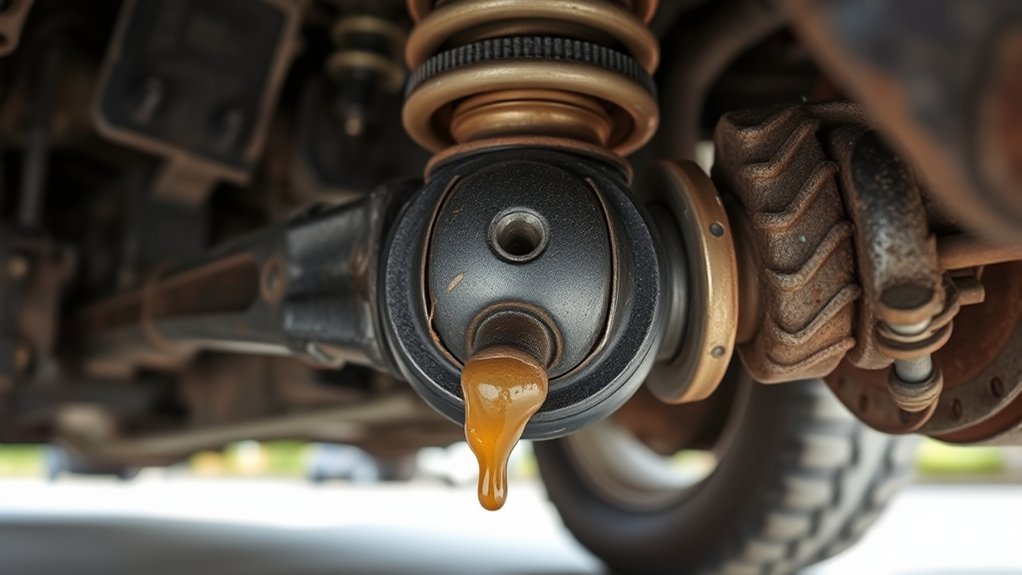
Although you might not see it, the CV axle plays a crucial role in your vehicle’s movement. It connects the transmission to the wheels, transferring power so your car can move. The CV axle has flexible joints, called constant velocity joints, that let the wheels turn smoothly while handling suspension up-and-down motion.
This flexibility ensures your car drives straight and corners accurately without losing power. Without a properly working CV axle, your wheels wouldn’t get the power they need, causing poor handling or even immobilizing your vehicle. Understanding this function helps you appreciate why keeping your CV axle in good shape is essential for safe and efficient driving.
It’s a key part you rely on every time you get behind the wheel.
What Are Common CV Axle Symptoms?
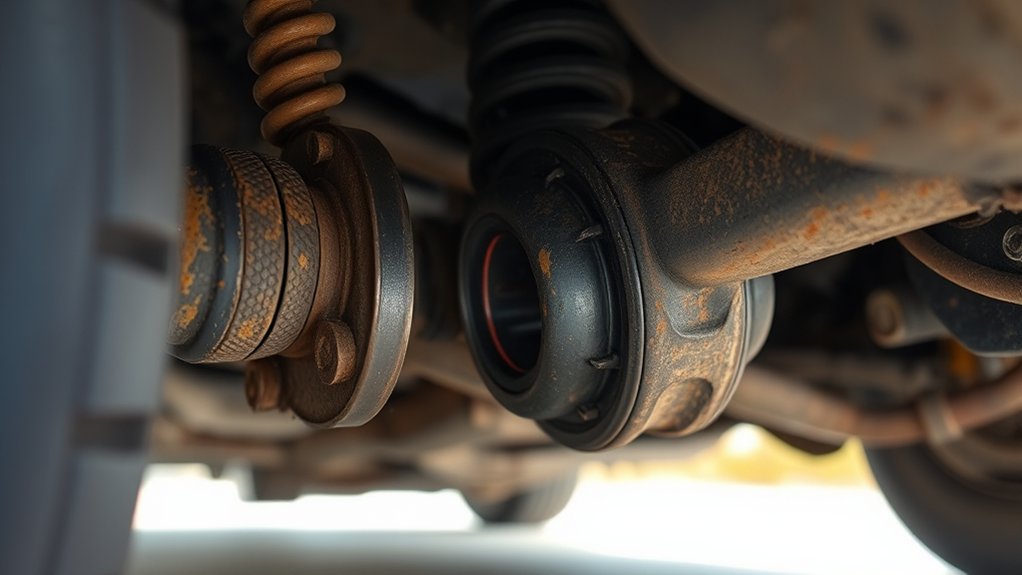
You’ll notice common signs when your CV axle is failing, like a clicking noise when turning or vibrations during acceleration. Grease leaks around the joints can also be a clear warning. Recognizing these symptoms early helps you avoid bigger problems down the road.
Clicking Noise When Turning
When you hear a clicking noise while turning, it often signals a worn or damaged CV axle. This noise usually comes from the joints that allow your wheels to turn smoothly. Ignoring it can lead to further damage or a breakdown.
Here’s what to watch for:
- Clicking or popping sounds when making sharp turns.
- Noise intensifies as you accelerate through a turn.
- Sounds are more noticeable in tight corners or parking lot maneuvers.
- The noise disappears or lessens when driving straight.
If you notice these signs, it’s a good idea to have your CV axle inspected soon. Addressing the issue early can save you from costly repairs and keep your vehicle safe to drive.
Vibration During Acceleration
If your vehicle vibrates noticeably during acceleration, it could be a sign that your CV axle is failing. When the axle’s joints or shafts wear out, they can cause uneven rotation, resulting in vibrations you’ll feel through the floorboard or steering wheel. These vibrations often increase with speed or when you put more power to the wheels.
You might also notice the shaking intensifies during turns or when accelerating hard. Ignoring these symptoms can lead to more serious damage, affecting drivability and safety. If you experience this kind of vibration, it’s important to have your CV axle inspected promptly.
Catching the issue early can prevent costly repairs and keep your vehicle running smoothly.
Grease Leaks Around Joints
Because grease keeps your CV axle joints lubricated and protected, seeing leaks around these areas signals a problem you shouldn’t ignore. When the CV boot cracks or tears, grease escapes, exposing the joint to dirt and moisture. This leads to accelerated wear and eventual failure.
Here’s what you should watch for:
- Visible grease splattered on the inside of your wheel or suspension components
- Torn or cracked CV boots revealing the greasy interior
- A noticeable grease trail along the axle shaft
- Increased noise or clicking sounds when turning, caused by contaminated joints
If you spot grease leaks, address the issue quickly to avoid costly repairs and guarantee your vehicle stays safe to drive.
How to Spot Noises From a Bad CV Axle
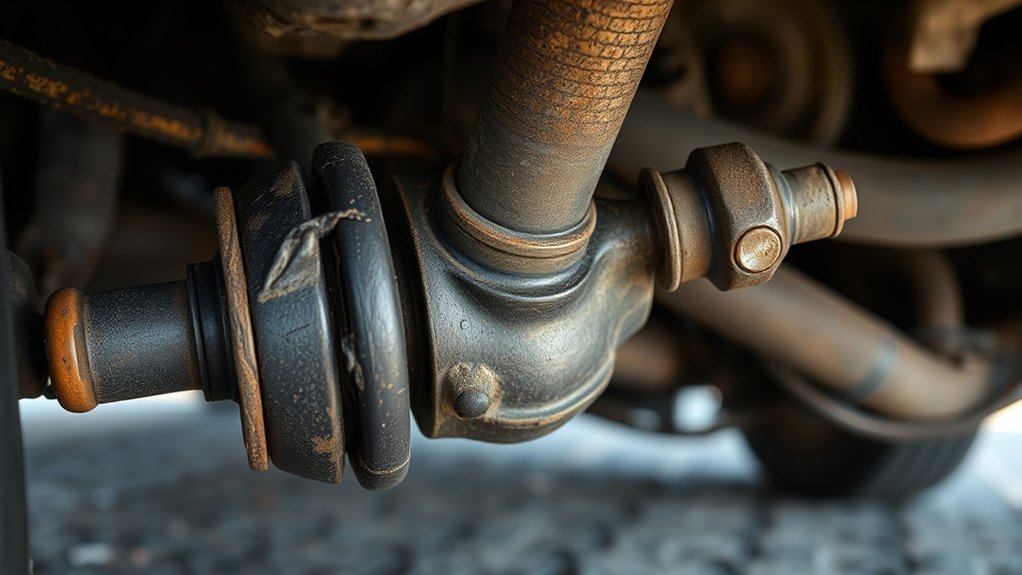
Although you might not immediately link strange sounds to your CV axle, paying close attention to unusual noises can help you spot problems early. When turning, listen for clicking or popping sounds, especially during sharp turns—this often signals worn CV joints. You might also hear a rhythmic clunking noise that changes with your speed, indicating the axle could be damaged or loose.
Grinding noises during acceleration or deceleration are another warning sign. Keep your windows down or use a mechanic’s stethoscope to isolate the sound’s source. If these noises appear, don’t ignore them; addressing CV axle issues early can prevent further damage and costly repairs.
Trust your ears—they’re a valuable tool for catching CV axle troubles before they escalate.
What Vibrations Mean for Your CV Axle
If you feel vibrations while driving, your CV axle might be the culprit. These shakes usually happen because of worn or damaged components that affect your car’s stability. Ignoring them can put your safety at risk, so it’s important to understand what these vibrations mean.
Common Vibration Symptoms
When your CV axle starts to wear out, you’ll often notice vibrations that grow stronger as you accelerate. These vibrations can affect your driving comfort and indicate a serious issue.
Here are common vibration symptoms to watch for:
- Steady shaking during acceleration – The car vibrates more as you press the gas pedal.
- Uneven or jerky movement – You might feel the vehicle pull or jerk unexpectedly.
- Vibrations felt in the steering wheel – Often caused by an axle problem on the front wheels.
- Increased vibration during turns – Turning aggravates the worn CV joint, making vibrations more noticeable.
If you experience these symptoms, it’s a clear sign your CV axle needs inspection or replacement to avoid further damage.
Causes of CV Vibrations
Why do vibrations occur in your CV axle, and what do they really mean? Vibrations usually happen because the CV axle’s joints or shafts get worn or damaged. When the CV joints lose their grease or the protective boot tears, dirt and moisture can enter, causing the joint to wear out faster.
This wear creates uneven rotation, which you feel as vibrations. Additionally, if the axle shaft bends due to impact or corrosion, it won’t spin smoothly, leading to shaking. Imbalanced or damaged CV components disrupt the smooth transfer of power from the transmission to the wheels, resulting in those noticeable vibrations.
These symptoms indicate your CV axle is struggling, and addressing the root cause early can prevent further damage.
Impact on Driving Safety
Vibrations from a worn or damaged CV axle don’t just cause discomfort—they directly affect your driving safety. When your CV axle vibrates, it signals that the joint may be failing, which can lead to serious issues. Here’s what those vibrations mean for you:
- Loss of control: Uneven vibrations can make steering unpredictable, increasing accident risk.
- Increased wear: Vibrations stress other suspension components, causing premature failure.
- Reduced braking efficiency: A compromised CV axle affects wheel stability, impacting braking performance.
- Sudden breakdowns: Ignoring vibrations can lead to complete axle failure, leaving you stranded or causing an accident.
Pay attention to these signs and get your CV axle checked promptly to keep your vehicle safe on the road.
Can a Bad CV Axle Affect Your Steering?
Although a bad CV axle primarily affects your vehicle’s drivetrain, it can also impact your steering. When the CV axle is worn or damaged, you might notice your steering feels less responsive or even a bit shaky, especially during turns. This happens because the axle plays a key role in transferring power to your wheels smoothly.
If it’s failing, that power delivery becomes uneven, causing vibrations that you’ll feel through the steering wheel. You may also experience unusual noises when turning, which can signal joint wear. Ignoring these signs can lead to further damage and compromised control.
How to Visually Check Your CV Axle
If your steering feels off or you hear unusual noises when turning, it’s a good idea to inspect your CV axle visually before heading to a mechanic. Here’s how you can check it yourself:
- Lift the vehicle safely – Use a jack and secure it with stands to access the axle easily.
- Examine the CV boots – Look for cracks, tears, or grease leaks around the rubber boots covering the joints.
- Check for axle play – Grab the axle near the joint and try to move it up and down or in and out. Excessive movement may indicate wear.
- Look for rust or damage – Inspect the axle shaft for visible signs of corrosion or physical damage.
These steps help you spot obvious problems early on.
When to DIY or Call a Mechanic for CV Axle Issues
Deciding whether to tackle CV axle repairs yourself or call a mechanic depends on your experience, tools, and the severity of the issue. If you have basic mechanical skills, a jack, and a socket set, you might handle minor tasks like replacing torn CV boots or tightening clamps.
However, if you notice clicking noises, vibrations, or severe axle damage, it’s wise to consult a professional. CV axle replacement requires lifting the vehicle safely, removing suspension components, and handling heavy parts, which can be challenging without the right equipment.
Also, incorrect installation can lead to further damage or safety risks. When in doubt, contacting a mechanic ensures the job’s done correctly and safely, saving you time, frustration, and potential repair costs down the road.
How Replacing a Bad CV Axle Saves Your Car
Knowing when to call a mechanic for CV axle issues can save you from costly damage, especially since a bad CV axle affects your car’s performance and safety. Replacing a faulty CV axle promptly helps you:
- Restore smooth and stable driving by eliminating vibrations and noises.
- Prevent further damage to your transmission and wheel assembly.
- Maintain proper handling and steering response, keeping you safe on the road.
- Avoid costly repairs that result from neglecting axle problems.
When you act quickly, you protect your vehicle’s core components and ensure it runs efficiently. Don’t wait for the problem to worsen—replacing a bad CV axle is a smart investment that keeps your car reliable and safe for every drive.
Frequently Asked Questions
How Much Does CV Axle Replacement Typically Cost?
You’ll typically pay between $300 and $800 for a CV axle replacement, depending on your car’s make, model, and labor costs. Prices vary, so getting a few quotes can help you find the best deal.
What Tools Are Needed for CV Axle Replacement?
Replacing a CV axle isn’t rocket science, but you’ll need a socket set, breaker bar, torque wrench, pry bar, hammer, and jack stands. Gloves and penetrating oil help, too.
With these tools, you’re ready to roll!
Can a Bad CV Axle Cause Transmission Damage?
Yes, a bad CV axle can cause transmission damage if ignored. When it fails, it puts extra strain on the transmission components, leading to costly repairs.
You should fix it promptly to avoid further issues.
How Long Does CV Axle Repair Usually Take?
Fixing a CV axle usually takes about 1 to 2 hours—quicker than a cheetah on roller skates!
You’ll have your car back on the road before you know it, depending on your mechanic’s schedule.
Are Aftermarket CV Axles as Reliable as OEM Parts?
Aftermarket CV axles can be reliable if you choose reputable brands, but they might not match OEM quality or durability exactly. You’ll save money, but expect potential trade-offs in fit and lifespan compared to OEM parts.
Conclusion
If you’ve noticed strange noises, vibrations, or steering issues, there’s a good chance your CV axle is waving a red flag. It’s funny how these symptoms often show up just when you’re planning a trip or running errands, isn’t it?
Catching the problem early by checking your axle visually or calling a mechanic can save you from bigger headaches down the road. Don’t wait—your car’s health depends on it!
Knowing how to tell if your CV axle is bad is crucial for maintaining vehicle safety and performance. Regular inspections and prompt repairs will keep your driving smooth and worry-free.

