

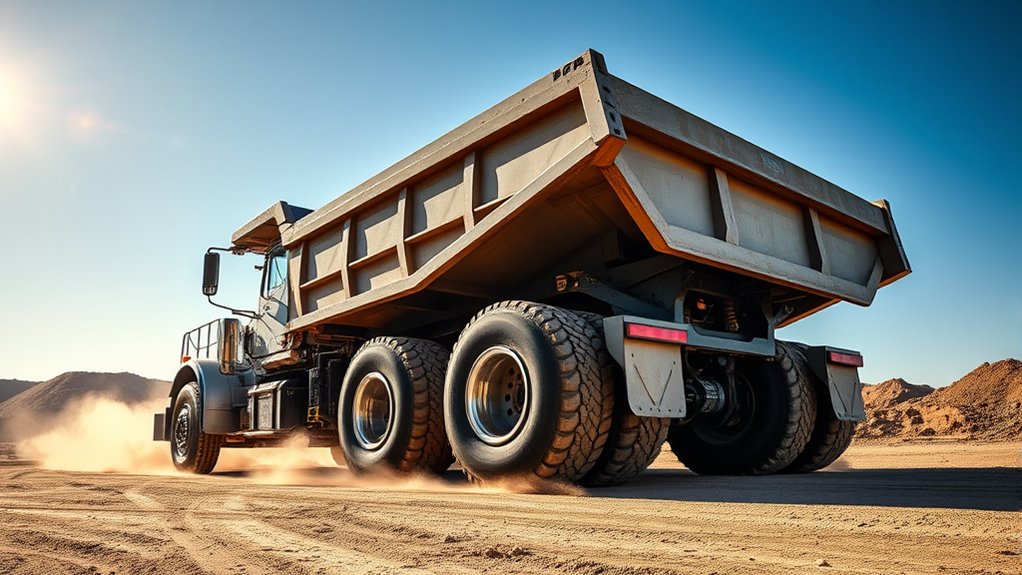
You can typically haul between 12 and 16 cubic yards in a tri axle dump truck, depending on the bed size and the material you’re carrying. Tri axle dump trucks are popular for their ability to carry heavy loads efficiently.
Understanding how many yards a tri axle dump truck can carry is essential for planning your hauling needs accurately.
Standard beds hold around 12 to 14 yards, while extended or high-capacity models reach up to 16 yards.
Keep in mind, denser materials like gravel reduce how much you can carry safely.
Knowing how to measure and calculate your load helps you avoid overloading and stay efficient.
There’s more to take into account when optimizing your truck’s capacity. Proper load distribution and adhering to weight limits ensure safety and maximize performance.
Always consider both volume and weight when determining your haul.
Key Takeaways
- Tri axle dump trucks typically carry between 12 and 16 cubic yards of material.
- Standard models have capacities of 12 to 14 cubic yards, while extended beds hold 14 to 16 cubic yards.
- Material type and density impact load volume; heavier materials reduce cubic yard capacity.
- Proper bed measurements (length × width × height) determine the truck’s cubic yard capacity.
- Load limits depend on chassis, suspension, and weight restrictions for safe and legal hauling.
What Is a Tri Axle Dump Truck and Why Use One?
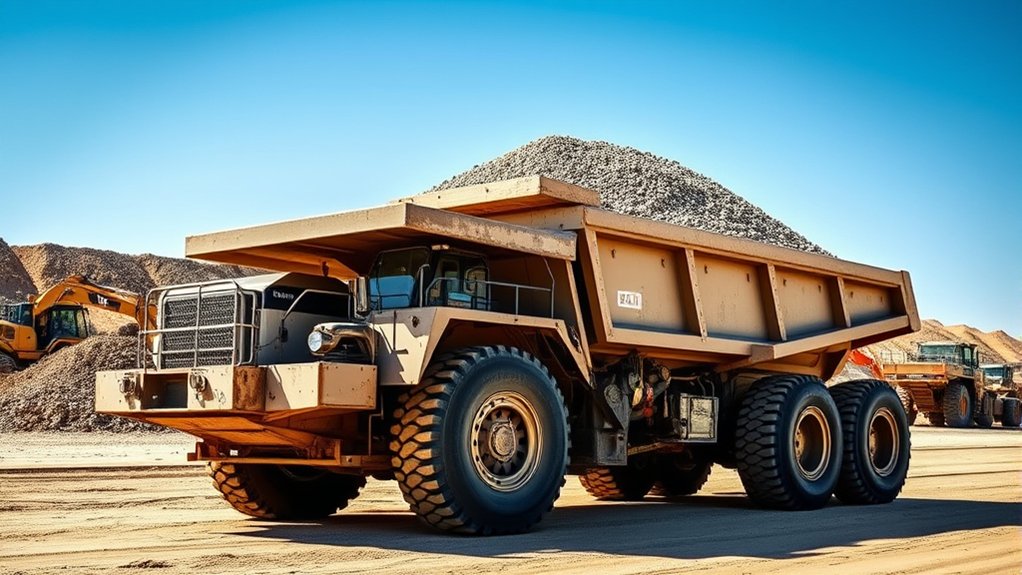
Although you might be familiar with standard dump trucks, a tri axle dump truck stands out because it has three rear axles instead of one or two. This design gives you greater stability and allows you to carry heavier loads without risking damage to the truck or the road.
When you’re working on large construction sites or hauling bulky materials like gravel or soil, using a tri axle dump truck helps you transport more in fewer trips, saving you time and fuel. Plus, the extra axle distributes the weight more evenly, which means you can navigate rough terrain more confidently.
If you need durability, efficiency, and a reliable way to move heavy materials, the tri axle dump truck is a smart choice for your hauling needs.
How Many Yards Can a Tri Axle Dump Truck Typically Carry?
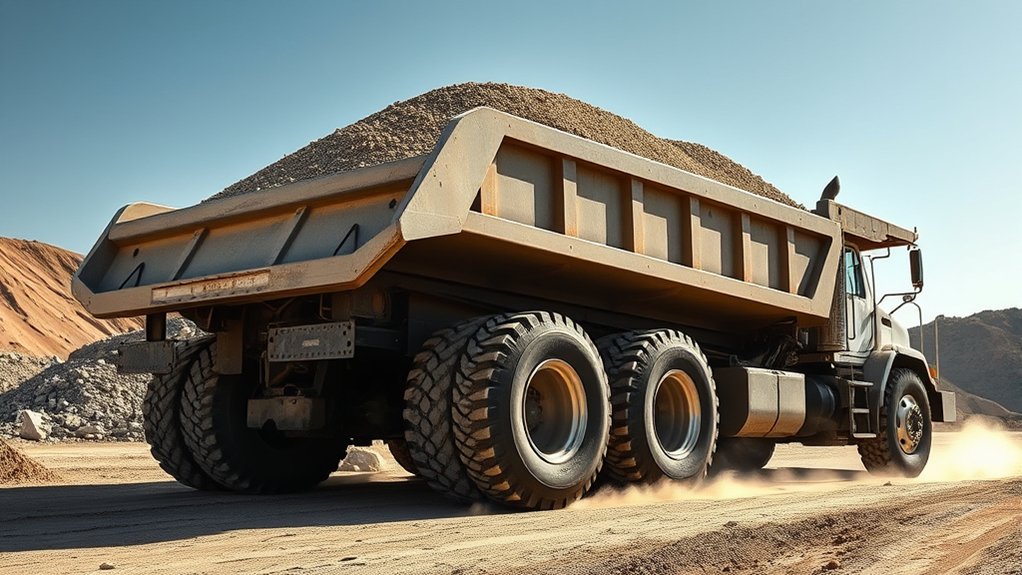
When you’re planning your haul, knowing how many yards a tri axle dump truck can carry helps you estimate loads and trips accurately. Typically, these trucks carry between 12 and 16 cubic yards, depending on factors like bed size and material density. Understanding this range allows you to optimize your hauling strategy and avoid overloading.
Here’s a quick overview of typical capacities:
| Truck Model | Capacity (Cubic Yards) |
|---|---|
| Standard Tri Axle | 12 – 14 |
| Extended Bed Tri Axle | 14 – 16 |
| High-Capacity Model | Up to 16 |
Knowing these figures ensures you plan efficiently and stay within safety limits for your hauling needs.
What Materials Do Tri Axle Dump Trucks Haul?
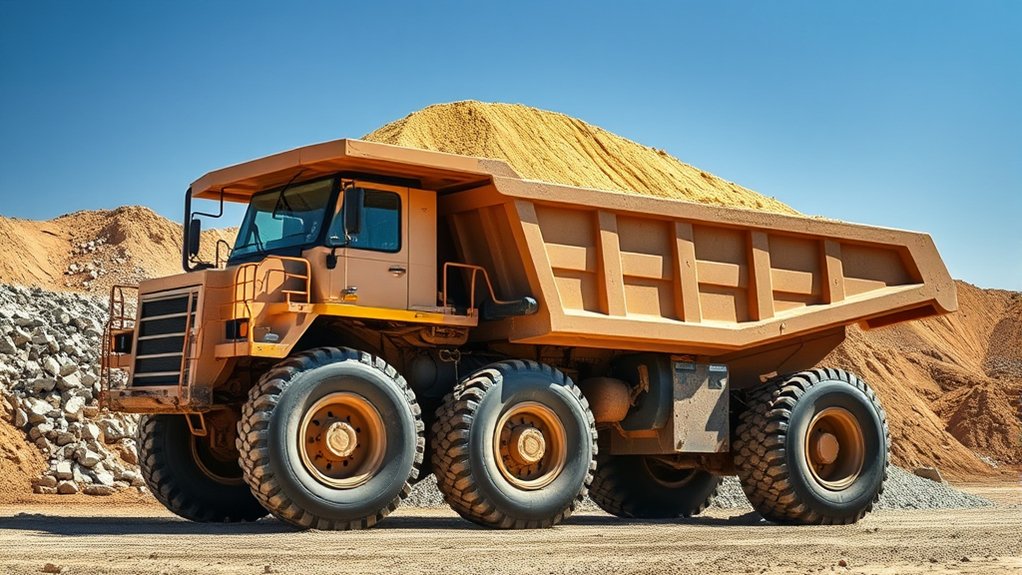
You’ll find tri axle dump trucks hauling a variety of common materials like gravel, sand, and dirt. They’re also equipped to transport specialized loads such as construction debris or asphalt.
Understanding what these trucks carry helps you choose the right one for your job.
Common Haul Materials
Since tri axle dump trucks offer a higher payload capacity than standard trucks, they’re ideal for hauling a variety of heavy materials. You’ll often see them carrying construction aggregates, dirt, and demolition debris. Their robust design lets you transport bulky loads efficiently, saving you multiple trips.
Here’s a quick look at common materials tri axle dump trucks haul:
| Material Type | Typical Use | Weight per Cubic Yard |
|---|---|---|
| Gravel | Road base, landscaping | 2,800 – 3,000 lbs |
| Sand | Concrete, fill | 2,600 – 3,000 lbs |
| Dirt/Topsoil | Gardening, grading | 2,200 – 2,700 lbs |
Knowing these materials helps you plan your loads better and maximize your truck’s capacity.
Specialized Material Transport
How exactly do tri axle dump trucks handle specialized materials that require extra care or specific conditions? You’ll find these trucks hauling materials like asphalt, concrete, and contaminated soil, all needing careful transport. For asphalt, tri axle trucks often use insulated beds to keep the material hot and workable.
When carrying concrete, they rely on tight tarps and secure loads to prevent spillage and contamination. Contaminated soil or hazardous materials require sealed beds and sometimes liners to avoid leaks or environmental hazards. You can also see tri axle dump trucks transporting scrap metal or heavy equipment parts, where reinforced beds and proper weight distribution are *essential*.
How Truck Size Influences Load Volume and Weight
Although tri axle dump trucks come in various sizes, their dimensions directly affect both the volume of material they can carry and the total weight they can handle. When you choose a larger truck, you’ll get a bigger bed, which means more cubic yards of material fit inside. However, increasing size also adds weight, so you need to evaluate legal road limits to avoid fines or damage.
The length, width, and height of the truck’s bed determine how much material it can hold, while the truck’s chassis and suspension affect the maximum safe load. By understanding these size factors, you can select the right tri axle truck for your job, maximizing efficiency without compromising safety or compliance on the road.
How Load Material Affects Tri Axle Dump Capacity
You need to take into account how the weight of your load material can change the tri axle dump truck’s capacity. Moisture content and density variations play a big role in how much you can safely carry.
Understanding these factors helps you avoid overloading and maximize efficiency.
Material Weight Variations
Because different materials vary widely in weight, the amount your tri axle dump truck can carry changes considerably depending on the load. For example, lighter materials like mulch allow you to haul more volume, while denser materials like gravel reduce your truck’s capacity.
Understanding these weight differences helps you avoid overloading and optimize each trip.
| Material | Weight per Cubic Yard (lbs) | Typical Load Capacity (yd³) |
|---|---|---|
| Mulch | 500 | 15-16 |
| Dirt | 2,200 | 3.5-4 |
| Gravel | 2,800 | 2.5-3 |
Moisture Content Impact
Material weight isn’t the only factor that influences how much your tri axle dump truck can carry—moisture content plays a big role too. When your load contains more water, it becomes heavier, reducing the volume you can safely haul.
Here’s what you should keep in mind:
- Wet materials like mud or clay weigh considerably more than dry ones, so your truck reaches its weight limit quicker.
- High moisture content can cause uneven load distribution, affecting truck handling and safety.
- Adjust your load volume based on moisture levels to avoid overloading and comply with legal weight limits.
Density Differences Effects
Although moisture content impacts load weight, the density of the material you’re hauling plays an even bigger role in determining how much your tri axle dump truck can carry. Denser materials reduce the volume you can transport without exceeding weight limits, while lighter materials allow for more yards per load. Understanding these differences helps you optimize each trip and avoid costly overload fines.
| Material | Approx. Density (lbs/yd³) |
|---|---|
| Gravel | 2,700 |
| Topsoil | 1,600 |
| Mulch | 600 |
You’ll notice mulch lets you haul more volume but less weight, while gravel limits yards but maximizes payload. Choose wisely based on your project’s needs.
Why Weight Limits Are Important for Tri Axle Dump Trucks
When you operate a tri axle dump truck, adhering to weight limits is vital to guarantee safety and prevent damage. Overloading can strain your truck’s suspension, brakes, and tires, leading to costly repairs and unsafe driving conditions. Additionally, exceeding weight limits increases the risk of accidents due to reduced vehicle control.
Finally, it can result in fines or penalties from regulatory authorities, impacting your business financially.
Here are three key reasons why you should respect weight limits:
- Safety – Prevent accidents by maintaining vehicle stability and control.
- Equipment Longevity – Avoid premature wear and costly maintenance.
- Legal Compliance – Steer clear of fines and keep your operations running smoothly.
Following weight limits keeps you safe and efficient on the road.
How to Calculate Yardage for Your Tri Axle Dump Truck Load
To calculate yardage for your tri axle dump truck load, start by measuring the truck bed’s length, width, and height.
Next, consider the material’s density since different materials weigh differently per cubic yard.
Finally, use these measurements to figure out the volume and convert it to weight to make certain you don’t exceed limits.
Measuring Truck Bed Dimensions
Calculating how many yards your tri axle dump truck can carry starts with measuring the truck bed dimensions accurately. You’ll need to get the length, width, and height of the bed to determine the volume in cubic feet, which you’ll later convert to cubic yards.
Here’s how to measure:
- Length: Measure the inside length of the truck bed from front to back.
- Width: Measure the inside width from one side to the other.
- Height: Measure the inside height from the floor of the bed to its top edge.
Once you have these three measurements, multiply them (length × width × height) to get the volume in cubic feet. This precise calculation sets the foundation for figuring out your truck’s yardage capacity.
Understanding Material Density
Now that you’ve determined your truck bed’s volume in cubic feet, the next step is understanding how material density affects how much your tri axle dump truck can carry. Material density refers to the weight of a material per unit volume, usually pounds per cubic foot. Different materials weigh differently—dry dirt is lighter than wet dirt, and gravel weighs more than mulch.
Knowing density helps you estimate how many cubic yards your truck can safely haul without exceeding weight limits. If you ignore density, you might overload your truck even if the volume seems within limits. So, always check the density of the material you’re hauling to make certain you load your truck efficiently and safely.
This knowledge prepares you for accurate yardage calculations.
Calculating Volume To Weight
When you’re ready to figure out how much weight your tri axle dump truck can carry, you’ll need to convert the volume of your load into weight based on the material’s density. This helps ensure you don’t overload your truck or violate weight limits. Here’s how to calculate it:
- Measure the volume of your load in cubic yards (yd³). This is usually the capacity of your truck bed or the amount you plan to haul.
- Find the material density, typically given in pounds per cubic yard (lbs/yd³). For example, gravel might weigh around 2,700 lbs/yd³.
- Multiply the volume by the density to get the total weight (Weight = Volume × Density).
This calculation keeps your load safe and legal.
How Weather and Terrain Affect Loading Volume and Safety
Although a tri axle dump truck is designed to handle heavy loads, weather and terrain can considerably influence both how much you can safely carry and how you load it.
Wet or icy conditions reduce traction, making it unsafe to overload or unevenly distribute material. Rough or uneven terrain demands cautious loading to maintain stability and prevent tipping.
| Weather Condition | Impact on Loading |
|---|---|
| Rain | Increases material weight; reduces traction |
| Snow/Ice | Reduces traction; risk of slipping |
| Dry | Ideal for maximum loading |
| Muddy Terrain | Decreases stability; load lighter |
| Rocky Terrain | Requires balanced loading to avoid damage |
Adjust your load based on these factors to ensure safety and efficiency.
How to Avoid Overloading and Optimize Your Tri Axle Dump Truck’s Capacity
To prevent overloading your tri axle dump truck and make the most of its capacity, you need to carefully calculate the weight and volume of your load before you start. Overloading can damage your truck, cause safety hazards, and lead to fines. Here’s how you can avoid it and optimize your truck’s capacity:
Prevent overloading your tri axle dump truck by accurately calculating load weight and volume for safety and efficiency.
- Know Your Truck’s Limits: Check the manufacturer’s specifications for maximum weight and volume. Don’t guess—use exact figures.
- Measure Materials Accurately: Use scales or volume measurements to ensure your load matches your truck’s capacity.
- Distribute Load Evenly: Balance the load across the tri axles to prevent stress on any single axle and improve stability.
Following these steps helps you work safely, efficiently, and legally every time.
How Tri Axle Dump Trucks Compare to Other Dump Truck Types
Since different dump truck types serve various purposes, understanding how tri axle dump trucks compare can help you choose the right vehicle for your job. Tri axle dump trucks offer a larger payload capacity than standard single or tandem axle trucks, typically carrying around 15 to 20 cubic yards. This makes them ideal for heavier loads and larger projects.
In contrast, standard dump trucks handle smaller loads, making them more maneuverable in tight spaces. Quad axle dump trucks can carry even more but might not be necessary for all tasks and can be less fuel-efficient.
Ultimately, tri axle dump trucks strike a balance between capacity and versatility, giving you more hauling power without compromising too much on mobility or cost.
Frequently Asked Questions
What Maintenance Is Required for Tri Axle Dump Trucks?
You need to regularly check tire pressure, brakes, and suspension on your tri axle dump truck. Don’t forget oil changes, hydraulic system inspections, and cleaning the bed to prevent rust and guarantee smooth operation.
How Fuel-Efficient Are Tri Axle Dump Trucks?
You’ll notice tri axle dump trucks aren’t very fuel-efficient, averaging 6-8 miles per gallon. But coincidentally, their power and load capacity make that trade-off worth it when you’re hauling heavy materials on tough jobs.
What Are the Licensing Requirements to Operate a Tri Axle Dump Truck?
You’ll need a commercial driver’s license (CDL) with a Class B or Class A endorsement, depending on the truck’s weight. Additional endorsements like air brake or hazardous materials may also be required.
Check local regulations, too.
Can Tri Axle Dump Trucks Be Used Off-Road?
Yes, you can use tri axle dump trucks off-road, especially on construction sites or rough terrain.
Just make sure your truck has appropriate tires and suspension to handle uneven ground safely and efficiently.
What Is the Typical Lifespan of a Tri Axle Dump Truck?
You can expect a tri axle dump truck to last around 10 to 15 years, depending on maintenance and usage.
If you keep it well-serviced and avoid harsh conditions, it’ll serve you reliably for many years.
Conclusion
You might worry a tri axle dump truck can’t handle your specific job, but it’s built for versatility and strength. With its larger capacity—typically around 12 to 16 cubic yards—you can haul heavy, bulky materials with ease.
Plus, by understanding how load type and conditions affect capacity, you’ll avoid overloading and maximize efficiency. Choosing a tri axle truck means getting reliable, cost-effective performance that keeps your project moving smoothly, no matter the challenge.
When considering how many yards a tri axle dump truck can carry, remember that its design optimizes both volume and weight capacity. This makes it an ideal choice for various construction and hauling needs, ensuring you get the most out of your investment.

