

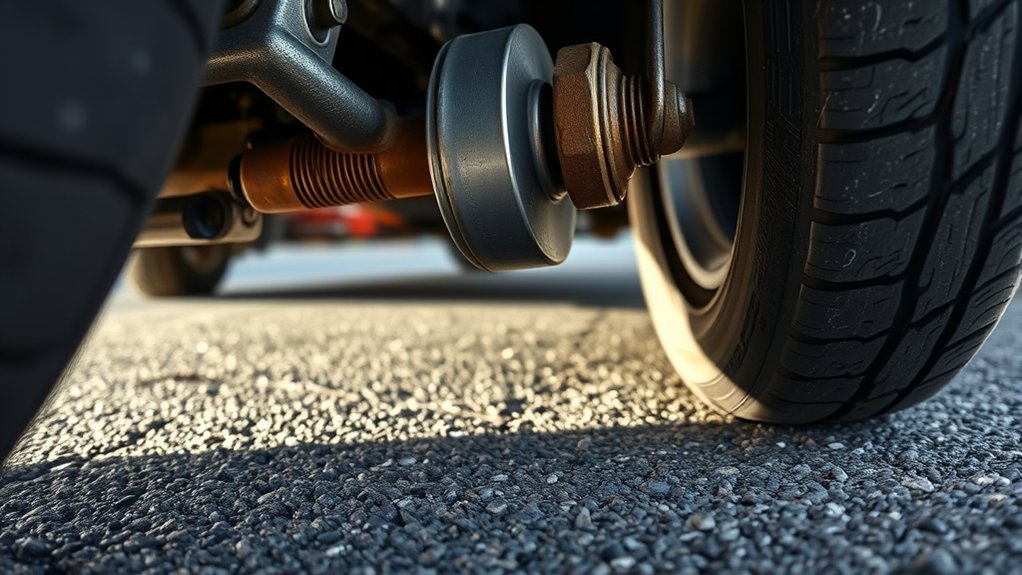
You’ll notice a bad axle by sounds like clicking or clunking during turns or acceleration, humming noises signaling worn bearings, or grinding that warns of serious damage. These distinct axle noise symptoms often indicate underlying issues such as worn CV joints or axle shafts.
Recognizing these sounds early is crucial for maintaining vehicle safety and preventing further damage.
These noises often come with vibrations or unstable steering, indicating worn CV joints or axle shafts. Ignoring them can lead to costly repairs or unsafe driving conditions.
If you keep exploring, you’ll find out how these sounds relate to axle problems and what you can do to fix them.
Key Takeaways
- A bad axle often produces clicking or clunking noises during sharp turns or acceleration.
- Rhythmic clicking that intensifies with speed indicates worn or damaged CV joints.
- Grinding or humming sounds, especially when turning or shifting gears, suggest serious axle or bearing damage.
- Vibrations or shuddering in the steering wheel often accompany axle problems.
- Noises from the wheel area that worsen during movement usually signal axle issues needing prompt attention.
How To Identify Common Axle Noises
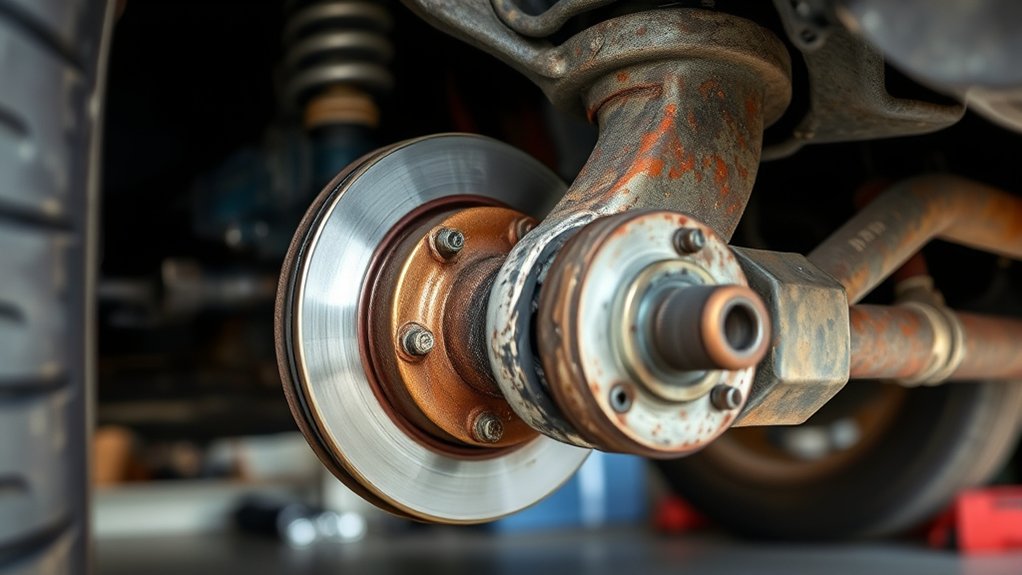
When your axle starts making unusual sounds, it’s important to recognize the specific noise to pinpoint the issue. You might hear a humming or whining sound while driving, which often indicates worn bearings or a failing axle shaft.
A clunking noise when you accelerate or decelerate usually signals a loose or damaged axle joint. If you catch a rhythmic thumping or knocking during turns, it might mean the CV joint is deteriorating.
Pay attention to any grinding sounds, especially when shifting gears or turning, as this could suggest serious damage. By distinguishing these common axle noises early, you can address problems before they worsen, saving you from costly repairs and ensuring your vehicle stays safe on the road.
What Does A Clicking Noise Mean For Your Axle?
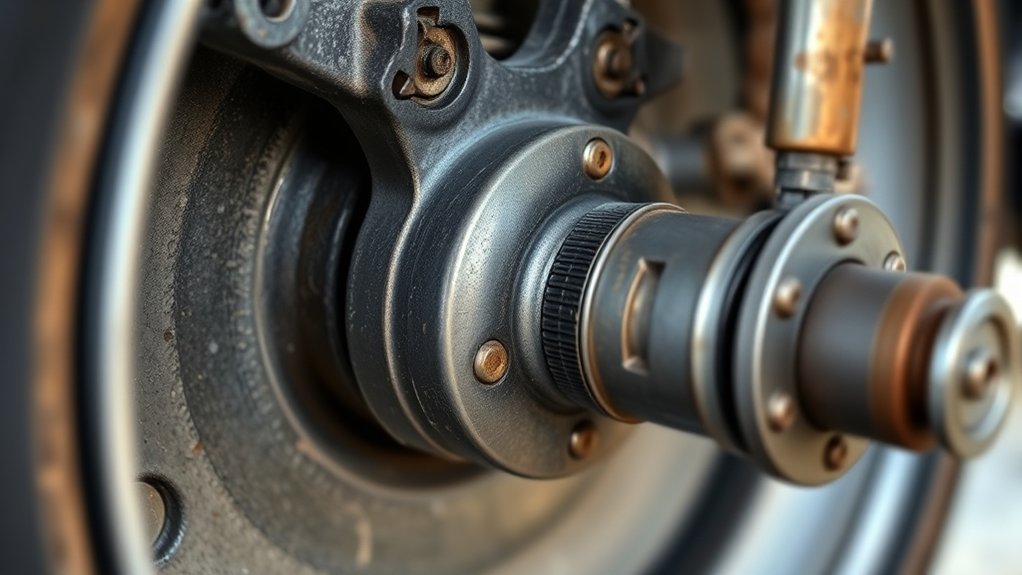
If you hear a clicking noise coming from your axle, it usually signals a problem you shouldn’t ignore. You might notice the sound when turning or accelerating, indicating worn or damaged parts.
Understanding the causes and repair options can help you fix the issue before it worsens.
Causes Of Clicking Noise
Although a clicking noise coming from your axle might seem minor at first, it often signals a serious issue that you shouldn’t ignore. One common cause is a worn-out CV joint, which can develop cracks or lose lubrication, leading to that distinct clicking sound when you turn.
Another possibility is debris or damage to the axle shaft itself, causing uneven rotation and noise. Sometimes, loose or damaged axle components, like clamps or bearings, can produce clicking as they shift during movement.
Rust or corrosion can also cause parts to stick and then release suddenly, creating that repetitive noise. Paying attention to these causes helps you catch problems early and avoid costly repairs or unsafe driving conditions.
Clicking Noise Symptoms
Since a clicking noise often signals axle trouble, you shouldn’t ignore it when you hear it. This sound usually becomes more noticeable when you turn sharply or accelerate. You might notice a rhythmic clicking that increases with speed, indicating worn or damaged CV joints.
If the noise worsens during these movements, it’s a clear symptom your axle needs attention. Sometimes, the clicking comes with vibrations or a feeling of looseness in the steering, which means the axle’s integrity is compromised. Ignoring these symptoms could lead to more serious damage or even axle failure.
Paying close attention to when and how the clicking occurs helps you identify the problem early and avoid costly repairs down the line.
Repair Options For Clicking
When you hear a clicking noise coming from your axle, it usually means the CV joints or axle components are worn and need fixing. Your best bet is to inspect the CV boots first; torn boots let grease escape and dirt in, causing joint wear.
If the joints are damaged, replacing the entire CV axle is often the most reliable solution. While some minor issues can be repaired by replacing the boots and repacking grease, worn joints rarely improve without full axle replacement.
Ignoring the noise risks further damage and costly repairs. Have a trusted mechanic diagnose the issue promptly, so you can avoid breakdowns and keep your vehicle running smoothly. Addressing clicking noises early saves you time and money.
Why Do Axles Make Clunking Sounds?
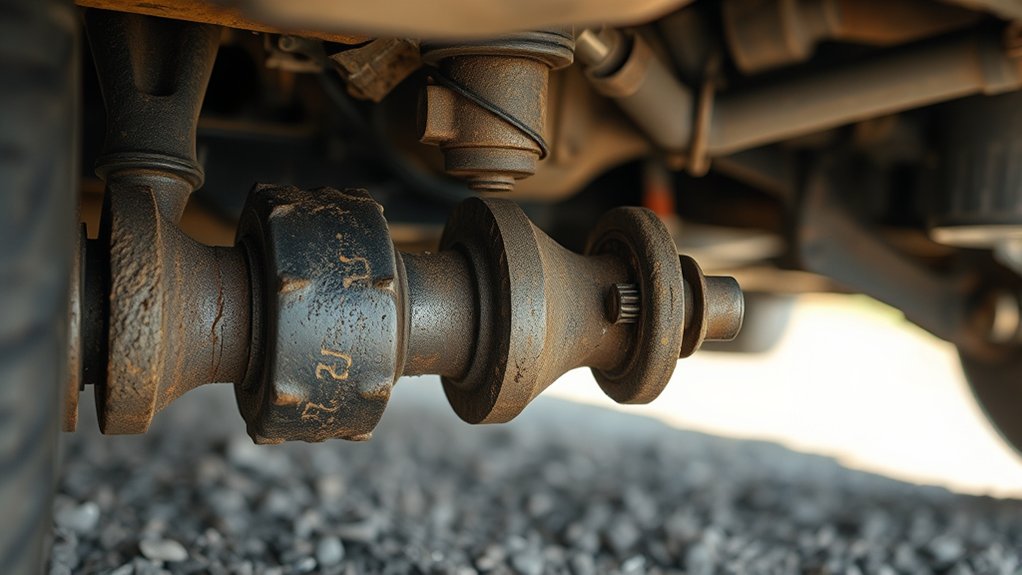
You might hear clunking sounds from your axle when parts inside it are worn or damaged. These noises often signal issues like loose joints or broken components that can affect your vehicle’s performance.
Understanding the causes can help you address the problem before it leads to bigger repairs.
Causes Of Clunking
Although clunking sounds from your axle can be alarming, they often point to specific mechanical issues that need quick attention. One common cause is worn or damaged CV (constant velocity) joints, which lose lubrication or develop cracks, leading to that distinct clunk when you turn or accelerate.
Loose or broken axle nuts or bolts also create clunking as the axle shifts during movement. Additionally, worn suspension components like control arm bushings or ball joints can cause your axle to move improperly, producing clunks. Sometimes, a damaged or bent axle shaft itself results in irregular contact and noise.
Identifying these causes early helps you avoid further damage and costly repairs, ensuring your vehicle runs smoothly and safely.
Impact On Vehicle
Clunking sounds from your axle don’t just signal worn parts—they directly affect how your vehicle performs and handles. When your axle clunks, you might notice jerky starts, uneven acceleration, or difficulty steering. These noises indicate stress in the drivetrain, which can lead to further damage if ignored.
Your safety and driving comfort are at stake.
| Symptom | Cause | Effect on Vehicle |
|---|---|---|
| Clunking Noise | Loose or worn CV joints | Jerky acceleration |
| Vibration | Damaged axle shaft | Shaky steering wheel |
| Difficulty Turning | Broken axle components | Reduced handling and control |
Addressing axle issues promptly keeps your vehicle running smoothly and prevents costly repairs.
What Grinding Noises Tell You About Your Axle
How can you tell if your axle is grinding? When you hear a persistent grinding noise while driving, especially during turns or acceleration, it’s a clear sign your axle may be damaged. Grinding sounds usually mean the axle’s bearings or joints are worn out or lacking lubrication.
If you ignore this noise, it can lead to severe axle failure and unsafe driving conditions. You might also notice vibrations or difficulty steering, which often accompany grinding issues. It’s essential to address these noises promptly by having a mechanic inspect your axle.
Catching the problem early can save you from costly repairs and keep your vehicle running smoothly and safely. Don’t wait until the noise worsens—take action as soon as you hear grinding.
Differences Between CV Joint And Axle Shaft Noises
You’ll notice CV joint noises often sound like clicking or popping when turning.
Axle shaft problems, on the other hand, usually produce a grinding or clunking sound during acceleration or deceleration.
Understanding these differences helps you pinpoint the exact issue faster.
CV Joint Noise Characteristics
While both CV joint and axle shaft noises can signal issues with your vehicle’s drivetrain, the sounds they produce have distinct characteristics that can help you pinpoint the problem. CV joint noise typically manifests as a rhythmic clicking or popping, especially when you turn sharply. This noise occurs because worn or damaged CV joints struggle to transfer torque smoothly through the joint’s flexible design.
Here’s what to listen for:
- Clicking or popping sounds during tight turns.
- Rhythmic noises that increase with acceleration.
- Noise localized near the wheel area.
- Sounds that worsen when the vehicle is under load or during sharp cornering.
Recognizing these traits can help you identify CV joint issues before they cause further damage.
Axle Shaft Sound Signs
Distinguishing between CV joint and axle shaft noises can save you time and money when diagnosing drivetrain problems. Axle shaft noises often present as a consistent knocking or clunking sound, especially during acceleration or when shifting gears. Unlike the rhythmic clicking of a failing CV joint, axle shaft issues tend to be deeper and less frequent.
You might also notice vibrations or a rough feeling through the steering wheel or floorboard. These sounds usually indicate worn or damaged bearings, loose U-joints, or a bent shaft. If you hear these signs, it’s essential to inspect the axle shaft promptly to avoid further damage.
Recognizing these differences helps you pinpoint the problem and get the right repairs done quickly.
How Axle Issues Impact Handling And Safety
Although axle problems might seem minor at first, they can seriously affect your vehicle’s handling and safety. When your axle is compromised, you may notice unstable steering, vibrations, or uneven tire wear, all of which increase the risk of accidents. Ignoring these issues puts you and others on the road in danger.
Axle issues may seem small but can dangerously impact your vehicle’s handling and overall safety.
Here’s how axle problems impact you:
- Loss of control: A damaged axle can cause your vehicle to pull to one side, making steering unpredictable.
- Increased vibrations: You’ll feel shaking through the floor or steering wheel, reducing comfort and control.
- Uneven tire wear: This leads to poor traction and handling, especially in wet or slippery conditions.
- Potential axle failure: Sudden breakage can cause a complete loss of power to the wheels, risking a crash.
Address axle issues promptly to keep your drive safe and smooth.
Why Axles Make Noise During Acceleration And Turns
When you accelerate or turn, your axles work harder to transfer power and handle the change in forces, which can cause noises if something’s wrong. You might hear clicking, clunking, or grinding sounds during these moments because worn or damaged CV joints struggle to rotate smoothly. These joints flex as your wheels turn and move, so any lack of lubrication or torn boots lets dirt in, causing noise.
Additionally, bent or cracked axles can produce vibrations and unusual sounds under stress. If your axle bearings wear out, they may also hum or rumble when you speed up or take a corner. Paying attention to these noises helps you spot axle problems early and avoid bigger, costly repairs.
How To Tell Axle Noise From Other Vehicle Sounds
If you hear unusual sounds coming from your vehicle, you’ll want to pinpoint whether they’re caused by your axles or something else. Axle noise often has a rhythmic clicking or clunking that changes with speed or when turning. To help you distinguish axle issues from other noises, consider these points:
- Sound Pattern: Axle sounds often occur during acceleration or turns, unlike engine or exhaust noises.
- Location: Axle noise seems to come from the wheel area, not the front engine bay or undercarriage.
- Noise Type: Clicking or popping usually indicates axle problems, whereas grinding might suggest brake or transmission issues.
- Response to Movement: If the noise changes when you turn sharply or accelerate, it’s likely axle-related.
Use these clues to identify axle noise accurately.
When Should You Repair A Bad Axle Immediately?
Because a damaged axle can compromise your vehicle’s safety and performance, you should address any signs of failure immediately. If you hear clicking or clunking noises when turning or accelerating, don’t ignore them. Vibrations or shuddering during driving are clear red flags.
Also, if you notice grease leaking near the wheels or your vehicle pulls to one side, get it checked right away. Continuing to drive with a bad axle risks further damage, potentially causing complete axle failure. This could leave you stranded or lead to loss of control while driving, which is dangerous.
How Mechanics Diagnose Axle Noise Problems
Although axle noise can be tricky to pinpoint, mechanics rely on a combination of visual inspections and test drives to diagnose the problem accurately. When you bring your vehicle in, they’ll first look for obvious damage or leaks around the axle area.
Then, they’ll carefully listen for unusual sounds during different driving conditions. Here’s how they break it down:
- Visual Inspection: Checking for torn boots, grease leaks, or rust.
- Test Drive: Noting when the noise occurs—turning, accelerating, or braking.
- Physical Checks: Manually rotating the axle to feel for roughness or play.
- Component Testing: Using specialized tools to examine bearings and joints.
DIY Checks For Axle Noise Problems
When you suspect axle noise, you can perform some simple checks yourself before heading to a mechanic. First, safely lift your vehicle using a jack and secure it with stands. Spin each wheel by hand and listen for clicking or grinding sounds, which often indicate axle issues.
Next, grab the axle shaft and try to wiggle it; excessive play can signal worn CV joints or bearings. Inspect the CV boots for cracks or leaks—damaged boots often lead to axle failure. While driving, note if the noise changes with speed or when turning sharply, as this can help pinpoint the problem.
These DIY checks give you a clearer idea of whether the axle needs professional attention or immediate repair.
Costs And Options For Fixing Axle Noise
After running through those DIY checks and identifying signs of axle noise, you’ll want to contemplate your repair options and the associated costs. Fixing axle noise varies widely depending on the issue’s severity and your vehicle type. Here are some common options:
Once you’ve diagnosed axle noise, consider repair options and costs based on severity and your vehicle type.
- CV Joint Replacement – Costs $300 to $800; necessary if the joint is damaged.
- Axle Shaft Replacement – Usually $400 to $1,000; this addresses bent or broken axles.
- Boot Replacement – Around $150 to $300; if the protective boot is torn but the joint is intact.
- Lubrication and Tightening – Often under $100; a quick fix for minor noise due to looseness or dryness.
Choosing the right option depends on inspection results and your budget.
How To Prevent Axle Damage And Noise
To keep your axle in good shape and avoid costly repairs, you need to maintain it regularly and drive carefully. Start by inspecting your vehicle for any leaks or damaged seals around the axle. Keep your tires properly inflated and aligned to reduce strain on the axle components.
Avoid sudden starts, hard turns, and rough terrain that can cause excessive stress. Regularly check and change your differential fluid as recommended by your vehicle’s manufacturer to guarantee smooth operation. If you notice unusual noises or vibrations, address them promptly to prevent further damage.
Frequently Asked Questions
Can Axle Noise Affect Fuel Efficiency?
Yes, axle noise often means a problem causing extra friction or resistance. When your axle isn’t working smoothly, your engine has to work harder, which can lower your fuel efficiency and increase fuel consumption over time.
Do Electric Vehicles Experience Axle Noise Differently?
Yes, you’ll notice axle noise differently in electric vehicles since they’re usually quieter overall. That means any axle issues stand out more, so you’ll want to get them checked promptly to avoid bigger problems.
How Does Axle Noise Vary With Weather Conditions?
You might notice axle noises get a bit more “temperamental” in extreme weather. Cold makes parts stiffer and louder, while rain or humidity can cause extra creaks or squeaks.
Are There Specific Axle Noises Related to Certain Car Brands?
Yes, some car brands have distinct axle noises due to design differences. You’ll notice unique clicking or grinding sounds in brands like Audi or BMW, so trust your ears and get it checked promptly to avoid damage.
Can Axle Noise Cause Damage to Other Car Components?
Yes, axle noise can cause damage to other parts like your wheel bearings, CV joints, and suspension components. If you don’t fix it quickly, you risk more expensive repairs and compromised vehicle safety. Don’t ignore it!
Conclusion
If you hear a clicking, clunking, or grinding noise from your axle, don’t ignore it—you could be one step away from a disaster! These sounds are your car’s way of screaming for help. By knowing the differences and doing simple checks, you can save yourself from sky-high repair bills.
Stay proactive, and your axle will thank you by running smoothly for miles. Remember, catching problems early is like stopping a ticking time bomb! Paying attention to what a bad axle sounds like can prevent major damage and keep your vehicle safe on the road.

