

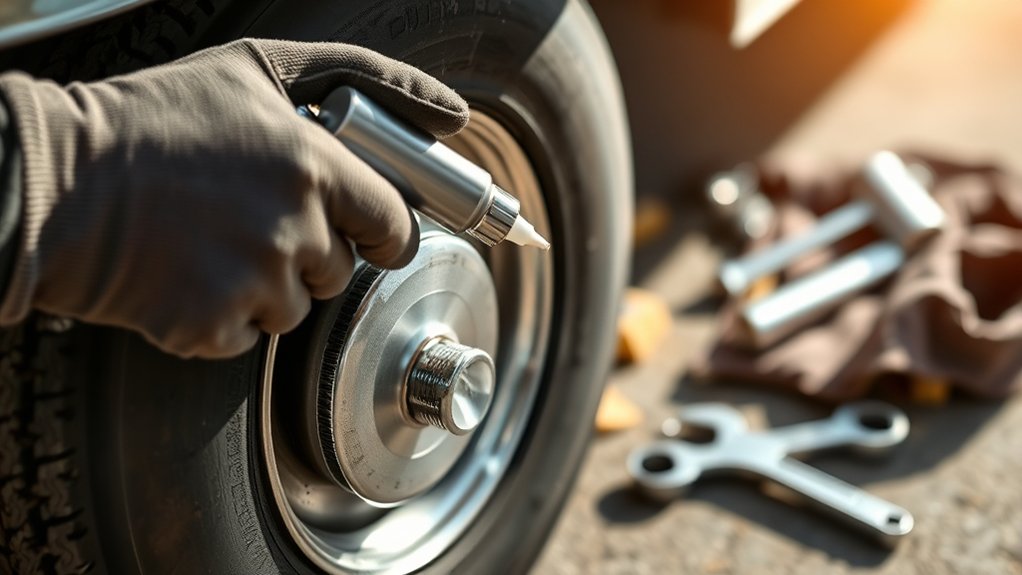
To grease your trailer axle in seven easy steps, start by parking on a flat surface and securing the trailer with wheel chocks to ensure safety. Gathering the right tools beforehand will make the process smoother and more efficient. Proper axle maintenance is essential for trailer safety and performance.
Next, loosen the lug nuts, lift the trailer using a jack, and carefully remove the wheel to access the axle hub.
Clean and inspect the bearings for any signs of damage or wear before applying grease. Use a grease gun to apply grease until it oozes out, ensuring thorough coverage.
Finally, reassemble everything tightly, replace the wheel, and lower the trailer. Spin the wheel to check for smooth operation and confirm the job is done correctly.
Keep following this guide, and you’ll soon master proper axle maintenance for safe and reliable towing.
Key Takeaways
- Park trailer on a flat surface, engage parking brake, and use wheel chocks for safety before starting.
- Lift trailer with a jack, remove lug nuts, and take off the wheel to access the axle hub.
- Remove and clean bearings, inspect for damage, and replace if necessary before greasing.
- Attach grease gun to the fitting, pump grease until it oozes, then rotate the hub for even distribution.
- Reassemble bearings, tighten spindle nut, secure with a cotter pin, replace dust cap, and remount the wheel.
Prepare Your Trailer Axle for Safe Maintenance
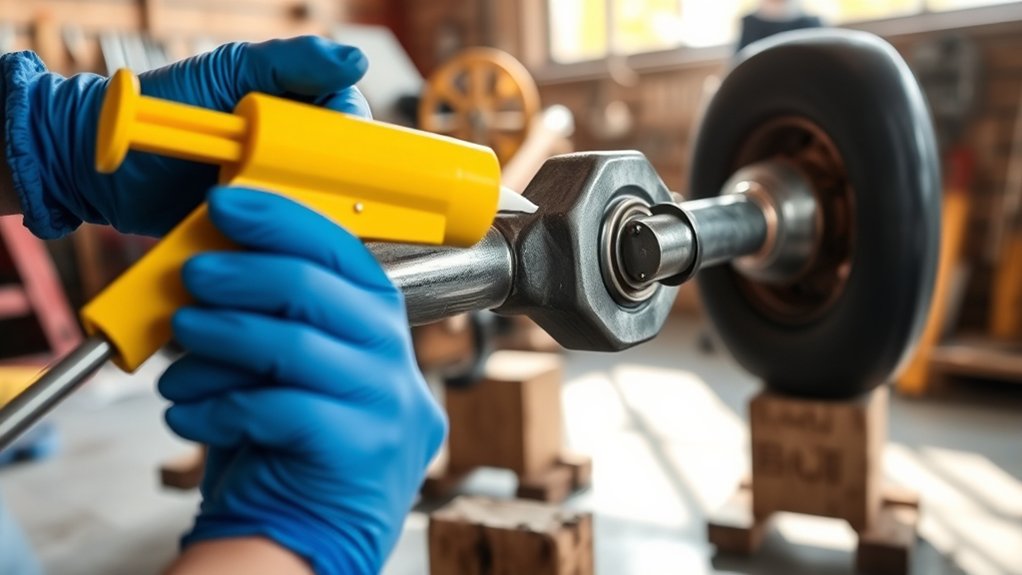
Before you begin greasing your trailer axle, how do you guarantee the job is safe and effective? First, park your trailer on a flat, stable surface to prevent movement. Engage the parking brake and use wheel chocks on both sides of the wheels opposite to the axle you’ll work on.
This keeps the trailer from rolling unexpectedly. Next, inspect the axle and surrounding parts for damage or excessive wear. Clean off any dirt, rust, or old grease from the grease fittings and axle components to ensure fresh grease adheres properly.
Finally, wear gloves and safety glasses to protect yourself during maintenance. Taking these precautions prepares your trailer axle for a smooth, safe greasing process, minimizing risks and ensuring your work lasts longer.
Gather Tools Needed to Grease Your Trailer Axle
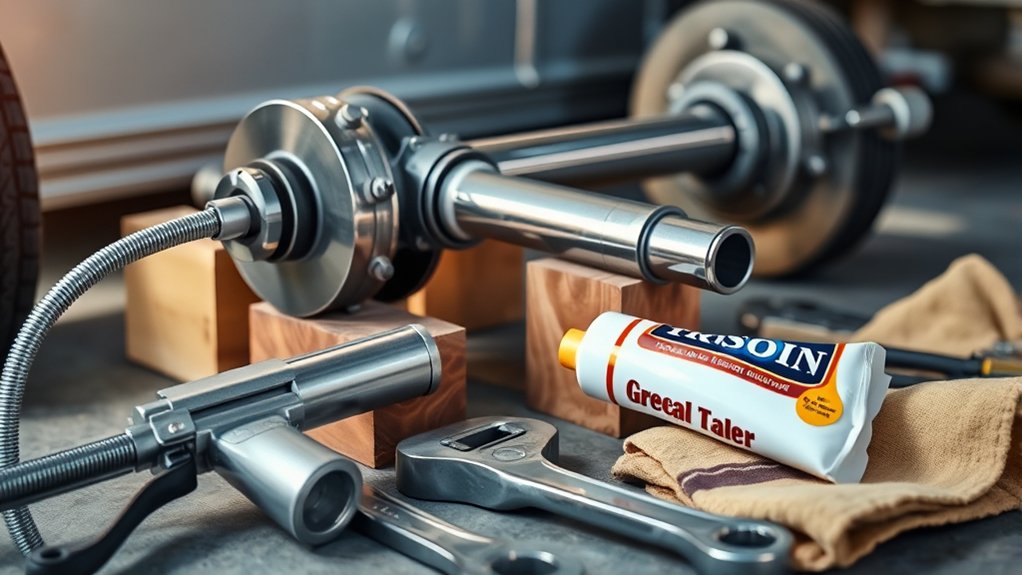
Before you start greasing your trailer axle, make sure you have all the essential tools like a grease gun, grease fittings, and a clean rag. Set up your workspace in a well-lit, flat area to keep everything organized and safe.
Having the right tools and environment will make the job quicker and easier.
Essential Greasing Tools
Although greasing a trailer axle might seem straightforward, having the right tools makes the job faster and more effective.
First, grab a quality grease gun—manual or battery-powered—to apply grease precisely where it’s needed. You’ll also need the appropriate grease cartridges, usually marine or wheel bearing grease, to guarantee proper lubrication.
Don’t forget a clean rag or paper towels to wipe away old grease and prevent contamination. A flathead screwdriver or a small pry tool helps remove the dust caps covering the axle fittings.
Finally, gloves protect your hands from grease and grime. With these essential tools ready, you’ll save time and avoid frustration, making your trailer axle maintenance smoother and more reliable.
Preparing Your Workspace
Gathering the right tools is just the start—setting up your workspace properly will make greasing your trailer axle easier and safer. Begin by choosing a flat, stable surface where your trailer won’t shift or roll. Use wheel chocks to secure the trailer firmly in place.
Make sure the area is well-lit so you can spot any dirt or damage while working. Lay down a tarp or newspapers to catch grease drips and keep the area clean. Have a container or rag handy to wipe off excess grease and prevent messes.
Keep all your tools within reach to avoid unnecessary trips. Finally, wear gloves to protect your hands and eye protection to guard against any grease splatters. A tidy, organized workspace helps you finish the job quickly and efficiently.
Remove the Wheel and Access the Axle Hub
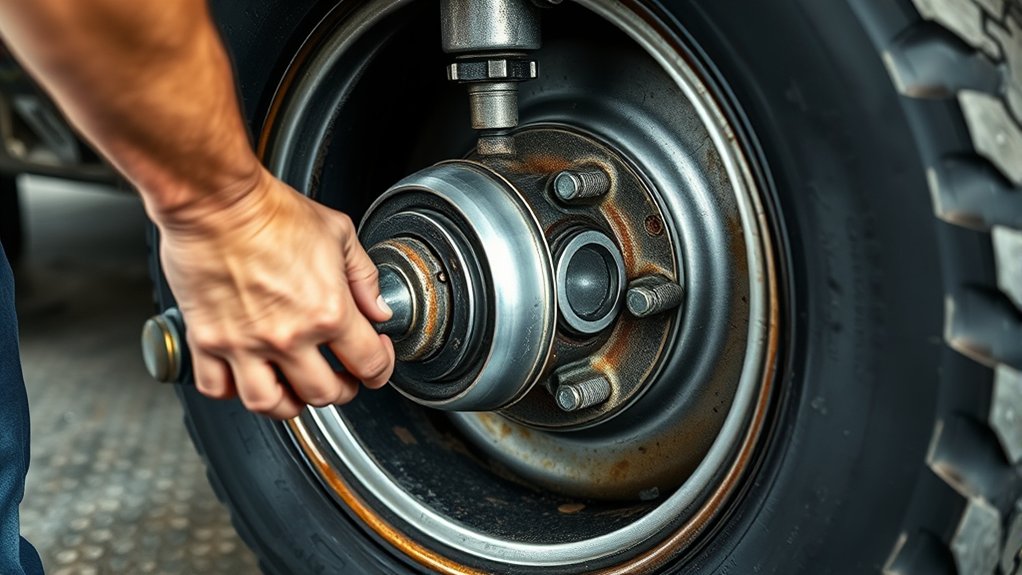
Once you’ve secured the trailer on a flat surface and engaged the parking brake, you can start by loosening the lug nuts on the wheel you’re working on. Use a lug wrench to turn them counterclockwise, but don’t remove them completely just yet.
Next, raise the trailer with a jack placed under the axle near the wheel, lifting it until the tire is off the ground. Now, fully remove the loosened lug nuts and take off the wheel.
With the wheel removed, you’ll have clear access to the axle hub. Keep your tools nearby, as you’ll need to work on the hub next. This step sets you up perfectly to proceed with greasing the axle and maintaining your trailer’s smooth operation.
Clean and Inspect Trailer Axle Bearings Thoroughly
Before applying new grease, you should clean and inspect the trailer axle bearings thoroughly to guarantee they’re free from dirt, debris, and wear. Start by removing the bearings from the hub carefully, then wipe off old grease using a clean rag. Use a solvent or degreaser to remove any stubborn grime, and let the bearings dry completely.
Once clean, check for signs of damage like pitting, rust, or cracking on the rollers and races. Spin the bearings by hand to feel for roughness or grinding, which indicates wear. Also, inspect the bearing seals for cracks or tears.
If you find any damage or excessive wear, replace the bearings or seals immediately to prevent future axle failure and assure safe trailer operation.
Grease Trailer Axle Bearings Properly With a Grease Gun
After ensuring your trailer axle bearings are clean and free of damage, you’ll want to apply fresh grease properly using a grease gun. Follow these steps to get it right:
- Attach a clean grease gun to the grease fitting on the axle hub.
- Pump the grease gun steadily until you see fresh grease oozing out around the bearing seals.
- Avoid over-packing to prevent bearing damage; stop when resistance increases.
- Rotate the hub manually to distribute the grease evenly inside the bearing assembly.
- Wipe away any excess grease to keep dirt and debris from sticking.
Reassemble the Hub and Secure the Wheel Correctly
Although greasing the bearings is essential, reassembling the hub and securing the wheel properly guarantees your trailer runs smoothly and safely. Start by sliding the hub back onto the spindle carefully, ensuring the bearings sit snugly in place.
Next, reinstall the outer bearing, followed by the spindle nut. Tighten the nut just enough to remove any play but don’t overtighten—it should still allow the hub to rotate freely. Then, secure the nut with a new cotter pin to prevent loosening.
Place the dust cap back on, tapping it gently until it’s flush and sealed. Finally, mount the wheel, tighten the lug nuts in a star pattern, and double-check for tightness. Doing this correctly keeps everything aligned and secure during your travels.
Test Your Trailer Axle After Greasing for Smooth Operation
After greasing your trailer axle and reassembling the wheel, spin the wheel to check its rotation for smoothness. Listen closely for any unusual noises that could indicate a problem.
Finally, feel the hub for heat build-up, which might signal excessive friction or improper greasing.
Check Wheel Rotation
How smoothly does your trailer wheel turn once you’ve applied grease to the axle? Checking the wheel rotation helps ensure the grease is doing its job and the axle operates without issues.
To properly assess this, follow these steps:
- Spin the wheel by hand and observe its movement.
- Look for any resistance or rough spots during rotation.
- Ensure the wheel keeps turning freely without stopping abruptly.
- Check that the wheel doesn’t wobble or feel loose on the axle.
- Confirm the axle and bearings feel lubricated and smooth.
If the wheel rotates easily and steadily, your greasing job is successful. If not, you might need to reapply grease or inspect for mechanical problems before hitting the road.
Listen For Unusual Noises
Once you’ve confirmed that the wheel spins smoothly, pay close attention to any unusual noises while turning or moving the trailer. Listen carefully for grinding, squeaking, or knocking sounds that could indicate problems with the axle or bearings. These noises often mean the grease hasn’t fully lubricated the components or there’s damage that needs addressing.
Move the trailer slowly and try different angles to detect any inconsistencies in sound. If you hear anything abnormal, stop immediately and inspect the axle for issues like worn bearings or insufficient grease. Catching these problems early helps prevent costly repairs and ensures safe towing.
Inspect for Heat Build-up
Because excessive heat signals friction or inadequate lubrication, you should carefully check your trailer axle for heat build-up after greasing. Right after you finish greasing, run your trailer for a short distance. Then, stop and cautiously feel the axle hub’s temperature.
If it’s too hot to touch, there’s likely an issue.
Here’s how to inspect for heat build-up effectively:
- Use an infrared thermometer for an accurate reading.
- Compare the temperature to the manufacturer’s recommended limits.
- Look for discoloration or burnt grease around the axle.
- Check for any unusual smells indicating overheating.
- Verify the wheel spins freely without resistance.
Address heat build-up promptly to prevent damage and keep your trailer running smoothly.
Frequently Asked Questions
How Often Should Trailer Axles Be Greased for Optimal Performance?
You should grease your trailer axles every 6 months or every 12,000 miles, whichever comes first. Regular greasing keeps bearings lubricated, prevents wear, and guarantees smooth, safe towing without unexpected breakdowns or damage.
Can I Use Regular Grease Instead of Trailer-Specific Grease?
You can use regular grease, but it’s like inviting a guest who might not fit perfectly—trailer-specific grease handles heavy loads and moisture better, so sticking with it guarantees your axle gets the best care and longevity.
What Are the Signs of a Failing Trailer Axle Bearing?
You’ll notice a loud grinding noise, wheel wobbling, or uneven tire wear if your trailer axle bearing is failing.
You might also feel heat around the hub or experience difficulty steering. Act quickly to avoid damage.
Is It Necessary to Replace Bearings When Greasing the Axle?
You don’t always need to replace bearings when greasing the axle, but if you hear grinding or notice rough rotation, it’s time.
Ignoring bad bearings risks serious damage and costly repairs down the road.
How Do Weather Conditions Affect Trailer Axle Maintenance?
You’ll notice that wet or salty conditions cause faster rust and corrosion, so you’ll need to grease your trailer axle more often and inspect seals closely.
This helps prevent dirt and moisture from damaging the bearings and axle components. Regular maintenance is crucial in these environments.
Conclusion
Now that you’ve greased your trailer axle, you’re set to roll smoother than a rocket on a slip ’n slide! Regular maintenance like this keeps your trailer running safely and extends its life way beyond what you’d expect.
Just follow these easy steps each time, and you’ll avoid costly repairs that feel like they come out of nowhere. Keep your wheels turning and enjoy every trip worry-free!
By greasing your trailer axle regularly, you ensure optimal trailer performance and prevent premature wear. This simple maintenance step is key to safe towing and long-lasting trailer axles. Make greasing your trailer axle a part of your routine for reliable, hassle-free travels.

