

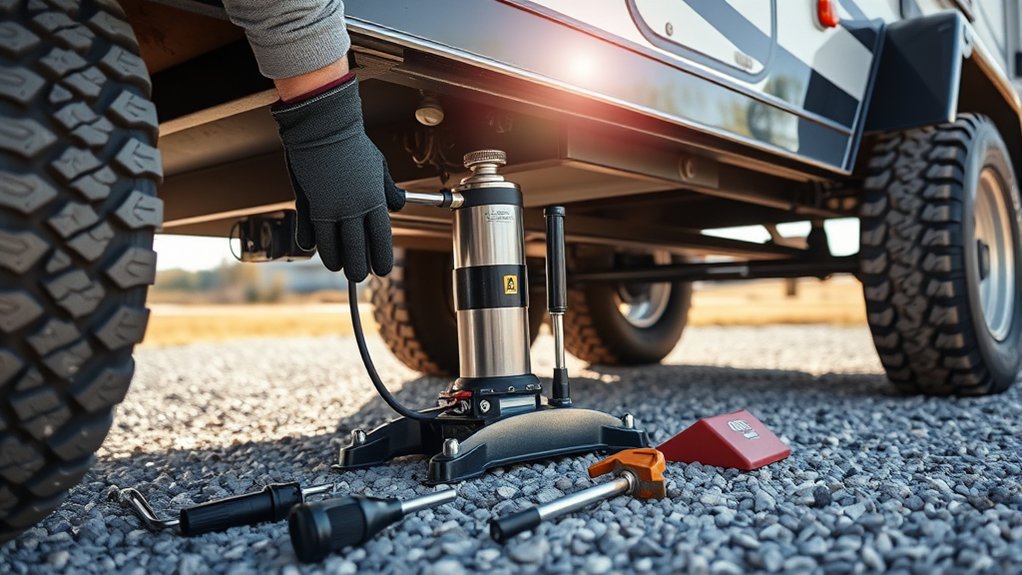
To jack up a dual axle travel trailer safely, start by choosing a level, solid surface and chock the wheels securely. Using a strong hydraulic bottle jack and sturdy jack stands is essential for stability.
Position the jack under reinforced frame areas, avoiding suspension components. Lift the trailer evenly by alternating sides to maintain balance.
Once raised, place jack stands under the frame to support the trailer before performing any work. When finished, lower the trailer carefully, checking for wobbling or instability.
Following these steps ensures your dual axle travel trailer stays supported and stable while you work. Proper preparation and safety measures help prevent accidents and damage during the jacking process.
Key Takeaways
- Select a level, solid surface and chock wheels on both sides to ensure trailer stability before lifting.
- Use a hydraulic bottle jack positioned under reinforced frame support points, avoiding suspension components.
- Lift the trailer evenly by alternating jacks and monitoring balance to keep the trailer level.
- Securely place jack stands rated for the trailer’s weight under the frame before removing tires or working.
- Lower the trailer gradually, ensuring tires are fully supported and jacks are fully retracted before moving.
Pick a Safe Spot to Jack Your Trailer
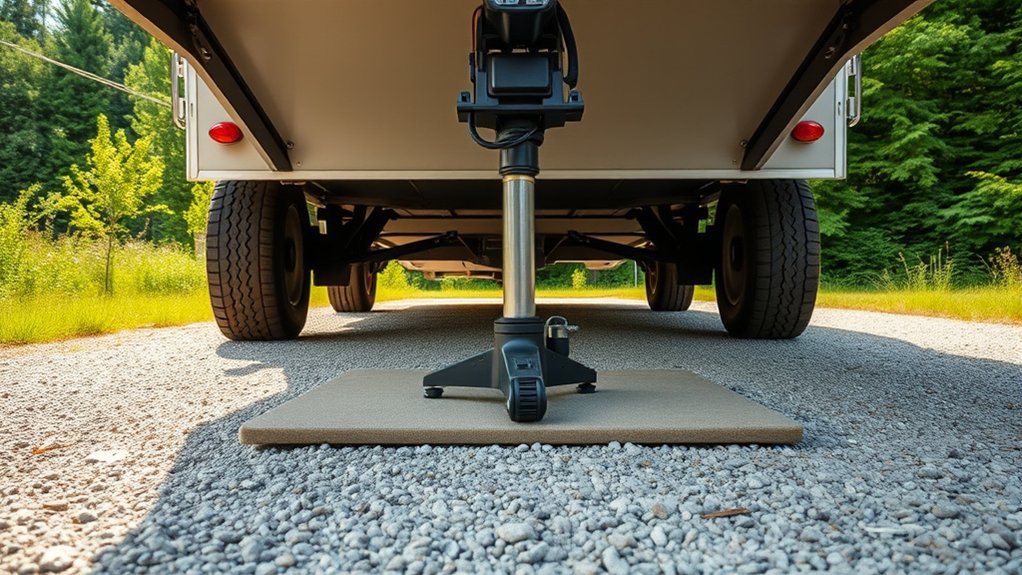
Before you start jacking up your dual axle travel trailer, make sure you choose a level, solid surface to work on. Uneven or soft ground can cause instability, making the trailer prone to shifting or slipping off the jack. Asphalt, concrete, or packed gravel are ideal surfaces.
Avoid dirt, grass, or loose gravel, as they can compress under pressure. Also, pick a spot away from traffic and obstacles to ensure your safety and prevent damage. Check the area for any debris or objects that might interfere with the jack or your movements.
Gather Tools and Equipment for Jacking Your Trailer
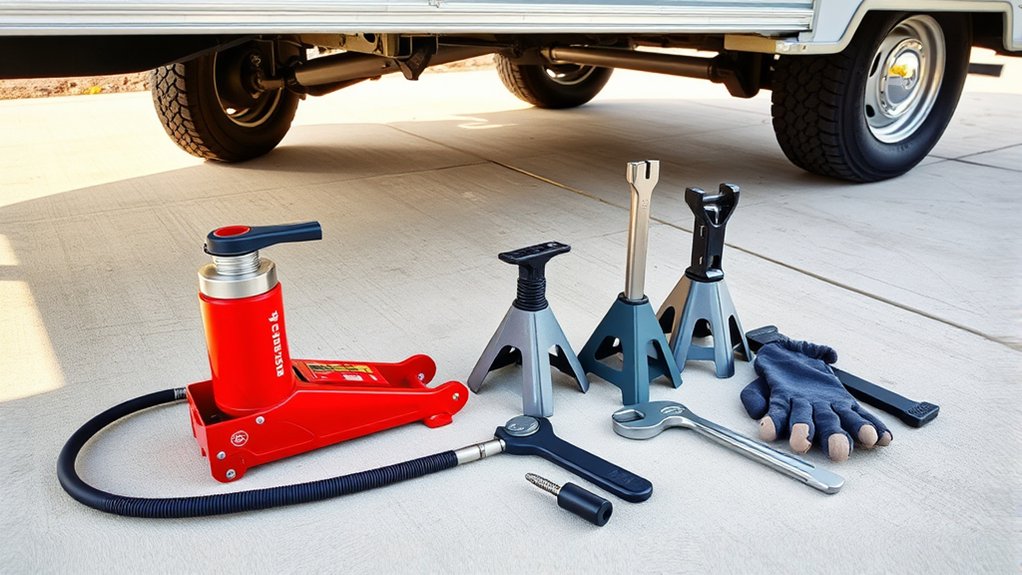
When you’re ready to jack up your dual axle travel trailer, gather all necessary tools and equipment to guarantee a smooth and safe process. Having the right gear on hand helps you avoid interruptions and ensures safety while lifting.
Here’s a quick checklist of essential items:
| Tool/Equipment | Purpose |
|---|---|
| Hydraulic bottle jack | Provides stable lifting force |
| Wheel chocks | Prevents trailer movement |
| Jack stands | Supports trailer after lifting |
| Lug wrench | Removes and tightens lug nuts |
Make sure the jack can handle your trailer’s weight, and always use sturdy jack stands to keep it secure. Wheel chocks are crucial to keep the trailer from rolling, so don’t skip them.
Prepare your tools before starting for an efficient jacking process.
Get Your Trailer Ready Before You Lift
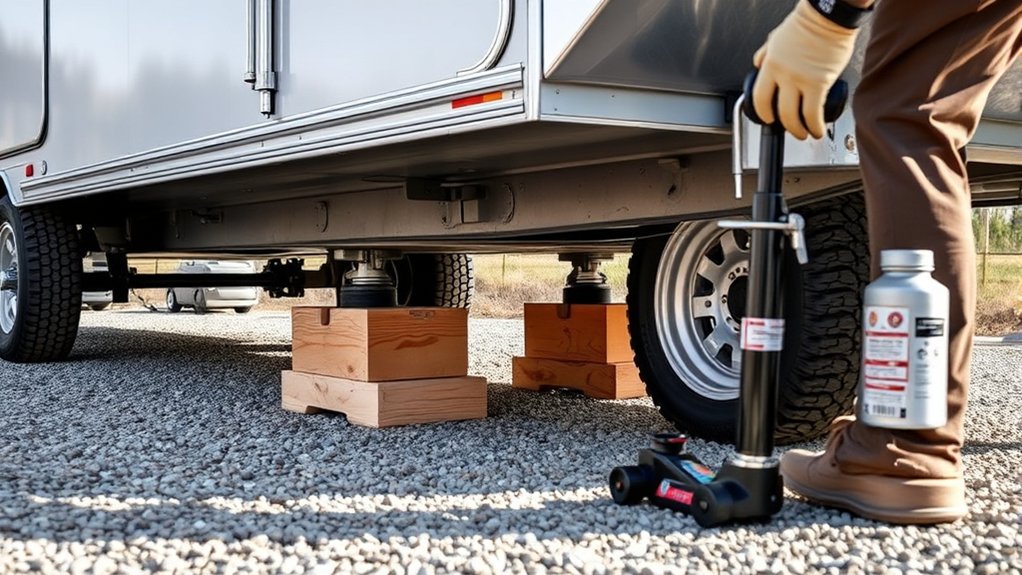
Although it might seem straightforward, getting your trailer ready before you lift is essential for safety and stability. You need to make sure everything is set up correctly to prevent accidents or damage.
Start by:
- Chocking the Wheels – Place wheel chocks firmly on both sides of the tires to prevent any movement.
- Engaging the Parking Brake – Always set your trailer’s parking brake to lock the wheels in place.
- Removing Any Cargo – Take out heavy items or secure loose gear inside the trailer to avoid shifting when lifted.
Position the Jack Under Your Trailer’s Frame
Start by locating the sturdy frame support points under your trailer where the jack will rest. Make certain the jack sits firmly and won’t slip during lifting.
Proper positioning ensures safety and stability as you raise the trailer.
Locate Frame Support Points
Where should you place the jack to lift your dual axle travel trailer safely? You need to locate solid frame support points to prevent damage and guarantee stability. Follow these steps:
- Inspect the frame: Look for reinforced areas or cross members designed to bear weight. These are usually thicker and free of rust or damage.
- Avoid suspension components: Never place the jack on axles, leaf springs, or wheels, as this can cause serious damage or unsafe lifting.
- Check the manufacturer’s manual: It often specifies recommended jacking points, ensuring you lift your trailer where it’s strongest.
Ensure Stable Jack Placement
Once you’ve identified the proper frame support points, position your jack directly beneath them to guarantee stability. Make sure the jack’s base sits on solid, level ground to prevent sinking or shifting. If the ground is soft, place a sturdy wooden board or metal plate under the jack for extra support.
Align the jack so it contacts the frame squarely—avoid tilting or angling it, which can cause the trailer to become unstable. Double-check that the jack head fits securely under the frame’s crossmember or main beam, not just the outer edges. Taking these steps ensures your trailer remains steady throughout the lifting process, reducing risks of accidents or damage.
Proper jack placement is critical for safe, effective lifting every time.
Lift the Trailer Evenly to Prevent Damage
Although it might be tempting to lift one side first, you need to raise both sides of your dual axle travel trailer evenly to avoid stressing the frame or axles. Uneven lifting can cause twisting or bending, which leads to costly damage.
Always lift both sides of your dual axle trailer evenly to prevent frame or axle damage.
To lift evenly, follow these steps:
- Position your jacks at the same points on each side to maintain balance.
- Crank each jack incrementally, alternating sides to raise the trailer gradually.
- Monitor the trailer’s level frequently with a bubble level to make certain it stays even.
Secure Your Trailer With Wheel Chocks and Stands
Before you start jacking up your trailer, make sure to secure it with wheel chocks to prevent any movement. Picking the right stands is key to keeping the trailer stable and safe while it’s lifted.
Let’s go over how to choose the best wheel chocks and stands for your setup.
Importance Of Wheel Chocks
Two sturdy wheel chocks are essential when you jack up a dual axle travel trailer to prevent it from rolling or shifting. Without them, you risk accidents or damage to your trailer and surroundings. Wheel chocks stabilize your trailer by gripping the ground firmly, especially on uneven or sloped surfaces.
Here’s why you shouldn’t omit them:
- Safety: They keep the trailer securely in place, protecting you and others from unexpected movement.
- Stability: Chocks reduce vibrations and sway when you work underneath or around your trailer.
- Peace of Mind: Knowing your trailer won’t roll lets you focus on jacking and maintenance without worry.
Always place chocks on both sides of at least one tire before lifting your trailer to ensure maximum security.
Choosing The Right Stands
Wheel chocks keep your trailer from rolling, but you’ll need sturdy stands to safely support its weight once it’s lifted. Choosing the right stands is essential for stability and safety. Look for stands rated for heavy loads, preferably adjustable to fit your trailer’s frame.
Avoid makeshift supports that can slip or collapse. Steel jack stands with wide bases are ideal, as they resist tipping on uneven ground. Before lifting, place your stands on solid, level surfaces.
| Stand Type | Load Capacity |
|---|---|
| Steel Jack Stand | Up to 6 tons |
| Adjustable Stand | 3 to 5 tons |
| Scissor Jack | 1 to 2 tons |
| Hydraulic Stand | 4 to 7 tons |
| Bottle Jack | 2 to 3 tons |
Choose stands that match or exceed your trailer’s weight for secure support.
Remove the Tire or Access the Work Area Safely
How do you safely access the work area when jacking up your dual axle travel trailer? First, ensure the trailer is on a level surface and the wheels are chocked to prevent movement.
When removing the tire or accessing the work area, follow these steps:
- Loosen Lug Nuts Before Lifting: Slightly loosen the lug nuts while the trailer is still on the ground to avoid wheel spin.
- Use Proper Lifting Equipment: Position your jack under a sturdy frame point, then lift cautiously to avoid instability.
- Secure the Trailer: Once lifted, place jack stands under the frame to hold the trailer securely before fully removing the tire or accessing the work area.
These steps minimize risk and create a safe environment for maintenance.
Lower Your Trailer Carefully After Maintenance
After you’ve completed your maintenance and securely removed the jack stands, lowering your dual axle travel trailer requires steady control to prevent sudden drops or damage. Slowly turn the jack handle or operate the hydraulic jack in small, deliberate increments. Keep a close eye on the trailer’s descent, ensuring it remains even and stable.
Avoid rushing this step—you want the trailer to settle gently onto the ground. If you notice any unusual movement or resistance, pause and reassess before continuing. Once the trailer’s weight is fully supported by the tires, stop lowering the jack completely.
Carefully remove the jack from under the trailer, making sure it’s clear of any parts or obstructions. Taking these precautions helps protect your trailer and guarantees your safety.
Check Trailer Stability Before Moving or Driving
Before you hit the road, make sure your dual axle travel trailer is stable and secure. Stability is essential for safe towing and to prevent damage. Follow these three key checks:
- Inspect the jacks and blocks: Ensure all jacks are fully retracted and any support blocks are removed or securely stowed.
- Test for movement: Gently push or rock the trailer to confirm it doesn’t wobble or shift. If it moves, recheck the jacks or stabilizers.
- Verify tire contact: Confirm all tires rest evenly on the ground, with no signs of uneven pressure or sagging.
Troubleshoot Common Trailer Jacking Problems
Although jacking up a dual axle travel trailer usually goes smoothly, you might encounter a few common problems along the way. If the jack won’t lift, check for debris or rust in the mechanism and lubricate it if needed. Make sure the jack is properly aligned under the frame—misalignment can cause instability or difficulty raising the trailer.
If the trailer shifts or feels unstable, double-check that the wheels are chocked firmly and the ground is level. Sometimes, the jack handle might slip; ensure you’re using the correct handle size and applying steady pressure.
Finally, if the jack doesn’t lower smoothly, inspect the release valve or mechanism for damage or blockages. Address these issues promptly to keep your jacking process safe and efficient.
Frequently Asked Questions
How Often Should I Inspect My Trailer Jacks for Wear and Tear?
You should inspect your trailer jacks for wear and tear before every trip and at least once a month during storage. Regular checks help you catch issues early and keep your trailer stable and safe.
Can I Use a Hydraulic Jack Instead of a Scissor Jack?
You can use a hydraulic jack instead of a scissor jack; in fact, hydraulic jacks can lift up to 6 tons, making them powerful and efficient.
Just make certain it’s rated for your trailer’s weight and use proper safety stands.
What Is the Maximum Weight Capacity for Typical Travel Trailer Jacks?
Typical travel trailer jacks usually support between 2,000 to 3,500 pounds.
You’ll want to check your specific jack’s rating to make certain it can safely lift your trailer without risking damage or injury.
How Do Weather Conditions Affect Trailer Jacking Safety?
Think slippery mud or strong winds won’t affect your trailer jacking safety? Wet or icy ground can cause instability, and wind might shift the trailer unexpectedly.
Always check conditions and secure your setup before you start jacking.
Are There Special Considerations for Jacking Trailers With Electric Brakes?
Yes, you should disconnect the trailer’s electric brakes before jacking to prevent accidental activation. Also, make sure the brake system is off and the battery is disconnected to avoid damage or injury while working under the trailer.
Conclusion
Jacking up your dual axle travel trailer might seem intimidating, but with these steps, you’re steering smoothly toward success. Like a captain guiding calm seas, you’ll lift your trailer safely and steadily, avoiding any jerks or slips.
Remember, patience and precision are your best mates—each careful move guarantees your trailer stays stable and secure. Now, go ahead and tackle that maintenance with confidence, knowing you’ve got the skills to keep your journey rolling strong.
By following these simple steps to jack up a dual axle travel trailer, you ensure safety and stability throughout the process. Proper jacking techniques help prevent damage and make maintenance easier. With practice, you’ll master how to jack up a dual axle travel trailer efficiently every time.

