

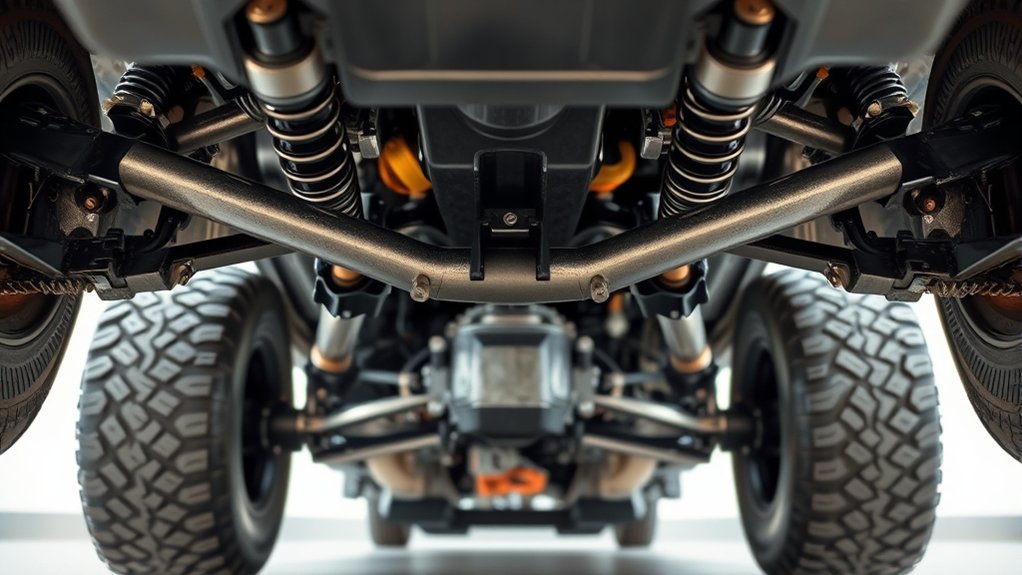
A live axle is a solid beam connecting both wheels, transmitting engine power to them simultaneously while moving as one unit. This type of axle is a crucial component in many vehicles, especially trucks and off-road vehicles, providing durability and strength.
You can identify a live axle by looking under your vehicle for a single solid axle housing with a differential bulge in the center, linking both wheels.
This setup affects how your suspension reacts, impacting handling and ride quality. Understanding the live axle’s role can help you better maintain your vehicle and anticipate its performance characteristics.
Keep exploring to learn more about how live axles influence vehicle dynamics and maintenance needs.
Key Takeaways
- A live axle is a solid beam connecting wheels, transmitting engine power to both wheels simultaneously through an integrated differential.
- It rotates as a single unit, linking both wheels so movement of one affects the other during suspension flexing.
- The differential housing appears as a central bulge on the solid axle beam underneath the vehicle.
- Live axles are commonly found in trucks, SUVs, and off-road vehicles like the Ford F-150 and Jeep Wrangler.
- To identify, look for a solid axle connecting both wheels and verify the axle moves as one during suspension movement.
What Is a Live Axle and How Does It Work
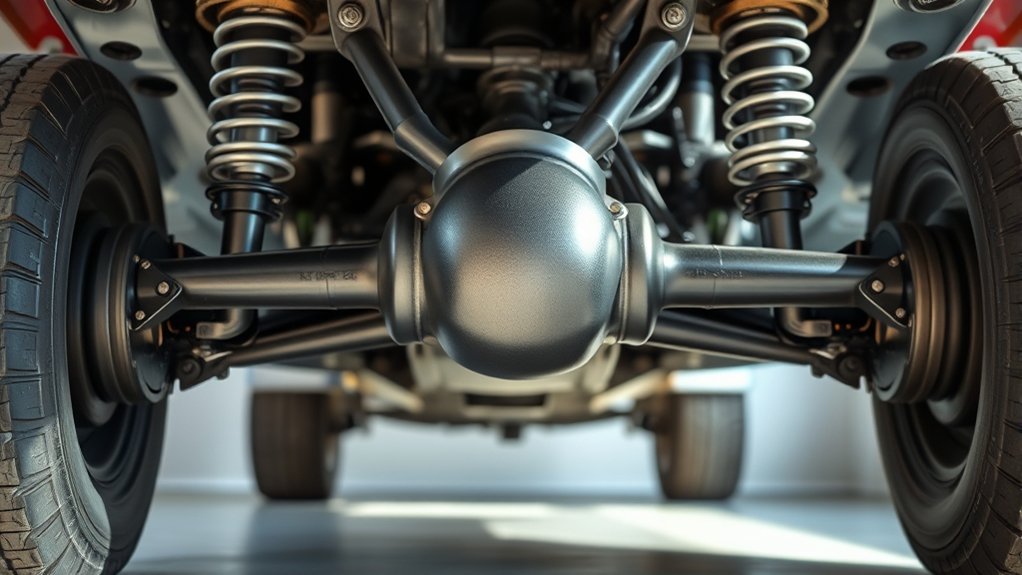
How does a live axle actually work? A live axle connects your vehicle’s wheels through a solid beam, transmitting power from the engine to both wheels simultaneously. Unlike other suspensions, this axle doesn’t just support weight; it actively drives your wheels.
When the engine turns the driveshaft, it rotates the differential housed in the live axle, which splits power evenly to both wheels. Because the wheels are rigidly connected, they move up and down together over bumps, maintaining consistent traction. This design is simple, durable, and effective for handling heavy loads or rough terrain.
How a Live Axle Differs From Independent Suspension
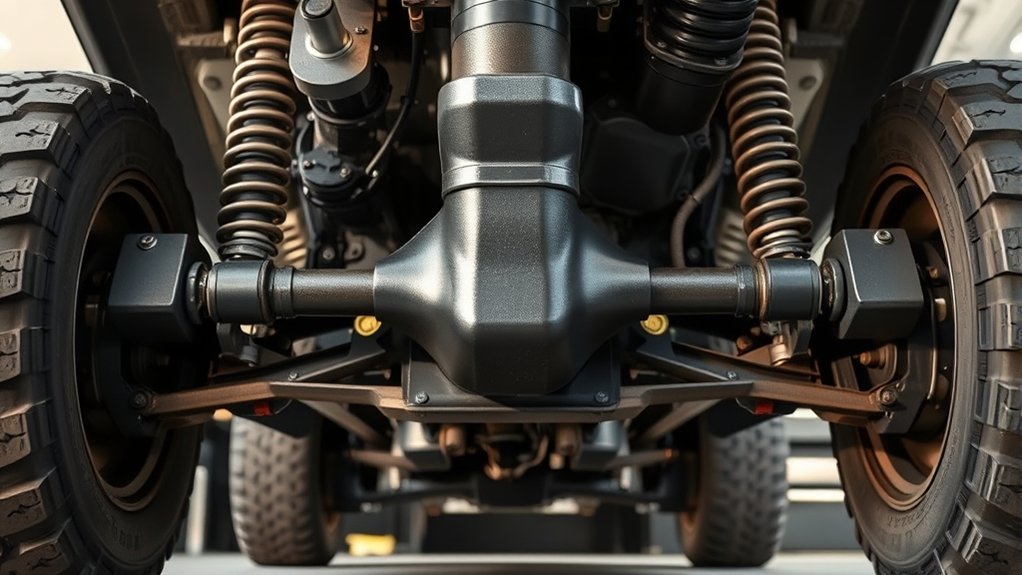
Why choose a live axle over independent suspension? The key difference lies in how the wheels move. With a live axle, both wheels are connected by a solid shaft, so they move together.
When one wheel hits a bump, the other is affected too. In contrast, independent suspension lets each wheel move separately, improving ride comfort and handling on uneven roads.
You’ll notice a live axle is simpler and sturdier, making it easier to maintain. Independent suspension is more complex, with multiple components allowing for that separate wheel movement.
Why Do Some Vehicles Use Live Axles Instead of Independent Suspension?
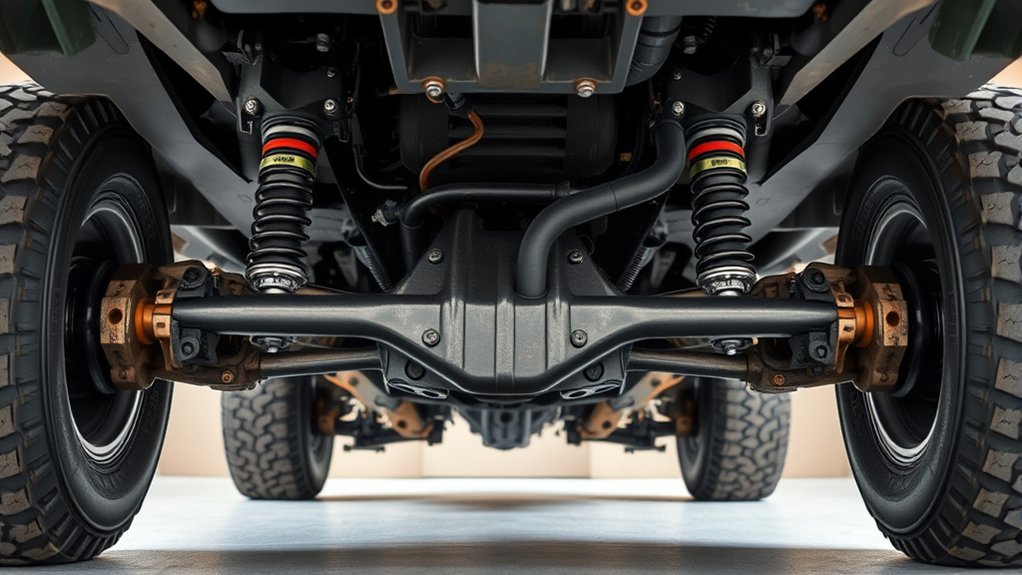
Although independent suspension offers smoother rides, many vehicles still rely on live axles because they provide greater strength and durability for heavy loads and rough conditions. If you need a setup that can withstand tough terrain or haul weight without compromising reliability, a live axle is often the better choice. It keeps both wheels connected, distributing loads evenly and reducing stress on individual components.
You’ll also find that live axles are simpler and cheaper to maintain, which matters if you plan on pushing your vehicle hard or using it in demanding environments. While independent suspension excels in comfort and handling, live axles give you ruggedness and longevity, making them ideal when strength and durability outweigh the need for a plush ride.
Common Vehicles That Typically Have Live Axles
When you look at vehicles designed for heavy-duty tasks or off-road use, you’ll often find live axles as a key component. These axles provide durability and strength needed for rough terrains and heavy loads.
You’ll commonly spot live axles in trucks, SUVs, and certain off-road vehicles.
Here are some typical vehicles that usually come equipped with live axles:
| Vehicle Type | Examples | Common Use |
|---|---|---|
| Pickup Trucks | Ford F-150, RAM 1500 | Towing, hauling |
| SUVs | Jeep Wrangler, Toyota 4Runner | Off-roading |
| Off-Road Vehicles | Land Rover Defender | Rugged terrain |
| Commercial Vans | Ford Transit | Cargo transport |
| Heavy-Duty Trucks | Freightliner Cascadia | Long-haul trucking |
How to Identify a Live Axle Under Your Vehicle
Live axles are common in many trucks, SUVs, and off-road vehicles, but identifying one on your own vehicle can be straightforward if you know what to look for. First, get under your vehicle and check the rear or front axle assembly. A live axle usually appears as a solid, single beam connecting both wheels, unlike independent suspensions where each wheel moves separately.
Look for a differential housing in the center of the axle—this bulge is a key sign of a live axle. Also, notice if the entire axle moves as one unit when the suspension flexes. If you see these features, you’re likely looking at a live axle.
Just confirm the vehicle is safely supported before inspecting underneath.
Key Mechanical Features That Define a Live Axle
You’ll want to focus on how the axle shafts transfer power directly to the wheels, making the axle “live.”
Notice how the differential is integrated into the assembly to allow wheel speed differences. Also, check the suspension connection points that secure the axle while allowing movement.
Axle Shaft Functionality
Although axle shafts might seem simple, they play a crucial role in transmitting power from the differential to the wheels, enabling your vehicle to move. When you accelerate, the axle shafts spin, transferring rotational force directly to the wheels. They must be strong enough to handle torque while flexible enough to accommodate suspension movement.
In a live axle setup, these shafts are fixed within a solid housing, meaning the entire assembly moves as one unit. This design ensures consistent power delivery but limits independent wheel movement. You’ll notice that the axle shafts are connected to the wheels at one end and the differential at the other, allowing them to rotate in sync.
Understanding how axle shafts function helps you appreciate the durability and efficiency of live axles in rugged conditions.
Differential Integration
How does the differential fit into the whole axle assembly? In a live axle, the differential is centrally integrated within the axle housing, connecting directly to the axle shafts. This integration means the differential and axle shafts form a single, solid unit that rotates together.
When power comes from the driveshaft, it enters the differential, which splits torque between the two wheels while allowing them to rotate at different speeds during turns. Because the differential is built into the axle housing, the entire assembly moves as one with the wheels.
This setup distinguishes a live axle from independent suspensions, where the differential is separate from the axle shafts. Understanding this integration helps you quickly identify a live axle by its unified mechanical design.
Suspension Connection Points
The way the differential and axle housing work together influences how the live axle connects to the suspension system. When you inspect a live axle, focus on these key suspension connection points that directly affect vehicle handling and durability:
- Trailing Arms or Leaf Springs – These attach the axle to the chassis, controlling longitudinal movement and supporting weight.
- Panhard Rod or Watt’s Linkage – These components limit lateral movement, keeping the axle centered under the vehicle.
- Shock Absorbers and Coil Springs – Mounted near the axle housing, they absorb impacts and maintain ride quality.
How to Tell If Your Front or Rear Axle Is a Live Axle
If you want to determine whether your front or rear axle is a live axle, start by checking if the axle shafts rotate with the wheels. A live axle’s shafts turn as the wheels turn, unlike a dead axle, which remains stationary. You can safely lift the vehicle and spin one wheel by hand—if the opposite wheel spins in unison, the axle is likely live.
Also, look under your vehicle to see if the axle housing connects directly to the wheels without separate half shafts. Live axles often have a solid beam connecting both wheels, whereas independent suspensions use separate axles. Identifying these visual and functional clues helps you quickly tell whether your axle is live without needing advanced tools or disassembly.
How to Tell If Your Live Axle Transmits Power
Even when you know your axle is live, you might wonder whether it actually transmits power to the wheels. To figure this out, you can perform a few simple checks.
- Check the drivetrain layout: If the axle is connected to the driveshaft, it usually transmits power.
- Observe wheel movement during acceleration: If the wheels rotate when you accelerate, the live axle is delivering torque.
- Look for a differential housing: A live axle often has a differential gear inside, which distributes power to the wheels.
How Live Axles Affect Vehicle Handling and Ride Quality
Because live axles directly connect both wheels, you might notice a firmer ride and less precise handling compared to independent suspension systems. When one wheel hits a bump, the entire axle moves, which can cause the opposite wheel to react unexpectedly. This connection reduces your vehicle’s ability to adapt to uneven surfaces independently, affecting overall stability during cornering and on rough roads.
You may feel more body roll and less responsiveness in sharp turns. However, this setup provides durability and simplicity, which can be beneficial in certain driving conditions. Being aware of how a live axle impacts your ride helps you adjust your driving style accordingly, especially if you’re used to independent suspensions that offer smoother and more controlled handling.
Pros and Cons of Live Axle Suspension Systems
You’ll find that live axle suspension systems offer great durability and strength, making them ideal for heavy loads and rough terrain. However, they can compromise ride comfort compared to independent setups.
It’s also worth considering how maintenance needs and costs stack up before deciding if it’s the right choice for you.
Durability and Strength
While live axle suspension systems might not offer the smoothest ride, their durability and strength make them a solid choice for many drivers. You’ll find these axles are built to withstand heavy loads and rough terrain without failing. This toughness means fewer repairs and longer service life, especially if you use your vehicle for off-roading or hauling.
Here’s why you can count on their durability and strength:
- Robust construction – Live axles use solid beams that handle stress better than independent setups.
- Simpler design – Fewer moving parts reduce the chance of mechanical failure.
- Load distribution – They spread weight evenly across the axle, which helps prevent damage during heavy use.
Ride Comfort Impact
How does a live axle affect your ride comfort? Live axles tend to transmit more road vibrations and bumps directly to the cabin since both wheels are connected rigidly. This means you might feel more jarring impacts, especially on uneven surfaces.
However, this design offers stability and predictable handling, which can make driving feel more controlled at lower speeds or off-road. On the downside, when one wheel hits a bump, the entire axle moves, potentially compromising smoothness on rough roads.
If you prioritize a cushioned, plush ride, a live axle might not deliver that luxury feel. But if you need robustness and simplicity, especially for heavy-duty use, you’ll accept some firmness in exchange for dependable performance.
Maintenance and Costs
The robust nature of live axles means they generally require less frequent maintenance compared to independent suspension systems. You’ll find that their simple design leads to fewer parts that can wear out or fail, which can save you time and money over the long run.
However, there are some costs and considerations to keep in mind:
- Durability vs. Ride Quality – Live axles are tough but can cause a harsher ride, potentially increasing wear on other components.
- Repair Costs – When repairs are needed, parts are usually cheaper and easier to replace, making maintenance cost-effective.
- Fuel Efficiency Impact – Due to added weight and less optimized geometry, live axles might slightly reduce fuel efficiency, affecting your overall operating costs.
Understanding these pros and cons helps you make an informed decision about your vehicle’s suspension.
What Maintenance Does a Live Axle Require
Because a live axle plays a crucial role in your vehicle’s suspension and drivetrain, maintaining it properly guarantees both safety and performance. You should regularly check the axle housing for leaks or damage and inspect the differential fluid level. Changing the differential oil at recommended intervals prevents wear and keeps gears lubricated.
Don’t forget to examine the axle seals and bearings for signs of wear or leakage, as these can cause costly damage if ignored. Greasing the universal joints and checking suspension components like leaf springs or control arms also helps maintain smooth operation. Regular inspections ensure you catch issues early, avoiding breakdowns.
Staying on top of these tasks will keep your live axle in good shape and your vehicle running safely and efficiently.
Upgrading or Replacing a Live Axle: Key Considerations
Keeping up with regular maintenance helps extend the life of your live axle, but there may come a time when upgrading or replacing it becomes necessary. When you reach that point, consider a few key factors to guarantee the best decision for your vehicle’s performance and safety.
Regular maintenance extends your live axle’s life, but upgrades may be needed for optimal performance and safety.
- Assess Your Needs: Determine if you need a stronger axle for heavier loads or improved off-road capability. Upgrading can enhance durability and handling.
- Compatibility: Make sure the new or upgraded axle fits your vehicle’s specifications, including gear ratios and suspension setup.
- Cost vs. Benefit: Weigh the expense of upgrading against potential performance gains and longevity. Sometimes, a replacement is more cost-effective than constant repairs.
Frequently Asked Questions
Can a Live Axle Be Converted to Independent Suspension?
Yes, you can convert a live axle to independent suspension, but it’s complex and costly. You’ll need new components, custom mounts, and careful alignment to guarantee proper handling and ride quality after the conversion.
How Does a Live Axle Impact Fuel Efficiency?
You might expect better fuel efficiency, but a live axle often adds weight and increases rolling resistance.
That means your vehicle uses more fuel compared to independent suspension, which typically offers a lighter, smoother ride.
Are Live Axles Compatible With Electric Vehicles?
Yes, live axles can work with electric vehicles, especially in trucks or SUVs where durability matters. You’ll find them less common in EVs focused on efficiency, though, as independent suspension often offers better performance and ride comfort.
Live axles provide robustness and simplicity, which is why they remain a viable choice for certain EV applications. However, for most passenger EVs, manufacturers prefer independent suspension systems to optimize handling and comfort.
What Tools Are Needed to Service a Live Axle?
You’ll need a socket set, torque wrench, jack stands, breaker bar, and screwdrivers to service a live axle. Don’t forget grease and axle pullers for bearings.
Always wear safety gear and follow proper procedures to avoid damage.
Can a Live Axle Handle Off-Road Modifications?
Yes, a live axle can handle off-road modifications well. You’ll find it durable and strong, making it ideal for rough terrain.
Just make sure to upgrade components like suspension and gears to match your off-road needs.
Conclusion
Now that you know what a live axle is and how to spot one, you’re ready to impress anyone with your suspension smarts. While live axles might not offer the cloud-like comfort of independent suspension, they’re incredibly tough—like the superhero of drivetrains.
Whether you’re maintaining, upgrading, or just curious, understanding live axles puts you miles ahead in vehicle knowledge. So, get under your ride and see this rugged marvel in action!
Knowing how to identify a live axle helps you appreciate its durability and role in vehicle suspension systems. This knowledge is key for anyone interested in automotive mechanics or looking to enhance their vehicle’s performance.

