

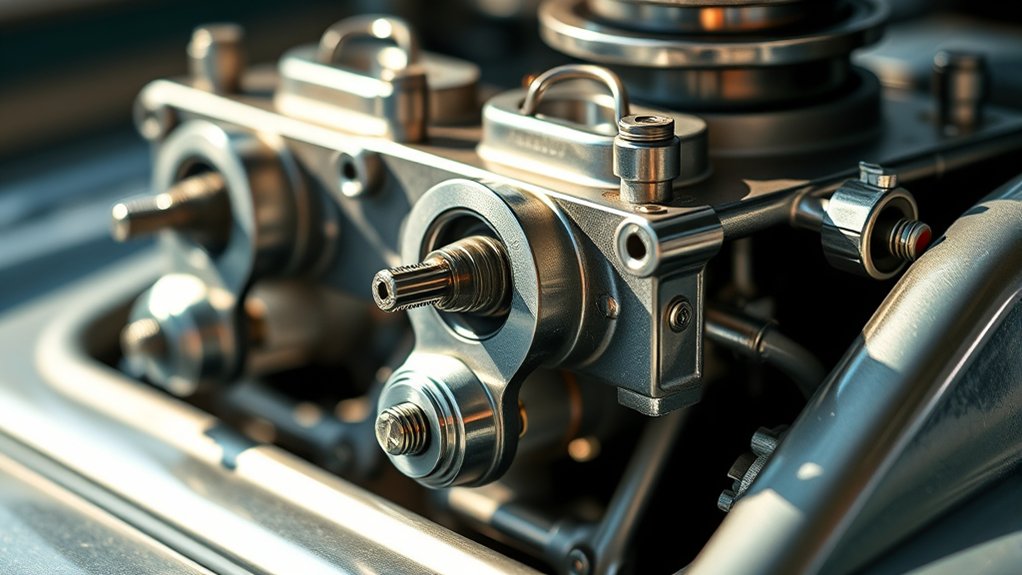
A carburetor is a vital component in many engines that mixes air and fuel before they enter your engine, ensuring smooth power and efficiency. This precise blending of fuel and air is essential for optimal engine performance and fuel economy.
By combining the right amounts of air and fuel, the carburetor helps your engine run smoothly under various conditions.
As air speeds through a narrow venturi, it creates suction that pulls fuel from the float chamber, blending it into a fine mist. The float and needle valve keep fuel levels steady, preventing overflow, while the throttle controls airflow and fuel flow based on your engine’s needs.
Keep exploring, and you’ll uncover how pressure and different parts fine-tune this critical process.
Key Takeaways
- A carburetor mixes fuel with air to create a combustible mixture for engine combustion and power delivery.
- Air speeds up through the venturi, lowering pressure and drawing fuel into the airflow from the fuel jet.
- The float mechanism regulates fuel level by controlling the needle valve to prevent overflow and maintain steady flow.
- The throttle valve adjusts airflow and fuel quantity to control engine speed and acceleration response.
- Changes in air pressure affect fuel mixture richness, impacting engine efficiency and performance at different altitudes.
What Is a Carburetor and Why Is It Important?
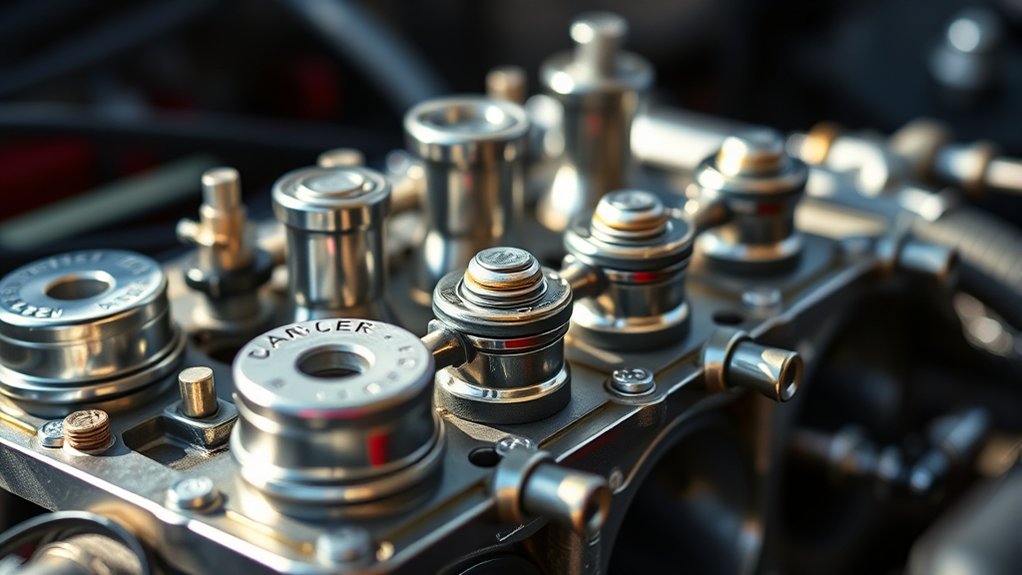
Although you might not see it right away, a carburetor plays a essential role in your engine’s performance. It’s the component responsible for mixing the right amount of fuel with air before this mixture enters the engine. Without it, your engine wouldn’t run smoothly or efficiently.
You rely on the carburetor to deliver consistent power, especially during acceleration or varying speeds. It adjusts fuel flow based on conditions like temperature and throttle position, ensuring your engine stays balanced. If the carburetor fails to function properly, you’ll notice poor fuel economy, rough idling, or even stalling.
Understanding what it is helps you appreciate how fundamental it is for maintaining your vehicle’s overall health and responsiveness on the road.
How Does a Carburetor Mix Air and Fuel?
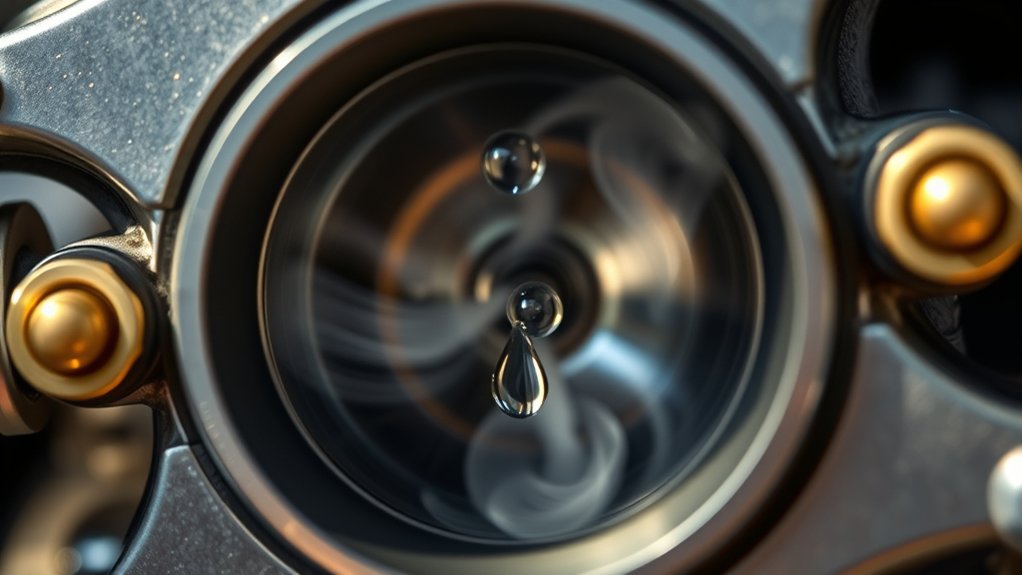
How exactly does a carburetor mix air and fuel to keep your engine running smoothly? It carefully combines the right amounts of air and fuel to create a combustible mixture your engine needs. Here’s how it works:
- Air enters through the carburetor’s intake.
- The carburetor adjusts the airflow based on engine demand.
- Fuel is drawn from the fuel bowl into the airflow.
- The air and fuel blend into a fine mist for efficient combustion.
- This mixture then flows into the engine’s cylinders for ignition.
What Happens Inside the Venturi to Draw Fuel In?
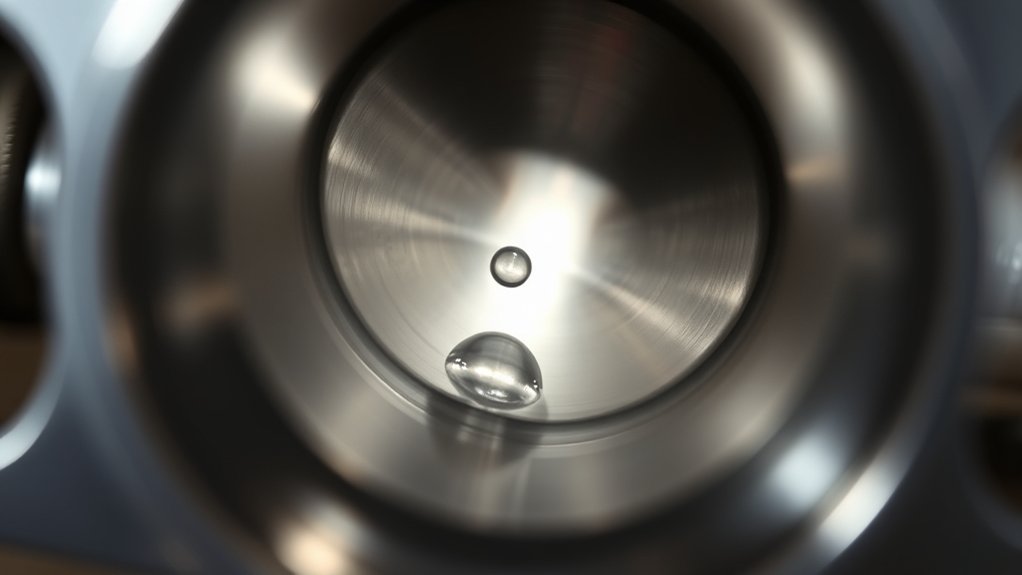
When air passes through the narrow venturi, its speed increases dramatically. You’ll notice this causes a drop in pressure inside the venturi, which creates a suction effect.
This pressure difference is what pulls fuel into the airflow, mixing it perfectly with the air.
Venturi Shape Effect
Why does the venturi shape play such a crucial role in a carburetor? The venturi narrows the airflow path, creating a pressure drop that draws fuel into the air stream. This shape guarantees fuel is pulled in just right for proper mixing.
Inside the venturi, you’ll notice:
- The narrowest point causes a pressure difference.
- Lower pressure at this point pulls fuel from the jet.
- The shape controls fuel flow consistency.
- It prevents fuel from flooding or starving the engine.
- The venturi design balances air and fuel for ideal combustion.
Airflow Speed Increase
What causes the airflow to speed up inside the venturi? As air enters the carburetor, the venturi’s narrow shape forces it to squeeze through a smaller space. You can think of it like pinching a hose—the same amount of air has to pass through a tighter area, so it moves faster.
This increase in speed is essential because it helps draw fuel from the jet into the airstream. Inside the venturi, the faster-moving air creates a flow that pulls fuel upward, mixing it with air to form the combustible mixture your engine needs.
Pressure Drop Mechanism
As the airflow speeds up through the venturi, it causes the pressure inside to drop considerably. This lower pressure creates a suction effect that draws fuel from the carburetor’s fuel bowl into the airflow. You’ll see this happens because the venturi narrows the air passage, increasing velocity and decreasing pressure simultaneously.
This pressure difference is key to mixing the right amount of fuel with air for efficient combustion.
Here’s what occurs inside the venturi to draw fuel in:
- Air speeds up through the narrowed passage.
- Pressure drops below atmospheric levels.
- Fuel is pulled from the float chamber.
- Fuel enters through the jet or nozzle.
- Air and fuel mix before entering the engine.
This pressure drop mechanism ensures your engine gets the proper fuel-air mix every time.
What Are the Main Parts of a Carburetor?
Although a carburetor might seem complex at first, understanding its main parts will make it much easier to grasp how it functions. You’ll find several key components working together: the float chamber, which maintains a steady fuel level; the venturi, a narrowed section where air speeds up and pressure drops; and the throttle valve, which controls air and fuel flow.
The main jet delivers fuel into the venturi, mixing it with air. The choke helps during cold starts by restricting airflow to enrich the mixture. Finally, the float controls fuel flow into the chamber, preventing overflow.
Knowing these parts and their roles helps you see how they collaborate to mix air and fuel efficiently for your engine.
How Does the Carburetor Throttle Control Fuel Flow?
You control the engine’s power by adjusting the throttle valve inside the carburetor. As you open or close this valve, it changes how much air flows through, which directly affects the fuel-air mixture.
This balance is key to keeping your engine running smoothly and efficiently.
Throttle Valve Operation
When you adjust the throttle valve, you directly control the amount of air entering the carburetor, which in turn regulates fuel flow. The throttle valve is fundamentally a butterfly valve that opens or closes inside the carburetor’s throat. When you press the accelerator, the valve opens wider, allowing more air to rush in.
This increased airflow lowers pressure in the venturi, drawing more fuel from the jet. Conversely, closing the valve restricts air, reducing fuel flow and engine power. The smooth operation of this valve is vital for responsive acceleration and efficient performance.
Key points about throttle valve operation:
- It controls air volume entering the engine
- Changes in valve position adjust fuel delivery indirectly
- It’s linked to the accelerator pedal or throttle handle
- Opening the valve increases engine power
- Closing reduces air and fuel flow for idling or deceleration
Fuel-Air Mixture Regulation
How exactly does the carburetor throttle control fuel flow to maintain the right fuel-air mixture? When you open the throttle valve, it increases airflow through the venturi, creating a stronger vacuum. This vacuum pulls more fuel from the float chamber through the jet into the airflow.
The faster air moves, the more fuel it draws, keeping the mixture balanced. When you close the throttle, airflow slows, reducing the vacuum and fuel flow. This precise regulation guarantees the engine gets the correct fuel-to-air ratio under different speeds and loads.
How Does the Choke Help Start the Engine?
Although starting a cold engine can be challenging, the choke plays a crucial role by temporarily restricting airflow to enrich the fuel mixture. When you engage the choke, it narrows the carburetor’s air intake, causing more fuel to mix with less air. This richer mixture ignites more easily in a cold engine, helping it start smoothly.
Here’s how the choke helps you start the engine:
- Reduces incoming air to increase fuel concentration
- Creates a richer fuel-air mixture for better ignition
- Compensates for poor vaporization in cold conditions
- Prevents the engine from stalling during startup
- Automatically or manually adjusts until the engine warms up
Using the choke properly guarantees your engine starts quickly and runs steadily until it reaches operating temperature.
How Does the Float Chamber Keep Fuel Levels Steady?
You rely on the float chamber to keep fuel levels steady by using a float mechanism that controls fuel flow. As fuel rises, the float closes the valve to stop more fuel from entering, preventing overflow. This simple regulation guarantees your engine gets just the right amount of fuel for smooth operation.
Float Mechanism Function
Why does the fuel level in the float chamber stay steady even as your engine uses fuel? It’s all thanks to the float mechanism inside the chamber. The float rises and falls with the fuel level, controlling the flow of fuel from the tank.
When the fuel drops, the float lowers, opening a valve to let more fuel in. When the fuel reaches the right level, the float rises, closing the valve to stop the flow. This simple but effective system ensures a consistent fuel supply for your engine.
Here’s how the float mechanism works:
- Float moves up and down with fuel level
- Connected to a needle valve
- Low fuel level opens the valve
- High fuel level closes the valve
- Maintains steady fuel supply without overflow
Fuel Level Regulation
How exactly does the float chamber keep the fuel level steady as your engine runs? Inside the chamber, a float rises and falls with the fuel level. When the fuel drops, the float lowers, opening a valve that lets more fuel in from the tank.
As fuel fills the chamber, the float rises and gradually closes the valve, stopping the flow once the right level is reached. This constant adjustment keeps the fuel level steady, ensuring a consistent fuel supply to the carburetor jets.
Preventing Overflow Issues
Maintaining the right fuel level in the float chamber not only guarantees steady engine performance but also plays a key role in preventing overflow issues. The float chamber uses a float connected to a needle valve that opens and closes based on fuel levels. When fuel rises, the float pushes the needle valve to shut off the fuel supply, stopping overflow.
If fuel drops, the valve opens, letting more fuel in. This automatic control keeps fuel at a consistent level.
Here’s how the float chamber prevents overflow:
- Float rises with fuel level
- Needle valve closes when fuel is high
- Stops excess fuel from entering
- Keeps fuel steady for smooth operation
- Prevents flooding and engine stalling
You rely on this mechanism to keep your engine running smoothly without fuel spillage.
How Does the Carburetor Adjust for Different Engine Speeds?
Although engine speeds vary constantly, the carburetor continuously adjusts the fuel and air mixture to match these changes. When you press the accelerator, the throttle valve opens wider, allowing more air to flow through the carburetor’s venturi. This increased airflow creates a stronger vacuum that pulls more fuel from the jet into the air stream.
At low speeds, the carburetor uses the idle and low-speed circuits to deliver a precise, lean mixture, ensuring smooth operation. As your engine speeds up, the main jet supplies additional fuel to meet higher demands. The accelerator pump also provides an extra squirt of fuel when you quickly open the throttle, preventing hesitation.
This dynamic adjustment keeps your engine running efficiently across a range of speeds.
How Does Air Pressure Affect Carburetor Performance?
Why does air pressure matter so much for your carburetor’s performance? Because your carburetor relies on the difference between atmospheric pressure and the pressure inside the intake manifold to draw fuel properly. When air pressure changes, it directly affects the air-fuel mixture, impacting engine efficiency and power.
Here’s how air pressure influences your carburetor:
- Lower air pressure reduces oxygen, causing a richer fuel mixture
- Higher air pressure increases oxygen, leaning out the mixture
- Altitude changes affect air pressure, requiring carburetor adjustments
- Sudden weather shifts can alter air density, impacting performance
- Proper air pressure guarantees smooth throttle response and fuel economy
Understanding air pressure helps you maintain ideal carburetor function under varying conditions.
What Are Common Carburetor Problems and Their Effects?
What happens when your carburetor starts acting up? You’ll likely notice rough idling, poor acceleration, or increased fuel consumption. These issues stem from common problems like clogged jets, vacuum leaks, or a stuck float.
Each affects your engine differently, but all reduce performance and efficiency.
| Problem | Effect on Engine |
|---|---|
| Clogged Jets | Uneven fuel delivery, stalling |
| Vacuum Leaks | High idle, poor fuel mixture |
| Stuck Float | Flooding or fuel starvation |
When you spot these symptoms, addressing the carburetor promptly is key. Ignoring them can lead to harder starts and engine damage over time.
Understanding these problems helps you maintain smooth engine operation and avoid costly repairs.
How to Tune a Carburetor for Optimal Fuel Efficiency?
When you tune a carburetor correctly, you’ll maximize fuel efficiency and get the best performance from your engine. Start by adjusting the idle speed screw to guarantee your engine runs smoothly at rest. Next, tweak the air-fuel mixture screw to find the ideal balance—too rich wastes fuel, too lean harms performance.
Check and adjust the float level to control fuel flow precisely. Also, clean the carburetor jets to prevent clogging that disrupts fuel delivery. Finally, test drive your vehicle and make minor adjustments as needed to optimize efficiency.
- Adjust the idle speed screw
- Fine-tune the air-fuel mixture screw
- Set the correct float level
- Clean carburetor jets regularly
- Test drive and readjust for best results
How Does a Carburetor Compare to Modern Fuel Injection?
Although carburetors have served engines well for decades, modern fuel injection systems offer more precise control over the air-fuel mixture, improving efficiency and performance. When you compare the two, you’ll notice fuel injection delivers fuel directly into the combustion chamber or intake manifold using electronically controlled injectors. This precision maximizes fuel economy, reduces emissions, and enhances throttle response.
Carburetors work mechanically, relying on air pressure differences to mix fuel and air, which can be less consistent. You’ll find that fuel injection adapts to changing conditions like temperature and load instantly, while carburetors require manual tuning. Overall, fuel injection provides better reliability and smoother operation, especially in varying environments, making it the preferred choice in modern vehicles.
Frequently Asked Questions
How Do Carburetors Affect Vehicle Emissions?
Carburetors affect emissions by mixing fuel and air less precisely than modern systems, so you’ll often see higher pollutants like carbon monoxide. If you don’t tune it properly, it’ll increase harmful exhaust and reduce fuel efficiency.
Can Carburetors Be Used in Motorcycles and Lawnmowers?
Yes, you can find carburetors in motorcycles and lawnmowers. They’re simple, reliable, and cost-effective, perfect for small engines.
Though fuel injection is common now, carburetors still power many older or basic models efficiently.
What Tools Are Needed for Carburetor Maintenance?
Think of your carburetor as a delicate garden—tools like screwdrivers, wrenches, carb cleaner, and a small brush help you tend it. You’ll need these to adjust, clean, and keep its performance blooming smoothly.
How Long Does a Typical Carburetor Last?
A typical carburetor lasts around 10 to 15 years with proper care. You’ll want to maintain it regularly, as neglect can shorten its lifespan.
Regular cleaning and adjustments keep it running smoothly longer.
Are There Any Safety Precautions When Handling Carburetors?
When Jake cleaned his carburetor, he wore gloves to avoid fuel contact. You should always handle carburetors in a well-ventilated area, avoid sparks, and wear protective gear to prevent injuries and inhaling harmful fumes.
Conclusion
Now that you know how a carburetor mixes air and fuel to power engines, it’s fascinating to note that despite being largely replaced by fuel injection, carburetors are still used in about 40% of small engines like lawnmowers and motorcycles. This shows their lasting reliability and simplicity.
By understanding how to tune and maintain your carburetor, you can keep your engine running smoothly and efficiently. This makes every ride or cut more enjoyable and cost-effective. Proper carburetor maintenance is key to optimal engine performance and fuel efficiency.

