

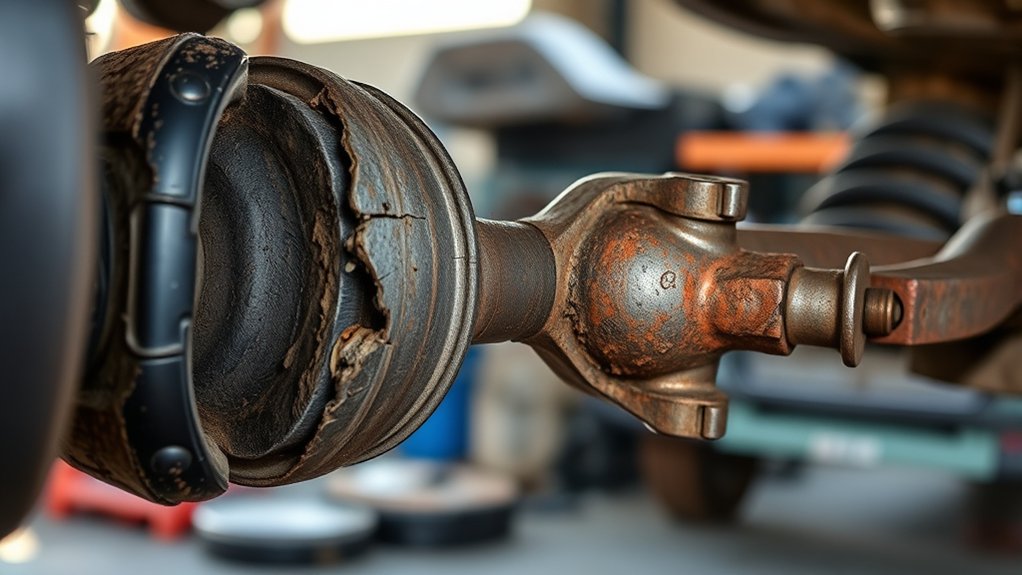
You can expect your CV axles to go bad due to several common causes that affect their performance and longevity. Torn boots are a primary issue, allowing dirt and moisture to enter the CV joints, which leads to accelerated wear. Worn bearings also contribute by causing wobble and noise, signaling that the axle is deteriorating.
Rust is another culprit, gradually eating away at the metal parts of the axle. Driving on rough roads and hitting potholes can speed up this wear significantly.
Additionally, poor wheel alignment and overloading put extra stress on the axles, often resulting in cracks.
Neglecting regular maintenance worsens all these problems, increasing the chance of failure. Manufacturing defects may also cause early axle issues.
By understanding and monitoring these causes, you can better protect your CV axles and extend their lifespan.
Key Takeaways
- Torn or cracked CV boots allow dirt and moisture to enter, causing joint contamination and grease loss.
- Regular wear and tear from driving stress and axle movement cause material fatigue and joint deterioration.
- Rust and corrosion from moisture and road salt weaken the axle, leading to cracks and failure.
- Overloading and aggressive driving increase mechanical stress, accelerating axle wear and potential damage.
- Poor maintenance, such as neglecting lubrication and inspections, leads to faster CV axle degradation.
How Torn CV Boots Damage Your CV Axles
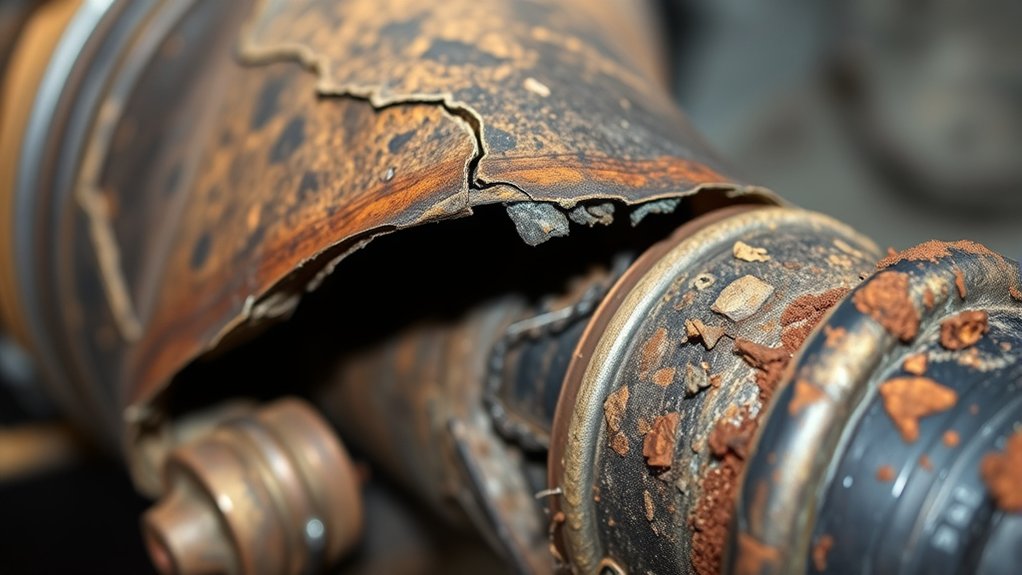
How exactly do torn CV boots damage your CV axles? When a CV boot tears, it no longer protects the joint from dirt, moisture, and debris. You’ll find that contaminants quickly get inside, which causes the grease that keeps your CV joint lubricated to leak out.
Without proper lubrication, the joint experiences increased friction and wear. As you drive, the CV joint endures more stress and starts to deteriorate faster. Over time, this leads to joint failure, vibrations, and clicking noises, especially during turns.
If you don’t replace a torn boot promptly, you risk damaging the entire CV axle, which can be costly to fix. So, don’t ignore a torn boot—it’s a small issue that can cause big problems for your CV axle.
Why Worn Bearings Cause CV Axle Failure
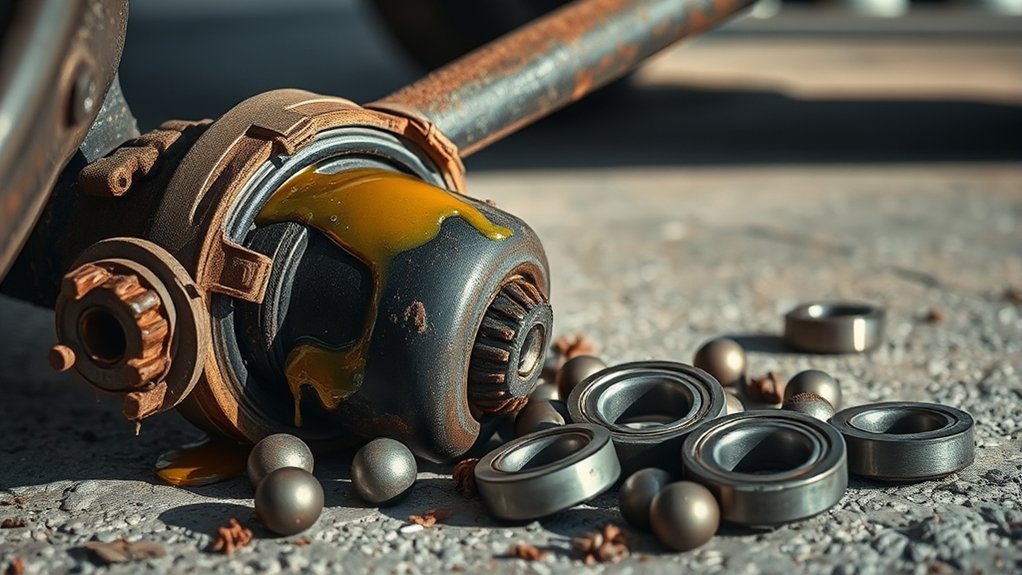
When your bearings wear out, they can’t support the CV axle properly, causing extra stress and uneven movement. This wear leads to vibrations and increased friction that can quickly damage the axle.
You’ll notice the axle failing faster when bearings aren’t in good shape.
Bearing Wear Effects
One of the main reasons CV axles fail is due to bearing wear, which directly impacts their performance. When bearings wear out, they cause increased friction and heat, leading to premature axle damage. You’ll notice vibrations, noise, and reduced smoothness while driving.
If ignored, worn bearings can cause the axle to seize or break.
Here’s how bearing wear affects your CV axle:
| Effect | Symptom | Consequence |
|---|---|---|
| Increased friction | Vibrations | Heat buildup |
| Reduced lubrication | Noise | Accelerated wear |
| Metal debris | Grinding sound | Contaminated joints |
| Bearing looseness | Axle wobble | Structural damage |
Pay attention to these signs to prevent costly repairs and ensure your vehicle runs smoothly.
Impact On Axle
Why do worn bearings lead to CV axle failure? When bearings wear out, they no longer support the axle shaft properly. This causes excessive play and uneven movement, putting extra stress on the CV joints.
As a result, the joints wear faster and can develop cracks or tears in their protective boots. Contaminants like dirt and moisture then enter, accelerating damage. You’ll notice vibrations or clunking sounds as the axle struggles to transmit power smoothly.
Ignoring worn bearings means the CV axle takes on abnormal forces, leading to premature failure. To avoid costly repairs, address bearing issues promptly. Replacing worn bearings keeps the axle aligned and the joints protected, ensuring your vehicle runs safely and efficiently without unexpected breakdowns.
How Rust and Corrosion Destroy CV Axles
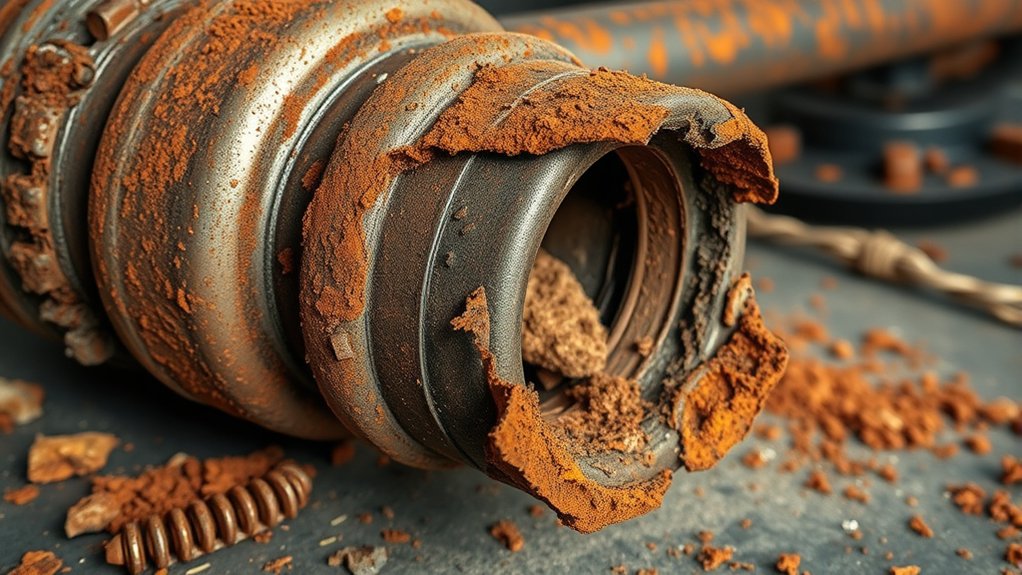
Rust and corrosion can quickly weaken your CV axles, compromising their strength and performance. When moisture and road salt get trapped around the axle, they start eating away at the metal surface. Over time, this causes pitting and thinning, which reduces the axle’s ability to handle stress.
You might notice cracks forming in the protective boot, allowing grease to leak out and contaminants to get in. This accelerates wear and leads to joint failure. If you don’t address rust early, the axle can eventually snap, leaving you stranded.
Regularly inspecting your axles and cleaning off salt or dirt buildup helps prevent corrosion. Applying protective coatings or replacing damaged boots can keep rust at bay and extend your CV axle’s lifespan.
Why Rough Roads Speed Up CV Axle Wear
When you drive on rough roads, your CV axles face constant vibrations that wear down their components faster. These bumps put extra stress on the joints, causing them to weaken over time.
If you regularly hit uneven surfaces, your CV axles won’t last as long as they should.
Impact of Road Vibrations
Rough roads can drastically increase the wear on your CV axles by subjecting them to constant vibrations and shocks. When you drive over uneven surfaces, these vibrations travel through your vehicle’s suspension and directly impact the CV axles. Over time, this repeated stress causes the axle components—especially the boots and joints—to deteriorate faster.
You might notice premature cracking or tearing of the protective boots, allowing dirt and moisture to enter and cause corrosion. The vibrations also accelerate the breakdown of grease inside the joints, reducing lubrication and increasing friction. If you frequently drive on bumpy roads, your CV axles endure far more intense and frequent pounding than usual, which shortens their lifespan and increases the risk of failure.
Regular inspections help catch this wear early.
Increased Joint Stress
Because uneven terrain forces your CV joints to move more aggressively, they experience increased stress that speeds up wear. When you drive on rough roads, your CV axles flex and twist more than usual, pushing the joints beyond their normal range. This extra strain can cause the internal components to break down faster, leading to premature failure.
The constant jarring from potholes and gravel also wears down the protective boots, letting dirt and moisture in. Once contaminants enter, they accelerate joint deterioration. To protect your CV axles, avoid rough surfaces when possible and inspect the boots regularly.
Catching damage early helps prevent costly repairs and keeps your vehicle running smoothly, saving you time and money in the long run.
How Poor Wheel Alignment Harms CV Axles
Although you might not notice it right away, poor wheel alignment puts extra stress on your CV axles by causing uneven tire wear and forcing the axles to operate at improper angles. This abnormal stress accelerates joint wear and can lead to premature failure.
When your wheels aren’t aligned properly, your axles must compensate for the misalignment, which increases friction and heat buildup in the joints.
| Effect | Impact on CV Axles |
|---|---|
| Uneven Tire Wear | Causes inconsistent load |
| Improper Angles | Leads to excessive stress |
| Increased Friction | Accelerates joint wear |
| Heat Buildup | Weakens rubber boots, joints |
Regular alignment checks help you avoid these issues, extending your CV axles’ lifespan.
Why Overloading Your Vehicle Ruins CV Axles
Carrying too much weight in your vehicle puts a huge strain on your CV axles, causing them to wear out faster. When you overload your car, the extra weight forces the CV axles to work harder, increasing stress on the joints and shafts. This added pressure can lead to premature wear, cracks, or even complete failure.
Overloading also affects suspension and drivetrain components, which indirectly harms CV axles by altering their alignment and movement. If you regularly haul more than your vehicle’s recommended capacity, you’re accelerating damage to these critical parts. To protect your CV axles and avoid costly repairs, always stick to the manufacturer’s weight limits and avoid loading beyond what your vehicle is designed to handle.
How Lack of Maintenance Shortens CV Axle Life
Neglecting regular maintenance is one of the quickest ways to shorten your CV axle’s lifespan. When you skip routine inspections and fail to replace worn or damaged CV boots, dirt and moisture can seep in, causing corrosion and premature wear. Without proper lubrication, the CV joints experience increased friction, leading to cracks and eventual failure.
You might not notice minor issues early on, but over time, these small problems compound, resulting in costly repairs or replacements. Staying on top of maintenance, like checking boots for tears and keeping joints lubricated, helps your CV axles perform smoothly and last longer. By dedicating a little time to care, you avoid unnecessary breakdowns and extend the life of your vehicle’s drivetrain components.
Frequently Asked Questions
How Can I Tell if My CV Axle Needs Replacement?
You’ll know your CV axle needs replacement if you hear clicking noises during turns, feel vibrations while driving, or notice grease leaking near the wheel.
Don’t ignore these signs; get it checked and replaced promptly.
What Are the Symptoms of a Failing CV Axle?
You’ll hear a rhythmic clicking sound when turning, feel vibrations shaking your steering wheel, and notice grease splattered near your tires.
These signs mean your CV axle’s failing, and you shouldn’t ignore them or risk a breakdown.
Can Driving With a Bad CV Axle Cause Further Damage?
Yes, driving with a bad CV axle can cause further damage. You’ll risk damaging your transmission, wheel bearings, and suspension components.
It’s best to get it repaired quickly to avoid costly repairs and unsafe driving conditions.
How Long Do CV Axles Typically Last?
You can expect your CV axles to last about 70,000 to 130,000 miles, depending on driving conditions and maintenance.
Keep an eye on boot tears and vibrations to catch issues early and extend their lifespan.
Is It Safe to Drive With a Broken CV Boot?
You wouldn’t want to ignore a tired CV boot; driving with a broken one isn’t exactly safe. Dirt and moisture sneak in, causing damage fast.
It’s best to fix it soon to avoid bigger trouble.
Conclusion
So, if you love surprises like snapping CV axles on your morning drive, just ignore torn boots, rusty parts, and rough roads. Who needs proper alignment or regular maintenance anyway? Overloading your ride? Perfect!
Your CV axles will thank you by failing spectacularly right when you least expect it. But hey, if you want your car to behave and save you from roadside drama, maybe give those axles a little TLC. Or don’t—your call!
Remember, regular maintenance, avoiding overloading, and keeping an eye on torn boots and rust are key to extending the life of your CV axles. Proper alignment and careful driving on rough roads also play a big role in preventing premature CV axle failure. Taking these steps can help you avoid the common causes why CV axles go bad.

